
As the 'Silver Tsunami' Hits Main Street, Retiring Founders Are Selling Their Businesses to Their Staff
Millions of Baby Boomer business owners are approaching retirement without a succession plan. Instead of liquidating or selling to private equity, a growing wave of founders is turning to employee ownership to preserve their legacy and build worker wealth.
By Factlen Editorial Team
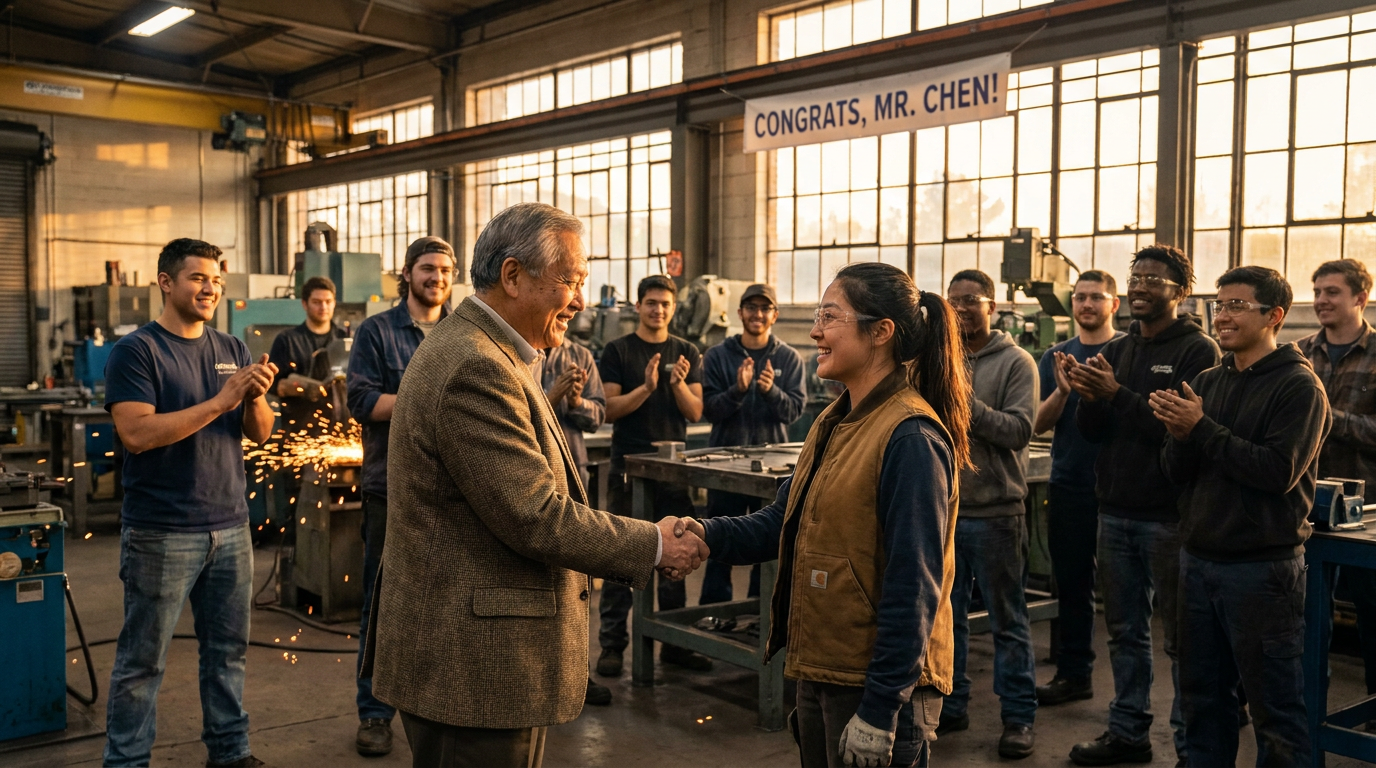
- Employee Ownership Advocates
- Proponents view worker buyouts as a powerful tool to save local economies and close the wealth gap.
- Retiring Founders
- Business owners are increasingly prioritizing legacy, culture, and staff welfare over maximum payout.
- Financial Skeptics
- Critics warn that employee buyouts can saddle companies with dangerous debt and shortchange retiring founders.
What's not represented
- · Private equity firms that traditionally acquire retiring founders' businesses
- · Next-generation family members who opt out of inheriting the business
Why this matters
As millions of Baby Boomer business owners retire, their exit strategies will determine the fate of millions of local jobs. The shift toward employee ownership offers a blueprint for preserving Main Street businesses while building unprecedented wealth for everyday workers.
Key points
- Roughly six million U.S. business owners are expected to retire by 2035, creating a massive succession crisis.
- Only 20% to 30% of small businesses listed for sale successfully find a traditional buyer.
- A growing number of founders are selling their companies to their employees via ESOPs and worker cooperatives.
- Employee ownership preserves local jobs, increases worker wages, and protects the founder's legacy, despite some financial complexities.
The American Main Street is facing a demographic cliff. Over the next decade, an estimated six million bosses of U.S. firms will enter retirement, representing the largest generational transfer of business assets in history. This phenomenon, widely dubbed the "Silver Tsunami," sees roughly 10,000 Baby Boomers turning 65 every single day.[1][3]
For decades, the standard exit strategy for a successful founder was straightforward: pass the company down to the children, or sell it to a competitor. But today, the landscape has shifted. Many children of founders have pursued their own careers and have no interest in taking over the family hardware store, logistics firm, or marketing agency.[2]
When owners look to the open market, the reality is often grim. Only 20% to 30% of small and medium-sized businesses listed for sale ever find a buyer. The rest face a heartbreaking alternative: liquidating assets, shutting the doors, and laying off the workforce that helped build the company.[2]

Faced with the prospect of community devastation or selling to private equity firms that might strip the company for parts, a growing coalition of founders is choosing a third path. They are selling their life's work directly to the people who know it best: their employees.[1][4]
Employee ownership is not a new concept, but it is experiencing a modern renaissance. Through structures like Employee Stock Ownership Plans (ESOPs) and worker-owned cooperatives, retiring founders can secure a lucrative exit while preserving their legacy and protecting their staff.[4]
The mechanics of these deals are designed to be accessible. In most cases, employees do not need to empty their savings accounts to buy the company. Instead, the buyout is financed through a loan taken out by the business itself—or through a "seller note" where the founder is paid out over time—using the company's future profits to service the debt.[5]
In most cases, employees do not need to empty their savings accounts to buy the company.
For the workers, the financial upside can be life-changing. Employees at worker-owned businesses earn roughly 33% more in wages than their peers at traditional firms. Furthermore, these structures have been shown to dramatically reduce wealth inequality, allowing frontline workers to build significant retirement assets simply by doing their daily jobs.[2][7]

"Being able to exit in a way that is economically fair to them but allows their workers to participate in future value creation is quite appealing to sellers," notes research from Harvard Business School. It transforms a potential economic crisis into an engine for middle-class wealth creation.[2]
The trend is also gaining institutional backing. Organizations like Capital Impact Partners and Teamshares are actively providing the capital and technical assistance required to facilitate these complex transitions. They help founders navigate the legal hurdles of establishing a trust and educating the workforce on what it means to think like an owner.[5][8]
However, the transition from a founder-led dictatorship to a worker-owned democracy is not without its pitfalls. Financial analysts warn that selling to staff can sometimes be an act of "emotional selling" that leaves the founder with less cash than a strategic corporate buyout would offer.[6]
Skeptics also point to the "repurchase obligation"—a legal requirement for ESOPs to buy back shares at fair market value when an employee retires or leaves. If the company is highly successful and its valuation skyrockets, this obligation can create a massive liquidity drain, effectively punishing the business for its own growth.[6]

Furthermore, saddling a company with the debt required to buy out a founder can restrict its ability to invest in new equipment, marketing, or expansion during the critical years immediately following the leadership transition.[6]
Despite these financial complexities, the momentum behind employee ownership continues to accelerate. For many founders, the peace of mind that comes from protecting their staff and keeping the business rooted in the local community far outweighs the potential of squeezing every last dollar out of a private equity sale.[3][4]
As the Silver Tsunami crests, the shift toward worker ownership is quietly reframing the American dream. It suggests that the ultimate success of an entrepreneur is not just building a profitable company, but creating an institution robust enough to enrich the people who keep it running long after the founder has stepped away.[1][5]
How we got here
1974
The Employee Retirement Income Security Act (ERISA) is passed, establishing the legal framework for modern ESOPs.
2018
The federal Main Street Employee Ownership Act is signed into law, making it easier for workers to secure loans to buy out retiring owners.
2020–2021
The COVID-19 pandemic accelerates the retirement timeline for thousands of small business owners, sparking a surge in cooperative conversions.
2026
With 10,000 Baby Boomers turning 65 daily, employee buyouts become a mainstream succession strategy to prevent mass closures.
Viewpoints in depth
Employee Ownership Advocates
Proponents view worker buyouts as a powerful tool to save local economies and close the wealth gap.
Advocates argue that the 'Silver Tsunami' presents a once-in-a-generation opportunity to democratize wealth. By converting traditional businesses into ESOPs or cooperatives, communities can prevent private equity firms from stripping local assets. They point to data showing that worker-owners enjoy higher wages, better job security, and significantly larger retirement nest eggs, all while keeping the business anchored in its original community.
Financial Skeptics
Critics warn that employee buyouts can saddle companies with dangerous debt and shortchange retiring founders.
From a strictly financial perspective, skeptics argue that selling to employees is often inefficient. Because workers rarely have the liquid capital to buy a multi-million-dollar firm, the buyout is typically financed by the company taking on massive debt. Critics also highlight the 'repurchase obligation'—the legal mandate for the company to buy back shares when workers leave—which can drain cash reserves just when the business needs to reinvest in growth. For the founder, it often means walking away with less money than a strategic corporate buyer would offer.
Retiring Founders
Business owners are increasingly prioritizing legacy, culture, and staff welfare over maximum payout.
For many founders who spent decades building their companies alongside loyal staff, the decision is deeply emotional. They express dread at the thought of a corporate competitor buying their firm only to lay off their friends and dismantle the company culture. While they acknowledge the financial trade-offs, these owners view employee buyouts as the ultimate succession plan—a way to fund their retirement while ensuring the institution they built continues to thrive on its own terms.
What we don't know
- Whether the federal government will introduce new tax incentives to further accelerate ESOP formations.
- How employee-owned companies will weather potential economic downturns compared to their private equity-backed competitors.
- The exact percentage of the 6 million retiring owners who will ultimately choose the employee buyout route.
Key terms
- Silver Tsunami
- The demographic wave of Baby Boomers reaching retirement age, leading to a massive transfer of assets and business ownership.
- Employee Stock Ownership Plan (ESOP)
- A qualified retirement plan that gives workers an ownership interest in the company, usually without requiring upfront capital from the employees.
- Worker Cooperative
- A values-driven business model where the company is entirely owned and democratically governed by its employees, typically on a one-worker, one-vote basis.
- Repurchase Obligation
- The legal requirement for an employee-owned company to buy back shares from workers when they retire or leave the firm.
Frequently asked
What is an ESOP?
An Employee Stock Ownership Plan is a corporate structure where a company's employees own shares in the business, usually held in a trust until they retire or leave.
Do employees have to buy the company with their own money?
No. In most ESOPs and worker cooperatives, the buyout is financed by a loan taken out by the company itself, which is repaid over time using the business's future profits.
Why don't owners just sell to private equity?
While private equity can offer quick cash, many founders worry that outside buyers will strip the company's assets, fire staff, or destroy the local legacy they spent decades building.
Sources
Source coverage
8 outlets
3 viewpoints surfaced








[1]BBCEmployee Ownership Advocates
As more US business owners retire many are selling up to their staff
Read on BBC →[2]Harvard Business SchoolEmployee Ownership Advocates
Strategy for the silver tsunami: Employee ownership
Read on Harvard Business School →[3]EntrepreneurRetiring Founders
The Silver Tsunami and What It Means to You
Read on Entrepreneur →[4]Bloomberg BusinessweekRetiring Founders
Worker Co-Ops Are an Idea With Growing Appeal for Small-Business Owners
Read on Bloomberg Businessweek →[5]TeamsharesEmployee Ownership Advocates
A New Way to Sell Your Business: Employee Ownership
Read on Teamshares →[6]Lavender HotelsFinancial Skeptics
The Honest Alternative to Emotional Selling
Read on Lavender Hotels →[7]Consumers Credit UnionEmployee Ownership Advocates
The benefits of employee ownership
Read on Consumers Credit Union →[8]Capital Impact PartnersEmployee Ownership Advocates
Worker Co-op Conversions Addressing a Crisis in Small Business Closures
Read on Capital Impact Partners →

More in business
See all 5 stories →AI Infrastructure
SpaceX Raises Record $85.7 Billion in Historic IPO to Fund Orbital AI Infrastructure
7 sources

AI Economics
The Compute-First Era: How AI is Rewriting the Rules of Venture Capital
6 sources

Fed Watch
Federal Reserve Holds Rates Steady as New Chair Kevin Warsh Signals Hawkish Pivot
8 sources
Every angle. Every day.
Get business stories with full source coverage and perspective breakdowns delivered to your inbox.