
Archaeologists Stunned by Roman Soldier Burial Found Inside 5,000-Year-Old Neolithic Fortress in Spain
Researchers excavating a Copper Age stronghold in southwestern Spain discovered the remains of a Roman legionary buried 2,500 years after the site was abandoned. The anomalous grave, complete with a military dagger, presents a forensic mystery regarding how the soldier died and why he was placed in the ancient ruins.

In the sun-baked earth of southwestern Spain, archaeologists have uncovered a temporal collision that spans millennia: a Roman legionary buried inside a massive prehistoric fortress that was already ancient when the city of Rome was founded.
The discovery at the Cortijo Lobato site near Almendralejo, located in the Extremadura region, has stunned researchers with its dual layers of history. The site was initially unearthed in 2021 during preliminary land surveys conducted for an Acciona Energía solar power plant, a routine preventive excavation that unexpectedly revealed a sprawling Chalcolithic, or Copper Age, stronghold.
While the Iberian Peninsula is known for its rich prehistoric heritage, the sheer scale of the Almendralejo site immediately set it apart from typical regional finds. The excavation quickly transformed from a standard environmental compliance check into a major archaeological investigation, drawing in specialists to map a structure that had lain undisturbed beneath the olive groves for nearly five thousand years.[2]
The foundational claim of the site's significance rests on the fortress itself, which dates to approximately 3000 BCE, placing it at the dawn of European civilization's transition from the Late Neolithic to the Bronze Age. Archaeological firm Tera S.L., which led the extensive excavation efforts, documented a highly sophisticated stronghold that challenges existing timelines of prehistoric military engineering. The Cortijo Lobato fortress features a pentagon-shaped enclosure ringed by three concentric walls constructed from a mix of stone and adobe.
The entire structure spans an impressive 77 meters across, dominating a hilltop that rises 314 meters above sea level to offer a commanding view of the surrounding Extremadura plains. This strategic elevation would have allowed the Copper Age inhabitants to monitor trade routes, agricultural lands, and approaching threats, though the specific adversaries they were defending against remain a subject of ongoing academic debate.
The architectural evidence recovered from the fortress demonstrates an unexpected level of geometric precision and tactical foresight. Excavators uncovered 25 projecting bastions integrated into the walls, alongside three massive defensive ditches, some measuring up to four meters wide. This bastioned system—which allows defenders to repel attacks from overlapping angles and eliminate blind spots—was centuries ahead of its time, representing a level of military sophistication that would not become common in Europe until much later in antiquity.
The presence of such advanced defensive architecture suggests that the Copper Age communities in southern Spain were highly organized, capable of mobilizing significant labor forces, and engaged in sustained regional conflicts that necessitated impregnable strongholds. The sheer volume of earth and stone moved to construct the Cortijo Lobato site points to a centralized authority and a society deeply concerned with territorial defense.
Yet the most startling evidence emerged not from the Copper Age foundations, but from a solitary, shallow grave discovered near the fortress's second defensive ditch. Here, excavators found the skeleton of a man aged between 25 and 35, laid to rest in a structure that had been abandoned and likely reduced to grass-covered ruins for more than 2,500 years. This stark chronological gap created an immediate forensic puzzle for the archaeological team.
The man was buried with a pugio—the standard-issue iron dagger of the Roman legions—placed deliberately on his back, linking him directly to the military forces that occupied the Iberian Peninsula millennia after the fortress's original builders had vanished. The collision of these two vastly different eras in a single stratigraphic layer has forced researchers to carefully untangle the site's timeline, separating the monumental architecture of the Copper Age from the isolated, clandestine burial of the Roman period.
Typological analysis of the artifact provides the strongest evidence for the deceased's identity and the timeline of his interment. The pugio found resting on the skeleton's back features a distinct sheath design that experts have securely dated to the late first century BCE, while the burial itself is estimated to have occurred later, during the second or third century CE.
The deliberate placement of this specific military sidearm strongly supports the hypothesis that the man was a Roman soldier, as the pugio was a highly personal weapon closely tied to legionary identity and status. In the Roman military tradition, soldiers often purchased and customized their own daggers, making the inclusion of the weapon in the grave a clear marker of his profession. The pristine condition of the iron blade and its sheath suggests it was buried intentionally as a grave good, rather than lost or discarded in the dirt.[3]
The historical context of the Roman occupation in Hispania offers clues as to what a legionary might have been doing in this remote part of Extremadura. If the man was an active-duty soldier at the time of his death, historical records suggest he likely belonged to the Legio VII Gemina. During the second and third centuries CE, this was the primary Roman military unit stationed in the Iberian Peninsula, tasked primarily with maintaining security along the region's extensive network of roads and protecting lucrative mining operations from banditry.
The Extremadura region was heavily integrated into the Roman economy, producing olive oil, wine, and metals for export across the empire. A soldier from the Legio VII Gemina could have been patrolling these vital trade routes, escorting a shipment of goods, or acting as a courier when he met his untimely end far from the legion's main headquarters.
The physical evidence of the grave itself presents a stark forensic mystery that contrasts sharply with standard Roman burial practices. The man was buried face down in a pit barely large enough to hold his body, and osteological analysis indicates that his feet appear to have been severed prior to interment. Traditional Roman funerary rites placed a heavy emphasis on proper burial, cremation, or entombment, ensuring the deceased's peaceful transition to the afterlife and preventing their spirit from wandering.
A prone burial—especially one involving post-mortem mutilation—is highly anomalous in the Roman world and is generally interpreted by archaeologists as a deliberate sign of disrespect, fear, or punishment. The hasty, cramped nature of the grave further suggests that the individuals who buried him were in a rush, lacking the time or the desire to dig a proper resting place.
Excavation director César Pérez has outlined several working hypotheses to explain these burial anomalies, though the archaeological team maintains transparent uncertainty regarding the exact cause of death. The prone position and severed feet often indicate a dishonorable burial, potentially serving as a severe punishment for desertion, theft, or a major military infraction committed by the soldier. Alternatively, the evidence is equally consistent with a violent murder, where the perpetrators hastily concealed the body in the ancient ruins to avoid detection.
A third possibility is that the man succumbed to a highly contagious disease while on patrol, prompting his comrades to bury him quickly and face-down—a superstitious practice sometimes used in antiquity to prevent the infected dead from rising or spreading the plague. Without soft tissue evidence, distinguishing between a military execution, a criminal murder, and a panicked disease burial remains a significant challenge.
The spatial mystery of the grave's location adds another layer of complexity to the evidence pack. No other traces of Roman occupation, encampment, or sustained activity have been found anywhere at the Cortijo Lobato site, making this burial an entirely isolated event. While it was not uncommon for Romans to reuse ancient, monumental ruins as temporary shelters or expedient burial grounds, the sheer isolation of this specific grave suggests a highly targeted, perhaps clandestine, action.
By the second century CE, the Copper Age fortress walls would have collapsed into prominent, grass-covered mounds, forming a distinct topographical feature on the Extremadura plains. This elevated ruin may have served as a recognizable landmark for a traveling military unit, a desperate hiding place for a fleeing deserter, or simply a convenient site where the ancient defensive ditches provided a pre-dug depression that could be quickly repurposed as a grave.
To resolve the remaining uncertainties surrounding the soldier's identity, researchers are currently turning to advanced biomolecular techniques, attempting to extract ancient DNA and stable isotopes from the enamel of the skeleton's teeth. Isotope analysis of strontium and oxygen will reveal the chemical signature of the water the man drank during his childhood, allowing scientists to pinpoint his geographic origins.
This data will definitively answer whether the man was a local Hispanian recruit who joined the Roman auxiliary forces, or an Italian-born legionary deployed across the Mediterranean to the Iberian province. If the DNA reveals a local origin, the narrative shifts to a native soldier buried in the landscape of his distant ancestors. Conversely, an Italian origin would paint a picture of a man who traveled across an empire only to be buried in a stronghold built by a civilization he never knew.
Until those laboratory results are finalized and published, the Almendralejo site stands as a profound monument to the layering of human history and the durability of ancient engineering. The discovery provides a rare, tangible link between two vastly different epochs: a Copper Age community that mobilized massive resources to build a fortress intended to endure, and a lone Roman soldier who, millennia later, found his final resting place within their ruined walls.
The evidence pack recovered from the sun-baked hill—spanning from 5,000-year-old adobe bastions to a rusted iron pugio—highlights the unpredictable ways in which subsequent civilizations interact with the monuments of the past. As excavations at Cortijo Lobato continue, archaeologists anticipate that the site will yield further insights into both the dawn of prehistoric warfare and the complex, often hidden realities of Roman military life on the fringes of the empire.
Key points
- Archaeologists in Spain discovered a Roman legionary buried inside a Copper Age fortress that was built around 3000 BCE.
- The 5,000-year-old fortress features a highly advanced pentagonal design with 25 defensive bastions, challenging previous timelines of prehistoric engineering.
- The Roman soldier was buried face-down with his feet severed, an anomalous and potentially dishonorable interment.
- A standard-issue Roman pugio dagger found in the grave links the man to the military forces occupying Hispania in the 2nd or 3rd century CE.
What we don’t know
- The exact cause of the Roman soldier's death and the reason his feet were severed.
- Whether the soldier was a local Hispanian recruit or an Italian-born legionary deployed to the region.
- The specific adversaries the Copper Age community was defending against when they built the massive fortress.
How we got here
3000 BCE
The Cortijo Lobato fortress is constructed during the Chalcolithic (Copper Age) period.
Late 1st Century BCE
The iron pugio dagger found in the grave is forged and issued to a Roman soldier.
2nd to 3rd Century CE
A Roman man is hastily buried face-down inside the long-abandoned ruins of the fortress.
2021
Preventive archaeological surveys for an Acciona Energía solar power plant uncover the site.
Feb 2025
The discovery of the Roman burial within the prehistoric walls is formally announced.
June 2026
Researchers prepare to extract ancient DNA from the soldier's teeth to determine his geographic origins.
- Forensic Archaeologists
- Focusing on the anomalies of the burial to determine the cause of death.
- Military Historians
- Analyzing the artifact to understand Roman troop movements in Hispania.
- Prehistoric Architecture Experts
- Studying the fortress to rewrite the timeline of Copper Age engineering.
Perspectives this story doesn't cover
- Local Extremadura Heritage Organizations
- Osteologists specializing in Roman-era diseases
Sources
Source coverage
3 outlets
3 viewpoints surfaced



- [1]UNNMilitary Historians
Archaeologists found a 5,000-year-old fortress in Spain: the secret of the Roman soldier
Read on UNN → - [2]Acciona EnergíaPrehistoric Architecture Experts
Major Archaeological Discovery During Preliminary Surveys for Almendralejo Solar Plant
Read on Acciona Energía → - [3]Archaeology MagazineMilitary Historians
Roman Burial Identified in Chalcolithic Fortress in Spain
Read on Archaeology Magazine →
More in Science
See all →Amazonian Archaeology
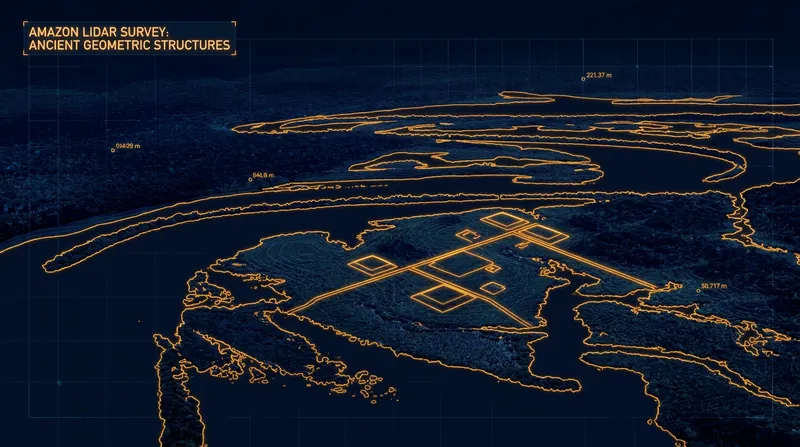
Lidar Reveals 2,500-Year-Old Urban Network in Amazon, Overturning Dogma of Primitive Early Societies
3 sources
Hominin Evolution
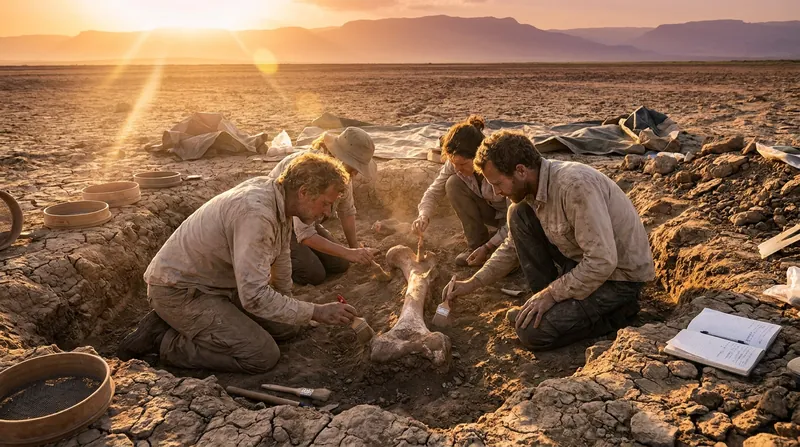
The Evidence Pack: How 2.8-Million-Year-Old Fossils Rewrite the Dawn of the Human Genus
4 sources
Human Evolution
Excavations on Sulawesi Reveal Archaic Hominin Lineage Coexisted with Homo sapiens for Millennia
2 sources
Maya Archaeology
Lost Maya City Found Deep in Mexican Jungle May Hold Keys to Civilization's Collapse
7 sources

Comments
Every angle. Every day.
Get Science stories with full source coverage and perspective breakdowns, free every day.