
Apple Unveils iOS 27 with Sweeping 'Siri AI' Overhaul and Deep System Customization
Apple's WWDC 2026 revealed a rebuilt iOS 27 featuring a conversational Siri, while Google's Android 17 beta introduced desktop-class multitasking and AI scam protection.
By Factlen Editorial Team
- Ecosystem Loyalists
- Values seamless integration, quality-of-life upgrades, and the long-awaited modernization of Siri.
- Industry Analysts
- Views the OS updates as a strategic repositioning in the AI arms race and a precursor to new hardware form factors.
- Platform Agnostics
- Compares Apple's AI features directly against Google's Android 17, focusing on utility, multitasking, and scam protection.
What's not represented
- · Independent repair shops assessing the hardware strain of always-on AI
- · Older device owners who may not receive the full suite of AI features
Why this matters
The operating systems powering billions of smartphones are fundamentally shifting from passive grids of apps to active digital assistants. These updates will change how you search for information, protect yourself from scams, and manage your daily digital life.
Key points
- Apple unveiled iOS 27 at WWDC 2026, featuring a completely rebuilt Siri interface.
- Siri now lives in the Dynamic Island and features a dedicated app with chat history.
- Visual Intelligence has been integrated directly into the primary Camera app.
- iOS 27 introduces independent volume controls and Extra Large home screen widgets.
- Landscape mode optimizations strongly hint at an upcoming foldable iPhone.
- Android 17's June beta counters with desktop-class windowing and AI scam call detection.
Apple wrapped up its Worldwide Developers Conference (WWDC) this week, unveiling iOS 27 and fundamentally rebuilding the iPhone's operating system around a proactive, conversational assistant. The update marks a significant shift in how users will interact with their devices, moving away from a static grid of applications toward an AI-driven interface that navigates tasks on the user's behalf.[1][4]
Two years after the initial debut of "Apple Intelligence," industry observers are calling iOS 27 a strategic do-over. The company has overhauled its underlying architecture to deliver on the original promise of a truly capable digital assistant, focusing heavily on performance, stability, and practical features that everyday consumers will actually use.[4]
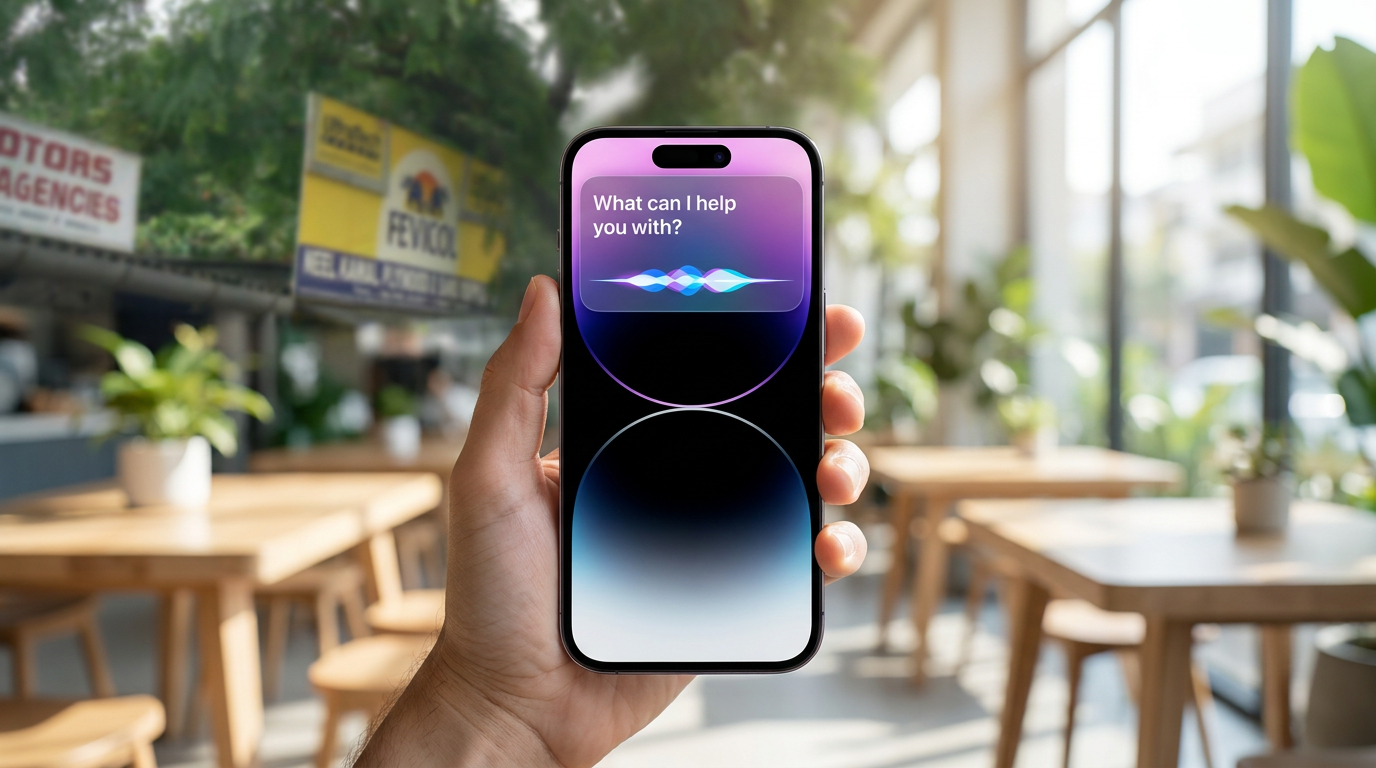
The most visible change is the complete redesign of Siri. Apple has retired the familiar full-screen border glow, relocating the assistant to the Dynamic Island. When summoned, Siri now drops down as a semi-transparent card with a glowing cursor, allowing users to maintain visual context of the app they were already using.[1][2]
For the first time, Siri also receives its own dedicated application. Users can now open a Siri app to view a history of their requests formatted as iMessage-style chat bubbles. This interface allows users to search past conversations, favorite specific answers for quick retrieval, and maintain context over multi-day interactions.[2]

To handle complex queries, the system relies on a hybrid processing model. Sensitive personal data is processed entirely on-device, while broader, knowledge-based requests can be routed to cloud models, including Google's Gemini. Addressing privacy concerns, Apple has included granular controls that allow users to set their Siri chat history to auto-delete after thirty days, one year, or never.[2][4]
Apple's Visual Intelligence feature is also getting a major usability upgrade. Previously mapped to a dedicated hardware button, the tool is now baked directly into the primary Camera app. By simply pointing their lens at a concert poster, a restaurant storefront, or a flyer, users can instantly pull up business hours, read reviews, or add events directly to their calendar.[1]
Apple's Visual Intelligence feature is also getting a major usability upgrade.
Beyond the headline artificial intelligence features, iOS 27 includes dozens of unannounced quality-of-life upgrades. Chief among them is a fix for a long-standing user grievance: the operating system finally allows users to independently manage the volume levels for their ringer, media playback, and alarms.[3]
Customization takes another step forward with the introduction of "Extra Large" widgets, which can now consume an entire home screen page for apps like Calendar and Weather. Meanwhile, the Find My app has been redesigned with new granular location-sharing tools, including a highly requested option that lets users hide their location for a single day without sending an alert to family members.[3]

Software changes are also fueling hardware speculation. Several core Apple applications, including Health, Find My, and Music, have been completely redesigned to fully support landscape orientation. Supply chain analysts view this widespread landscape optimization as the software foundation for the heavily rumored "iPhone Fold," which is expected to debut later this year.[2][3]
Continuing its strong track record in accessibility, Apple introduced automatic, on-device closed captions for all personal videos. Whether a video is recorded locally on the camera roll, received from a friend via Messages, or streamed online, the operating system can now generate accurate captions in real time without requiring an internet connection.[2]
The broader Apple ecosystem is receiving parallel upgrades. Mac users running the upcoming macOS 27 will gain the ability to resize iPhone mirroring windows, expanding them to iPad-like dimensions on their desktop. Additionally, the iPad and Apple Watch are receiving their own tailored versions of the new Siri and intelligence frameworks.[3][5]
As Apple rolls out iOS 27, the broader smartphone landscape is undergoing a simultaneous evolution. Google's Android 17, currently in its June beta phase, is introducing its own suite of transformative features. Android is pushing heavily into desktop-class productivity with "App Bubbles," a new windowing system that allows apps to float and resize on tablets and foldable devices.[7]

Google is also leveraging AI for aggressive consumer protection. The latest Android 17 drop includes a highly praised fake call detection system that analyzes incoming audio to thwart voice-cloning scams. If the system detects that a caller is using AI to spoof a trusted contact's voice, it immediately flashes a full-screen warning to the user.[6]
The race to build the ultimate agentic smartphone is now fully underway. Developer betas for iOS 27 are available immediately, with a public beta scheduled for July. The final software will ship to consumers this September, setting the stage for a new generation of devices that act less like passive tools and more like active digital copilots.[1][2][8]
How we got here
June 2024
Apple initially unveils 'Apple Intelligence', laying the groundwork for on-device AI.
June 8, 2026
Apple announces iOS 27 at WWDC, featuring a completely rebuilt Siri.
July 2026
Public beta for iOS 27 is scheduled to launch.
September 2026
Expected public release of iOS 27 alongside the iPhone 18 lineup.
Viewpoints in depth
Ecosystem Loyalists
Values seamless integration, quality-of-life upgrades, and the long-awaited modernization of Siri.
For users deeply entrenched in the Apple ecosystem, iOS 27 is less about generative AI novelty and more about removing daily friction. The introduction of independent volume controls, landscape mode for core apps, and visual intelligence baked directly into the camera are seen as massive usability wins. The Siri overhaul is viewed as the missing link that finally makes Apple's walled garden fully conversational and context-aware.
Privacy & Security Advocates
Focused on on-device processing, auto-delete features, and Android's scam detection.
Security experts are closely monitoring how both Apple and Google handle the massive data requirements of agentic AI. They highlight the importance of Apple's 30-day auto-delete option for Siri chats and the hybrid processing model that keeps sensitive data on the phone. Concurrently, they praise Android 17's proactive fake call detection as a necessary, aggressive defense against the alarming rise of malicious voice-cloning technology.
Industry Analysts
Views the OS updates as a strategic repositioning in the AI arms race and a precursor to new hardware.
Market watchers argue that iOS 27's widespread landscape optimizations are a clear software tell for an upcoming foldable iPhone, laying the groundwork before the hardware is even announced. Furthermore, they view the integration of Google's Gemini into Apple's ecosystem as a pragmatic admission that Apple needed outside partnerships to remain competitive in the rapidly advancing generative AI space.
What we don't know
- Whether the extensive landscape mode optimizations confirm the release of an 'iPhone Fold' this year.
- How heavily Apple will rely on Google's Gemini versus its own in-house foundational models for complex Siri queries.
- The exact battery life impact of running continuous on-device AI models on older iPhone hardware.
Key terms
- Dynamic Island
- The pill-shaped cutout at the top of modern iPhones that expands to show alerts, live activities, and now the Siri interface.
- Visual Intelligence
- An AI feature that analyzes the camera's viewfinder to provide real-time information about real-world objects, storefronts, and text.
- On-device processing
- Performing AI computations directly on the phone's hardware rather than sending data to cloud servers, ensuring better privacy and speed.
- App Bubbles
- A new multitasking feature in Android 17 that allows apps to run in floating, resizable windows similar to a desktop operating system.
Frequently asked
When will iOS 27 be available to the public?
The public beta will launch in July 2026, with the final release scheduled for September alongside the new iPhone models.
What is the biggest change to Siri?
Siri has been completely rebuilt with a new Dynamic Island interface, a dedicated app for chat history, and deeper integration with on-device AI and cloud models.
Does iOS 27 fix the volume control issue?
Yes. iOS 27 finally allows users to independently manage the volume for their ringer, media playback, and alarms.
What is Android 17 adding to compete?
Android 17 is introducing desktop-class 'App Bubbles' for multitasking and an AI-powered fake call detection system to block voice-cloning scams.
Sources
Source coverage
8 outlets
3 viewpoints surfaced








[1]MacworldEcosystem Loyalists
WWDC 2026 live blog: As the keynote happened
Read on Macworld →[2]MacRumorsIndustry Analysts
The sweeping Siri redesign coming in iOS 27
Read on MacRumors →[3]LifehackerEcosystem Loyalists
20 iOS 27 Features Apple Didn't Announce at WWDC
Read on Lifehacker →[4]BloombergIndustry Analysts
Apple Rebuilds Siri in Do-Over Moment for AI Strategy
Read on Bloomberg →[5]The StarPlatform Agnostics
Apple WWDC 2026 recap: What's coming to iPhone, Mac and other devices
Read on The Star →[6]SlashGearPlatform Agnostics
Android 17's June drop brings fake call detection and more
Read on SlashGear →[7]Android AuthorityPlatform Agnostics
Android 17 features: Everything confirmed so far
Read on Android Authority →[8]ForbesIndustry Analysts
Smartphones Double Down On AI-Native Capabilities In 2026
Read on Forbes →



Every angle. Every day.
Get technology stories with full source coverage and perspective breakdowns delivered to your inbox.