
Alpine Skiing's Biggest Stars Target Full World Cup Returns After Devastating Injuries
After enduring horrific crashes and grueling two-year rehabilitations, Petra Vlhova, Sofia Goggia, and Aleksander Aamodt Kilde are finally enjoying healthy summer training blocks ahead of the 2026-27 season.
By Ryder James

June is traditionally a quiet month for the FIS Alpine Ski World Cup, a time when athletes retreat to high-altitude European glaciers or travel to the Southern Hemisphere to build their physical base for the upcoming winter. But for three of the sport's biggest names, this particular summer represents a monumental, hard-fought victory.
For the first time in over two years, Petra Vlhova, Sofia Goggia, and Aleksander Aamodt Kilde are entering an off-season dictated by performance goals and technical refinement rather than grueling medical rehabilitation and survival. Their presence on the snow this month marks a turning point for a sport that has deeply missed their competitive fire.[1]
The synchronized return of these generational talents marks the end of a dark chapter for alpine skiing. In early 2024, the sport was rocked by a devastating wave of high-speed crashes that sidelined its brightest stars in rapid succession, leaving fans and competitors alike in shock.
Vlhova tore her anterior cruciate ligament and medial collateral ligament, Kilde suffered a horrific downhill crash that nearly cost him his life, and Goggia fractured her leg in multiple places during a routine training run. The sheer volume of catastrophic injuries sparked industry-wide conversations about race scheduling, course safety, and athlete fatigue, but for the skiers themselves, it simply meant the beginning of a long, agonizing road back to the start gate.[2][3]
Vlhova’s nightmare began in January 2024 on her home snow in Jasna, Slovakia. At the time of her crash, she was skiing at the absolute peak of her powers, sitting just 25 points behind her career-long rival, Mikaela Shiffrin, in the World Cup slalom standings.
The accident abruptly ended her season and required two separate surgeries to repair the extensive ligament and cartilage damage in her knee. What was initially projected to be a standard one-year recovery stretched into a grueling two-year ordeal, testing the Slovakian champion's legendary mental toughness as she watched her competitors race without her.[2]
After making a rushed, highly emotional return to the start gate for the 2026 Milano-Cortina Olympics—where she competed in the team combined event just to prove she could—Vlhova is finally enjoying a normal preparation cycle.
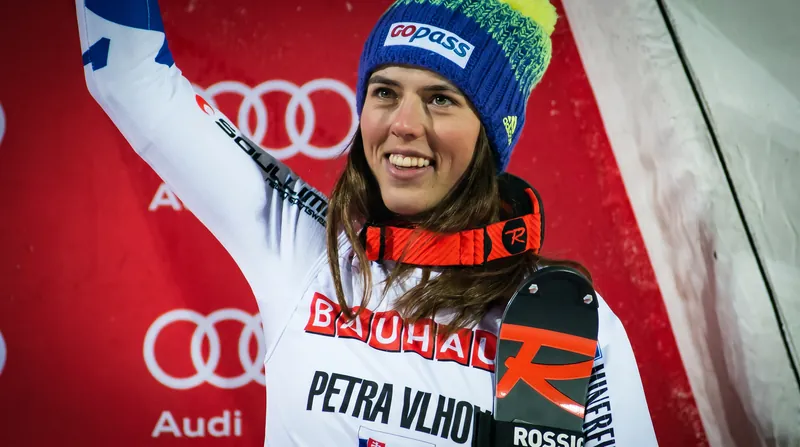
She spent her 31st birthday this June training on the Stelvio Glacier in Italy, posting updates from a sunny summer camp that would have seemed impossible just a year ago. By logging unrestricted, pain-free hours on the snow, Vlhova is signaling to the ski world that she is building toward a full, uncompromising return for the 2026-27 World Cup season.[2]
The women's technical circuit has sorely missed the Slovakian star's powerful, aggressive style. During her extended absence, Shiffrin continued to rewrite the sport's record books, dominating the slalom field with little consistent resistance from the rest of the pack.
Shiffrin herself admitted to missing the fierce battles that defined their rivalry, noting that the circuit simply wasn't the same without Vlhova pushing her to the limit. Vlhova’s healthy summer camp is the strongest indicator yet that the defining rivalry of modern women's slalom is poised to resume in full force this winter.[2]
Meanwhile, Italy’s undisputed 'Speed Queen,' Sofia Goggia, is also finalizing her summer training plans with a clean bill of health and a renewed sense of purpose. Goggia fractured her right tibia and tibial malleolus in a February 2024 giant slalom training crash, an injury so severe that she later admitted she was 'really close to quitting' the sport entirely. The emotional toll of crawling on the snow and feeling like her career was over weighed heavily on the four-time downhill champion.[1]
True to her fearless, uncompromising reputation, Goggia mounted a miraculous comeback. She returned to the snow and stunned the skiing world by winning a super-G race at Beaver Creek in December 2024, proving that her nerve and skill remained entirely intact. Now, with the surgical hardware finally removed from her leg and the intense pressure of the 2026 home Olympics behind her, she is preparing for a massive South American training block to refine her technique.[1]
Goggia and the Italian women’s speed team will head to Ushuaia, Argentina, in late August for a month-long camp, followed by further high-speed training in La Parva, Chile. For Goggia, the ability to log high-intensity downhill miles without the looming shadow of a surgical recovery is a luxury she has rarely enjoyed in her injury-plagued career. This uninterrupted block of southern hemisphere training is critical for building the aerodynamic stability and confidence required to dominate the World Cup speed circuit once again.[1]
On the men’s side, the World Cup circuit is eagerly awaiting the full, unrestricted return of Aleksander Aamodt Kilde. The Norwegian powerhouse suffered arguably the most terrifying injury of the 2024 season when he crashed violently into the safety netting at the classic Lauberhorn downhill in Wengen, Switzerland. The high-speed impact resulted in a deep laceration and severe nerve damage in his calf, while simultaneously tearing multiple ligaments in his shoulder, requiring immediate, complex surgical intervention just to stabilize his condition.[3]
Kilde’s recovery was uniquely harrowing, evolving from a standard sports rehabilitation into a genuine medical emergency. During a training camp in the United States, he contracted a severe case of sepsis—blood poisoning—that spread to his bones and ligaments. The infection forced him into emergency surgery in Colorado, with doctors warning him that it was a matter of life and death. The heavy doses of antibiotics required to fight the infection caused him to lose significant muscle mass and strength, setting his timeline back by months.[3]
Despite the massive setbacks, Kilde made a brief, courageous return to the World Cup in late 2025, but the physical toll of downhill racing proved too steep for his recovering body. He ultimately made the agonizing decision to withdraw from the 2026 Winter Olympics in Milan-Cortina, citing persistent back issues and the realization that his body simply needed more time to handle the extreme gravitational forces of the sport. It was a heartbreaking choice, but one rooted in long-term self-preservation.[3]
'At this point, I've accomplished my comeback,' Kilde noted upon his Olympic withdrawal, explaining that he had felt the pace again but needed far more repetition to safely push his limits on the world's most dangerous courses. By stepping back and playing the long game, Kilde is using this summer to rebuild his physical armor properly, prioritizing steady, incremental strength gains over rushed, emotionally driven milestones. His focus is now entirely on the 2026-27 World Cup season, where he hopes to finally race without restriction.[3]
Alpine skiing is an inherently brutal, unforgiving sport, where athletes routinely hurl themselves down icy, injected mountainsides at speeds exceeding 120 kilometers per hour. The immense physical forces exerted on knees, backs, and shoulders make catastrophic injuries an ever-present occupational hazard, and very few racers make it through a career without at least one major surgical intervention. The sheer trauma these athletes subject their bodies to is often hidden behind the glamour of the World Cup podium.[2][3]
The sheer trauma these athletes subject their bodies to is often hidden behind the glamour of the World Cup podium.
Yet, the resilience demonstrated by Vlhova, Goggia, and Kilde highlights the extraordinary mental fortitude required to survive and thrive at the absolute pinnacle of the sport. Their refusal to quietly retire, enduring endless months of isolation, painful physical therapy, and the lingering psychological trauma of their high-speed crashes, speaks to a competitive drive that transcends simple victory.
For these athletes, the grueling hours spent in the gym and the careful, measured return to the snow are fueled by a deep, intrinsic love for the mountains and an unshakable belief in their own capabilities.
As the Southern Hemisphere winter approaches and the European glaciers soften under the summer sun, the sight of these three champions packing their bags for training camps rather than hospital visits is the most uplifting news the ski community could ask for. They have survived the darkest periods of their professional lives and emerged with a renewed appreciation for their craft. When the FIS World Cup gates finally open again this fall, the starting list will, at long last, feel complete.[1]
The essentials
- Petra Vlhova is training on the Stelvio Glacier, targeting a full return for the 2026-27 World Cup season.
- Sofia Goggia has finalized a massive South American training block after recovering from a fractured tibia.
- Aleksander Aamodt Kilde is taking the summer to rebuild his strength after surviving sepsis and a horrific crash.
- The simultaneous return of these stars promises to reignite historic rivalries across the FIS World Cup circuit.
Timeline
Jan 2024
Aleksander Aamodt Kilde and Petra Vlhova suffer devastating crashes at Wengen and Jasna.
Feb 2024
Sofia Goggia fractures her tibia and malleolus in a training crash.
Dec 2024
Goggia makes a triumphant return to win the super-G at Beaver Creek.
Feb 2026
Vlhova and Kilde make emotional but physically limited appearances around the Milano-Cortina Olympics.
June 2026
All three stars enter the summer off-season fully focused on training rather than rehabilitation.
- The Athletes
- Focuses on the mental toll of being away from the sport, the isolation of rehab, and the shift from survival mode to performance mode.
- The Competitors
- Highlights how the absence of these stars altered the World Cup, and how their return restores the sport's premier battles.
- Medical & Coaching Staff
- Emphasizes the complex, non-linear nature of recovering from multi-ligament tears and the danger of rushing back to the snow.
Perspectives this story doesn't cover
- Equipment Manufacturers
- Younger Skiers
Sources
Source coverage
3 outlets
3 viewpoints surfaced



- [1]Sportal.euMedical & Coaching Staff
Sofia Goggia and the Italian women's team have finalized their preseason schedule
Read on Sportal.eu → - [2]SnowBrainsThe Competitors
Petra Vlhová Sets Sights on 2026 Olympics After Receiving Medical Clearance 2 Years Post Injury
Read on SnowBrains → - [3]Olympics.comThe Athletes
Aleksander Aamodt Kilde opens up about injury nightmare: 'Matter of life and death'
Read on Olympics.com →
More in Sports
See all →Injury
Alpine Injury Report: Schwarz and O'Brien Enter Southern Hemisphere Camps at Full Strength as Brignone Battles Lingering Pain
7 sources
Injury
Petra Vlhová Targets Full World Cup Return as Slovakian Star Completes First Healthy Summer Camp in Two Years
7 sources
Injury
Alpine Skiing Injury Report: Lauren Macuga Targets Chile Comeback as World Cup Stars Navigate Summer Rehab
7 sources
Injury
Italian Speed Specialist Elena Curtoni Overcomes Summer Ankle Injury for Final World Cup Season
6 sources

Comments
Every angle. Every day.
Get Sports stories with full source coverage and perspective breakdowns, free every day.