
Albuquerque Bans Cryptocurrency ATMs to Curb Consumer Fraud
The Albuquerque City Council has ordered the removal of all physical cryptocurrency kiosks within 45 days, citing their widespread use in financial scams targeting vulnerable residents.
By Nabil Faris

- Consumer Protection Advocates
- Argue that physical crypto kiosks are primarily conduits for financial exploitation.
- Crypto Kiosk Operators
- Maintain that outright bans unfairly punish legitimate businesses for third-party crimes.
- Digital Asset Proponents
- Support the distinction between physical kiosks and online cryptocurrency trading.
Perspectives this story doesn't cover
- Unbanked individuals who rely on cash-to-crypto services
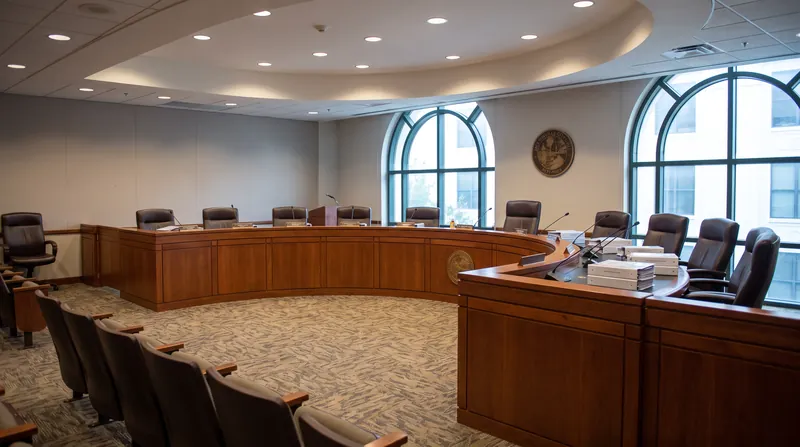
Inside the Albuquerque City Council chambers on Wednesday evening, lawmakers unanimously approved Ordinance O-26-49, effectively outlawing physical cryptocurrency kiosks across New Mexico's largest city. The measure gives operators and the retail stores hosting the machines exactly 45 days to unplug and physically remove them.[1][2]
The ban targets the hardware and the intermediaries that convert cash into digital tokens, not the digital assets themselves. Residents remain free to buy, hold, and trade Bitcoin, Ethereum, and other cryptocurrencies through online exchanges and personal digital wallets.[1][4]
District 1 Councilor Stephanie W. Telles, who co-sponsored the legislation with District 7 Councilor Tammy Fiebelkorn, presented a stark local metric to the council: an estimated 90% of cryptocurrency ATM transactions in Albuquerque are currently tied to fraud.[1][3]
"No one who legitimately exchanges or transmits virtual currency uses these kiosks, because the high fees make them a ripoff," Telles stated following the vote. She noted that the machines' promise of instant, anonymous, and irreversible transactions makes them a preferred settlement layer for organized crime and human traffickers.[1][3]
The local data mirrors a national surge in kiosk-facilitated financial crime. The Federal Bureau of Investigation's Internet Crime Complaint Center recorded nearly 11,000 complaints related to cryptocurrency vending machines in 2024, representing more than $246 million in consumer losses.[1]
The local data mirrors a national surge in kiosk-facilitated financial crime.
In New Mexico alone, residents reported $86.6 million in cryptocurrency-related fraud losses during 2025. Elderly victims bore the brunt of the exploitation, accounting for $55.8 million—roughly 53% of the state's total fraud losses for the year.
The ordinance also closes a potential loophole by prohibiting "cashier-facilitated" transactions, where a retail clerk collects cash over the counter on behalf of a virtual currency provider. Property owners, landlords, and retailers who continue to host the machines after the 45-day window face cumulative daily fines and the potential revocation of their business licenses.[1][4]
Albuquerque's decision accelerates a broader municipal and state-level crackdown on physical crypto infrastructure. Indiana enacted a statewide ban on the machines in March 2026, followed by Tennessee in July and Minnesota in August.[5]
The tightening regulatory environment has already reshaped the industry. Bitcoin Depot, formerly one of the largest kiosk operators in North America, filed for bankruptcy protection in May 2026 and subsequently removed approximately 9,700 machines from operation.[4]
For Albuquerque residents, the immediate takeaway is clear: any remaining physical crypto kiosks in local convenience stores or gas stations must be removed by late October. The city government will now begin notifying known operators and retail hosts of their impending deadline to clear the hardware from the municipality.[1][5]
The stakes
Physical crypto kiosks have become a primary tool for scammers to extract irreversible cash payments from victims. Removing these machines cuts off a major local avenue for financial exploitation without restricting residents' ability to trade digital assets online.
The essentials
- Albuquerque passed an ordinance banning physical cryptocurrency ATMs and cashier-facilitated crypto transactions.
- Operators and retail hosts have 45 days to physically remove the machines from the city.
- City officials estimate that 90% of local crypto ATM transactions are tied to fraud and scams.
- The ban does not restrict residents from buying, holding, or transferring cryptocurrency through online exchanges.
Sources
Source coverage
5 outlets
3 viewpoints surfaced





- [1]City of AlbuquerqueConsumer Protection Advocates
Council Protects Consumers from Crypto Scams by Passing Virtual Currency Ordinance
Read on City of Albuquerque → - [2]KOB4Consumer Protection Advocates
Crypto ATMs are now banned in Albuquerque
Read on KOB4 → - [3]ATM MarketplaceCrypto Kiosk Operators
Albuquerque bans crypto ATMs
Read on ATM Marketplace → - [4]ForkLogDigital Asset Proponents
Albuquerque Bans Crypto ATMs Due to Fraud Concerns
Read on ForkLog → - [5]CryptoRankDigital Asset Proponents
Albuquerque Bans Crypto ATMs, Gives Operators 45 Days to Remove Machines
Read on CryptoRank →
Comments

More in Community
See all →Housing Affordability
The Ground Lease and Resale Formula That Keep Community Land Trust Housing Permanently Affordable
5 sources

Affordable Housing
Jacksonville City Council Member Seeks to Restore $4.9M Stripped From Affordable Housing Trust Fund
3 sources
Quadratic Voting
How Quadratic Voting Replaces Majority Rule in Community Budgets
5 sources

Infrastructure Policy
Chicago Mayor Calls for Moratorium on New Data Center Construction Over Energy, Water Use
8 sources

Every angle. Every day.
Get Community stories with full source coverage and perspective breakdowns delivered to your inbox.