
2026 Equestrian Injury Report: Ward Nears Return as FEI and USEF Implement New Recovery Protocols
As the summer equestrian season accelerates, top competitors like McLain Ward and Marcus Orlob's mount Jane are navigating recovery timelines, while new return-to-sport protocols reshape how the industry handles injuries.
By Omar Haddad

As the global equestrian circuit shifts into its busy summer season in June 2026, several of the sport's top competitors are navigating the delicate process of returning from injury. For fans and analysts, tracking the health of elite riders and their equine partners is a crucial metric for predicting outcomes at upcoming major events.
However, this season's injury report is defined not just by who is sidelined, but by a profound cultural shift in how the sport handles recovery. Across both jumping and dressage, the traditional "ride through the pain" mentality is rapidly being replaced by structured, data-driven rehabilitation protocols. High-profile athletes are taking the time needed to heal properly, reflecting a broader industry push spearheaded by governing bodies to prioritize long-term welfare over immediate competitive glory.[4]
The most notable absence in the jumping arena this spring has been USA's McLain Ward. The decorated Olympian and former World Cup champion was forced to halt his early-season momentum after suffering a minor but limiting injury. During a jump-off at the Winter Equestrian Festival, Ward took a fall from his mount, Snapchat, resulting in a broken small bone in his hand.
While hand injuries might have been taped up and ignored in previous decades, the precision required at the elite five-star level makes full mobility non-negotiable. The fracture immediately disrupted Ward's spring campaign, forcing him to carefully evaluate his timeline for a safe and effective return to the saddle.[1][2]
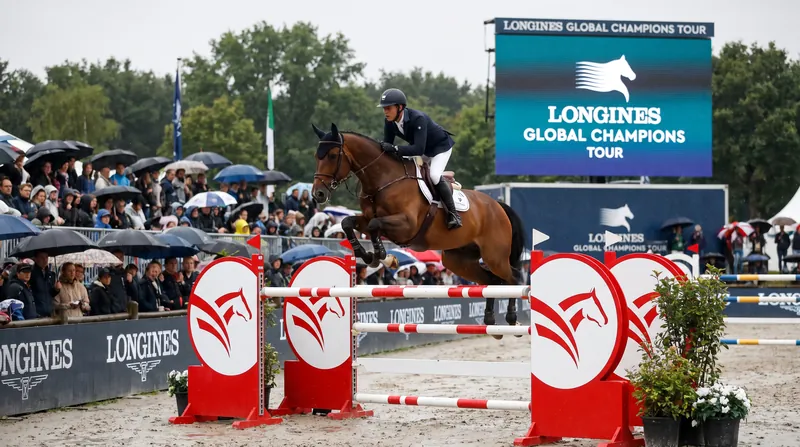
Ward's hand injury had immediate ripple effects across the U.S. team's roster. He was forced to withdraw from the Nations Cup in Ocala, and more significantly, he had to pull his top horse, Jordan Molga M, from the Longines FEI Jumping World Cup Final hosted in Fort Worth, Texas, this past April.
Ward, who famously swept all four rounds to win the 2017 World Cup Final in Omaha aboard HH Azur, was considered a heavy favorite. His withdrawal underscored the unpredictable nature of equestrian sport, where a single misstep can alter the trajectory of an entire season. However, Ward is currently progressing well through his rehabilitation and is widely expected to return to top-flight competition as the summer European circuit peaks.[1][2]
While Ward's absence left a significant void in Fort Worth, it provided a crucial opportunity for the next generation of American talent. Lillie Keenan, who had made her World Cup Final debut in 2025 with an impressive 11th-place finish, was tapped to fill Ward's spot.
Riding the 12-year-old British Sport Horse stallion Kick On, Keenan stepped into the high-pressure environment of Dickies Arena. The seamless substitution highlighted the depth of the U.S. bench, but it also reinforced the importance of having healthy, fully prepared combinations ready to deploy when injuries inevitably strike the top tier of the ranking list.[1][2]
On the dressage side of the sport, the U.S. team has been closely monitoring the recovery of Jane, the highly touted 12-year-old Grand Prix mare ridden by Marcus Orlob. Owned by Alice Tarjan, Jane is widely considered a prospect for the top tier of international dressage and a strong candidate for the 2028 Los Angeles Olympics.
The mare started 2026 in dominant form, securing a victory at the Wellington CDI5* in January. However, shortly after the win, Jane sustained an injury in her paddock during a scheduled break. The setback immediately paused her training regimen, forcing Orlob and his veterinary team to implement a strict, conservative recovery plan.[3]
The timing of Jane's paddock injury presented a significant logistical challenge for her 2026 campaign. Veterinary advice mandated that the mare should not resume working until early May, leaving her less than two weeks to prepare for the U.S. National Grand Prix Championship in Ocala.
Consequently, the team made the difficult but necessary decision to skip the May championships entirely, prioritizing the horse's long-term soundness over the immediate qualification requirements. Now back in light work, Jane's camp is looking toward exceptional circumstance provisions and late-summer European qualifiers, hoping to build enough fitness to make the short-list for the World Championships in Aachen this August.[3]
The careful, patient handling of injuries to stars like Ward and Jane coincides with a massive regulatory push to formalize return-to-sport protocols. For human athletes, the United States Equestrian Federation (USEF) has been advancing its new "Return to Sport Concussion Strategy" under rule proposal Tracking 065-24.
This sweeping mandate requires that any participant who falls at a competition must be thoroughly examined by qualified medical personnel—such as a physician or nurse practitioner—before they are permitted to remount a horse. The rule is designed to eliminate the guesswork and peer pressure that historically led riders to remount while suffering from undiagnosed brain injuries.
This focus on human neurological recovery is heavily supported by recent data from across the Atlantic. A 2026 interview study supported by British Equestrian and Rider Minds revealed that female riders frequently downplay the severity of concussions, often attributing cognitive symptoms like mental fatigue, low mood, and sensory overload to general stress rather than traumatic brain injury.
The study highlighted instances where riders continued to compete for years with unhealed concussions, unknowingly prolonging their recovery times. By implementing strict, medically supervised return-to-sport guidelines, federations are actively working to dismantle the toxic "man up" culture that has long pervaded equestrian sports.
Equine recovery is undergoing a similarly rigorous, data-driven transformation. At the 2026 FEI Sports Forum in Lausanne, veterinary directors and researchers presented compelling evidence on how large-scale datasets are reshaping welfare policies. Rather than applying blanket rules, the FEI is now utilizing risk profiling to tailor mandatory rest periods for horses recovering from exertion or minor injuries.
In disciplines like endurance, this targeted intervention has already led to a measurable reduction in catastrophic injuries. The data proves that extending and customizing recovery timelines based on specific biological and environmental factors significantly improves a horse's chances of returning to peak performance safely.[4]
The integration of predictive modeling is also beginning to influence how veterinary teams approach equine rehabilitation. By analyzing tens of millions of data points—ranging from surface composition to limb load—officials can now provide highly specific guidance on when a horse is truly ready to return to the competition ring.
The integration of predictive modeling is also beginning to influence how veterinary teams approach equine rehabilitation.
This scientific approach removes the emotional pressure from owners and riders who might otherwise rush a horse back into training. For elite mounts like Jane, having access to advanced diagnostic tools ensures that every step of her comeback is monitored, minimizing the risk of re-injury as she ramps up her workload for the European tour.[3][4]
Ultimately, the 2026 season is serving as a powerful case study in the evolution of equestrian sports medicine. The temporary absences of champions like McLain Ward and promising horses like Jane are no longer viewed simply as bad luck, but as necessary pauses managed by expert medical and veterinary teams.
Key points
- McLain Ward is recovering from a broken bone in his hand sustained during a fall at the Winter Equestrian Festival.
- Ward's injury forced him to withdraw from the 2026 FEI Jumping World Cup Final, allowing Lillie Keenan to take his place.
- U.S. Dressage mare Jane is back in light work after a paddock injury forced her to miss the National Grand Prix Championship.
- The USEF is advancing a new Return to Sport Concussion Strategy requiring medical clearance for riders after a fall.
- The FEI is utilizing large-scale datasets to implement tailored, mandatory rest periods to prevent catastrophic equine injuries.
How we got here
January 2026
Marcus Orlob and Jane win at the Wellington CDI5*, but Jane subsequently suffers a paddock injury.
Late Winter 2026
McLain Ward breaks a bone in his hand after a fall from Snapchat at the Winter Equestrian Festival.
April 2026
Ward officially withdraws from the Longines FEI Jumping World Cup Final in Fort Worth; Lillie Keenan takes his place.
May 2026
Jane is cleared by veterinary staff to resume light work; USEF advances its Return to Sport Concussion Strategy.
June 2026
Ward and Orlob continue their rehabilitation programs as the summer European circuit begins.
- Rider Safety Advocates
- Argue that strict, mandatory medical evaluations are necessary to protect riders from the long-term dangers of concussions.
- Equine Welfare Officials
- Focus on using large-scale data to implement tailored rest periods that prevent catastrophic injuries in horses.
- Competitive Teams & Owners
- Balance the drive to qualify for major championships with the necessity of conservative, patient rehabilitation timelines.
Perspectives this story doesn't cover
- Grassroots and amateur riders who may lack access to elite veterinary and medical care
Sources
Source coverage
4 outlets
3 viewpoints surfaced




- [1]Horse NetworkCompetitive Teams & Owners
McLain Ward & Charlotte Dujardin Withdraw from 2026 World Cup Final
Read on Horse Network → - [2]The Horse of Delaware ValleyCompetitive Teams & Owners
Lillie Keenan on Kick On will replace McLain Ward
Read on The Horse of Delaware Valley → - [3]Dressage-NewsCompetitive Teams & Owners
Jane Sidelined With Injury, Likely Out of Grand Prix Championships
Read on Dressage-News → - [4]EquiJournalistsEquine Welfare Officials
FEI Sports Forum 2026: Data driven welfare and Safety
Read on EquiJournalists →
More in Sports
See all →Equestrian Eventing
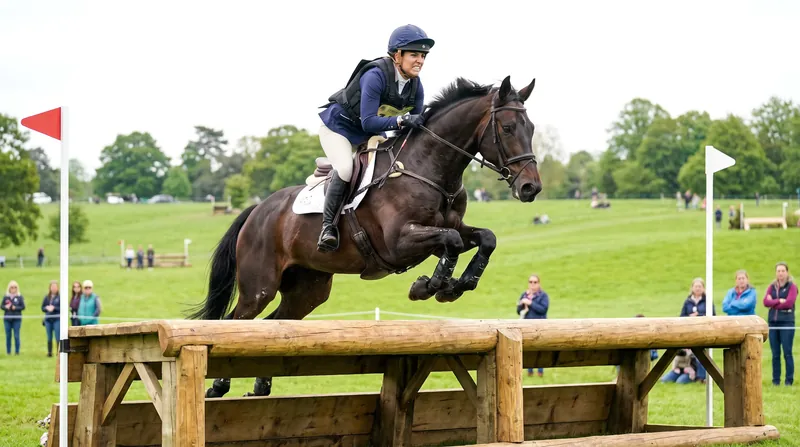
U.S. Rider Caroline Pamukcu Secures Podium Finish at Defender Burghley Horse Trials
4 sources
Standings
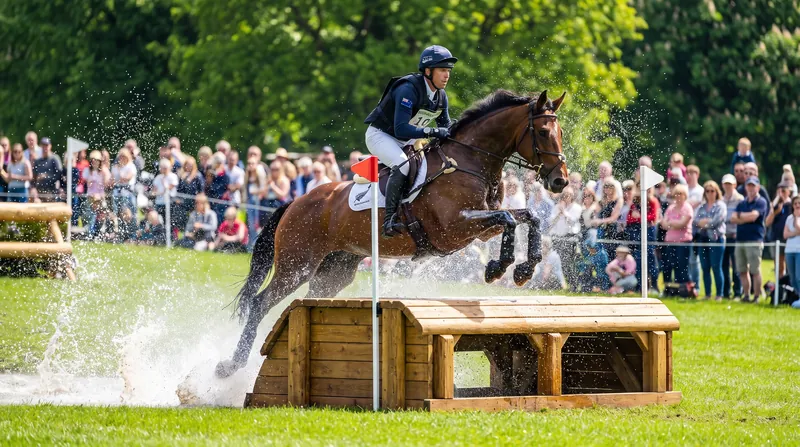
Tim Price Reclaims World No. 1 in FEI Eventing Rankings as Aachen World Championships Loom
4 sources
Standings
France Holds Eventing Nations Cup Lead as New Zero-Score Final Format Shakes Up Strategy
6 sources
Standings
Riesenbeck International Seizes Global Champions League Lead as Basel Cosmopolitans Surge
6 sources
Comments
Every angle. Every day.
Get Sports stories with full source coverage and perspective breakdowns, free every day.