
Women's Sports Revenues Projected to Surpass $3 Billion in 2026 Amid Historic Media Deals
Global revenues for elite women's sports are forecast to hit a record $3 billion in 2026, driven by massive new broadcast rights and soaring franchise valuations. The milestone marks a 340% increase since 2022, signaling the industry's transition from a proof-of-concept phase to a maturing, high-scale market.
By Xia Wu

The financial landscape of professional sports is undergoing a seismic realignment. According to a definitive 2026 forecast by Deloitte, global revenues for elite women's sports are projected to surpass $3 billion this year.
This milestone represents a staggering 340 percent increase since 2022, blowing past previous estimates and cementing the sector as one of the fastest-growing asset classes in global entertainment. The narrative has definitively shifted; stakeholders are no longer trying to prove the fundamental value of women's sports, but are instead racing to build the infrastructure required to capture its massive scale.[4]
The acceleration has caught even optimistic analysts off guard. Just a year ago, industry experts projected that 2025 revenues would hover around $2.35 billion. Instead, the market easily cleared $2.4 billion, driven by a surge in North American investments and a rapidly expanding global fan base. This growth is not an anomaly or a temporary spike tied to a single mega-event. It is the result of a structural maturation across leagues, sponsors, and media partners who are now underwriting long-term, multi-cycle success.[1]
To understand how this $3 billion ecosystem functions, it helps to break down the core mechanisms of sports monetization. Revenue in elite sports is traditionally divided into three pillars: commercial, matchday, and broadcast. Commercial revenue—which includes corporate sponsorships, brand partnerships, and merchandise sales—remains the largest engine for women's sports. In 2026, commercial income is expected to total $1.4 billion, capturing a 45 percent share of the global pie as blue-chip financial and consumer brands flock to the space.[4]
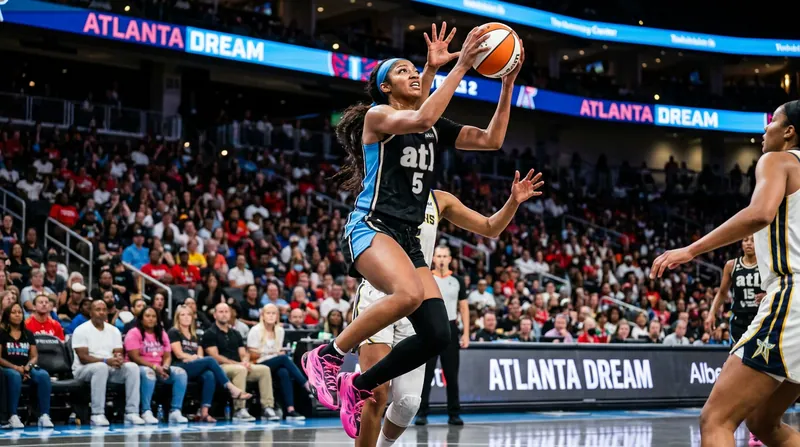
The influx of corporate money is highly visible on the court and the pitch. The WNBA, for instance, tipped off its recent seasons with a record 45 corporate sponsors, more than doubling its sponsorship revenue compared to the start of the decade. Brands are drawn to the highly engaged, purpose-driven demographics of women's sports fans, who data shows are significantly more likely to purchase from companies that sponsor their favorite leagues. This dynamic has transformed jersey patches and stadium naming rights into premium, highly contested inventory.[2][3]
The second pillar, matchday revenue, captures the live, in-stadium experience. This segment is projected to reach $911 million in 2026, accounting for 30 percent of total revenue. This climb is driven by a combination of higher venue utilization, record-breaking attendance figures, and increased ticket yields. Leagues like the NWSL and WNBA have seen year-over-year attendance spikes exceeding 40 percent, prompting teams to move games to larger NBA-sized arenas to meet surging demand.[3][4]
However, it is the third pillar—broadcast revenue—that is fundamentally rewriting the economics of women's sports. Media rights are projected to generate $765 million globally in 2026. Historically, women's broadcast rights were often bundled as "throw-ins" alongside men's properties, obscuring their true market value. Today, leagues are unbundling these rights, taking them to the open market as independent entities, and sparking fierce bidding wars among traditional networks and streaming giants.[4]
The most glaring example of this broadcast revolution is the WNBA's historic 11-year, $3.1 billion media rights deal, which officially takes effect in 2026. The agreement consolidates a broad portfolio of partners, including Disney, NBCUniversal, and Amazon Prime Video, skyrocketing the league's annual broadcast revenue to $281 million. That figure is nearly 6.5 times the value of the league's previous media contract, outpacing the growth rate of equivalent men's renewals and providing a massive injection of capital into the league's salary cap and marketing budgets.[3]
This media strategy brings women's sports directly into the modern "streaming wars." While fragmenting games across multiple apps and cable channels can create a discovery hurdle for casual viewers, league executives view it as a necessary byproduct of a highly competitive market. The influx of capital from tech and media giants allows for enhanced "shoulder programming"—the pre-game shows, documentaries, and prime-time marketing that build narrative arcs around star athletes and keep fans engaged between live events.
As revenue streams multiply, franchise valuations are experiencing an unprecedented boom. Sportico recently valued the WNBA's Golden State Valkyries at a staggering $850 million following their record-breaking debut season. In the NWSL, the enterprise value of teams has similarly skyrocketed; Angel City FC set a global benchmark when its controlling stake was sold at a $250 million valuation, a figure that analysts believe is already climbing higher. These numbers represent a 50-fold increase in expansion fees and team valuations compared to just five years ago.[2]
Despite these eye-popping figures, institutional investors argue that women's sports remain vastly undervalued. A significant valuation gap persists when comparing women's franchises to their male counterparts. For example, while WNBA playoff viewership now approaches levels comparable to the NBA's regular season, the average NBA franchise is worth roughly $5.5 billion, compared to the WNBA's rising but comparatively modest average of $269 million.[3]
Financial analysts view this mismatch between fan attention and enterprise value as a rare arbitrage opportunity. Investment platforms and private equity firms are increasingly underwriting the upside, projecting that well-executed investments in women's sports could deliver returns of two to five times their initial capital over the next decade. This potential for exponential growth is drawing ultra-high-net-worth individuals and institutional capital that previously focused exclusively on established men's leagues.[3]
Geographically, North America remains the epicenter of this economic boom, generating 54 percent of the global revenue. However, emerging regions in Europe and the Asia-Pacific are rapidly gaining ground, establishing new benchmarks for commercial success. Across all regions, soccer and basketball are the dominant forces, collectively representing 70 percent of total global revenue, with each sport accounting for roughly a 35 percent share.[4]
Yet, the global picture is not uniformly rosy, and a stark reality check exists outside the top-tier North American leagues. A recent report by FIFA highlighted the financial challenges that many women's soccer clubs still face worldwide. Across 669 clubs in 101 territories, the average global salary for players remains strikingly low, and 67 percent of top-tier international clubs still operate at a year-over-year loss.[1]
FIFA's findings underscore that while the elite tip of the spear is thriving, much of the global women's sports ecosystem remains in a "start-up business" phase of development. In many international leagues, matchday revenues remain depressed due to lower average attendances and a lack of season-ticket culture. This disparity highlights the critical need for sustained, localized investment to ensure that the billion-dollar boom at the top trickles down to grassroots and developing professional leagues.[1]
Looking ahead, the next phase of growth will depend heavily on infrastructure. The organic expansion of live audiences is driving the need for dedicated, purpose-built facilities, such as the NWSL's CPKC Stadium in Kansas City, which allows teams to control their own matchday revenues, concessions, and premium seating. As leagues mature, these hard assets will become just as crucial to franchise valuations as broadcast rights and corporate sponsorships.[2]
The 2026 financial milestones confirm that the era of treating women's sports as a philanthropic endeavor or a loss-leader is officially over. Armed with billion-dollar media pacts, blue-chip corporate backing, and a fiercely loyal global fan base, elite women's sports have firmly established themselves as a premium, high-growth asset class. The challenge for the next decade is no longer generating demand, but building the structural capacity to house it.[4]
Key points
- Global revenues for elite women's sports are projected to hit $3 billion in 2026.
- Commercial sponsorships remain the largest revenue driver at $1.4 billion.
- The WNBA's new $3.1 billion media rights deal multiplies its annual broadcast revenue by 6.5 times.
- Franchise valuations are soaring, with top teams reaching enterprise values up to $850 million.
- Despite top-tier success, many international clubs still operate at a loss, requiring sustained investment.
How we got here
2022
Global women's elite sports revenue sits at a baseline that will soon quadruple over the next four years.
2023
The NWSL signs a four-year, $240 million media rights deal, signaling a new era of broadcast value.
July 2024
The WNBA secures the foundational pieces of a landmark $3.1 billion media rights agreement.
March 2025
Deloitte reports that 2024 revenues shattered expectations, hitting $1.88 billion globally.
June 2026
The WNBA's new media rights deal officially takes effect, multiplying the league's annual broadcast revenue by 6.5 times.
- Institutional Investors
- Focus on the valuation gap and the potential for exponential returns.
- League Executives & Analysts
- Prioritize unbundling rights, scaling infrastructure, and achieving long-term sustainability.
- Media & Broadcasters
- Leverage live sports to win the streaming wars and capture highly engaged audiences.
- Global Realists
- Highlight the financial disparities and operating losses outside of top-tier North American leagues.
Perspectives this story doesn't cover
- Grassroots athletes in developing nations
- Independent merchandising brands
Sources
Source coverage
4 outlets
4 viewpoints surfaced




- [1]The GuardianGlobal Realists
UK waters hit with extreme heatwave as global sea temperatures reach record levels
Read on The Guardian → - [2]Sports Business JournalLeague Executives & Analysts
Women's sports speed reads: Valuations and Expansion
Read on Sports Business Journal → - [3]McKinsey & CompanyInstitutional Investors
The state of women's sports in 2025: Valuations and viewership
Read on McKinsey & Company → - [4]Ministry of SportLeague Executives & Analysts
Deloitte Forecast: Global Women's Elite Sports Revenue to Hit US$3 Billion in 2026
Read on Ministry of Sport →

More in Sports
See all →Sports Finance
Premier League Precedent: Everton Ordered to Pay Burnley £26M in Damages for Financial Rule Breach
4 sources

NCAA Policy
How the NCAA's Proposed 2027 Calendar Overhaul Will Reshape College Football
4 sources

WNBA Boom
Angel Reese's Rebounding Record Highlights a $5.5 Billion WNBA Business Boom
6 sources
Football Governance
Swiss Football Association Withdraws Support for Gianni Infantino's 2027 FIFA Re-Election Bid
9 sources

Comments
Every angle. Every day.
Get Sports stories with full source coverage and perspective breakdowns, free every day.