
Wearable Tech Pivots to Clinical Validation and FDA Clearance for Healthcare Integration
As the FDA clarifies the boundary between wellness gadgets and medical devices, smartwatch and fitness ring manufacturers are aggressively pursuing clinical validation to integrate directly into patient care.

The era of the simple step-counter is rapidly closing. In 2026, the wearable technology industry is undergoing a massive transformation, pivoting away from generic fitness tracking and toward rigorous clinical validation.
Driven by consumer demand for actionable health insights and a shifting regulatory landscape, manufacturers are increasingly seeking formal clearance from the U.S. Food and Drug Administration (FDA) to market their devices as legitimate medical tools. This shift represents a fundamental maturation of the market, moving wearables from the realm of lifestyle accessories into the highly regulated sphere of clinical healthcare.[3]
The catalyst for this industry-wide pivot was a January 2026 update to the FDA's guidance on 'General Wellness: Policy for Low Risk Devices' and 'Clinical Decision Support Software'. The agency clarified the boundary between consumer gadgets and regulated medical devices, stating that products estimating metrics like blood pressure or heart rate variability could remain in the unregulated wellness category—provided they do not make specific disease-related claims.
This regulatory clarification provided much-needed guardrails for an industry that had been operating in a gray area, allowing companies to understand exactly what level of evidence is required for different types of health features.[1][2]
This regulatory clarification followed a period of tension between tech companies and regulators. In 2025, the FDA issued a high-profile warning letter to a major consumer wearable brand, stating that its blood pressure insights had crossed the line from a wellness feature into a medical device.
The 2026 guidance was designed to provide a clearer framework, allowing companies to innovate while maintaining strict patient safety standards. By drawing a hard line based on the intended use and marketing claims of a device, the FDA effectively forced manufacturers to choose between remaining a general wellness product or investing in the clinical trials necessary for medical clearance.
The moment a device claims to diagnose, treat, or mitigate a specific medical condition, it crosses that regulatory threshold. For companies looking to differentiate their products in an increasingly saturated market, crossing that line has become a strategic imperative rather than a burden.
Achieving FDA 510(k) clearance or De Novo classification serves as a powerful stamp of clinical legitimacy, proving that a device's outputs are accurate enough to inform actual medical decisions. This validation is crucial not just for consumer trust, but for convincing healthcare systems to integrate these devices into their standard workflows.
Tech giants have aggressively pursued this medical-grade tier, transforming everyday accessories into sophisticated diagnostic tools. In recent years, Apple, Samsung, and Google have all secured FDA clearances for advanced smartwatch features that go far beyond counting calories. These include electrocardiogram (ECG) capabilities for detecting atrial fibrillation, algorithms for identifying moderate to severe sleep apnea, and even loss-of-pulse detection systems designed to automatically alert emergency services during cardiac events. These clearances demonstrate that consumer hardware has reached a level of precision previously reserved for bulky, expensive hospital equipment.[3]
The underlying mechanism for these breakthroughs relies on sophisticated, miniaturized sensors. Technologies such as photoplethysmography (PPG), which uses light to measure blood flow and oxygen saturation, and miniaturized electrodes for single-lead ECG readings, form the hardware foundation. To earn FDA clearance, manufacturers must conduct rigorous clinical trials demonstrating that these sensors perform with substantial equivalence to traditional, hospital-grade predicate devices across diverse patient populations. This involves testing the algorithms against gold-standard clinical references to ensure they do not generate dangerous false positives or miss critical health events.[4]
As a result of these rigorous requirements, the market is now visibly bifurcating into two distinct categories. While consumer wellness wearables still hold the larger overall market share by volume, clinical-grade wearable medical devices are the fastest-growing segment, expanding at roughly 25 percent annually. These devices are no longer just lifestyle accessories; they are validated instruments capable of continuous physiological monitoring. This divergence means consumers must now actively choose between a device designed for general fitness motivation and one engineered for clinical disease management.[4]
Beyond the hardware itself, the ultimate goal of this clinical pivot is seamless healthcare integration. Validated wearable data is increasingly flowing directly into Electronic Health Records (EHRs) through standardized protocols like FHIR (Fast Healthcare Interoperability Resources). This interoperability allows physicians to monitor patients remotely, transforming chronic disease management from a series of episodic clinic visits into continuous, proactive care. When a patient's smartwatch detects an irregular heart rhythm, that data can now securely alert their cardiologist in real-time, enabling interventions before a catastrophic event occurs.
This integration is also being heavily driven by new financial incentives within the healthcare system. Healthcare providers can now utilize specific Current Procedural Terminology (CPT) codes for Remote Patient Monitoring (RPM), allowing them to be financially reimbursed for the time spent reviewing data generated by FDA-cleared wearables. This economic alignment is accelerating the adoption of wearable technology within traditional clinical workflows, as doctors are now compensated for the proactive, data-driven care that these devices enable. Without this reimbursement structure, the widespread clinical adoption of wearables would likely stall.
For healthcare providers, the distinction between a wellness gadget and a cleared medical device is absolutely critical. While consumer trackers are excellent for encouraging physical activity and general well-being, their data is often not robust or reliable enough for clinical use. FDA-cleared devices, by contrast, provide a validated evidentiary floor, giving doctors the confidence to adjust medications, order further diagnostic testing, or alter treatment plans based on wearable data. This trust is the cornerstone of integrating patient-generated health data into formal medical practice.[4]
Despite the rapid technological and regulatory progress, significant challenges remain on the horizon. The influx of continuous, real-time health data can easily overwhelm clinical workflows if not properly filtered, leading to severe alert fatigue among physicians. Furthermore, experts caution that while wearables are powerful screening tools, they are not replacements for comprehensive clinical evaluation. The risk of false positives remains a concern, as inaccurate alerts can cause unnecessary patient anxiety and drive up healthcare costs through unwarranted follow-up testing.[4]
Looking ahead, the boundary between consumer electronics and medical equipment will continue to blur as the technology matures. As sensors become more advanced, algorithms more precise, and regulatory pathways more clearly defined, the smartwatch on your wrist is poised to become one of the most important diagnostic tools in modern medicine. By bridging the gap between daily self-care and professional healthcare, these clinically validated wearables are fundamentally reshaping how we monitor, manage, and ultimately improve human health.[3]
Key points
- Wearable technology companies are increasingly seeking FDA clearance to market their devices as validated medical tools.
- A January 2026 FDA guidance update clarified the boundary between general wellness gadgets and regulated medical devices.
- Tech giants like Apple, Samsung, and Google have secured clearances for features detecting sleep apnea, atrial fibrillation, and loss of pulse.
- Validated wearable data is now being integrated into Electronic Health Records (EHRs) for remote patient monitoring.
Unanswered questions
- How healthcare systems will effectively manage and filter the massive influx of continuous patient data without causing physician burnout.
- Whether health insurance companies will universally cover the costs of consumer wearables prescribed for remote patient monitoring.
- How long-term data privacy will be maintained as consumer tech companies become deeply embedded in clinical healthcare networks.
How we got here
2018
Apple receives the first FDA clearance for a smartwatch ECG feature, marking a turning point for consumer wearables.
2022
The FDA issues a rule enabling over-the-counter hearing aids, paving the way for advanced audio wearables.
2025
The FDA issues a warning letter to a major wearable brand for crossing the line into medical device territory without clearance.
Jan 2026
The FDA updates its guidance on low-risk wellness devices, clarifying the regulatory boundaries for health tech.
Feb 2026
Google receives groundbreaking FDA clearance for a loss-of-pulse detection feature on its Pixel Watch.
- Medical Device Manufacturers
- Argues that strict FDA clearance is the only way to ensure patient safety and data reliability.
- Consumer Tech Companies
- Focuses on democratizing health data and providing early warning systems for chronic conditions.
- Healthcare Providers
- Prioritizes data interoperability and the prevention of alert fatigue in clinical workflows.
- Regulatory Experts
- Emphasizes the need for clear guidelines, patient safety, and rigorous post-market surveillance.
Perspectives this story doesn't cover
- Patient Privacy Advocates
- Health Insurance Payers
Sources
Source coverage
4 outlets
4 viewpoints surfaced




- [1]Fierce HealthcareConsumer Tech Companies
FDA paves way for more consumer wearables to hit the market, eases regulation of AI-enabled devices
Read on Fierce Healthcare → - [2]MD+DIMedical Device Manufacturers
Navigating the Gray Area: FDA's 2026 Guidance on Wearables and Wellness Devices
Read on MD+DI → - [3]Counterpoint ResearchConsumer Tech Companies
The Regulatory Journey of Smartwatches: From Step Counters to a Health Companion
Read on Counterpoint Research → - [4]ForbesRegulatory Experts
Wearable Tech And BYOD: Benefits And Risks In Healthcare Technology
Read on Forbes →
More in Fitness
See all →Wearable Tech
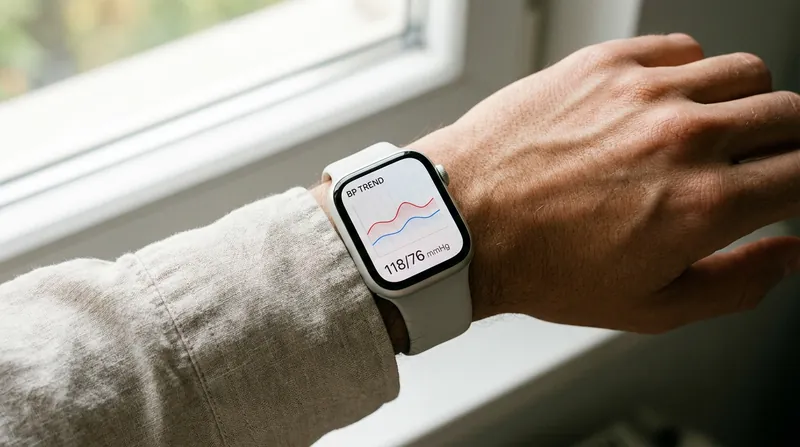
FDA Guidance Opens Door for Wearables to Track Blood Pressure Without Medical Device Clearance
5 sources
Wearable Tech
Garmin Releases System Software 23.31 for Fenix 8 and Enduro 3 Lines
4 sources
Wearable Tech
Apple Watch Series 12 Introduces 'Health Age' Metric and Readiness Scoring Alongside Upgraded Heart Rate Sensor
6 sources
Vibration Therapy
The Science of Vibration Plates: What the Evidence Says About Whole-Body Vibration Training
10 sources

Comments
Every angle. Every day.
Get Fitness stories with full source coverage and perspective breakdowns, free every day.