
CPSC Considers Mandatory Safety Standards for Connected Fitness Wearables Amid Growing Safety Concerns
The U.S. Consumer Product Safety Commission is evaluating mandatory safety standards for fitness wearables following a surge in consumer adoption and recent product recalls. The move coincides with updated FDA guidance that shifts more oversight of low-risk wellness devices to the CPSC.

For years, the booming market for fitness trackers and smartwatches has existed in a regulatory gray area, caught between the rapid pace of Silicon Valley innovation and the stringent oversight of federal health agencies. Now, that tension is forcing a structural shift in how consumer safety is managed.
As the U.S. Food and Drug Administration (FDA) steps back to ease premarket requirements on low-risk wellness devices, the U.S. Consumer Product Safety Commission (CPSC) is stepping forward. The CPSC is actively considering new mandatory safety standards for connected fitness wearables to address a growing list of physical hazards, signaling a new era of accountability for tech manufacturers.[1][2]
The regulatory realignment stems from the FDA's finalized 2026 General Wellness Guidance, which officially relaxed premarket review requirements for non-invasive wearables that track metrics like heart rate, sleep patterns, and physical activity. Under the updated policy, as long as a device does not make explicit medical claims—such as diagnosing or treating a specific disease—it qualifies for enforcement discretion and avoids the arduous medical device approval process.
The move was designed to accelerate consumer access to digital health tools, with FDA officials emphasizing the need to match the speed of technology development and lower barriers to entry for innovative startups.[2][3]
However, a product exempt from FDA medical device regulation does not mean it is exempt from federal safety oversight. Devices that fall outside the FDA's purview are automatically classified as consumer products, placing them squarely under the jurisdiction of the CPSC.
With the wearable market expanding rapidly—drawing in not just traditional tech companies but also dietary supplement brands and wellness startups—the CPSC is dedicating significant agency resources to assess the unique physical risks these connected devices pose to users. Regulators recognize that as these products account for a growing share of the health market, they require dedicated attention.[1]
The CPSC's focus is driven by a history of highly publicized recalls involving fitness trackers and smartwatches. The primary hazards are not related to data accuracy or software glitches, but rather physical injuries sustained during everyday use.
Skin irritation, allergic reactions to band materials, and thermal burns caused by overheating lithium-ion and button cell batteries make up the majority of reported incidents. In some cases, consumers have sustained severe second- and third-degree burns while wearing the devices, prompting the agency to evaluate whether existing voluntary industry standards are sufficient to protect the public.[1][4]
If the CPSC implements mandatory safety standards, manufacturers will face a much stricter compliance landscape before their products ever reach store shelves. Companies would be required to subject their wearables to rigorous physical testing under both foreseeable use and foreseeable misuse scenarios. Products that come into prolonged contact with the skin would need to be assessed for toxicity to prevent inflammation, while devices containing specific battery types would be subject to strict thermal and electrical shock design requirements. These standards would fundamentally change how wellness devices are engineered.[1]
This shift is particularly challenging for non-traditional tech companies entering the wearable space. Dietary supplement brands and wellness startups diversifying into smart packaging or connected fitness trackers are finding themselves subject to the Consumer Product Safety Act and the Federal Hazardous Substances Act for the very first time. Legal experts advise that these companies must integrate comprehensive safety monitoring programs during the product development stage, rather than treating compliance as a post-manufacturing checklist. Failing to do so could result in costly recalls and severe civil penalties.[1][7]
Manufacturers must also carefully navigate how their products are marketed, as the boundary between a consumer product and a medical device remains highly sensitive to language. The FDA has made it clear that regulatory status can shift based entirely on intended use and user-facing claims.
If a fitness tracker's marketing materials, in-app dashboards, or notifications begin to sound diagnostic—such as claiming to provide 'medical grade' blood pressure insights or prompting users to adjust medications—the product immediately crosses back into FDA territory, triggering a completely different set of stringent medical device requirements.[3][6]
Beyond physical safety, the regulatory divide also impacts data security and user privacy. While the FDA enforces specific cybersecurity rules and premarket submission requirements for medical devices, low-risk general wellness products under the CPSC's jurisdiction do not have to comply with those exact frameworks. However, manufacturers are still bound by broader consumer privacy laws and must maintain robust post-market updates and vulnerability patching to protect user data, ensuring that a physical safety standard is matched by digital security in an increasingly connected ecosystem.[5][6]
The industry's reaction to the evolving regulatory landscape highlights the tension between innovation and consumer protection. Technology companies and digital health startups have widely praised the FDA's relaxed rules, arguing that lower barriers to entry will foster innovation and drive down costs for consumers. Conversely, consumer advocacy groups have urged caution, emphasizing that without aggressive CPSC enforcement, the market could be flooded with poorly manufactured devices that prioritize novel features over basic physical safety, leaving users vulnerable to hardware failures.[2]
For consumers, this regulatory reshuffling offers a practical takeaway: a fitness wearable is a consumer electronic device, not an infallible medical instrument. Users should remain vigilant about physical discomfort, immediately discontinuing use if a device becomes unusually hot or causes persistent skin irritation. As the CPSC works to formalize its safety expectations, consumers can expect to see more explicit warning labels and clearer instructions regarding the physical limitations and safe usage of their connected fitness gear, ultimately leading to a more mature and reliable wearables market.[1][4][7]
Key points
- The CPSC is considering mandatory safety standards for connected fitness wearables to address physical hazards like battery overheating and skin irritation.
- The move follows the FDA's 2026 decision to ease premarket review requirements for low-risk, non-invasive general wellness devices.
- Products that fall outside FDA medical device regulations are automatically classified as consumer products under CPSC jurisdiction.
- Manufacturers, including non-traditional tech companies, face new requirements for rigorous physical testing and safety compliance.
- Federal Regulators
- Focus on establishing clear jurisdictional lines to protect consumers from physical harm without over-regulating low-risk wellness data.
- Digital Health Innovators
- Support the regulatory shift as a necessary step to accelerate technological advancement and lower barriers to entry.
- Consumer Safety Advocates
- Argue that relaxed FDA rules must be met with aggressive CPSC enforcement to prevent hardware injuries.
- Legal & Compliance Experts
- Advise manufacturers on navigating the complex boundary between consumer products and medical devices.
Perspectives this story doesn't cover
- Component Manufacturers
- Everyday Wearable Users
Sources
Source coverage
7 outlets
4 viewpoints surfaced







- [1]NutraIngredientsDigital Health Innovators
Q&A: How wearables are pushing supplement brands into new regulatory territory
Read on NutraIngredients → - [2]ConsumerAffairsConsumer Safety Advocates
FDA to ease regulations on consumer wearable health devices
Read on ConsumerAffairs → - [3]National Law ReviewFederal Regulators
FDA's General Wellness: Policy for Low Risk Devices, finalized January 6, 2026
Read on National Law Review → - [4]U.S. Consumer Product Safety CommissionFederal Regulators
Safety Concerns Associated with Wearable Technology Products
Read on U.S. Consumer Product Safety Commission → - [5]Troutman PepperLegal & Compliance Experts
Noninvasive physiologic trackers may now qualify as general wellness products
Read on Troutman Pepper → - [6]Womble Bond DickinsonLegal & Compliance Experts
FDA Updates General Wellness Policy for Wearables
Read on Womble Bond Dickinson → - [7]Factlen Editorial TeamDigital Health Innovators
Synthesis by Factlen editorial team
Read on Factlen Editorial Team →
More in Fitness
See all →Wearable Tech
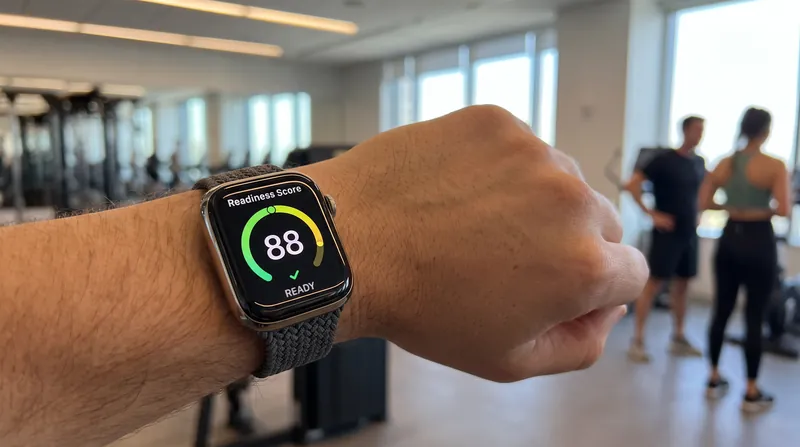
FDA Finalizes Guidance Exempting Non-Medical Wearables and Fitness AI From Stringent Regulation
6 sources
Wearable Tech
Wearable Tech Pivots to Clinical Validation and FDA Clearance for Healthcare Integration
4 sources

Wearable Tech
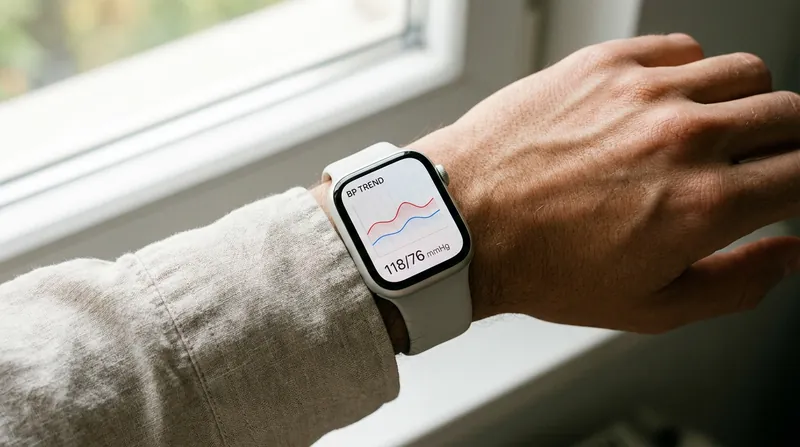
FDA Guidance Opens Door for Wearables to Track Blood Pressure Without Medical Device Clearance
5 sources
Joint Biomechanics
The 50-70% Reduction: How the Elliptical Trainer Minimizes Peak Ground Reaction Force Compared to Running
11 sources

Comments
Every angle. Every day.
Get Fitness stories with full source coverage and perspective breakdowns, free every day.