
USA Fencing Secures Major Roster and Coaching Acquisitions Ahead of LA 2028
In a series of high-profile international transfers and coaching hires, USA Fencing is aggressively assembling a powerhouse roster for the 2028 Los Angeles Olympics.
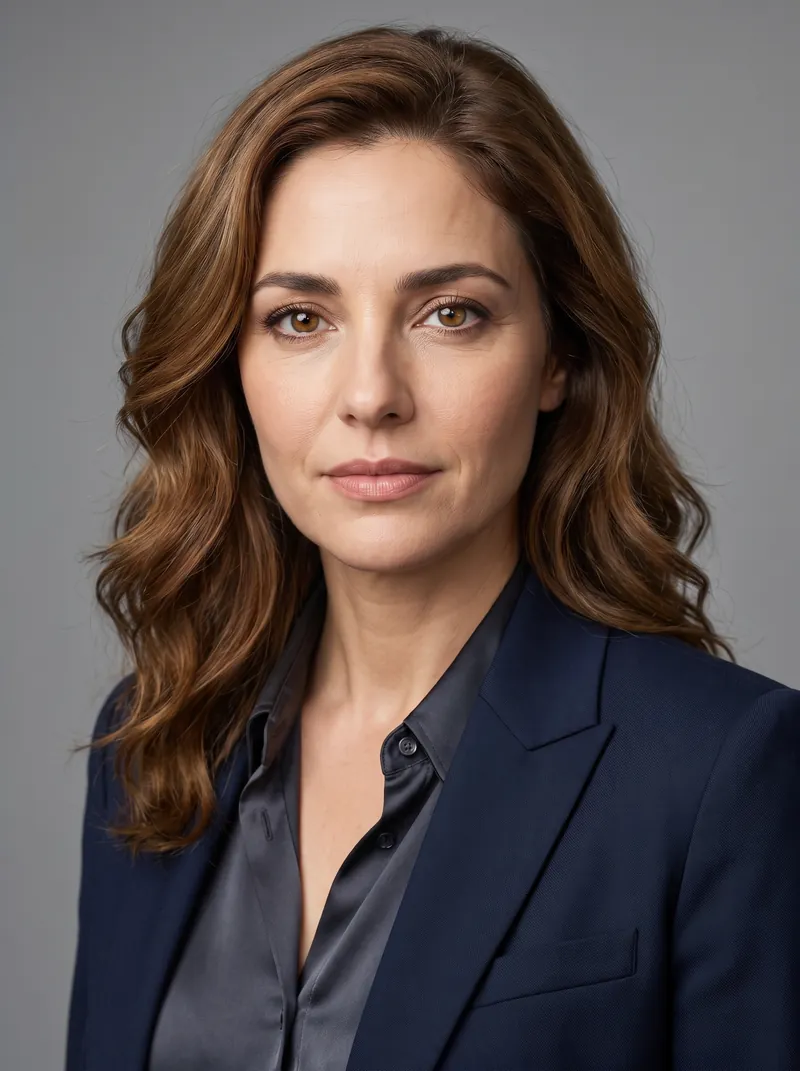
The "free agency" market in international fencing is heating up, and Team USA is making blockbuster moves. With the 2028 Los Angeles Olympics on the horizon, USA Fencing has executed a series of major roster transfers and coaching hires designed to cement an American dynasty.[1]
While trades in the traditional sense do not exist in Olympic sports, the equivalent mechanism—a change of national representation—can fundamentally alter the balance of power. These nationality transfers are rare, requiring complex approvals from the International Fencing Federation (FIE), but they represent the ultimate acquisition for a national team.[2]
The crown jewel of USA Fencing's recent acquisitions is 19-year-old Carolina Stutchbury. The reigning European silver medalist and former highest-ranked British fencer has officially transferred her national allegiance to the United States, bringing immediate star power to an already formidable American squad.[1][2]
Stutchbury's move is deeply intertwined with the American collegiate system. As a standout sophomore at Columbia University, she has already earned First-Team All-American honors and was named the Women's Foil Newcomer of the Year by the United States Fencing Coaches Association.[1][3]
Having lived in the United States for much of her life, Stutchbury cited her long-term residency and the unique opportunity to fence for a host nation in 2028 as key drivers for the move. The allure of the Los Angeles Games has proven to be a powerful recruiting tool for the American federation.[1]
The transfer prompted a gracious but telling response from British Fencing. CEO Georgina Usher publicly thanked Stutchbury for her contributions while acknowledging the stark economic realities of modern international sports.[2]
Usher noted that the US system currently offers senior athletes a level of financial support and host-nation opportunities that Great Britain cannot match. This disparity has sparked conversations within UK Sport about how to better fund and retain homegrown talent against the gravitational pull of the American sports machine.[2]
The talent acquisition strategy extends far beyond the athletes on the strip; the coaching "free agency" market is just as fiercely contested. USA Fencing has aggressively overhauled its national coaching staff to ensure its athletes have world-class guidance.[4][6]
A major component of this overhaul is the high-profile return of Sebastien Dos Santos as the USA Women's Epee National Coach. Dos Santos is a revered figure in the sport, having previously spent 12 years with the organization.[4]
Dos Santos brings a legendary pedigree back to the national team. He previously led the US men's epee team to its first-ever Senior World Championship gold in 2012 and served as Director of Epee when the US women captured their historic 2018 team title. Most recently, he earned Assistant Coach of the Year honors while working with the Air Force Academy.[4]
The coaching promotions also include Aleks Ochocki, who has been elevated to Men's Saber National Coach. Ochocki's promotion rewards his exceptional track record, which includes guiding American star Eli Dershwitz to an individual World Championship gold medal.[1][6]
Furthermore, USA Fencing successfully retained Ralf Bissdorf as the Women's Foil National Coach. Bissdorf, an Olympic silver medalist from Germany, cemented his legacy by coaching the US women's foil team to a historic Olympic gold in Paris, making his retention a critical victory for the federation.[1][6]
These coaching hires reflect a deliberate shift toward a more collaborative, holistic approach to high performance. The new leadership emphasizes a "team at large" dynamic that actively integrates personal club coaches, collegiate programs, and sports psychologists into the national team's preparation.[4]
The symbiotic relationship between USA Fencing and the NCAA is the engine driving this success. Collegiate programs serve as elite incubators, blending world-class education with high-performance athletic training that attracts top-tier global talent to American shores.[3][5]
The grassroots fencing community has reacted with widespread enthusiasm to the federation's aggressive moves. On forums and social media, fans and amateur fencers have praised the strategic brilliance of the acquisitions, noting that the US is successfully weaponizing its collegiate infrastructure to build an undeniable superpower.[6]
As the 2026 season progresses toward the World Championships, USA Fencing's "transaction window" has fundamentally reshaped the international landscape. By securing elite global athletes and proven coaching veterans, the road to LA 2028 looks brighter—and more dominant—than ever for American fencing.[1]
Key points
- British foil star Carolina Stutchbury has transferred her national allegiance to the United States.
- The 19-year-old Columbia University sophomore cited the opportunity to compete for the host nation at the 2028 LA Olympics.
- USA Fencing also announced major coaching hires, including the return of five-time Olympic coach Sebastien Dos Santos.
- Aleks Ochocki and Ralf Bissdorf have been secured to lead the men's saber and women's foil programs, respectively.
- The moves highlight the powerful draw of the well-funded US collegiate and national fencing ecosystem.
How we got here
2012
Sebastien Dos Santos leads the US men's epee team to its first-ever Senior World Championship gold.
2024
Ralf Bissdorf coaches the US women's foil team to a historic Olympic gold in Paris.
September 2025
Carolina Stutchbury officially announces her transfer from Great Britain to USA Fencing.
January 2026
Sebastien Dos Santos is named the USA Fencing Women's Epee National Coach.
June 2026
USA Fencing solidifies its coaching and athlete roster ahead of the upcoming World Championships and the LA 2028 Olympics.
- USA Fencing Leadership
- Focused on capitalizing on the LA 2028 host-nation advantage by securing the best global talent and proven coaching veterans.
- International Federations
- Acknowledging the difficulty of competing with the financial and collegiate resources of the United States, prompting internal reviews of athlete support systems.
- Collegiate Fencing Community
- Viewing the NCAA as the ultimate incubator for Olympic talent, where academic prestige and elite athletic training merge.
Perspectives this story doesn't cover
- Athletes displaced by incoming transfers
- European club coaches losing talent to the NCAA
Sources
Source coverage
6 outlets
3 viewpoints surfaced




- [1]USA FencingUSA Fencing Leadership
USA Fencing Welcomes Carolina Stutchbury to the Team
Read on USA Fencing → - [2]British FencingInternational Federations
CAROLINA STUTCHBURY TRANSFERS TO USA FENCING
Read on British Fencing → - [3]Columbia University AthleticsCollegiate Fencing Community
Fencing Earns Four Honors From USFCA
Read on Columbia University Athletics → - [4]Air Force Academy AthleticsUSA Fencing Leadership
Fencing Assistant Coach Sebastien Dos Santos Named USA Fencing Women's Epee National Coach
Read on Air Force Academy Athletics → - [5]NCAA.orgCollegiate Fencing Community
National Collegiate Fencing Championship
Read on NCAA.org → - [6]Reddit r/FencingCollegiate Fencing Community
New USA Fencing Coaches announced for next four years
Read on Reddit r/Fencing →
More in Sports
See all →Injury
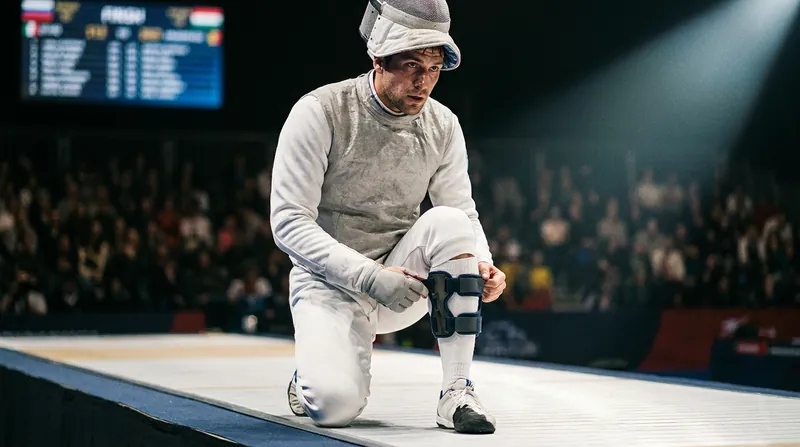
Global Fencing Injury Report: Bianchi's Resurgence, Mohamed's Setback, and the Toll of the 2026 Season
7 sources
Standings
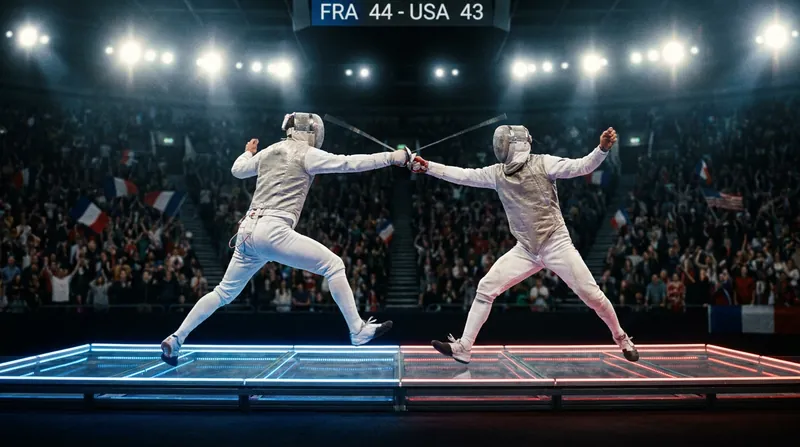
Japan's Surge Threatens South Korea's Reign Atop FIE Men's Team Sabre Standings
4 sources
Injury
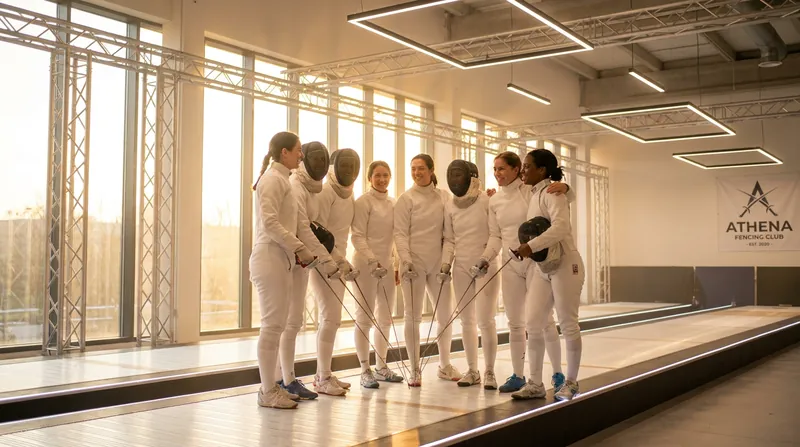
Italian Fencing Federation Expands 'Pink Ribbon' Rehabilitation Program for Breast Cancer Survivors
5 sources
Standings
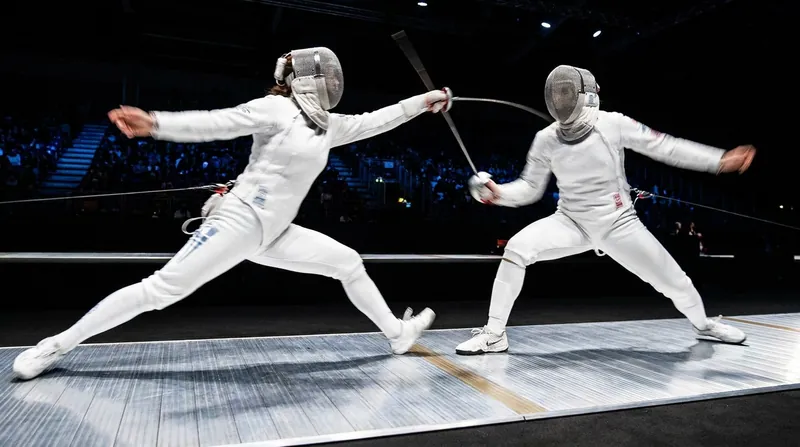
The Race for World No. 1: Kiefer, Favaretto, and Volpi Collide in Historic Women's Foil Standings Battle
4 sources
Comments
Every angle. Every day.
Get Sports stories with full source coverage and perspective breakdowns, free every day.