
US Nears Comprehensive Deal With Iran as UAE Unfreezes Assets
The Trump administration is reportedly days away from signing a landmark agreement with Iran aimed at ending regional hostilities. The impending deal, accompanied by the UAE's release of frozen Iranian funds, has drawn sharp criticism from Israeli leadership.
By Factlen Editorial Team
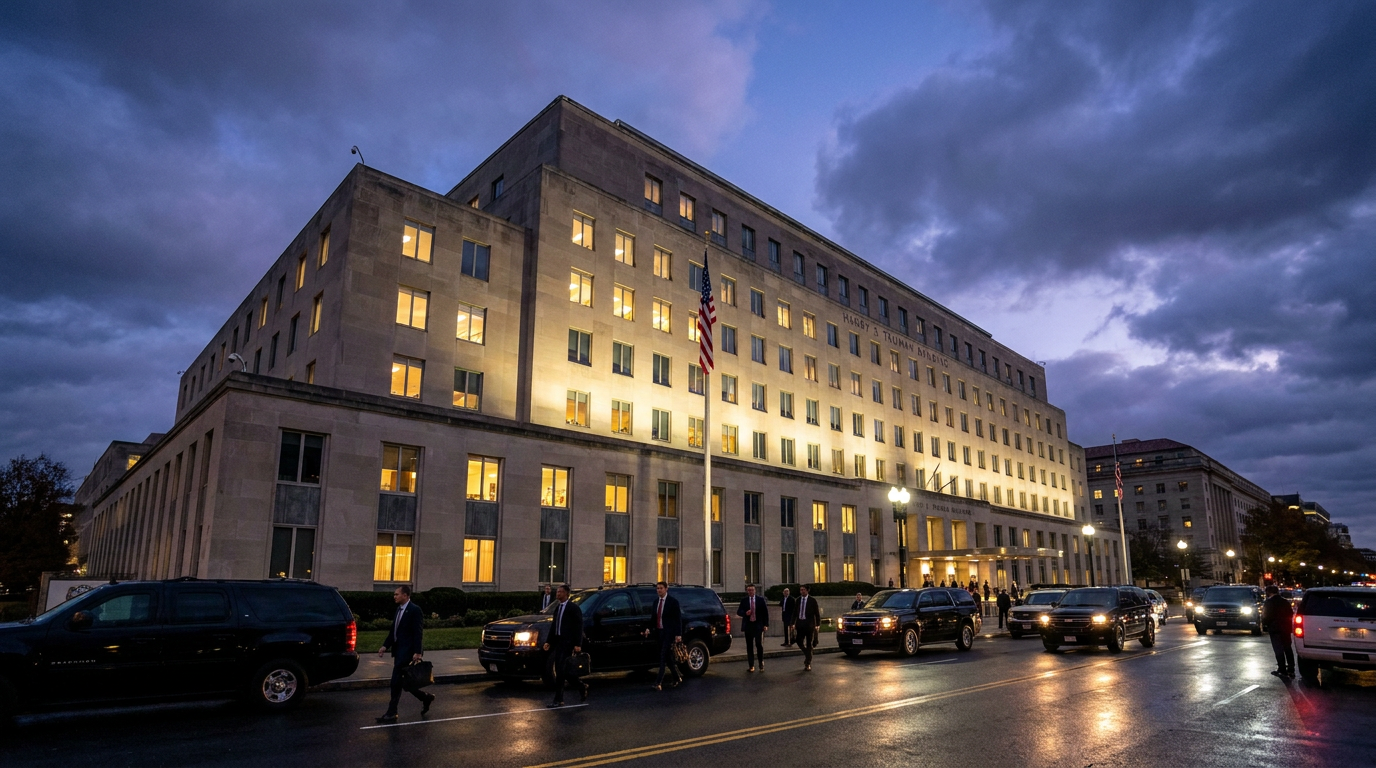
- US Administration & Allies
- Views the deal as a historic peacemaking achievement necessary to extract the US from Middle Eastern conflicts.
- Israeli Leadership
- Considers the agreement a dangerous concession that empowers Iran and fails to dismantle its proxy networks.
- Gulf Arab States
- Prioritizes pragmatic de-escalation to protect domestic economies and infrastructure from regional war.
- Iranian Establishment
- Frames the unfreezing of assets and the diplomatic deal as a victory born of resilience against Western sanctions.
Why this matters
A finalized US-Iran agreement would fundamentally reshape Middle Eastern security dynamics and global energy markets. It marks a dramatic pivot in US foreign policy that could de-escalate ongoing regional conflicts, though it risks severely straining Washington's alliance with Israel.
The United States is standing on the precipice of a sweeping diplomatic agreement with Iran, a sudden maneuver that threatens to dramatically alter the geopolitical landscape of the Middle East. President Donald Trump reportedly informed Israeli Prime Minister Benjamin Netanyahu that a finalized deal is expected within a matter of days, framing the impending accord as a necessary and historic step to end ongoing regional conflicts. The abrupt pivot from a posture of maximum pressure to high-stakes dealmaking marks a defining moment for the administration's foreign policy, signaling a desire to untangle Washington from entrenched Middle Eastern disputes and stabilize a volatile region.[1][3]
Signaling the deal's imminent arrival, the United Arab Emirates has already begun the complex process of unlocking frozen Iranian financial assets held within its banking sector. Sources familiar with the negotiations indicate that the unfreezing is part of a broader, US-backed ceasefire push designed to ease immediate military tensions and prevent either side from crossing established 'red lines.' The UAE's involvement highlights the intricate multilateral coordination required to bring Tehran to the table, utilizing economic relief as the primary lever to secure Iranian compliance with the proposed ceasefire parameters.[2][7]
The release of these funds—estimated to be in the billions of dollars—provides Tehran with crucial economic relief after years of stringent international sanctions that have battered the Iranian economy. Financial markets reacted swiftly to the diplomatic thaw, with global oil benchmarks stabilizing as energy traders priced in a significantly lower risk of supply disruptions in the critical Strait of Hormuz. For the global economy, the prospect of a stabilized Middle East and the potential return of legitimate Iranian crude to the market offers a welcome reprieve from months of energy volatility.[7][8]

However, the diplomatic breakthrough has triggered an immediate and fierce backlash from Israel's political and military establishment. In a reportedly tense phone call on Thursday evening, Trump told Netanyahu, 'This is the deal. It's a great deal, and it's time to end this war.' The Israeli Prime Minister, who has spent his career advocating for the dismantling of Iran's nuclear capabilities and proxy networks, views the pending agreement as a profound strategic betrayal. When Netanyahu initially went to war alongside the US administration's regional goals, an accommodation with Tehran was not the envisioned endgame.[1][4]
However, the diplomatic breakthrough has triggered an immediate and fierce backlash from Israel's political and military establishment.
Israeli officials have expressed deep, public concern that any expedited agreement will fail to adequately dismantle Iran's nuclear infrastructure or meaningfully curb its financial and logistical support for proxy networks operating across Lebanon, Syria, and Yemen. For Netanyahu, who aligned closely with Trump's previous 'maximum pressure' campaign during his first term, the sudden pivot toward diplomatic accommodation represents a bitter pill. It exposes a fundamental divergence in security priorities between Jerusalem, which views Iran as an existential threat requiring military containment, and Washington, which is increasingly eager to declare a diplomatic victory and pivot its resources elsewhere.[1][6]
Conversely, the Trump administration is aggressively presenting the prospective deal as a historic peacemaking achievement that eluded previous presidents. Proponents within the administration argue that a negotiated settlement, backed by regional partners like the UAE, is the only viable mechanism to extract the United States from endless Middle Eastern conflicts. By securing a deal that ostensibly freezes Iran's most provocative regional activities in exchange for targeted sanctions relief, the administration hopes to present a major foreign policy win to the American public while shifting strategic focus toward broader global economic priorities.[5]

In Tehran, the unfreezing of assets by the UAE is already being heralded as a significant diplomatic and economic victory. State-aligned media outlets have characterized the developments as a necessary Western concession, emphasizing a narrative that Iran's resilience under years of crippling sanctions ultimately forced a change in Washington's approach. Hardline factions within the Iranian government are likely to leverage the influx of capital to validate their strategy of regional resistance, even as pragmatic elements welcome the desperately needed liquidity to address soaring domestic inflation and public dissatisfaction.[8]
The active facilitation by the United Arab Emirates highlights a broader, pragmatic regional realignment among Gulf Arab states. While countries like the UAE and Saudi Arabia remain deeply wary of Iranian regional influence and military capabilities, they have increasingly pursued paths of de-escalation and economic engagement with Tehran. This shift is driven by a desire to protect their own vulnerable domestic infrastructure and ambitious economic diversification plans from the devastating fallout of a direct regional war. The UAE's willingness to serve as the financial conduit underscores this preference for managed stability over open confrontation.[2][3]
As the final text of the agreement is hammered out behind closed doors, international observers are closely monitoring how the deal will be structured to survive intense domestic political scrutiny in both Washington and Tehran. The immediate, practical test of the accord will be whether the promised ceasefire parameters actually hold on the ground, particularly along the highly volatile Israel-Lebanon border where proxy forces remain heavily armed. If the deal is signed in the coming days as expected, it will mark the beginning of a precarious new chapter in Middle Eastern diplomacy, one fraught with both historic opportunity and profound risk.[3][6]
Viewpoints in depth
The US Administration's view
A necessary pivot to end endless wars and stabilize the region.
For the White House, finalizing a comprehensive deal with Iran represents the culmination of a major foreign policy objective: untangling the United States from volatile Middle Eastern conflicts. Proponents argue that a negotiated settlement is the only realistic way to prevent a wider regional war while freeing up American diplomatic and military resources for other global priorities. By securing a ceasefire and freezing Iran's most provocative activities, the administration believes it is delivering a historic diplomatic victory.
Israel's view
A strategic betrayal that leaves existential threats intact.
Israeli leadership views the impending agreement with profound alarm, arguing that it provides Tehran with billions in sanctions relief without permanently dismantling its nuclear program or severing its ties to proxy militias. For Prime Minister Benjamin Netanyahu, who supported the US administration's earlier 'maximum pressure' campaign, the pivot to accommodation is seen as a dangerous capitulation. Jerusalem fears the influx of unfrozen funds will simply be redirected to arming groups along Israel's borders.
Gulf States' view
Pragmatic de-escalation to safeguard economic stability.
Countries like the UAE and Saudi Arabia are navigating a delicate balance. While they share Israel's concerns regarding Iranian regional ambitions, they are acutely aware that a direct military confrontation would devastate their own economies and infrastructure. By facilitating the unfreezing of Iranian assets, the UAE is actively participating in a strategy of managed de-escalation, prioritizing regional stability and economic growth over ideological confrontation.
What we don't know
- The exact terms, duration, and enforcement mechanisms of the impending US-Iran agreement.
- Whether Israel will take unilateral military action if the deal is signed.
- How the unfrozen funds will be monitored to ensure they are not diverted to proxy networks.
Sources
Source coverage
8 outlets
4 viewpoints surfaced








[1]AxiosIsraeli Leadership
Trump's pending Iran deal is bitter pill for Netanyahu
Read on Axios →[2]Al JazeeraGulf Arab States
UAE to unlock frozen Iranian funds amid US ceasefire push
Read on Al Jazeera →[3]ReutersUS Administration & Allies
US nears comprehensive agreement with Iran; UAE begins unfreezing assets
Read on Reuters →[4]The Jerusalem PostIsraeli Leadership
Netanyahu expresses 'deep concern' over impending Washington-Tehran accord
Read on The Jerusalem Post →[5]Fox NewsUS Administration & Allies
Trump administration on verge of historic peace deal with Iran, ending decades of hostility
Read on Fox News →[6]Times of IsraelIsraeli Leadership
Israel blindsided as US advances Iran ceasefire framework
Read on Times of Israel →[7]BloombergGulf Arab States
Oil prices stabilize as UAE unfreezes Iranian funds ahead of potential US deal
Read on Bloomberg →[8]Tehran TimesIranian Establishment
Diplomatic victory: Unfrozen assets signal shift in Western approach to Iran
Read on Tehran Times →


Every angle. Every day.
Get news politics stories with full source coverage and perspective breakdowns delivered to your inbox.