
US Halts Military Strikes on Iran Amid Conflicting Claims Over Imminent Peace Deal
President Trump has suspended planned military strikes on Iran, citing progress toward a comprehensive peace agreement, though Iranian officials caution that no final settlement has been reached. The pause comes as the 105-day conflict continues to disrupt global energy markets and shipping through the Strait of Hormuz.
By Factlen Editorial Team
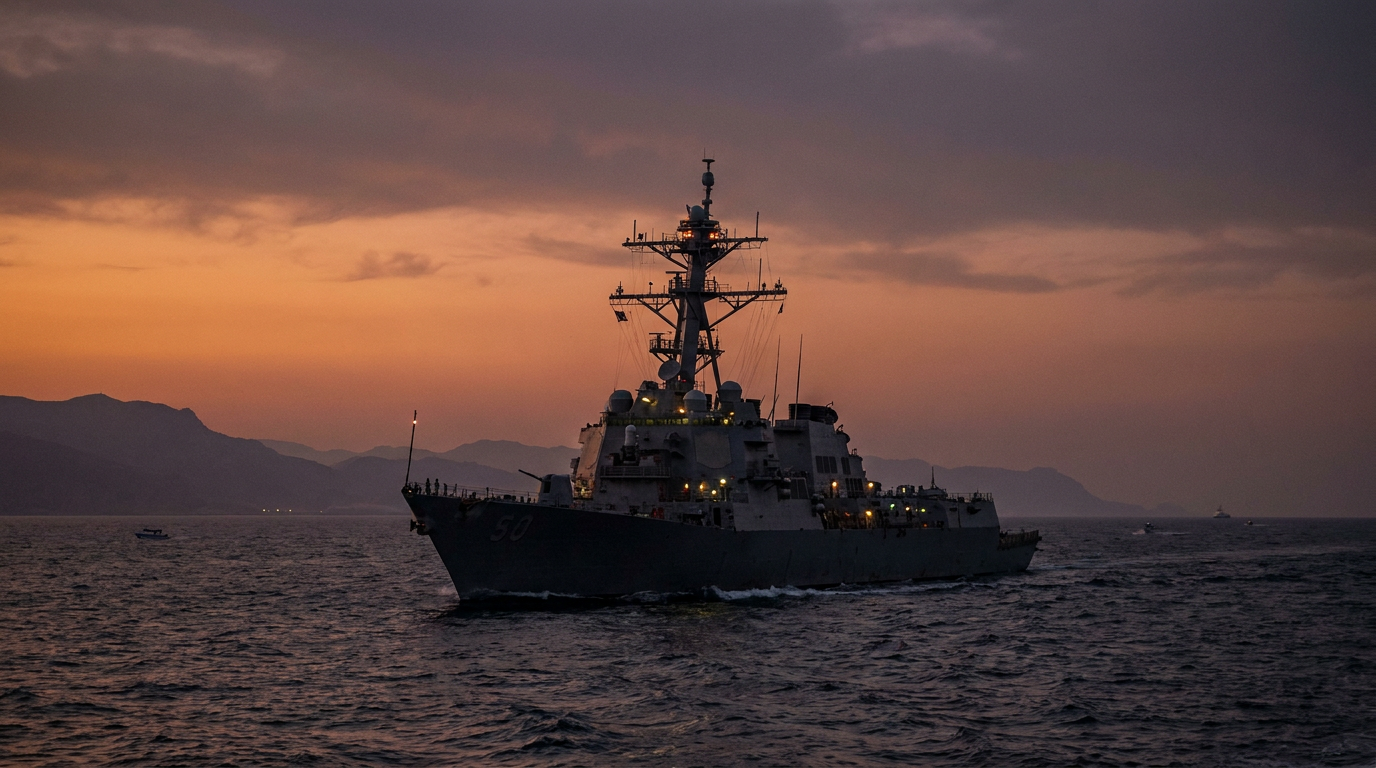
- US Administration
- Framing the halted strikes as a diplomatic window for an imminent, historic peace settlement.
- Global Economic Watchers
- Focused on the severe economic damage already inflicted by the 105-day conflict and demanding a swift reopening of shipping lanes.
- Iranian Leadership
- Projecting resilience, denying any final capitulation, and maintaining leverage over the Strait of Hormuz.
What's not represented
- · Regional Gulf State Allies
- · Civilian Populations in Iran
- · Independent Energy Analysts
Why this matters
The 105-day conflict has effectively closed the Strait of Hormuz, choking off 20% of the world's oil supply and triggering economic contractions in Western nations. A finalized peace deal would avert a devastating regional war and stabilize global energy markets, while a collapse in talks could trigger immediate US strikes on Iranian oil infrastructure.
Key points
- The US abruptly halted planned military strikes on Iran's Kharg Island oil terminal on Friday.
- President Trump claimed a 'great settlement' is imminent, suggesting a peace deal could be signed this weekend.
- Iran's foreign ministry contradicted the timeline, stating that US proposals are still under review and nothing is finalized.
- The 105-day conflict has severely disrupted global shipping through the vital Strait of Hormuz.
- Economic fallout is mounting globally, with the UK reporting a 0.1% GDP contraction in April due to energy price spikes.
On the 105th day of the escalating conflict between the United States and Iran, President Donald Trump abruptly halted planned military strikes against Iranian targets, citing the imminent signing of a comprehensive peace agreement.[1][2]
The suspended American military action was reportedly aimed at Kharg Island, Iran's most critical oil export terminal. A strike on the facility would have represented a massive escalation in the ongoing war, potentially crippling Tehran's primary source of foreign revenue and triggering severe retaliatory measures.[1][5]
Instead of authorizing the strikes, President Trump announced that a "great settlement" had been reached between Washington and Tehran, suggesting that a formal peace deal could be signed as early as this weekend. The White House has framed the pause in military action as a necessary diplomatic window to finalize the historic accord.[2][7]

However, Iranian officials quickly moved to temper expectations, contradicting the American president's timeline. Iran's foreign ministry issued a statement clarifying that while a proposed US deal is currently under review in Tehran, no final conclusion or agreement has been reached.[1][2]
State-aligned media in Iran echoed this caution, emphasizing that diplomatic channels remain open but warning against premature declarations of peace. The conflicting narratives highlight the fragile nature of the current ceasefire and the deep mistrust that continues to define the negotiations.[5][6]
State-aligned media in Iran echoed this caution, emphasizing that diplomatic channels remain open but warning against premature declarations of peace.
The domestic political environment in the United States is also complicating the diplomatic push. Observers note that the Trump administration has faced mounting internal frustrations and shifting strategies regarding Iran. Critics suggest the president's eagerness to announce a deal reflects a desire to secure a foreign policy victory amid broader domestic challenges.[3]
Meanwhile, the global economic fallout from the 105-day conflict continues to compound, driven largely by the closure of the Strait of Hormuz. The vital shipping lane, which typically facilitates roughly a fifth of the world's oil trade, has been effectively blocked since the early days of the war.[4][8]

The economic damage is already materializing in official government data worldwide. In the United Kingdom, the economy contracted by 0.1% in April, a downturn directly attributed to the conflict. After a strong first quarter, the sudden spike in energy prices caused by the Hormuz blockade forced the British expansion into reverse.[4]
Global shipping companies remain in a state of paralysis, forced to reroute vessels on longer, more expensive journeys around the Cape of Good Hope. Industry analysts warn that even if a peace deal is signed this weekend, clearing the Strait of Hormuz of military threats and restoring normal commercial traffic will take weeks.[7][8]
Energy markets reacted to the whiplash of the day's events with intense volatility. Brent crude prices fluctuated wildly as traders weighed the relief of halted strikes against the reality that Iran has not yet committed to reopening the strait.[5][7]

The coming days represent a critical juncture for the global economy and Middle Eastern stability. If the proposed US deal satisfies Tehran's demands, the 105-day war could conclude with a rapid de-escalation.[1][2]
Conversely, if the Iranian review rejects the American terms, the White House may quickly pivot back to its military options. With Kharg Island still in the crosshairs and the global economy straining under the weight of high energy prices, the margin for diplomatic error remains vanishingly small.[1][3][4][5]
How we got here
Late Feb 2026
The US-Iran conflict escalates, leading to the effective closure of the Strait of Hormuz to commercial shipping.
April 2026
Global energy prices spike, causing the UK economy to shrink by 0.1% and raising fears of a broader recession.
Early June 2026
The US military prepares targeted strikes against Iran's Kharg Island oil export terminal.
June 11, 2026
President Trump claims a 'great settlement' is on the verge of being signed between Washington and Tehran.
June 12, 2026
The US abruptly halts the planned strikes, though Iran denies that a final peace agreement has been reached.
Viewpoints in depth
The White House's View
Framing the pause in military action as the culmination of a successful pressure campaign.
President Trump and his allies are positioning the halted strikes not as a hesitation, but as a strategic pause to finalize a historic diplomatic victory. By claiming a 'great settlement' is imminent, the administration seeks to project strength and claim credit for ending a conflict that has severely strained global markets. However, some domestic critics argue this eagerness reflects internal frustrations and a desire to pivot away from a costly standoff.
Tehran's View
Denying capitulation and maintaining strategic leverage through the Hormuz blockade.
Iranian officials are carefully managing the narrative to avoid appearing as though they are surrendering under military threat. By publicly contradicting the US timeline and emphasizing that proposals are merely 'under review,' Tehran maintains its leverage. The ongoing closure of the Strait of Hormuz remains Iran's most potent negotiating tool, ensuring that the economic pain felt by Western nations keeps pressure on Washington to offer favorable terms.
Global Markets' View
Deeply skeptical of political rhetoric and focused entirely on the resumption of commercial shipping.
For international economists and shipping conglomerates, the political maneuvering in Washington and Tehran is secondary to the physical reality of the Strait of Hormuz. The 105-day blockade has already caused measurable economic damage, such as the UK's 0.1% GDP contraction in April. Market watchers warn that even if a deal is signed, the logistical backlog and lingering security fears mean that normal energy flows and supply chains will take weeks to fully recover.
What we don't know
- The specific terms and concessions included in the proposed US peace deal.
- Whether Iran is genuinely considering the agreement or using the review period to stall for time.
- How quickly commercial shipping could safely resume in the Strait of Hormuz if a deal is signed.
Key terms
- Strait of Hormuz
- A narrow, strategically vital waterway between the Persian Gulf and the Gulf of Oman, through which roughly 20% of the world's oil passes.
- Kharg Island
- Iran's primary crude oil export terminal, located in the Persian Gulf, which handles the vast majority of the country's energy exports.
- Brent Crude
- A major trading classification of sweet light crude oil that serves as a benchmark price for purchases of oil worldwide.
Frequently asked
Has a peace deal been signed between the US and Iran?
No. While President Trump claims an agreement is imminent, Iran's foreign ministry states that proposals are still under review and nothing is finalized.
Why did the US halt its planned military strikes?
The US suspended the attacks, which reportedly targeted Iran's Kharg Island oil terminal, as a diplomatic gesture while peace talks progress.
How is the conflict affecting the global economy?
The closure of the Strait of Hormuz has spiked global energy prices, leading to economic contractions in countries like the UK, which saw its GDP shrink by 0.1% in April.
Sources
Source coverage
8 outlets
3 viewpoints surfaced







[1]Al JazeeraIranian Leadership
Iran war day 105: Trump halts attacks after Kharg Island threat
Read on Al Jazeera →[2]The GuardianGlobal Economic Watchers
Middle East crisis live: Iran says no final peace agreement reached
Read on The Guardian →[3]Fox NewsUS Administration
Why Trump keeps flipping on Iran: A president who sees the world as he wants it to be
Read on Fox News →UK economy shrank by 0.1% in April as Iran war held back growth
Read on The Guardian - Business →[5]ReutersGlobal Economic Watchers
Oil markets volatile as US pauses Iran strikes amid peace deal rumors
Read on Reuters →[6]Tehran TimesIranian Leadership
Foreign Ministry denies finalized US agreement, reviews proposals
Read on Tehran Times →[7]The Wall Street JournalUS Administration
Economic Toll of Hormuz Closure Mounts as White House Pushes for Deal
Read on The Wall Street Journal →[8]BBC NewsGlobal Economic Watchers
Global shipping braces for extended Hormuz blockade despite US-Iran talks
Read on BBC News →

Every angle. Every day.
Get news politics stories with full source coverage and perspective breakdowns delivered to your inbox.