
US and Iran Reach 'Great Settlement' as Trump Cancels Military Strikes
President Trump announced a diplomatic breakthrough with Tehran, halting planned military strikes and signaling a major de-escalation in the Middle East. Details of the agreement are still being finalized, but the move averts an immediate armed conflict.
By Factlen Editorial Team
- Administration Supporters
- Argue that the credible threat of force successfully brought Iran to the negotiating table.
- Diplomatic Skeptics
- Emphasize the lack of published details and question the long-term viability of the sudden agreement.
- Market & Economic Analysts
- Focus on the immediate relief to global energy markets and the avoidance of a supply shock.
What's not represented
- · Iranian government officials' direct characterization of the deal
- · Perspectives from US regional allies like Israel and Saudi Arabia
Why this matters
A direct military conflict between the US and Iran would have severe global consequences, including massive disruptions to global energy markets and widespread regional instability. This settlement pulls both nations back from the brink of war, directly impacting global security and economic stability.
Key points
- President Trump announced a 'great settlement' with Iran, canceling planned military strikes.
- The agreement averts an immediate armed conflict in the Middle East.
- Specific details of the diplomatic arrangement have not yet been released.
- Global oil prices dropped sharply following the news of de-escalation.
President Donald Trump announced late Thursday that the United States and Iran have reached a "great settlement," abruptly canceling planned military strikes against Tehran. The announcement marks a dramatic de-escalation after weeks of soaring tensions that had pushed the two nations to the brink of direct armed conflict.[1][2][4]
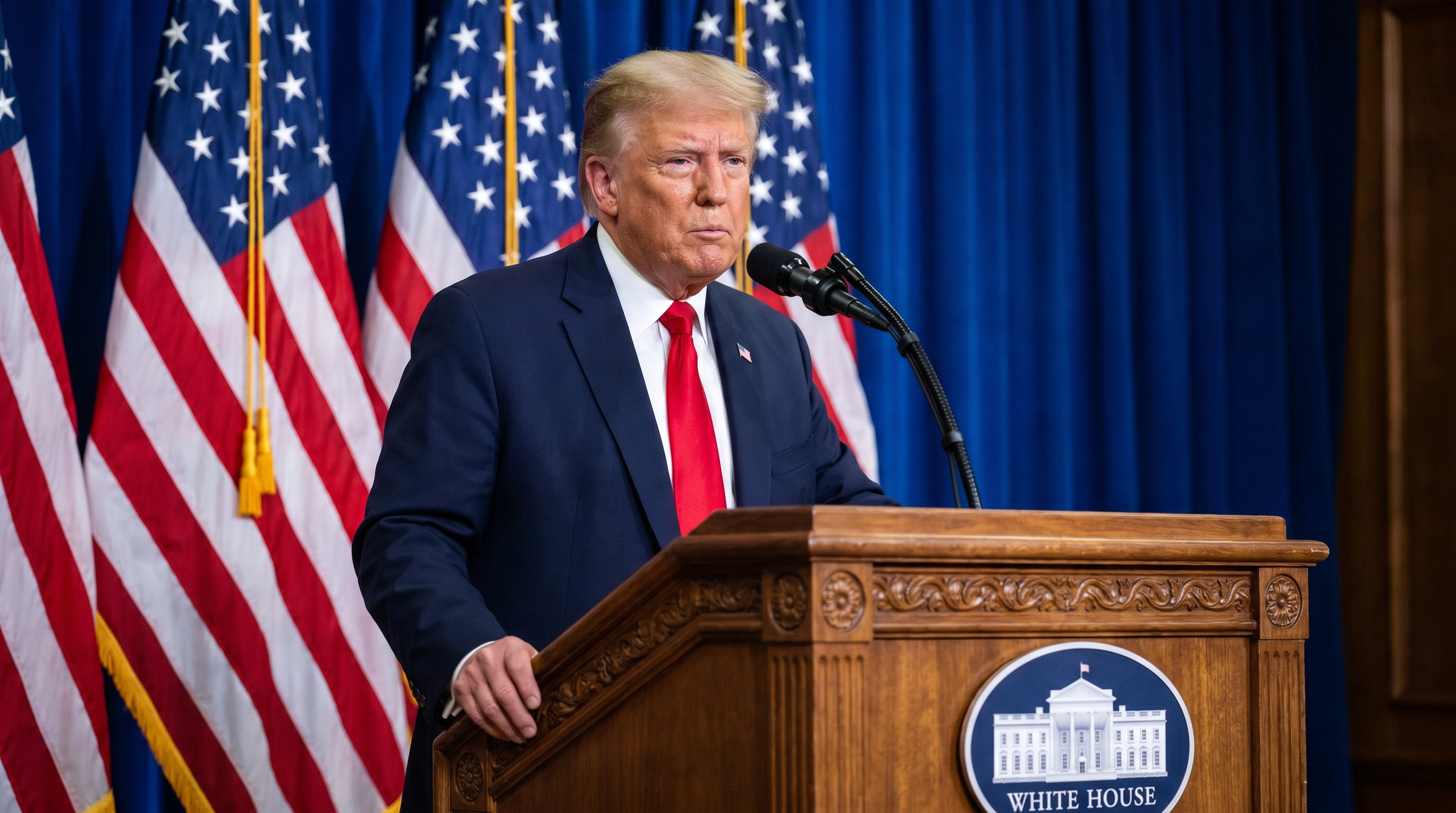
Speaking from the White House, Trump stated that the deal had been "approved" and that diplomats were in the process of finalizing the official documents. While specific terms of the agreement remain undisclosed, the immediate consequence is the halting of US military operations that were reportedly hours away from execution.[3][7]
The sudden diplomatic breakthrough follows a period of intense military buildup in the Persian Gulf. Recent weeks saw escalating rhetoric, proxy skirmishes, and the deployment of additional US naval assets to the region. The international community had been bracing for a potential kinetic exchange after talks appeared to stall earlier in the month.[5][8]
Global markets reacted swiftly to the news of the de-escalation. Brent crude oil prices, which had spiked amid fears of supply disruptions in the Strait of Hormuz, dropped sharply to $82 per barrel. Equities rallied in after-hours trading as investors breathed a sigh of relief over the averted conflict.[6]

Global markets reacted swiftly to the news of the de-escalation.
Domestically, the announcement has been met with cautious optimism, though reactions vary across the political spectrum. Conservative commentators and allies of the administration have praised the president's "peace through strength" approach, arguing that the credible threat of overwhelming military force compelled Tehran to return to the negotiating table.[3]
Conversely, some foreign policy analysts and critics are urging caution, noting that the administration has yet to release the concrete details of the "great settlement." Skeptics question whether the agreement addresses long-standing issues such as Iran's nuclear enrichment program and its support for regional proxy groups, or if it merely represents a temporary pause in hostilities.[4][8]

Internationally, allied nations and global organizations have welcomed the pause in military escalation. European leaders, who had been urging restraint from both Washington and Tehran, expressed hope that the finalized documents would pave the way for a sustainable diplomatic framework.[7]
The focus now shifts to the specifics of the finalized documents. State Department officials and their Iranian counterparts are reportedly working through backchannels to solidify the terms. Until the full text of the agreement is published, the durability of this sudden diplomatic pivot remains the central question for global security analysts.[2][5]
How we got here
Early June 2026
Tensions escalate with US naval deployments and stalled diplomatic talks.
June 10, 2026
US military reportedly prepares for targeted strikes against Iranian assets.
June 11, 2026
President Trump abruptly announces a 'great settlement' and halts the planned strikes.
Viewpoints in depth
Administration Supporters
Praise the 'peace through strength' strategy, arguing the threat of strikes forced a deal.
Allies of the administration view the sudden settlement as a vindication of a hardline approach. They argue that by demonstrating a genuine willingness to use overwhelming military force, the US compelled Iranian leadership to abandon brinkmanship and accept diplomatic terms. This perspective emphasizes that deterrence, rather than preemptive concession, is the most effective tool in Middle Eastern diplomacy.
Foreign Policy Skeptics
Demand concrete details, questioning if the deal addresses nuclear enrichment or just delays conflict.
Critics and foreign policy realists remain deeply cautious, pointing out that a 'settlement' without published terms is merely a ceasefire. They question whether the administration secured meaningful concessions regarding Iran's nuclear program or its funding of regional proxies. For these analysts, the true test of the agreement is not the avoidance of strikes today, but whether the underlying structural conflicts between Washington and Tehran have been resolved.
Global Markets
Focused on stability, reacting positively to the averted disruption of energy supplies.
For economic analysts and energy traders, the geopolitical nuances are secondary to the immediate preservation of supply chains. The Persian Gulf is the artery for a massive percentage of global oil, and any kinetic conflict threatened to send energy prices spiraling, potentially triggering a broader economic downturn. The market's swift rally reflects a collective sigh of relief that this worst-case scenario has been taken off the table.
What we don't know
- The specific concessions made by either the US or Iran in the settlement.
- How the agreement addresses Iran's nuclear enrichment capabilities.
- Whether regional allies, such as Israel and Saudi Arabia, were consulted on the terms.
Key terms
- Strait of Hormuz
- A crucial shipping chokepoint between the Persian Gulf and the Gulf of Oman, through which a significant portion of the world's oil supply passes.
- Brent Crude
- A major trading classification of sweet light crude oil that serves as a benchmark price for purchases of oil worldwide.
Frequently asked
Are US troops currently engaged in combat with Iran?
No. The planned military strikes were canceled following the announcement of the settlement, averting direct combat.
What is in the new US-Iran agreement?
The specific terms have not yet been disclosed. Officials are reportedly finalizing the documents.
How did the stock market react?
Markets rallied and oil prices dropped sharply, reflecting investor relief that a major conflict was avoided.
Sources
Source coverage
8 outlets
3 viewpoints surfaced







[1]Al Jazeera
Trump says US and Iran have reached a ‘great settlement’
Read on Al Jazeera →Iran war live: Trump claims Tehran deal ‘approved’, cancels new strikes
Read on Al Jazeera →[3]Fox NewsAdministration Supporters
President Trump announces historic peace settlement with Iran, averts military conflict
Read on Fox News →[4]The New York TimesDiplomatic Skeptics
Trump Halts Strikes on Iran, Claiming a 'Great Settlement' is Reached
Read on The New York Times →[5]ReutersMarket & Economic Analysts
U.S. and Iran reach tentative agreement to de-escalate, Trump says
Read on Reuters →[6]The Wall Street JournalMarket & Economic Analysts
Markets Rally as Trump Cancels Iran Strikes Following Settlement Claims
Read on The Wall Street Journal →[7]BBC News
Trump says US-Iran deal 'approved', pulling back from brink of war
Read on BBC News →[8]Associated PressDiplomatic Skeptics
Details remain scarce as Trump declares diplomatic victory over Iran
Read on Associated Press →


Every angle. Every day.
Get news politics stories with full source coverage and perspective breakdowns delivered to your inbox.