
US and Iran Near Historic Peace Deal as Pakistan Announces 'Final Text' Agreement
Pakistani mediators announced that a final text for a US-Iran peace agreement has been reached, coinciding with reports that the UAE will unlock billions in frozen Iranian funds.
By Factlen Editorial Team
- US Administration
- Frames the deal as a security victory where economic relief is strictly conditional on Iranian compliance.
- Iranian Leadership
- Views the agreement as a diplomatic win that secures vital economic relief while maintaining regional leverage.
- Regional Mediators
- Focuses on the necessity of the breakthrough to prevent a broader war and stabilize the global economy.
- Israeli Security Establishment
- Demands that any agreement permanently neutralize Iran's nuclear ambitions and proxy networks.
What's not represented
- · Global energy markets and shipping companies
- · Lebanese government and civilian populations
Why this matters
A finalized peace deal would end a devastating 105-day regional war, reopen the critical Strait of Hormuz to global shipping, and fundamentally reshape the security architecture of the Middle East.
Key points
- Pakistani PM Shehbaz Sharif announced the US and Iran have agreed on a final text for a peace deal.
- The UAE has reportedly agreed to unlock $10 billion to $20 billion in frozen Iranian funds to ease tensions.
- President Trump canceled imminent airstrikes on Iran, stating a deal could be signed over the weekend in Europe.
- US Vice President JD Vance clarified that economic relief for Iran is strictly conditional on meeting security obligations.
- Iranian state media claims the deal will end conflicts on all fronts, including the Israeli offensive in Lebanon.
- The agreement aims to officially reopen the Strait of Hormuz, a critical chokepoint for global oil shipments.
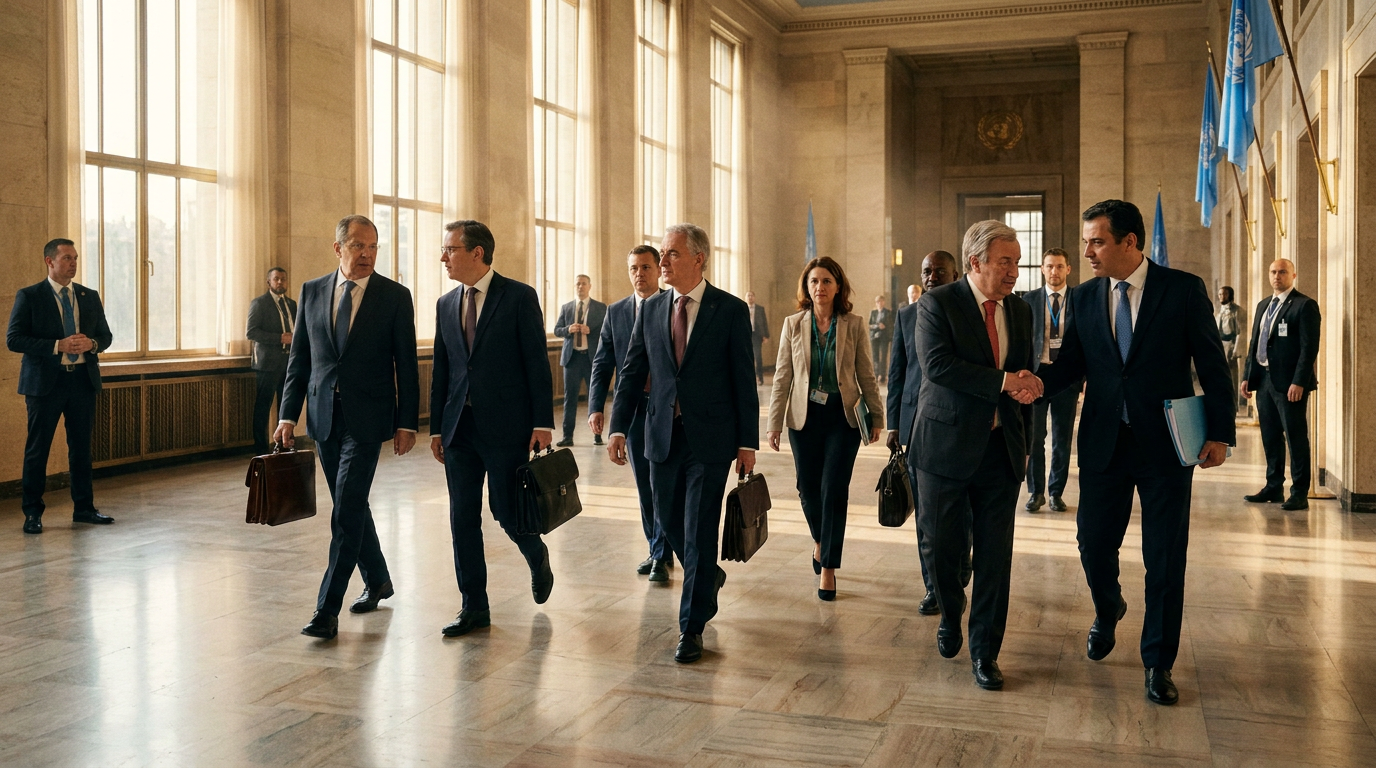
The United States and Iran are standing on the precipice of a historic peace agreement designed to end their devastating months-long war, with Pakistani mediators formally announcing on Friday that a "final, agreed-upon text" has been reached. This monumental diplomatic breakthrough follows 105 days of intense and destabilizing conflict that severely disrupted global energy markets, threatened international shipping lanes, and drew multiple regional powers into the fray. Pakistani Prime Minister Shehbaz Sharif, whose government has hosted critical back-channel negotiations since successfully brokering a temporary ceasefire in early April, confirmed the milestone. Sharif stated that Islamabad is now working closely with both Washington and Tehran to finalize the immediate next steps, setting the stage for a formal signing ceremony that could fundamentally alter the geopolitical landscape of the Middle East.[3][4][5]
The sudden pivot toward a diplomatic resolution materialized rapidly after a highly volatile week that threatened to plunge the region back into all-out war. Just days ago, the US and Iran traded heavy military strikes following the downing of an American Apache attack helicopter near the strategically vital Strait of Hormuz. The escalation prompted US President Donald Trump to publicly threaten "bigger" and more devastating bombing raids against Iranian targets. However, in a dramatic reversal on Thursday, Trump abruptly canceled the imminent airstrikes, citing significant behind-the-scenes progress in the ongoing peace talks. He later told reporters gathered at the White House that the two nations had achieved a "great settlement," boldly predicting that the Strait of Hormuz would officially reopen to unhindered global trade as soon as the deal is signed—an event he suggested could take place over the weekend in Europe.[2][4]
As a major, tangible step toward regional de-escalation, the United Arab Emirates has reportedly agreed to unlock between $10 billion and $20 billion in frozen Iranian funds. Regional diplomatic sources indicate that an initial tranche of $3 billion has already been transferred to Tehran. The UAE's calculated tactical shift aims to permanently halt weeks of damaging Iranian attacks on Gulf Arab energy and transport infrastructure, fostering a broader environment of lasting stability. This massive financial maneuver coincides with the final stages of the overarching negotiations between Tehran and Washington, which have long centered on the release of tens of billions of dollars in Iranian oil revenues that were systematically blocked by stringent US economic sanctions.[1]

Addressing the diplomatic progress, Iranian Foreign Minister Abbas Araghchi expressed cautious optimism, stating publicly that the so-called "Islamabad Memorandum of Understanding" has "never been closer" to completion. While Araghchi urged the international media to refrain from speculating on the specific contents until the document is officially finalized, Iranian state media outlets closely aligned with the regime quickly published supposed drafts of the agreement. These leaked reports claimed the deal would comprehensively end hostilities across all regional fronts—including the ongoing Israeli military offensive against Hezbollah forces in Lebanon—without forcing Tehran to relinquish its strategic military oversight and control over the Strait of Hormuz.[2][4][6]
The circulation of these leaked terms triggered an immediate and forceful pushback from the highest levels of the US administration, exposing the fragile nature of the ongoing negotiations. President Trump blasted the Iranian media reports as bearing "no relation to the truth," aggressively labeling the leakers as "dishonorable people" and warning that Tehran needed to "get their act together, and fast" if they wanted the deal to survive. US Vice President JD Vance also took to social media to dispel what he termed a coordinated campaign of "fake information," aiming to clarify the exact financial and security mechanics of the proposed settlement for both domestic and international audiences.[2][3]
Vance emphatically stressed that the Iranian government is not receiving any cash "simply for signing a deal or attending a meeting." Instead, he outlined that the agreement is strictly and carefully structured to prioritize the core security concerns of the United States and its regional allies. According to the Vice President, economic benefits—including the broader unfreezing of international assets—will only flow to Tehran if the Islamic Republic verifiably meets its stringent security obligations under the pact. A senior US official corroborated this stance, noting that while Iran would indeed be rewarded economically for strict compliance, the administration's primary and unwavering focus remains on neutralizing regional threats.[2][3][4]

The prospect of a finalized, comprehensive deal has also drawn intense scrutiny and apprehension from key US allies in the region, most notably Israel. Israeli Defense Minister Israel Katz publicly urged the Trump administration to ensure that the final agreement permanently and verifiably prevents Iran from ever obtaining a nuclear weapon. Furthermore, Katz demanded that the pact actively dismantle Tehran's extensive network of proxy militias, which have long threatened Israeli borders. He stressed that any lasting settlement must reflect both American and Israeli long-term security interests, warning against a rushed agreement that might inadvertently fund future attacks against the Jewish state.[6]
Despite the evident internal fractures within both the US and Iranian political establishments, and the ongoing public posturing from all sides, diplomatic momentum is heavily favoring a historic resolution. A senior US official intimately involved in the talks estimated an 80 to 85 percent likelihood that the agreement will be formally signed within a matter of days, likely in Geneva. If successful, the landmark pact would not only halt the immediate and devastating bloodshed but also establish a completely new framework for collective security in the Persian Gulf, allowing global shipping to resume normal, safe operations through one of the world's most vital maritime economic chokepoints.[2][5]
How we got here
Feb 28, 2026
The war begins with joint US-Israeli military strikes on Iranian targets.
April 8, 2026
Pakistan brokers a temporary ceasefire, pausing all-out hostilities and initiating back-channel talks.
June 10, 2026
The US and Iran trade strikes near the Strait of Hormuz following the downing of a US Apache helicopter.
June 11, 2026
President Trump cancels planned bombing raids, citing significant progress in peace negotiations.
June 12, 2026
Pakistani PM Shehbaz Sharif announces that a final, agreed-upon text for the peace deal has been reached.
Viewpoints in depth
US Administration
The deal is a security victory where economic relief is strictly conditional on Iranian compliance.
US officials, including President Trump and Vice President JD Vance, are aggressively managing the narrative to counter claims that the US is handing over cash unconditionally. They emphasize that the agreement is structured around verifiable security obligations. By framing the deal as a mechanism that prioritizes American and allied interests, the administration aims to project strength and assure domestic critics that economic benefits for Tehran are a reward for compliance, not a signing bonus.
Iranian Leadership
The agreement is a diplomatic win that secures vital economic relief while maintaining regional leverage.
For Tehran, the unfreezing of billions of dollars—facilitated by the UAE—represents a critical lifeline for an economy battered by sanctions and war. Iranian state media has framed the draft agreement as a comprehensive victory that ends hostilities across all fronts, including Lebanon, without forcing Iran to surrender its strategic oversight of the Strait of Hormuz. This narrative helps the regime sell the ceasefire to hardliners at home as a successful defense of national sovereignty.
Regional Mediators
The breakthrough proves that regional diplomacy can resolve conflicts that military force cannot.
Pakistan, which has hosted the negotiations since brokering the initial April ceasefire, views the "Islamabad Memorandum of Understanding" as a monumental diplomatic achievement. Prime Minister Shehbaz Sharif and other regional actors emphasize that the deal is essential for preventing the conflict from spiraling into a broader regional war. For these nations, the focus is on immediate de-escalation, reopening maritime trade routes, and stabilizing the global economy.
Israeli Security Establishment
Any agreement must permanently neutralize Iran's nuclear ambitions and proxy networks.
Israeli officials view the diplomatic pivot with caution. Having engaged in direct military confrontation with Iran alongside the US, Israel's primary concern is that a rushed peace deal might leave Tehran's nuclear infrastructure and proxy militias intact. Defense Minister Israel Katz's public statements reflect a deep-seated anxiety that economic relief could inadvertently fund future attacks, underscoring Israel's demand for ironclad guarantees regarding its long-term security.
What we don't know
- Whether hardline factions within the Iranian political establishment will fully endorse the final terms.
- The exact verification mechanisms the US will use to ensure Iranian compliance before releasing further funds.
- How the agreement will specifically address the ongoing conflict between Israel and Hezbollah in Lebanon.
Key terms
- Islamabad Memorandum of Understanding
- The working title for the draft peace agreement between the United States and Iran, named after the city where Pakistan mediated the talks.
- Strait of Hormuz
- A narrow, strategically vital waterway between the Persian Gulf and the Gulf of Oman, through which roughly 20 percent of the world's oil passes.
- Frozen Assets
- Billions of dollars in Iranian state funds held in foreign banks that were blocked from being accessed due to international sanctions.
Frequently asked
Has the peace deal been officially signed?
Not yet. While Pakistani mediators announced that a final text has been agreed upon, the formal signing is expected to take place in the coming days, potentially in Geneva.
What happens to Iran's frozen funds?
The UAE has reportedly agreed to unlock between $10 billion and $20 billion in frozen Iranian assets. However, US officials stress that broader economic relief will only occur if Iran meets its security obligations.
Will the deal affect the conflict in Lebanon?
Iranian media and officials claim the draft agreement includes an end to hostilities on all fronts, including the ongoing Israeli offensive against Hezbollah in Lebanon, though the US has not publicly confirmed this.
Sources
Source coverage
6 outlets
4 viewpoints surfaced





[1]Al JazeeraIranian Leadership
UAE to unlock frozen Iranian funds amid US ceasefire push
Read on Al Jazeera →[2]The GuardianUS Administration
Trump lashes out at Iranian media over leaked ceasefire terms
Read on The Guardian →[3]Arab NewsUS Administration
Trump and Vance hit out at Iran deal 'misinformation,' Pakistan PM says final text agreed
Read on Arab News →[4]DawnRegional Mediators
'Peace has never been this close': PM Shehbaz says text of 'final' US-Iran peace deal agreed upon
Read on Dawn →[5]Anadolu AgencyRegional Mediators
US, Iran agree on peace deal's 'final text' to end war: Pakistan
Read on Anadolu Agency →[6]The Jerusalem PostIsraeli Security Establishment
Final text of US-Iran peace deal agreed upon, Pakistani PM announces
Read on The Jerusalem Post →

Every angle. Every day.
Get news politics stories with full source coverage and perspective breakdowns delivered to your inbox.