
US and Iran Near Ceasefire Agreement as Trump Administration Pressures Israel
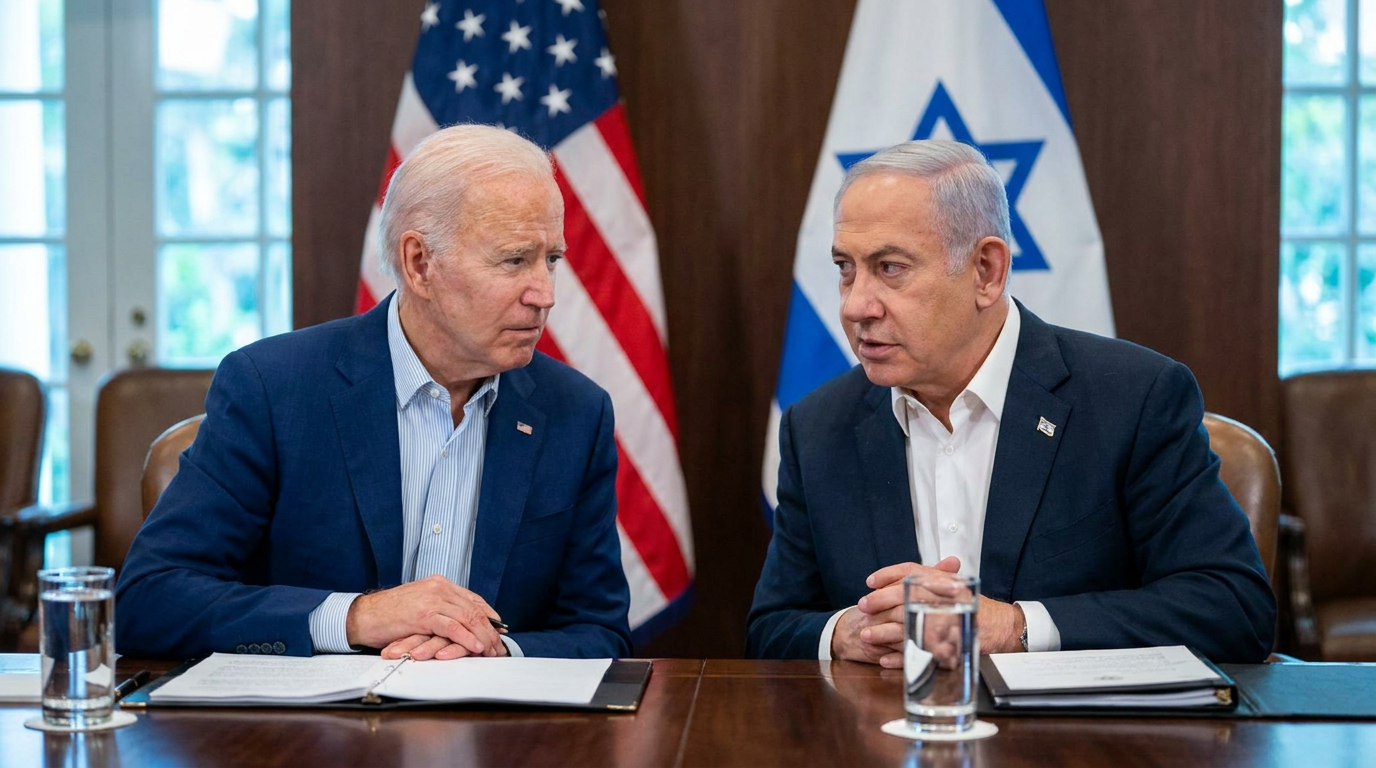
President Trump is reportedly days away from signing a landmark ceasefire agreement with Iran, aiming to halt regional hostilities despite strong opposition from Israeli Prime Minister Benjamin Netanyahu.
By Factlen Editorial Team
- US Administration
- Argues that the deal successfully ends a costly war and stabilizes the region while prioritizing American interests.
- Israeli Security Establishment
- Views the ceasefire as a dangerous concession that leaves Iran's nuclear and military capabilities unchecked.
- Iranian Leadership
- Frames the agreement as a diplomatic victory that secures sanctions relief and halts Western military aggression.
What's not represented
- · Lebanese civilians
- · Gulf State monarchies
Why this matters
A US-Iran ceasefire would fundamentally reshape Middle Eastern geopolitics and stabilize global energy markets, but it forces Israel to reassess its security strategy as Washington signals a pivot away from open-ended conflict.
Key points
- President Trump is expected to sign a ceasefire deal with Iran within days.
- The agreement aims to end direct military strikes and provide Iran with targeted sanctions relief.
- Israeli Prime Minister Benjamin Netanyahu strongly opposes the deal, viewing it as a premature end to the conflict.
- Global oil markets saw a 4.2% drop in crude prices following the news.
- The deal forces Israel to reconsider its security strategy without direct US military backing against Tehran.
The United States and Iran are on the brink of a historic ceasefire agreement, a diplomatic breakthrough that President Donald Trump expects to sign within days. The sudden acceleration of the deal marks a dramatic shift in Washington's Middle East policy, aiming to de-escalate a conflict that has threatened to engulf the broader region and disrupt global energy supplies.[1][2]
The impending agreement, however, has exposed a severe rift between the White House and its closest regional ally. In a tense phone call on Thursday evening, Trump reportedly informed Israeli Prime Minister Benjamin Netanyahu that the deal was finalized, bluntly stating, "This is the deal. It's a great deal, and it's time to end this war."[1]
For Netanyahu, the development is a bitter pill. Israel went to war alongside the US with the expectation of dismantling Iran's forward-operating capabilities and crippling its nuclear infrastructure. Israeli officials are now scrambling to assess the implications of a US withdrawal from active hostilities while Tehran's core military apparatus remains largely intact.[1][5]
The exact terms of the pending agreement remain closely guarded, but diplomatic sources indicate it involves a mutual cessation of direct military strikes and a freeze on certain Iranian proxy activities. In exchange, Iran would receive targeted sanctions relief, and the US would commit to restraining Israeli military action against Iranian soil.[4][8]
In exchange, Iran would receive targeted sanctions relief, and the US would commit to restraining Israeli military action against Iranian soil.
Global markets reacted immediately to the news of a potential de-escalation. Brent crude oil prices slid by over 4% in early trading, reflecting investor relief that the vital Strait of Hormuz might be spared from further military blockades or shipping disruptions.[6]

Within the United States, the political reaction has been highly polarized. Supporters of the administration have praised Trump's "America First" approach, arguing that the deal successfully extracts the US from another endless Middle Eastern war while securing key strategic objectives without further American casualties.[3]
Conversely, defense hawks and some bipartisan national security analysts have expressed deep alarm. Critics argue that the ceasefire merely delays an inevitable confrontation, providing Tehran with a crucial financial lifeline and time to reconstitute its forces without permanently dismantling its nuclear enrichment program.[7][8]
The Iranian government has signaled cautious optimism, with state media portraying the impending ceasefire as a diplomatic victory that successfully resisted Western military pressure. Regional mediators, particularly in Oman and Qatar, have reportedly played a crucial role in bridging the final gaps between Washington and Tehran over the past several weeks.[4]

As the signing window approaches, the focus shifts to Jerusalem's next move. Netanyahu faces immense domestic pressure from his right-wing coalition partners, who view any compromise with Iran as an existential threat. Whether Israel will abide by the US-brokered terms or pursue unilateral military action remains the most volatile variable in the region.[1][5][7]
How we got here
Early 2026
Hostilities escalate between US-Israeli forces and Iran, threatening regional stability.
May 2026
Secret negotiations accelerate in Oman and Qatar to find a diplomatic off-ramp.
June 11, 2026
President Trump informs Prime Minister Netanyahu that a ceasefire deal is imminent.
June 12, 2026
News of the pending agreement breaks, causing global oil prices to drop significantly.
Viewpoints in depth
US Administration's view
Prioritizes ending the conflict and stabilizing global markets over prolonged military engagement.
The White House views the ceasefire as a fulfillment of its 'America First' foreign policy mandate. By securing a halt to direct hostilities and freezing proxy attacks, the administration argues it has achieved its primary strategic goals without committing the United States to an open-ended, costly war in the Middle East. Officials emphasize that the deal stabilizes global energy markets and shifts the burden of regional security back to local actors.
Israeli Government's view
Considers the ceasefire a dangerous capitulation that leaves Iran's core threats unresolved.
For Jerusalem, the abrupt pivot by Washington is seen as a strategic abandonment. Israeli defense officials argue that halting the war now allows Iran to preserve its nuclear enrichment infrastructure and rebuild its military capabilities. The Israeli government maintains that only sustained military pressure can neutralize the threat from Tehran, and they fear the deal ties Israel's hands while granting Iran a crucial economic lifeline.
Iranian Leadership's view
Frames the agreement as a successful resistance against Western military pressure.
Tehran is projecting the impending ceasefire as a vindication of its 'strategic patience' and regional deterrence. By surviving the military escalation and securing sanctions relief, Iranian leaders argue they have forced the United States to acknowledge Iran's enduring influence in the Middle East. The deal is being sold domestically as a diplomatic triumph that will alleviate economic hardship without compromising the nation's sovereignty.
What we don't know
- Whether Israel will abide by the US-brokered terms or launch unilateral strikes against Iran.
- The exact specifics of the sanctions relief granted to Tehran.
- How the agreement will be enforced if proxy groups violate the ceasefire.
Key terms
- Proxy activities
- Military or political actions carried out by allied militant groups funded or directed by a larger power, such as Iran's support for regional militias.
- Sanctions relief
- The lifting or easing of economic penalties imposed by one country on another, allowing the penalized country to resume international trade.
- Strait of Hormuz
- A crucial maritime chokepoint between the Persian Gulf and the Gulf of Oman through which a significant portion of the world's oil supply passes.
Frequently asked
What are the terms of the US-Iran deal?
While exact details are guarded, it reportedly involves a mutual cessation of direct military strikes, a freeze on Iranian proxy activities, and targeted US sanctions relief.
Why is Israel opposed to the ceasefire?
Israeli leaders believe the deal leaves Iran's nuclear infrastructure and military capabilities intact, posing an ongoing existential threat to Israel.
How will this affect global oil prices?
The prospect of peace has already caused a drop in oil prices, as markets anticipate a lower risk of disruptions in the Strait of Hormuz.
Sources
Source coverage
8 outlets
3 viewpoints surfaced








[1]AxiosIsraeli Security Establishment
Trump's pending Iran deal is bitter pill for Netanyahu
Read on Axios →[2]NYT
Elon Musk Becomes the World’s First Trillionaire; U.S.-Iran cease-fire appears within reach
Read on NYT →[3]Fox NewsUS Administration
Trump touts 'historic' Iran peace deal, urges Israel to accept terms
Read on Fox News →[4]Al JazeeraIranian Leadership
Iran signals readiness for ceasefire as US pressure mounts on Israel
Read on Al Jazeera →[5]The Jerusalem PostIsraeli Security Establishment
Netanyahu convenes emergency cabinet as US-Iran deal looms
Read on The Jerusalem Post →[6]Reuters
Oil prices slide as US and Iran near ceasefire agreement
Read on Reuters →[7]Times of IsraelIsraeli Security Establishment
Israeli officials warn US-Iran deal leaves nuclear threat unchecked
Read on Times of Israel →[8]Wall Street JournalUS Administration
Trump's Middle East Gamble: Peace Deal Tests US-Israel Alliance
Read on Wall Street Journal →


Every angle. Every day.
Get news politics stories with full source coverage and perspective breakdowns delivered to your inbox.