
US and Iran Near Breakthrough Deal to End Three-Month War
President Trump announced a tentative peace agreement to end the U.S.-Iran conflict and reopen the Strait of Hormuz, though Tehran cautions that final details remain under review.
By Factlen Editorial Team
- U.S. Administration
- Prioritizes immediate economic relief, reopening shipping lanes, and securing a conceptual end to the nuclear threat.
- Iranian Government
- Seeks the lifting of sanctions and unfreezing of assets while protecting domestic political red lines.
- Regional Security Observers
- Focuses on the enforceability of the deal regarding Iran's proxy networks and ballistic missile capabilities.
What's not represented
- · Commercial shipping companies affected by the Strait closure
- · Iranian civilians facing the economic impact of sanctions and war
- · European Union diplomats mediating the broader regional fallout
Why this matters
The three-month conflict has choked off global shipping through the Strait of Hormuz, spiking energy prices and threatening a wider regional war. A finalized deal would immediately lower global oil costs, reopen vital trade routes, and de-escalate the most severe Middle East crisis in years.
Key points
- President Trump announced a tentative peace deal to end the three-month U.S.-Iran conflict.
- The agreement aims to reopen the Strait of Hormuz and lift certain economic sanctions on Tehran.
- Planned U.S. military strikes on Iran's Kharg Island oil hub were called off hours before the announcement.
- Iranian officials caution that large parts of the deal are finalized, but a final decision is still pending.
- Global oil prices dropped to two-month lows following the de-escalation news.
- A formal signing ceremony is proposed to take place in Europe as early as this weekend.
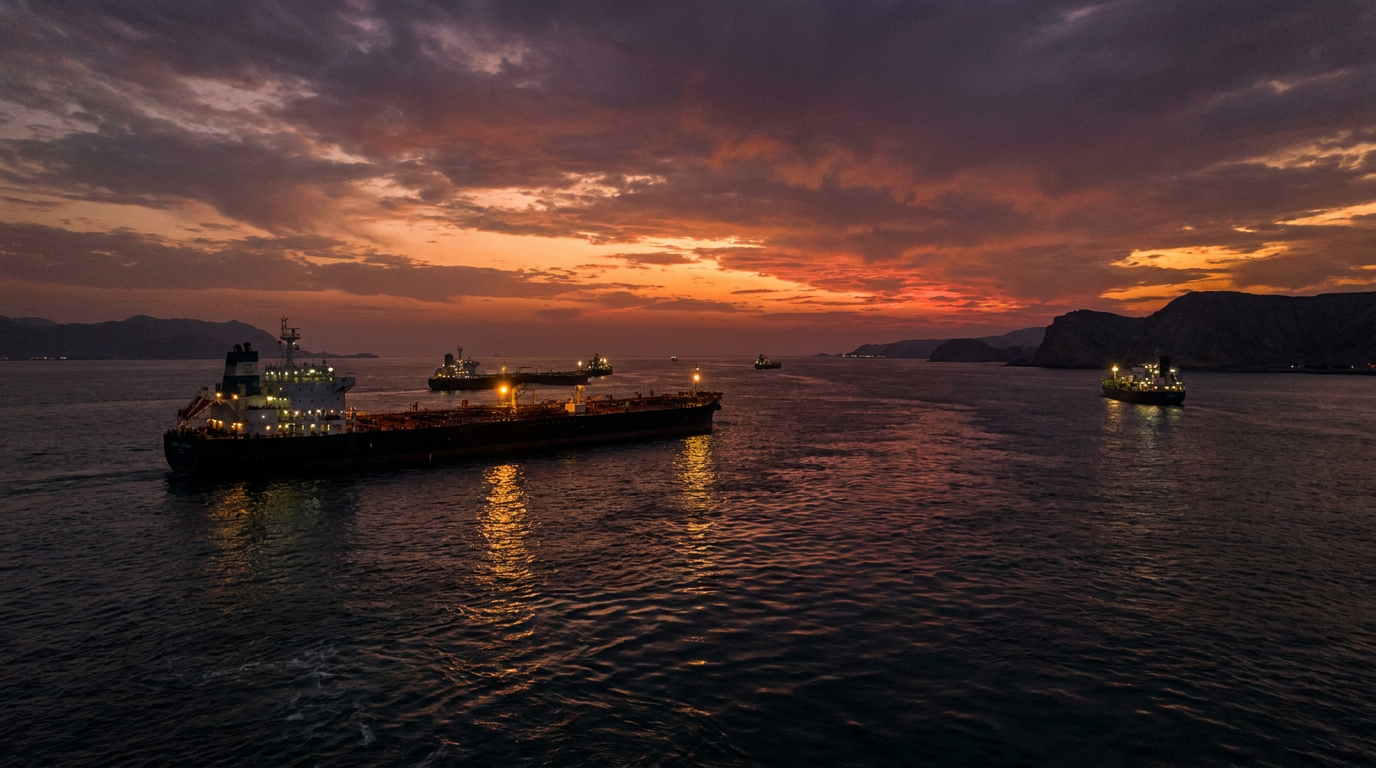
After three months of open conflict that has choked global shipping and spiked energy prices, the United States and Iran appear to be on the verge of a major diplomatic breakthrough. On Thursday evening, U.S. President Donald Trump announced a "great settlement" to end the war, abruptly calling off a wave of planned American military strikes against Iranian targets. The proposed agreement, which could be signed in Europe as early as this weekend, aims to permanently reopen the Strait of Hormuz and establish new guardrails around Tehran's nuclear ambitions.[2][3][4][5]
The immediate catalyst for the diplomatic pivot was a high-stakes military standoff. Just hours before the announcement, the U.S. was preparing to heavily bombard Kharg Island, Iran's primary oil export hub, in retaliation for Iranian drone attacks on commercial vessels. Instead, citing rapid progress in backchannel negotiations mediated by Qatar, the White House suspended the operation. "The strait will officially open as soon as we sign," Trump told reporters in the Oval Office, framing the deal as a definitive end to the crisis.[2][3][4][5][6]
Understanding the mechanics of this proposed settlement requires looking at the core demands of both sides. For Washington, the primary objective is securing the uninterrupted flow of global energy and neutralizing Iran's nuclear capabilities. For Tehran, the imperative is economic survival: the lifting of crippling international sanctions and the release of billions of dollars in frozen assets. The emerging Memorandum of Understanding (MoU) attempts to thread this needle by offering phased economic relief in exchange for verifiable military and nuclear concessions.[2][3][6]

However, a significant gap remains between the American framing of a "done deal" and the cautious rhetoric emerging from Tehran. While Trump asserted that Iran's Supreme Leader, Ayatollah Mojtaba Khamenei, has already approved the terms, Iranian officials are pumping the brakes. Esmaeil Baghaei, spokesperson for Iran's Foreign Ministry, confirmed that "large parts of the agreement have been finalized," but explicitly noted that no final conclusion has been reached. The text is currently under review by Iran's highest decision-making bodies, who remain adamant about not crossing established "red lines".[3][5][6]
This hesitation highlights the central uncertainty of the current moment: whether the conceptual agreements reached by negotiators can survive contact with domestic hardliners in both countries. Trump himself acknowledged that the current MoU is "a little conceptual," particularly regarding Iran's nuclear material. He argued that the immediate nuclear threat has been neutralized because U.S. strikes earlier in the conflict buried Tehran's enriched material "under a mountain," allowing negotiators to focus on broader strategic realignments rather than immediate facility inspections.[2][5]
The regional implications of the deal are equally complex, particularly for U.S. allies who have borne the brunt of Iran's proxy network. Israeli Prime Minister Benjamin Netanyahu's office quickly clarified that Israel is not a party to the MoU. Nevertheless, Jerusalem expressed appreciation for the U.S. commitment to ensuring the final text includes the dismantling of enrichment infrastructure, strict limitations on ballistic missile production, and a definitive cessation of Iranian support for regional proxy militias.[2][6]
The regional implications of the deal are equally complex, particularly for U.S.
The economic stakes of this diplomatic tightrope walk are staggering. The three-month war effectively closed the Strait of Hormuz—a narrow maritime chokepoint between the Persian Gulf and the Gulf of Oman through which roughly 20% of the world's oil consumption typically passes. This blockade sent global energy prices soaring, fueling inflation and threatening a global recession. The mere announcement of an impending deal sent immediate shockwaves through financial markets, triggering a strong global stock rally.[5][6]
Commodity markets reacted with similar speed. Within hours of the White House briefing and the cancellation of the Kharg Island strikes, oil prices plummeted to two-month lows. Brent crude futures dropped 2.7% to $90.60 a barrel, while U.S. West Texas Intermediate (WTI) fell to $87.71. These market movements underscore how deeply the global economy relies on the free navigation of Middle Eastern waterways, and how much economic relief hinges on the successful signing of the European pact.[4][5]

Domestic political pressures are also heavily influencing the timeline. The conflict has become a significant liability for the White House ahead of the November midterm elections. Sinking approval ratings, driven largely by voter anger over high gasoline prices, have left some Republicans openly worrying about losing control of Congress. Securing a definitive peace deal that lowers prices at the pump while claiming a victory over Iran's nuclear program offers a potent political narrative for the administration.[5]
Despite the optimism, the reality on the ground remains volatile. The April ceasefire has been repeatedly strained by tit-for-tat violence, and hostilities have not entirely ceased. Just this week, U.S. forces shot down two Iranian one-way attack drones attempting to strike commercial ships, while Iran's military intercepted a tanker transiting the strait. These ongoing skirmishes serve as a stark reminder that until the documents are signed—expected to be handled by Vice President JD Vance and top negotiators Steve Witkoff and Jared Kushner—the region remains on a knife's edge.[2][3][5][6]

The structure of the proposed sanctions relief is another critical mechanism that requires careful implementation. If the deal proceeds, the U.S. will need to coordinate with international banking institutions to unfreeze Iranian assets—a process that is historically fraught with legal and logistical hurdles. Financial experts note that even with a signed agreement, it could take weeks or months for the practical effects of sanctions relief to materialize in the Iranian economy, testing the patience of Tehran's leadership.[3]
Furthermore, the verification protocols for Iran's missile production and proxy funding will be heavily scrutinized by the international community. Unlike previous nuclear agreements that focused heavily on centrifuges and uranium stockpiles, this broader settlement attempts to address Iran's entire regional security apparatus. Ensuring compliance will likely require an unprecedented level of intelligence sharing and monitoring, raising questions about enforcement mechanisms if either side accuses the other of a breach.[2]

Ultimately, the coming days will determine whether this conceptual framework can be translated into a durable peace. The logistical preparations for the European summit are already underway, signaling a high degree of confidence from the American delegation. However, until the Iranian Supreme National Security Council issues its formal endorsement and the ink is dry on the final documents, the global economy and the stability of the Middle East remain suspended in a delicate state of diplomatic limbo.[2][5][6]
How we got here
March 2026
Active conflict breaks out between the U.S. and Iran, leading to the effective closure of the Strait of Hormuz to commercial shipping.
April 2026
A fragile ceasefire is announced but is repeatedly strained by tit-for-tat military strikes.
June 11, 2026
Following drone attacks on shipping, the U.S. prepares to bomb Iran's Kharg Island oil terminal.
June 11, 2026 (Evening)
President Trump abruptly calls off the strikes and announces a breakthrough peace settlement.
Mid-June 2026
Proposed timeline for U.S. and Iranian delegations to formally sign the agreement in Europe.
Viewpoints in depth
U.S. Administration's view
Seeking a rapid diplomatic victory to lower domestic gas prices and neutralize the nuclear threat.
For the White House, the primary driver is a combination of global economic stability and domestic political survival. The three-month conflict has caused a spike in gasoline prices that threatens Republican prospects in the upcoming midterm elections. By securing a deal that reopens the Strait of Hormuz and claims to permanently end Iran's nuclear ambitions, the administration aims to deliver immediate economic relief to American voters while projecting strength abroad. The willingness to accept a 'conceptual' agreement on nuclear material reflects a pragmatic shift toward prioritizing immediate de-escalation over exhaustive, drawn-out facility inspections.
Iranian Leadership's view
Balancing the desperate need for economic relief against hardline pressure to maintain strategic red lines.
Tehran's approach is dictated by severe economic distress caused by the war and compounding international sanctions. The prospect of unfreezing billions in assets and resuming normalized oil exports is an existential necessity for the government. However, Iranian negotiators are walking a tightrope; they must secure these economic lifelines without appearing to capitulate to American military threats. This dynamic explains the cautious public messaging from the Foreign Ministry, which emphasizes that no final decision has been made and that the Supreme National Security Council is still reviewing the text to ensure core ideological and security red lines are not crossed.
Regional Allies' view
Cautiously supportive of de-escalation but demanding strict limits on Iran's proxy network.
Nations like Israel, Saudi Arabia, and the UAE view the diplomatic breakthrough through the lens of regional security rather than just global oil prices. While they welcome the avoidance of a full-scale regional war, they remain deeply skeptical of any agreement that provides Iran with financial windfalls without dismantling its network of proxy militias. As articulated by the Israeli Prime Minister's office, regional powers expect the final deal to go beyond nuclear enrichment and strictly enforce the cessation of Iranian support for groups that have historically destabilized the Middle East.
What we don't know
- Whether Iran's Supreme National Security Council will formally approve the final text of the agreement.
- The exact verification mechanisms that will be used to monitor Iran's nuclear material and proxy funding.
- How quickly international sanctions will be lifted and frozen Iranian assets released if the deal is signed.
Key terms
- Strait of Hormuz
- A narrow, strategically vital waterway between the Persian Gulf and the Gulf of Oman through which roughly 20% of the world's oil consumption passes.
- Kharg Island
- Iran's primary oil export terminal located in the Persian Gulf, which handles the vast majority of the country's crude oil exports.
- Memorandum of Understanding (MoU)
- A formal agreement outlining the broad terms and conceptual framework of a deal before a final, legally binding contract is signed.
- Proxy Militias
- Armed groups funded, trained, or directed by a larger power to act on its behalf in regional conflicts without direct military engagement.
Frequently asked
Is the US-Iran war officially over?
Not yet. While President Trump announced a memorandum of understanding, Iranian officials emphasize that their decision-making bodies are still reviewing the text and no final agreement has been signed.
Will global gas prices go down?
Markets have already reacted positively, with global oil prices dropping nearly 3% on the news. If the Strait of Hormuz officially reopens, it is expected to further stabilize energy costs.
What happens to Iran's nuclear program?
The U.S. claims the deal will permanently prevent Iran from obtaining a nuclear weapon, though the current agreement treats nuclear material 'conceptually,' relying partly on the impact of previous U.S. military strikes on Iranian facilities.
When and where will the deal be signed?
U.S. officials have proposed signing the final documents in Europe as early as this weekend, with Vice President JD Vance expected to attend on behalf of the United States.
Sources
Source coverage
6 outlets
3 viewpoints surfaced






[1]Al JazeeraIranian Government
Are Iran, US really close to a breakthrough ‘deal’?
Read on Al Jazeera →[2]The Times of IsraelU.S. Administration
Trump calls off strikes on Iran, claims agreement could be signed this weekend in Europe
Read on The Times of Israel →[3]Al ArabiyaRegional Security Observers
Trump says US, Iran could sign peace deal as soon as this weekend
Read on Al Arabiya →[4]DAWN.COMIranian Government
Trump unveils 'great' Iran deal, signing expected in Europe
Read on DAWN.COM →[5]The HinduRegional Security Observers
Donald Trump says Iran war deal close as Strait of Hormuz tensions linger
Read on The Hindu →[6]ReutersU.S. Administration
Trump says Iran war deal close as Strait of Hormuz tensions linger
Read on Reuters →

Every angle. Every day.
Get news politics stories with full source coverage and perspective breakdowns delivered to your inbox.