
UK Ratification of High Seas Treaty Triggers New Global Mechanism for Marine Protected Areas
The UK has formally joined the active High Seas Treaty, unlocking a historic legal framework to establish environmental sanctuaries across two-thirds of the global ocean.
By Marina Lopez

Share this story
In short
- The UK has formally ratified the High Seas Treaty, unlocking its legal ability to propose Marine Protected Areas in international waters.
- The treaty establishes a standardized mechanism for proposing, reviewing, and enforcing environmental protections across two-thirds of the global ocean.
- New rules mandate Environmental Impact Assessments for any commercial activity on the high seas, including deep-sea mining.
The high seas—the vast, deep stretches of ocean that lie beyond any single nation's 200-mile exclusive economic zone—cover nearly two-thirds of the global ocean and harbor some of the planet's most vital ecosystems. For decades, these international waters have operated as a largely unregulated frontier, governed by a patchwork of regional fisheries agreements and shipping conventions that left critical biodiversity vulnerable to industrial exploitation.
That regulatory void is now officially closing. On July 10, 2026, the United Kingdom formally ratified the Biodiversity Beyond National Jurisdiction (BBNJ) Agreement, widely known as the High Seas Treaty, depositing its instrument of ratification at the United Nations in New York.
The UK's ratification marks a critical operational milestone for the treaty, which officially entered into force in January 2026 after crossing the required threshold of 60 ratifying nations late last year. By formally joining the active treaty, the UK has unlocked its legal standing to actively participate in the agreement's most powerful and anticipated mechanism: the creation of Marine Protected Areas (MPAs) in international waters.
Prior to the BBNJ Agreement, establishing an enforceable MPA on the high seas was a nearly impossible diplomatic hurdle, resulting in less than 1% of international waters receiving any formal environmental protection.
The core of the High Seas Treaty is its standardized legal pathway for Area-Based Management Tools (ABMTs). Under this new mechanism, a member state—or a coalition of ratifying nations—can submit a formal proposal to protect a specific high-seas region based on its ecological significance, such as migratory routes for whales, deep-water coral reefs, or vital spawning grounds. Once a proposal is submitted, the designated area undergoes a rigorous scientific and technical review to validate the ecological claims and determine the necessary level of protection.[2]
Following the scientific review, the mechanism mandates a robust stakeholder consultation process. This ensures that other nations, scientific bodies, indigenous communities, and commercial maritime industries have the opportunity to review the proposed boundaries and restrictions.
The final decision to establish the MPA rests with the Conference of the Parties (COP), the treaty's central governing body, which is scheduled to hold its inaugural meeting in early 2027. If approved by the COP, the MPA becomes an internationally recognized sanctuary, legally restricting harmful activities like bottom trawling or deep-sea mining within its borders.[2]
Conservation groups are already urging the UK government to leverage its newly acquired status to champion specific marine sanctuaries. Greenpeace UK has publicly called on the newly elected government to propose the Sargasso Sea—a unique, free-floating seaweed ecosystem in the Atlantic Ocean that serves as a critical nursery for sea turtles and eels—as one of the first high-seas MPAs. Advocates view the UK's diplomatic weight as essential for pushing ambitious proposals through the COP and turning the treaty's theoretical framework into tangible lines on the map.[1][2]
Beyond the creation of marine sanctuaries, the High Seas Treaty establishes a mandatory, standardized framework for Environmental Impact Assessments (EIAs) across all international waters. Any planned economic activity in the high seas must now be thoroughly evaluated for potential harm to marine ecosystems before it can legally proceed.
This critical provision is designed to act as a robust safeguard against rapidly emerging industries, such as deep-sea mining for battery metals or novel geoengineering projects aimed at carbon sequestration. By mandating these assessments, the treaty ensures that commercial development does not outpace environmental oversight.
The scientific community has particularly heralded the treaty's approach to Marine Genetic Resources (MGRs), which represent one of the most contentious issues resolved during the negotiations. The high seas harbor unique extremophiles and deep-water organisms whose genetic codes hold immense potential for breakthroughs in pharmaceuticals, biotechnology, and agriculture. Historically, only wealthy nations with advanced deep-sea submersibles and robust research budgets could access, sequence, and patent these resources. This dynamic effectively left developing nations entirely cut out of the resulting scientific discoveries and the lucrative financial dividends that followed.
To rectify this historical imbalance, the BBNJ Agreement explicitly mandates the fair and equitable sharing of benefits derived from Marine Genetic Resources. The treaty establishes a centralized clearing-house mechanism where digital sequence information, biological samples, and subsequent research findings must be transparently shared with the global scientific community.
Furthermore, any monetary benefits derived from commercializing these genetic discoveries must be directed back into a specialized fund. This fund is strictly earmarked for the conservation and sustainable use of high-seas biodiversity, ensuring that the ocean's genetic wealth directly finances its own ongoing protection.[2]
This benefit-sharing mechanism is inextricably linked to the treaty's strict provisions for capacity building and the transfer of marine technology. Developed nations that ratify the treaty are now legally obligated to actively assist developing states with the tools, technology, and specialized training necessary to participate in high-seas conservation and research. This capacity-building mandate ensures that the complex scientific review processes for establishing MPAs and conducting EIAs are not dominated solely by wealthy Western nations, but rather reflect a truly inclusive and global consensus on how the ocean should be managed.
Despite the legal framework now being active, enforcement on the high seas remains a profound logistical challenge. The ocean is vast, and monitoring illegal, unreported, and unregulated (IUU) fishing or unauthorized industrial activities across millions of square miles will require unprecedented satellite surveillance, data sharing, and international cooperation. Because the treaty only binds the countries that have formally ratified it, activities conducted by vessels flagged to non-ratifying nations will continue to complicate universal enforcement and compliance.[2]
Nevertheless, the activation of the MPA mechanism provides the only viable legal pathway to achieving the Kunming-Montreal Global Biodiversity Framework's "30 by 30" target—the international commitment to protect 30% of the planet's land and oceans by 2030.
Because national waters only account for a third of the global ocean, reaching that mathematical threshold was physically impossible without a mechanism to protect the high seas. With the UK and over 60 other nations now fully onboard, the global community finally has the tools required to safeguard the blue half of the planet.[2]
The UK's journey to ratification required significant domestic legislative groundwork. To comply with the treaty's mandates, the British government passed the Biodiversity Beyond National Jurisdiction Act in early 2026, which formally aligned domestic maritime law with the new international standards. Having played a leading role in shaping the BBNJ Agreement over more than a decade of complex United Nations negotiations, the UK's formal accession is viewed by diplomatic observers as a critical signal to other G7 nations that the treaty is now moving from abstract diplomacy into active enforcement.
The urgency surrounding the treaty's implementation is driven by the escalating threats facing international waters. Climate change is already altering ocean chemistry, leading to severe acidification and deoxygenation that threaten the foundational species of the marine food web. When combined with the pressures of industrial overfishing and the looming prospect of deep-sea mining for polymetallic nodules, marine biologists warn that high-seas ecosystems are approaching critical tipping points. The MPA mechanism offers a way to build ecological resilience, giving vulnerable species safe havens where they can recover from overlapping human impacts.
As the international community prepares for the first Conference of the Parties in 2027, the focus has definitively shifted from negotiation to practical implementation. Member states are currently drafting the first wave of MPA proposals, while scientific bodies are working to establish the baseline data required for the upcoming environmental impact assessments.
The UK's ratification ensures that one of the world's major maritime powers will be at the table when the first lines are drawn on the map, setting the precedent for how the global commons will be managed for generations to come.[2]
Jargon, explained
- BBNJ Agreement
- Biodiversity Beyond National Jurisdiction; the formal UN designation for the High Seas Treaty.
- Marine Protected Area (MPA)
- A clearly defined geographical space in the ocean managed through legal means to achieve long-term conservation of nature.
- Area-Based Management Tools (ABMTs)
- Regulatory mechanisms, including MPAs, used to manage human activities in a specific ocean area to protect biodiversity.
- Marine Genetic Resources (MGRs)
- Genetic material from marine plants, animals, or microbes that holds potential value for scientific or commercial applications.
- Conference of the Parties (COP)
- The supreme decision-making body of the treaty, composed of all ratifying member states.
Common questions
What are the high seas?
The high seas are areas of the ocean that lie beyond any country's 200-mile exclusive economic zone, making up about two-thirds of the global ocean.
What is the High Seas Treaty?
Also known as the BBNJ Agreement, it is a legally binding international treaty that provides a framework for protecting marine biodiversity in international waters.
How does the treaty create Marine Protected Areas?
Member states submit proposals for specific areas, which undergo scientific review and stakeholder consultation before being voted on by the Conference of the Parties.
Does the treaty ban fishing on the high seas?
No. It allows for the creation of specific protected areas where harmful activities like bottom trawling may be restricted, but it does not issue a blanket ban on high-seas fishing.
Competing readings
The Conservation Imperative
Why environmental groups view the MPA mechanism as a race against time.
For marine conservationists, the activation of the High Seas Treaty is not just a diplomatic victory, but a ticking clock. Organizations emphasize that the '30 by 30' target requires protecting roughly 11 million square kilometers of ocean every year until the end of the decade. They argue that the COP must bypass bureaucratic delays and immediately establish large-scale sanctuaries in ecologically critical zones like the Sargasso Sea and the Emperor Seamounts. Their primary concern is that industrial fishing fleets and prospective deep-sea mining operations will accelerate their activities before the new MPA boundaries can be legally enforced.
The Scientific and Equity Focus
How researchers and developing nations view the treaty's benefit-sharing rules.
While MPAs dominate the headlines, the scientific community and developing nations view the treaty's rules on Marine Genetic Resources (MGRs) as its most revolutionary achievement. For decades, the high seas were effectively a 'finders keepers' environment, where only a handful of wealthy nations possessed the technology to harvest and patent deep-sea genetics. By mandating a centralized clearing-house for digital sequence information and requiring capacity-building for developing states, this camp argues the treaty democratizes ocean science. They emphasize that true ocean protection is impossible unless all nations have the technological and financial means to participate in its governance.
- Marine Conservationists
- Advocate for the rapid establishment of strict, highly protected MPAs to meet the 30x30 global target.
- State & Diplomatic Actors
- Emphasize the geopolitical milestone of ratification and the procedural mechanisms for international ocean governance.
- Scientific Community
- Focus on the treaty's provisions for data sharing, environmental impact assessments, and equitable access to marine genetic resources.
- Global Equity Advocates
- Prioritize the treaty's capacity-building mandates and the fair sharing of financial benefits derived from high-seas discoveries.
Perspectives this story doesn't cover
- Non-ratifying Maritime Powers
- Deep-Sea Mining Corporations
- High-Seas Commercial Fishing Fleets
Sources
Source coverage
2 outlets
4 viewpoints surfaced


- [1]MyGreenPodMarine Conservationists
Ocean sanctuaries: UK ratifies High Seas Treaty
Read on MyGreenPod → - [2]Factlen Editorial TeamGlobal Equity Advocates
Synthesis by Factlen editorial team
Read on Factlen Editorial Team →

More in Environment
See all →Export Finance
How Export Credit Guarantees Shape Global Energy Infrastructure
5 sources
Glacier Dynamics
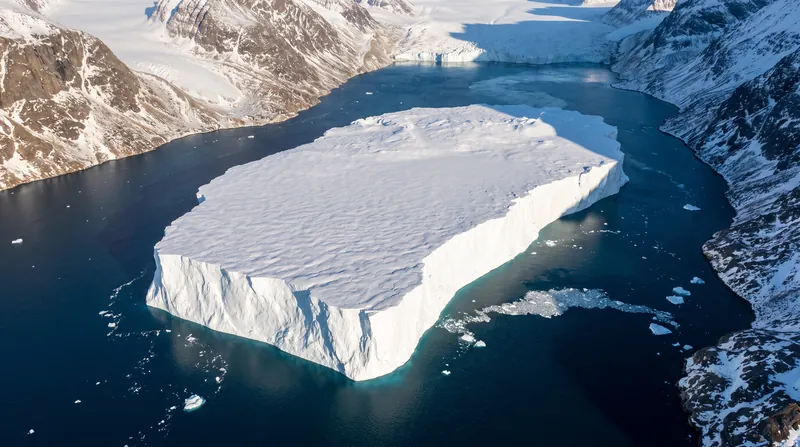
Greenland's Petermann Glacier Loses Manhattan-Sized Ice Island in Largest Arctic Calving Since 2020
6 sources
Climate Policy
How the Paris Agreement's 2035 Climate Targets Will Shape the Next Decade of Global Energy
3 sources

Wildlife Biology
As a Third Heat Dome Traps 70 Million Americans, How Wildlife Survives the Extreme Heat
8 sources
Comments
Every angle. Every day.
Get Environment stories with full source coverage and perspective breakdowns, free every day.