
The 100-Year Global Warming Potential: How the GWP Metric Compares the Climate Impact of Methane, N2O, and CO2
The 100-Year Global Warming Potential metric provides a standardized way to compare greenhouse gases, but its century-long time horizon fundamentally reshapes how the near-term impacts of short-lived pollutants are calculated.
By Marina Lopez

Share this story
When a corporation declares its supply chain "carbon neutral," or a nation reports its annual climate progress, the math relies on a single conversion rate that dictates global environmental policy. Every ton of methane, nitrous oxide, and fluorinated gas emitted into the atmosphere is mathematically converted into a carbon dioxide equivalent using the 100-Year Global Warming Potential (GWP100) metric.
This standardized exchange rate determines which industries face regulatory crackdowns and where billions of dollars in climate finance are directed. Because different greenhouse gases trap heat at vastly different rates and degrade on different timelines, the decision to evaluate them all over a strict 100-year horizon fundamentally reshapes the apparent climate impact of agriculture, energy production, and waste management.[1][3]
The GWP metric functions as an atmospheric exchange rate. As the US EPA explains, "CO2, by definition, has a GWP of 1 regardless of the time period used, because it is the gas being used as the reference." To calculate a gas's GWP, scientists measure two distinct properties: its radiative efficiency, or how effectively its molecular structure absorbs infrared energy, and its atmospheric lifetime, which dictates how long it persists before breaking down.[1][4]
Nitrous oxide (N2O), an agricultural byproduct primarily released through synthetic fertilizer application, persists in the atmosphere for over a century. It absorbs heat so efficiently that its 100-year GWP is 273. This means releasing one ton of N2O alters the climate as much as releasing 273 tons of CO2. Fluorinated gases, used in refrigeration and industrial manufacturing, possess even more extreme multipliers. Sulfur hexafluoride (SF6), for instance, carries a GWP in the tens of thousands, making even trace emissions a significant regulatory target.[1][3]
The debate within the GWP framework centers entirely on time, specifically regarding short-lived climate pollutants like methane (CH4). Methane is the second-largest contributor to global warming, responsible for roughly 30% of current temperature increases, but it degrades into water and CO2 after only 10 to 12 years. During its brief lifespan, it traps heat at an extraordinary rate.[3][4]
When measured over a 20-year window (GWP20), methane is 81.2 to 82.5 times more potent than carbon dioxide. However, because the standard GWP100 metric averages that intense short-term warming over a full century—including 88 years when the original methane molecule no longer exists—its official value drops to between 27 and 30. This mathematical dilution has profound regulatory consequences.[1][3]
Under international reporting rules, frameworks governing corporate emissions accounting mandate that organizations use the 100-year GWP values from the Intergovernmental Panel on Climate Change (IPCC) for all inventories. By standardizing on the 100-year timeframe, the framework structurally halves the apparent near-term impact of methane leaks from natural gas infrastructure and agricultural operations. While entities may optionally report 20-year values, the 100-year baseline remains the mandatory benchmark for compliance and target-setting.[4]
The Intergovernmental Panel on Climate Change regularly updates these conversion factors as atmospheric science advances. In its Sixth Assessment Report (AR6) published in 2021, the IPCC refined the GWP values to account for climate-carbon feedbacks and distinguish between fossil and non-fossil methane. Fossil methane, released during coal mining or oil extraction, carries a slightly higher GWP because its eventual degradation adds new fossil-derived CO2 to the atmosphere, unlike biogenic methane from livestock, which recycles existing surface carbon.[4]
The United Nations Environment Programme recommends adopting these AR6 values, though many national inventories still rely on older AR4 or AR5 figures for historical consistency. For policymakers, the choice of metric dictates the pace of the energy transition. Reducing human-caused methane emissions rapidly could mitigate global temperature increases by fractions of a degree, providing critical time to decarbonize heavy industry.[3][4]
Yet, because the GWP100 standard minimizes methane's immediate potency, investments often flow toward long-term CO2 reduction rather than rapid methane abatement. Alternative metrics are emerging to address this temporal mismatch. Some climate scientists advocate for GWP*, a dynamic calculation that accounts for the rate of change in short-lived gas emissions rather than treating them as cumulative pollutants.[2][3]
Under GWP*, a constant rate of methane emissions does not continuously add to global warming in the same way CO2 does, because the breakdown of older methane balances the warming impact of new emissions.
While the 100-year standard remains the bedrock of the Paris Agreement and international reporting, the debate over how to measure time in the atmosphere will determine the trajectory of climate action over the next crucial decade. The physical reality of the atmosphere does not conform to a single century-long average, and the metrics chosen today will dictate which greenhouse gases accumulate tomorrow.[3][5]
Analysis by camp
Standardized Accounting Advocates
Prioritize long-term consistency and international comparability using the GWP100 baseline.
Regulatory bodies and international standards organizations argue that a single, stable metric is essential for global climate accounting. By anchoring all national and corporate inventories to the 100-year Global Warming Potential, frameworks like the Paris Agreement can track progress across decades without constantly recalculating historical baselines. They maintain that while GWP100 may understate near-term impacts, it prevents the regulatory chaos that would ensue from using multiple time horizons simultaneously.
Near-Term Mitigation Proponents
Emphasize the urgent need to use GWP20 to drive immediate action on methane and prevent near-term tipping points.
Climate scientists and environmental agencies focused on immediate temperature reduction argue that the 100-year average dangerously obscures the threat of short-lived pollutants. Because methane drives roughly 30% of current warming, they advocate for evaluating its impact over a 20-year window, where its potency is over 80 times that of CO2. This camp warns that ignoring near-term warming in favor of century-long averages could push the climate past irreversible tipping points before long-term CO2 reductions take effect.
Dynamic Metric Researchers
Advocate for flow-based metrics like GWP* that model the actual atmospheric physics of short-lived gases over time.
A growing coalition of atmospheric physicists argues that static multipliers fundamentally misrepresent how short-lived gases behave. They propose GWP*, a metric that measures the rate of change in emissions rather than treating them as cumulative stock. Under this framework, a steady rate of methane emissions does not continuously increase global temperatures, because the degradation of old methane offsets the warming of new emissions. This perspective seeks to align carbon accounting with actual physical temperature responses.
- Standardized Accounting Advocates
- Prioritize long-term consistency and international comparability using the GWP100 baseline.
- Near-Term Mitigation Proponents
- Emphasize the urgent need to use GWP20 to drive immediate action on methane and prevent near-term tipping points.
- Dynamic Metric Researchers
- Advocate for flow-based metrics like GWP* that model the actual atmospheric physics of short-lived gases over time.
Sources
Source coverage
5 outlets
3 viewpoints surfaced





- [1]US EPAStandardized Accounting Advocates
Understanding Global Warming Potentials
Read on US EPA → - [2]Our World in DataDynamic Metric Researchers
Global warming potential of greenhouse gases relative to CO₂
Read on Our World in Data → - [3]WikipediaDynamic Metric Researchers
Global warming potential
Read on Wikipedia → - [4]IPCCNear-Term Mitigation Proponents
Climate Change 2021: The Physical Science Basis - Chapter 7
Read on IPCC → - [5]Factlen Editorial TeamDynamic Metric Researchers
Synthesis by Factlen editorial team
Read on Factlen Editorial Team →
More in Environment
See all →Food Waste
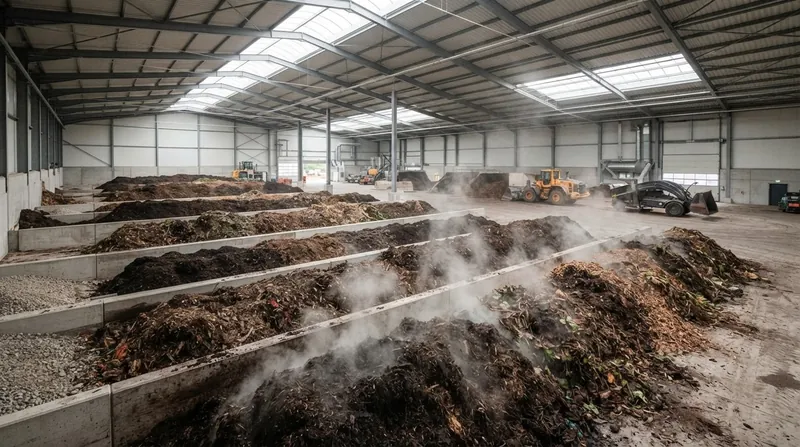
UNEP Warns Rotting Food Waste Produces Up to 10 Percent of Global Emissions, Five Times More Than Aviation
4 sources
Amazon Conservation
Protecting Existing Amazon Forests Yields Greater Climate and Biodiversity Gains Than Restoration, Study Finds
3 sources

Water Accounting
The Blue, Green, and Grey Water Footprint: How the ISO 14046 Standard Calculates Total Water Use
7 sources
Climate Baselines
The 30-Year Rule: How the IPCC's Standard Normal Period Masks the True Rate of Climate Change
8 sources
Comments
Every angle. Every day.
Get Environment stories with full source coverage and perspective breakdowns, free every day.