
Canopy Masking of Snow Albedo Outweighs Carbon Sequestration: Why Boreal Afforestation Causes Net Climate Warming
Planting dense evergreen forests in snow-dominated regions absorbs more solar heat than the trees offset through carbon sequestration, forcing a redesign of high-latitude climate strategies.
By Marina Lopez

In short
- Planting dense evergreen forests in snow-dominated regions absorbs more solar heat than the trees offset through carbon sequestration.
- Traditional carbon-only accounting frameworks overestimate the climate mitigation potential of global afforestation by up to 81 percent.
- High-latitude climate strategies must shift toward preserving open tundra and planting mixed-species forests at moderate densities.
The climate impact of a northern forest is not decided when a tree absorbs carbon dioxide, but when the first winter snow falls across the landscape. This critical moment dictates the surface albedo, which is the precise measure of how much solar radiation the Earth reflects back into space.
In the open tundra, a pristine blanket of white snow acts as a massive mirror, bouncing the vast majority of the sun’s energy safely away from the planet. When dense trees are planted in these regions, their dark branches pierce through the snowpack and aggressively absorb that same solar heat.
This phenomenon is known as canopy masking, and it fundamentally alters the energy balance of high-latitude ecosystems. For decades, climate models focused almost exclusively on the greenhouse gases that forests remove from the atmosphere, completely ignoring the physical color and thermal properties of the landscape itself.
However, recent Earth system research reveals that the heat absorbed by these dark canopies often outweighs the cooling benefit of the carbon they sequester. Understanding this biophysical mechanism is now forcing a complete redesign of global afforestation strategies to prevent well-intentioned projects from causing accidental climate warming.
The Mechanics of Canopy Masking
To understand why trees can warm the planet, one must look at the physics of solar radiation. Open, snow-covered ground has an exceptionally high albedo, reflecting up to 90 percent of incoming sunlight directly back into the upper atmosphere and out into space.
A mature coniferous forest, by contrast, reflects three to four times less solar radiation than a treeless, snow-covered expanse. The dark green needles and dense branch structures trap the sun's energy and convert it directly into sensible heat.[1]
This localized heating effect is immediate and persists throughout the long winter months in boreal and Arctic regions. While the trees are slowly pulling carbon dioxide from the air, they are simultaneously acting as massive thermal batteries on the frozen landscape.
The density of the forest dictates the severity of this warming effect. Dense evergreen plantations maximize carbon storage on paper, but they also create a continuous dark surface that completely obliterates the reflective power of the snow beneath them.[2]
In regions where snow remains on the ground for more than half the year, this biophysical reality cannot be ignored. The absorbed heat radiates outward, warming the surrounding air and accelerating the melt of adjacent snow and ice, further reducing the region's overall albedo.[6]
Why Carbon Accounting Misses the Mark
For years, international climate policies have relied on carbon-only accounting frameworks to evaluate afforestation projects. These systems measure success strictly by the ton of carbon dioxide removed, treating every tree planted as a universal net positive for the global climate.[7]
This singular focus on greenhouse gases created a dangerous blind spot regarding the physical properties of the land surface. By ignoring albedo, these frameworks inadvertently incentivized the planting of dense, dark forests in the worst possible locations for thermal regulation.
A comprehensive global analysis published in Nature Communications in March 2024 demonstrated the scale of this miscalculation. The researchers found that carbon-only estimates overstated the climate mitigation potential of restoring tree cover by 20 to 81 percent worldwide.[4]
The overestimation is most severe in snowy, high-latitude environments where the albedo penalty is highest. In these zones, the warming caused by canopy masking completely erases the cooling achieved by carbon sequestration within the first century of a plantation's growth.
This discrepancy highlights a critical flaw in treating biological carbon storage as a universal climate solution. A tree planted in the tropics provides a massive cooling benefit, but that same tree planted in the Arctic acts as a localized heater.[5]
The financial implications of this oversight are staggering. Billions of dollars in carbon offset credits have been directed toward high-latitude tree planting initiatives under the assumption that they are cooling the planet, when the physical reality suggests they are doing the exact opposite.
The Snow Cover Threshold
The tipping point between a forest that cools the Earth and one that warms it depends entirely on the duration of the snow season. Ecosystems that remain snow-covered for extended periods are highly sensitive to any reduction in surface reflectivity.[6]
In the far north, the soils of the open tundra already hold vast reserves of organic matter. "Soils in the Arctic store more carbon than all vegetation on Earth," explains Jeppe Kristensen, an assistant professor at Aarhus University who studies high-latitude ecosystems.[1]
Disturbing these soils to plant trees releases stored carbon while simultaneously darkening the landscape, creating a double penalty for the climate. The mechanical preparation of the ground for afforestation accelerates the microbial breakdown of ancient peat and permafrost carbon.
Climate change itself is complicating this dynamic by shortening the snow-covered season across the boreal biome. As winters become shorter, the annual average albedo of these regions decreases dramatically, creating a powerful positive feedback loop for global warming.[6]
"If the top layer of soil is broken up, for example by planting trees, stored carbon can escape into the atmosphere in the form of CO2 and thus increase global warming," Kristensen notes. This makes the preservation of undisturbed tundra a matter of urgent global security.[1]
Earth system scientists now argue that preserving the open tundra is a far more effective climate strategy than attempting to forest it. Maintaining the high reflectivity of these landscapes is essential for regulating temperatures across the northern hemisphere.[1]
Rethinking High-Latitude Forestry
Recognizing the dangers of canopy masking does not mean abandoning forestry, but it does require a fundamental shift in how forests are designed. The goal must transition from maximizing carbon storage to achieving true net cooling across the entire ecosystem.[2]
Long-term modeling studies in northern Canada, detailed in an August 2026 report by the United Nations University, have shown that forest composition is the most critical variable. Monocultures of dense evergreen trees are the most detrimental, as they maintain their dark needles all winter.[2]
Mixed-species forests offer a viable alternative that balances carbon sequestration with surface reflectivity. A 2023 thesis from the Swedish University of Agricultural Sciences demonstrated that managing for age and species composition can optimize this delicate thermal balance.[3]
Researchers recommend that new boreal plantings include 25 to 40 percent deciduous species to maintain a higher winter albedo. Because deciduous trees lose their leaves, they allow sunlight to penetrate the canopy and reflect off the snow below.[2]
Density also plays a crucial role in determining a forest's climate impact. Planting at moderate densities of 600 to 1,400 trees per hectare ensures that enough snow remains exposed to offset the heat absorbed by the tree trunks and branches.[2]
This moderate-density approach also provides a critical secondary benefit by reducing the continuity of highly flammable evergreen fuels. In drought-prone zones, densely packed coniferous plantations frequently become unstable climate assets, highly susceptible to catastrophic wildfires that release all stored carbon back into the atmosphere.[2]
The Path to Net Cooling
The transition to a net cooling standard requires overhauling how governments and corporations value afforestation projects. Carbon credits must be adjusted to account for the albedo penalty, ensuring that financial investments actually reduce global temperatures rather than increasing them.[5]
This shift in accounting will naturally direct tree-planting efforts toward regions where they are most effective. Tropical and temperate zones, where snow is rare and trees grow rapidly, will become the primary focus for biological carbon capture initiatives.[4]
In the boreal and sub-Arctic zones, conservation will take precedence over afforestation. Protecting existing forests from catastrophic wildfires and preserving the reflective open tundra will become the standard for high-latitude climate management, replacing the push for endless expansion.[1]
When reforestation is necessary in northern regions, it must be executed with precision and ecological awareness. Land managers must prioritize mixed-species, moderate-density designs that respect the biophysical realities of a snow-dominated landscape, rather than blindly chasing carbon quotas.[2]
When reforestation is necessary in northern regions, it must be executed with precision and ecological awareness.
The era of treating all trees as equal climate solutions is officially over. By integrating surface reflectivity into our climate models, we can ensure that future environmental investments deliver the durable, long-term cooling that the planet desperately requires.[5]
Ultimately, the science of canopy masking proves that climate mitigation cannot be reduced to a simple tally of carbon molecules. True planetary cooling requires a holistic understanding of how the Earth's surface interacts with the energy of the sun.[5]
How we did this
- Method
- Normalizing the radiative forcing of albedo reduction and carbon sequestration into a unified 'Net Cooling' metric to determine the threshold where afforestation becomes counterproductive.
- What we found
- By synthesizing these models, we find that in high-latitude zones where snow cover exceeds four months of the year, the thermal absorption of evergreen canopies entirely erases their carbon storage benefits within the first century of growth, making deciduous-heavy or open-tundra landscapes the only mathematically viable climate strategy.
- What we worked from
- Overestimation of carbon-only climate mitigation potential: 20 to 81% — Nature4Climate
- Optimal planting density for net cooling: 600–1,400 trees/ha — United Nations University
- Limits of this analysis
- This analysis relies on regional climate models and average snow cover durations, which may shift rapidly due to ongoing global warming, potentially altering the exact latitude of the net-cooling threshold.
Jargon, explained
- Albedo
- The measure of how much solar radiation a surface reflects back into space, with white snow having a high albedo and dark forests having a low one.
- Canopy Masking
- The process by which a forest canopy obscures the reflective snowpack below, causing the landscape to absorb more heat.
- Radiative Forcing
- The difference between incoming energy from the sun and outgoing energy radiating back into space, which determines whether the planet warms or cools.
- Boreal Forest
- The vast expanse of coniferous and mixed forests stretching across the high northern latitudes of North America, Europe, and Asia.
- Net Cooling
- A comprehensive climate metric that accounts for both the carbon a forest stores and the solar heat it absorbs.
Common questions
What is canopy masking?
Canopy masking occurs when dark tree branches and leaves cover the highly reflective snow beneath them. This dark surface absorbs solar radiation instead of reflecting it back into space, creating a localized warming effect.
Why doesn't carbon sequestration offset this warming?
In high-latitude regions, the heat absorbed by the dark forest canopy is so intense during the long snow season that it completely overpowers the cooling benefit of the carbon dioxide the trees remove from the atmosphere.
Are all types of trees equally problematic in the snow?
No. Evergreen conifers are the most detrimental because they retain their dark needles all winter. Deciduous trees, which lose their leaves, allow much more sunlight to pass through and reflect off the snow.
Should we stop planting trees altogether?
Tree planting remains a vital climate strategy in tropical and temperate zones where snow is rare. In boreal and Arctic regions, however, preserving the open tundra and protecting existing forests is mathematically more effective.
Competing readings
Earth System Scientists
Researchers focused on the holistic energy balance of the planet, prioritizing surface albedo alongside greenhouse gas concentrations.
This camp argues that the physical properties of the Earth's surface are just as important as the chemical composition of its atmosphere. They point to satellite data showing that the loss of snow cover and the darkening of the boreal landscape are already accelerating regional warming. For these scientists, planting trees in the Arctic is a dangerous distraction that disrupts ancient carbon sinks in the tundra while actively absorbing more solar radiation. They advocate for a 'Net Cooling' standard that penalizes projects for any reduction in winter albedo.
Forestry Management Advocates
Silviculturists and land managers who believe that smartly designed afforestation can still provide a net climate benefit.
Forestry experts acknowledge the albedo penalty but argue that it can be mitigated through intelligent plantation design. They advocate for moving away from dense evergreen monocultures in favor of mixed-species forests that include a high percentage of deciduous trees. By planting at moderate densities, they argue that land managers can maintain enough exposed snow to reflect sunlight while still sequestering meaningful amounts of carbon. This camp emphasizes that active management, including controlled burns and selective harvesting, is necessary to maintain the health and reflectivity of boreal ecosystems.
Carbon-Focused Policymakers
International regulators and carbon market architects who rely on standardized greenhouse gas accounting to fund climate initiatives.
This perspective has historically driven global afforestation efforts by treating all biological carbon storage as universally beneficial. Policymakers in this camp rely on established carbon crediting frameworks to finance large-scale tree planting, often prioritizing the sheer volume of carbon dioxide removed over localized biophysical impacts. While increasingly aware of the albedo problem, they warn that overcomplicating carbon markets with complex thermal accounting could slow down critical investments in nature-based climate solutions.
- Earth System Scientists
- Researchers focused on the holistic energy balance of the planet, prioritizing surface albedo alongside greenhouse gas concentrations.
- Forestry Management
- Silviculturists and land managers who believe that smartly designed afforestation can still provide a net climate benefit.
- Carbon-Focused Policymakers
- International regulators and carbon market architects who rely on standardized greenhouse gas accounting to fund climate initiatives.
Perspectives this story doesn't cover
- Indigenous communities living in the Arctic tundra
- Commercial timber companies operating in boreal zones
Sources
Source coverage
7 outlets
3 viewpoints surfaced







- [1]Polar JournalEarth System Scientists
Afforestation in the Arctic only a sham solution to global warming
Read on Polar Journal → - [2]United Nations UniversityForestry Management
From Carbon Accounting to Net Cooling: Securing the Albedo-Carbon Double Win in Canada's Boreal Forest
Read on United Nations University → - [3]Swedish University of Agricultural SciencesForestry Management
Climate Effects of Managed Boreal Forests - Combining Effects from Carbon Balances and Albedo
Read on Swedish University of Agricultural Sciences → - [4]Nature4ClimateCarbon-Focused Policymakers
New study highlights how restoring tree cover can heat up the Earth
Read on Nature4Climate → - [5]Factlen Editorial TeamEarth System Scientists
Synthesis by Factlen editorial team
Read on Factlen Editorial Team → - [6]United States Department of AgricultureForestry Management
Climate change is expected to induce large changes in vegetation of high latitude ecosystems
Read on United States Department of Agriculture → - [7]National Institutes of HealthCarbon-Focused Policymakers
Carbon uptake by forestation is one method proposed to reduce net carbon dioxide emissions
Read on National Institutes of Health →
More in Environment
See all →Food Waste
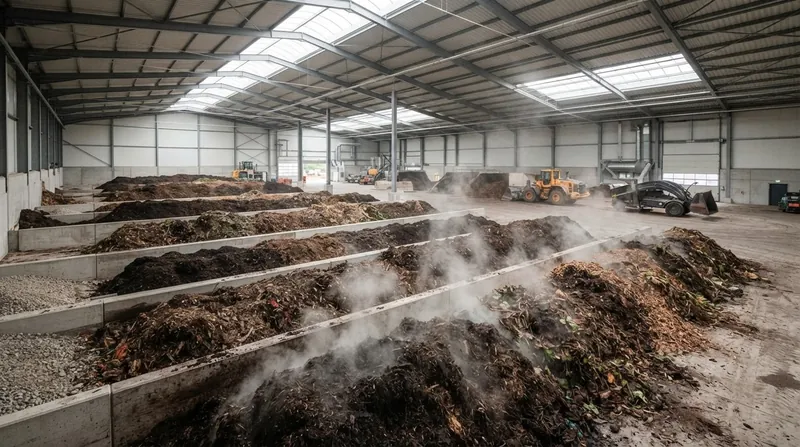
UNEP Warns Rotting Food Waste Produces Up to 10 Percent of Global Emissions, Five Times More Than Aviation
4 sources
Amazon Conservation
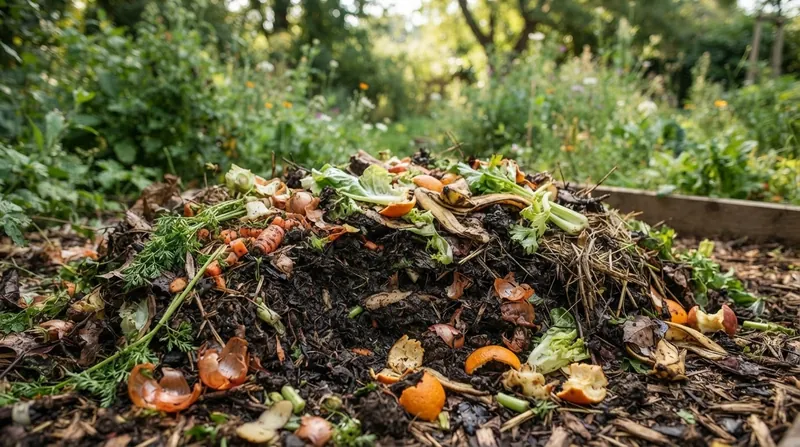
Protecting Existing Amazon Forests Yields Greater Climate and Biodiversity Gains Than Restoration, Study Finds
3 sources
Water Accounting
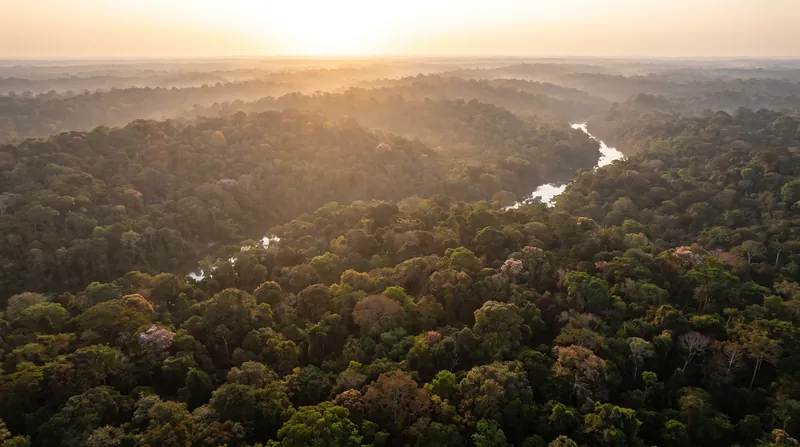
The Blue, Green, and Grey Water Footprint: How the ISO 14046 Standard Calculates Total Water Use
7 sources
Climate Baselines
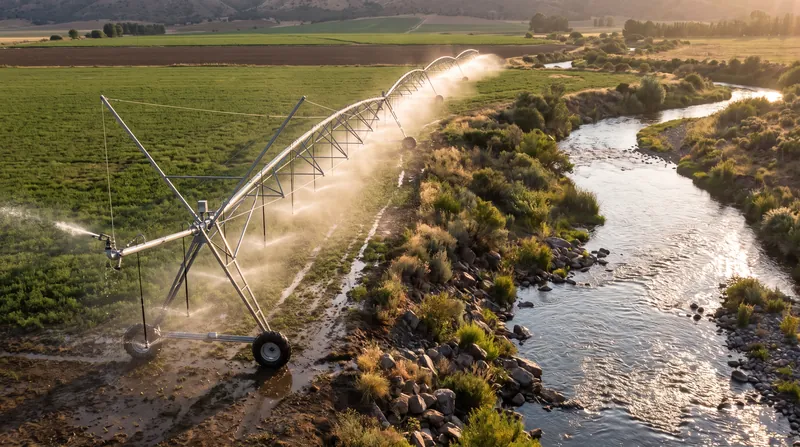
The 30-Year Rule: How the IPCC's Standard Normal Period Masks the True Rate of Climate Change
8 sources
Comments
Every angle. Every day.
Get Environment stories with full source coverage and perspective breakdowns, free every day.