
How Crushed Volcanic Rock is Becoming a Gigaton-Scale Carbon Removal Tool
Enhanced rock weathering accelerates a natural geological process by spreading crushed silicate on farmland, permanently locking away carbon while boosting crop yields.

For millions of years, the Earth has relied on a slow, silent mechanism to regulate its climate. When rain falls, it absorbs carbon dioxide from the atmosphere, creating a weak carbonic acid. As this rain hits mountains and exposed rock, it triggers a chemical reaction that locks the carbon away, eventually washing it into the ocean. This natural geological thermostat has kept the planet habitable, but it operates on timescales of hundreds of thousands of years—far too slow to address the modern climate crisis.
Now, a rapidly scaling climate technology is attempting to put nature's thermostat into overdrive. Known as enhanced rock weathering (ERW), the process involves taking silicate rocks like basalt, crushing them into a fine powder, and spreading them across vast tracts of agricultural land. By dramatically increasing the surface area of the rock exposed to the elements, scientists and startups are compressing a millennial-scale geological process into a matter of months or years.
The momentum behind ERW has surged in 2026, transforming it from a niche academic concept into one of the most promising pillars of the permanent carbon removal industry. Unlike biological carbon capture methods like planting trees—which can release their stored carbon if they burn or rot—enhanced rock weathering offers near-permanent storage. Once the carbon dioxide reacts with the crushed rock, it converts into stable dissolved bicarbonates that flow through soil and river systems into the ocean, where the carbon remains trapped for over 1,000 years.[2][3]
The sheer scale of the potential drawdown is staggering. According to models reviewed by Project Drawdown and academic institutions, widespread deployment of enhanced rock weathering could remove between one and four gigatons of carbon dioxide from the atmosphere annually by 2050. To put that in perspective, a single gigaton is roughly equivalent to the yearly emissions of a major industrial economy.[1]
But the climate benefits are only half of the story. What makes ERW uniquely attractive is its profound co-benefits for global agriculture. Basalt, the most commonly used rock for this process, is rich in essential plant nutrients like iron, magnesium, phosphorus, and calcium. When applied to farmland, the rock dust acts as a natural fertilizer, replenishing degraded topsoil and regulating soil pH.[2][5]
For generations, farmers have paid to apply agricultural lime to their fields to reduce soil acidity. Crushed basalt can replace this lime entirely, eliminating a major operational cost while simultaneously generating revenue. Startups operating in this space provide the rock dust to farmers for free, or even pay them per hectare to apply it, funding the operation through the sale of high-value carbon removal credits to corporate buyers.[5]
The agronomic results have been overwhelmingly positive. Field trials and commercial deployments have demonstrated that basalt application not only increases crop yields but also builds plant resilience. The silicon released by the weathering rock helps crops develop tougher leaves and stems, improving their natural defenses against pests and reducing drought-induced oxidative stress.[2]
This rare alignment of ecological and economic incentives has triggered a wave of investment. Major technology companies have identified ERW as a highly scalable, low-cost route to permanent carbon removal. Microsoft, Google, and Stripe have locked in hundreds of thousands of tonnes through multi-year contracts with ERW startups.
Companies like Lithos Carbon, UNDO, and ZeroEx have rapidly expanded their operations across North America and Europe, utilizing existing agricultural logistics networks to spread the rock dust using standard farming equipment. By tapping into the infrastructure already used to distribute fertilizer and lime, these companies avoid the massive capital expenditures required by engineered carbon capture facilities.
However, the most explosive growth is happening outside the traditional tech hubs. A 2026 study published in Communications Sustainability by researchers at Cornell University highlighted that the true potential of enhanced rock weathering lies in the Global South. Because the chemical reactions rely on water and heat, tropical environments with high rainfall and warm temperatures accelerate the weathering process dramatically.[1][3]
Startups like InPlanet are already capitalizing on this geographic advantage, deploying large-scale ERW projects across Brazil. In tropical soils, the carbon removal rates are estimated to be three to five times faster than in temperate zones. Expanding access to this technology in countries like Brazil and India not only maximizes carbon drawdown but also directs vital climate finance to smallholder farmers in developing economies.[1][3][4]
Despite the immense promise, the industry faces significant hurdles, chief among them being the challenge of measurement, reporting, and verification (MRV). Unlike direct air capture plants, which can put a meter on a pipe to measure exactly how much carbon is captured, ERW takes place in open, dynamic agricultural ecosystems. Tracking the exact volume of carbon converted to bicarbonate as it moves through soil and water requires complex geochemical modeling and rigorous soil sampling.
To prevent greenwashing, the industry has spent the last few years developing stringent verification protocols. Registries like Puro.earth have established rigorous methodologies that require third-party auditors to measure environmental stressors and verify carbon drawdown at every step of the process. The first independently verified ERW credits were issued under these strict protocols in early 2025, providing the market with the confidence needed to scale.[2]
Another critical consideration is the energy required to mine, crush, and transport the rock. If the logistics rely heavily on fossil fuels, the emissions could offset the carbon captured by the weathering process. To maintain a highly positive net-climate impact, operators are increasingly sourcing waste rock from existing mining operations and utilizing renewable energy for the crushing process, ensuring the life-cycle emissions remain a fraction of the total carbon removed.[2]
As the world races to limit global warming, emission reductions alone are no longer sufficient; humanity must actively remove billions of tonnes of legacy carbon from the atmosphere. Enhanced rock weathering offers a uniquely elegant solution, utilizing the Earth's oldest climate-control mechanism and the vast footprint of global agriculture. By turning farmers into climate heroes and rock dust into a tool for planetary repair, ERW is proving that sometimes the most advanced technologies are simply nature, accelerated.[4]
Key points
- Enhanced rock weathering (ERW) accelerates a natural geological process to permanently remove CO₂ from the atmosphere.
- Crushed silicate rocks like basalt are spread on agricultural land, where they react with rainwater to lock away carbon.
- The process provides major co-benefits to farmers, replacing expensive lime and boosting crop yields with essential nutrients.
- Tropical climates in the Global South can weather rocks up to five times faster than temperate zones.
Open questions
- The long-term ecological impact of drastically increasing dissolved bicarbonates in local river systems before they reach the ocean.
- Whether the global supply of easily accessible, safe silicate waste rock is sufficient to reach the multi-gigaton scale without opening new, energy-intensive mines.
- How quickly international carbon markets will standardize the complex measurement protocols required for open-field weathering.
Timeline
Geological History
Natural rock weathering regulates Earth's climate over millions of years.
Early 2020s
Startups begin piloting enhanced rock weathering on agricultural lands to accelerate the process.
Early 2025
The first independently verified ERW carbon credits are issued under rigorous new measurement protocols.
2026
Major tech companies sign multi-year, multi-million-dollar offtake agreements for ERW credits.
- Climate Scientists & Modelers
- Focuses on the gigaton-scale potential of the technology and the 1,000-year permanence of ocean storage compared to biological methods.
- Agricultural Communities
- Values the tangible farming benefits, such as replacing expensive lime, reducing fertilizer costs, and improving crop resilience to drought.
- Carbon Market Verifiers
- Emphasizes the necessity of strict measurement and verification protocols to track open-system chemistry and prevent corporate greenwashing.
- Global South Advocates
- Argues that the technology's future lies in tropical climates where weathering is faster, and that carbon finance must equitably reach smallholder farmers.
Perspectives this story doesn't cover
- Mining Industry Operators
- Marine Biologists
Sources
Source coverage
5 outlets
4 viewpoints surfaced





- [1]Cornell ChronicleGlobal South Advocates
Widespread 'enhanced rock weathering' could slow global warming
Read on Cornell Chronicle → - [2]Puro.earthCarbon Market Verifiers
Enhanced Rock Weathering Methodology
Read on Puro.earth → - [3]NatureTech MemosGlobal South Advocates
Top 10 Soil Carbon Sequestration Startups 2026
Read on NatureTech Memos → - [4]ESG TodayGlobal South Advocates
Microsoft Signs Enhanced Rock Weathering Carbon Removal Deal with InPlanet
Read on ESG Today → - [5]Remineralize the EarthAgricultural Communities
ZeroEx: Pioneering Enhanced Rock Weathering in Europe and Revolutionizing Carbon Dioxide Removal Verification Worldwide
Read on Remineralize the Earth →
More in Environment
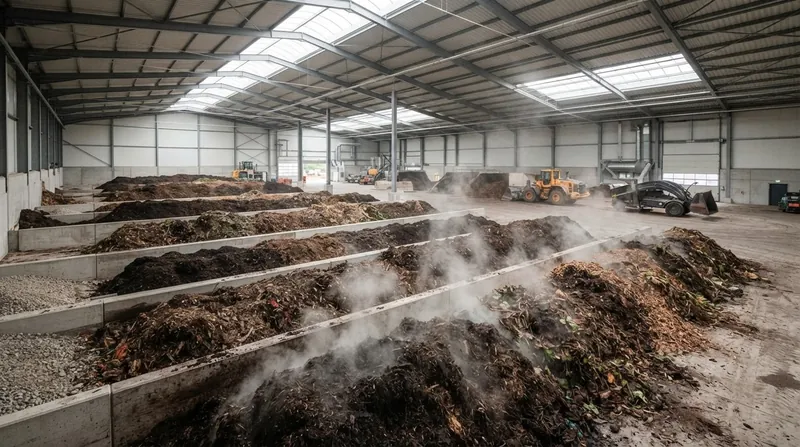
See all →Food Waste
UNEP Warns Rotting Food Waste Produces Up to 10 Percent of Global Emissions, Five Times More Than Aviation
4 sources
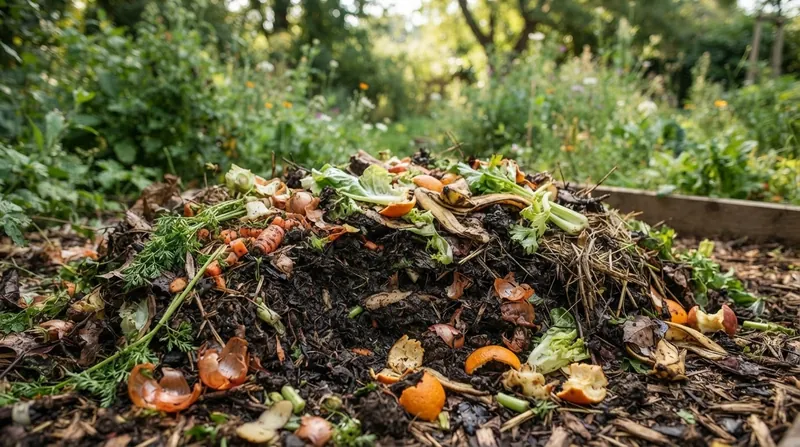
Amazon Conservation
Protecting Existing Amazon Forests Yields Greater Climate and Biodiversity Gains Than Restoration, Study Finds
3 sources
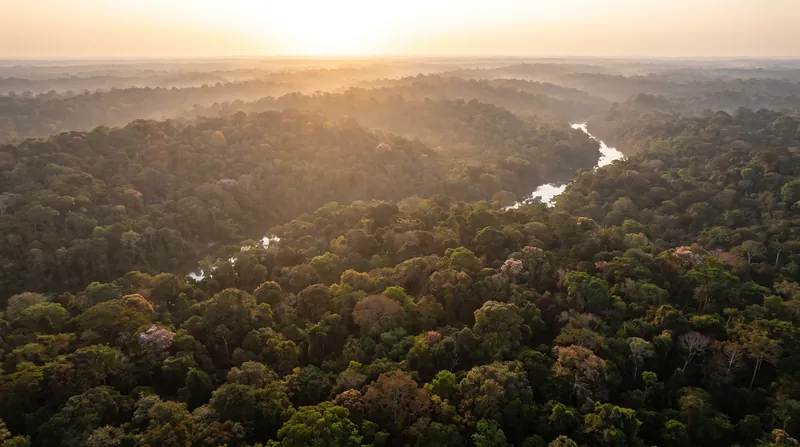
Water Accounting
The Blue, Green, and Grey Water Footprint: How the ISO 14046 Standard Calculates Total Water Use
7 sources
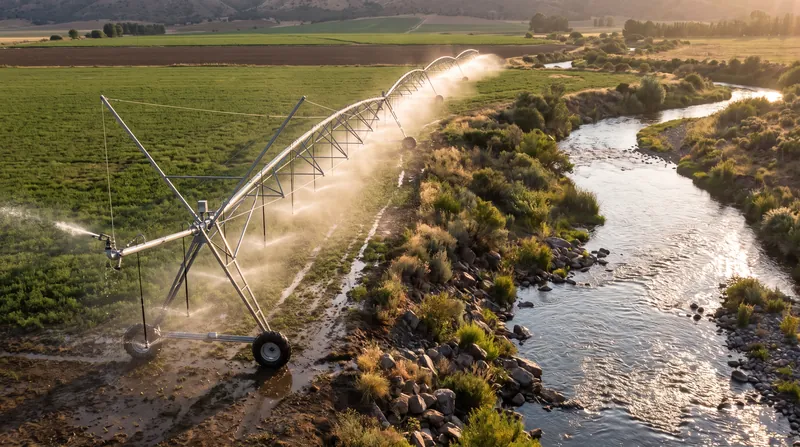
Climate Baselines
The 30-Year Rule: How the IPCC's Standard Normal Period Masks the True Rate of Climate Change
8 sources
Comments
Every angle. Every day.
Get Environment stories with full source coverage and perspective breakdowns, free every day.