
U.S. Military Strike in Venezuela Kills Tren de Aragua Gang Leader
A coordinated U.S. missile strike in Venezuela has killed Hector Rusthenford Guerrero Flores, the notorious leader of the transnational Tren de Aragua gang. The assassination marks a major escalation in the U.S. military's campaign against Latin American organized crime.
By Factlen Editorial Team
- U.S. Administration
- Views the strike as a necessary wartime action to eliminate a transnational terrorist threat and secure the hemisphere.
- Legal & Human Rights Observers
- Raises alarms over the militarization of anti-gang efforts, citing extrajudicial killings and due process violations.
- Venezuelan Authorities
- Frames the operation as a successful collaborative law enforcement effort to eradicate organized crime within its borders.
What's not represented
- · Venezuelan civilians living in areas controlled by Tren de Aragua
- · Migrants navigating smuggling routes previously controlled by the gang
Why this matters
The militarization of the U.S. fight against transnational gangs sets a profound precedent for how America projects force in the Western Hemisphere. The strike not only decapitates one of the region's most violent syndicates but also signals a controversial shift toward using wartime powers and lethal military action for border and drug enforcement.
Key points
- The U.S. military killed Tren de Aragua leader Hector Guerrero Flores in a coordinated missile strike in Venezuela.
- President Trump announced the operation, which was carried out by JSOC with CIA intelligence.
- Guerrero Flores, known as 'Niño Guerrero,' oversaw the gang's expansion into a transnational human trafficking and drug smuggling syndicate.
- The strike is part of a broader U.S. military campaign against the gang, which includes lethal maritime strikes and mass deportations.
- Human rights advocates have criticized the militarized approach, raising concerns over extrajudicial killings and due process violations.
The United States military has assassinated Hector Rusthenford Guerrero Flores, the notorious leader of the Venezuelan transnational gang Tren de Aragua, in a targeted missile strike within Venezuela. President Donald Trump announced the operation on Friday evening, describing it as a "swift and lethal kinetic strike" that eliminated one of the hemisphere's most wanted fugitives. The strike marks a significant escalation in the U.S. government's aggressive, militarized campaign against Latin American organized crime.[1][2][3][4]
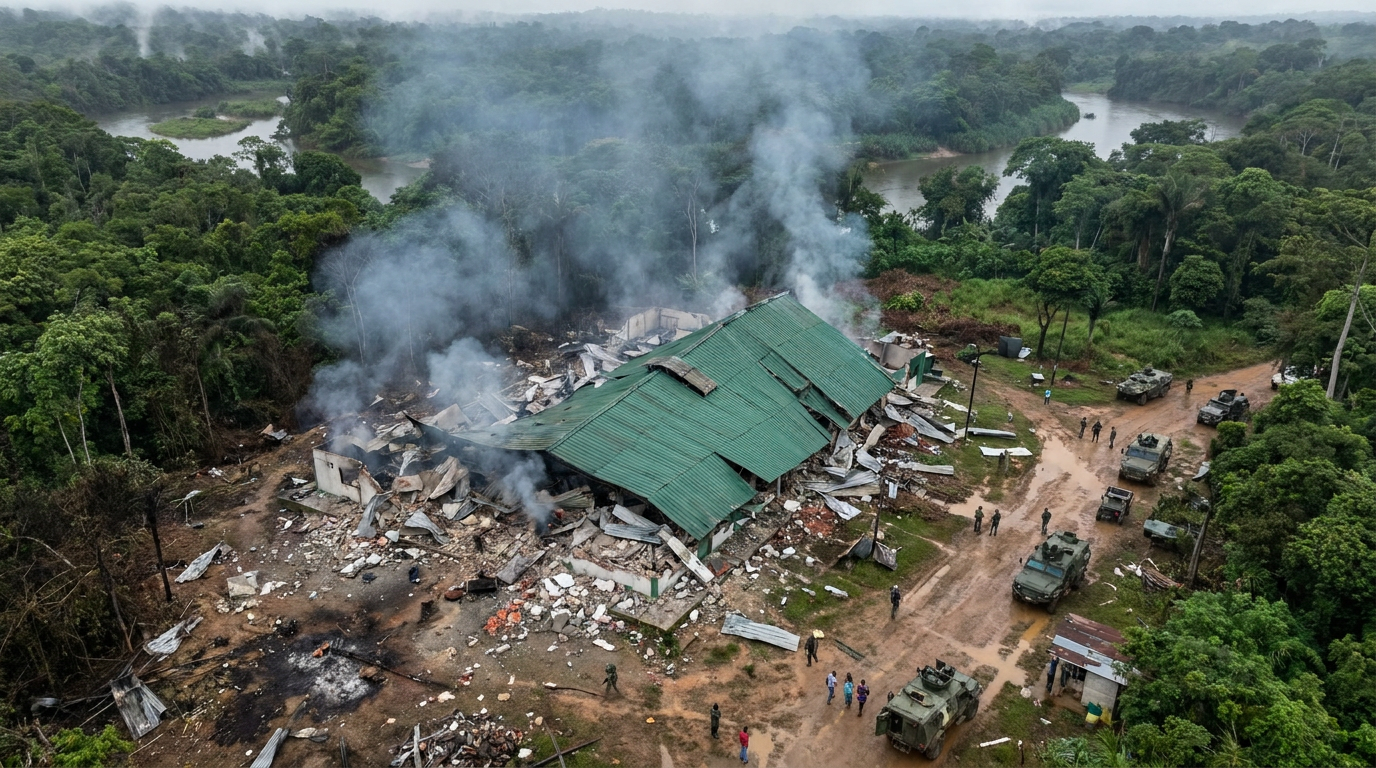
The operation was carried out earlier in the week by the Joint Special Operations Command (JSOC) using a missile, guided by intelligence provided by the CIA. Defense Secretary Pete Hegseth confirmed the strike hit a Tren de Aragua compound, which Venezuelan authorities later identified as being located in the southern state of Bolívar. Trump published unclassified aerial video footage on his Truth Social account showing a projectile obliterating a small building with a green roof.[2][3][6]
Guerrero Flores, 43, widely known by his alias "Niño Guerrero," had been the architect of Tren de Aragua's explosive growth. Over more than a decade, he transformed the group from a localized prison gang operating out of Venezuela's Tocorón Penitentiary into a sprawling transnational criminal enterprise. The U.S. State Department had offered a $5 million reward for information leading to his capture following a sweeping federal indictment in New York last December.[1][2][3][4][7]
Federal prosecutors accused Guerrero Flores of directing a vast network involved in human trafficking, extortion, kidnapping, and cocaine smuggling across the Americas. Under his leadership, the gang capitalized on the historic exodus of Venezuelan migrants, controlling smuggling routes heading south toward Chile and north toward the United States. He had been on the run since September 2023, when he escaped Tocorón prison shortly before a massive raid by Venezuelan security forces.[2][3][5]

The strike's execution highlights a dramatic shift in U.S.-Venezuelan relations following the American military operation in January 2026 that removed former Venezuelan President Nicolás Maduro from power to face U.S. drug charges. Both Trump and Hegseth emphasized that the strike on Guerrero Flores was conducted in "full collaboration" with Venezuelan security forces. Venezuela's communications ministry released a statement confirming the "combined operation" aimed at eradicating organized crime in the region.[2][3][4][6]
Both Trump and Hegseth emphasized that the strike on Guerrero Flores was conducted in "full collaboration" with Venezuelan security forces.
The assassination is the highest-profile action in an unprecedented U.S. military offensive against Tren de Aragua, which the Trump administration designated as a foreign terrorist organization early last year. By classifying the gang alongside traditional terror groups, the administration established a legal framework to treat the criminal syndicate as a military adversary rather than a standard law enforcement target.[3][4][5]
This wartime footing has already manifested in the Caribbean and Eastern Pacific, where the U.S. military has conducted dozens of lethal strikes against small boats suspected of smuggling drugs for the gang. The administration has argued that the United States is engaged in an "armed conflict" with Tren de Aragua, a justification that has resulted in the deaths of more than 200 people in maritime strikes since last fall.[3][4]

Domestically, Tren de Aragua has been a central focus of the administration's immigration and border enforcement policies. Trump has repeatedly characterized the gang's presence in the U.S. as an "invasion," blaming the group for driving violence and illicit drug distribution in American cities. This narrative has underpinned some of the administration's most controversial executive actions.[4][5]
In March 2025, the administration invoked the Alien Enemies Act of 1798—a wartime law last used broadly during World War II—to summarily deport hundreds of Venezuelan men. Accusing them of being Tren de Aragua operatives, the U.S. government bypassed standard immigration courts and flew the deportees to a maximum-security prison in El Salvador.[2][3][5]
The militarization of the anti-gang effort has drawn intense scrutiny from legal experts and human rights observers. Critics argue that the maritime boat strikes amount to extrajudicial killings, noting the difficulty of verifying the identities and affiliations of those killed at sea. Similarly, immigration advocates point out that many of the men deported to El Salvador under the Alien Enemies Act were denied due process, with some judges finding insufficient evidence of their gang ties.[2][3]

Despite the controversy, the administration views the elimination of Guerrero Flores as a major strategic victory and a vindication of its heavy-handed approach. "Tren de Aragua terrorists no longer have safe haven in Venezuela or anywhere else," Trump wrote in his announcement, promising to hunt down cartel leaders "anytime, anyplace."[1][2][7]
The long-term impact of Guerrero Flores's death on Tren de Aragua's operations remains uncertain. While the removal of its central architect deals a severe blow to the organization's command structure, security analysts warn that transnational gangs often splinter into more volatile, competing factions when a top leader is killed. Regional authorities across South America are now bracing for potential retaliatory violence or internal power struggles within the syndicate's expansive network.[4][5]
How we got here
Sept 2023
Hector Guerrero Flores escapes from Venezuela's Tocorón prison.
Early 2025
The U.S. designates Tren de Aragua a foreign terrorist organization.
March 2025
The U.S. invokes the Alien Enemies Act to deport alleged gang members to El Salvador.
Jan 2026
The U.S. military removes Venezuelan President Nicolás Maduro from power.
June 2026
A U.S. missile strike in Venezuela kills Guerrero Flores.
Viewpoints in depth
The U.S. Security Imperative
The administration's justification for treating a criminal gang as a military adversary.
By designating Tren de Aragua a foreign terrorist organization, the U.S. government fundamentally shifted its approach from law enforcement to military engagement. Proponents of this strategy argue that traditional policing is insufficient against a transnational syndicate that operates across borders, controls vast smuggling networks, and allegedly coordinates with hostile state actors. The administration maintains that lethal strikes and mass deportations are necessary to dismantle a group they accuse of 'invading' the United States and driving violent crime.
Human Rights Concerns
The legal and ethical backlash against the militarized anti-gang campaign.
Legal scholars and human rights advocates warn that the U.S. is setting a dangerous precedent by using military force against alleged gang members. Critics point to the maritime strikes in the Caribbean, which have killed over 200 people, as extrajudicial assassinations lacking oversight or transparency. Furthermore, the use of the 18th-century Alien Enemies Act to summarily deport Venezuelans to a maximum-security prison in El Salvador has sparked outrage, with advocates noting that many deportees were denied the opportunity to contest their alleged gang affiliations in court.
Regional Law Enforcement
How South American nations view the decapitation of the syndicate.
For countries like Colombia, Peru, and Chile, which have borne the brunt of Tren de Aragua's explosive expansion, the death of Guerrero Flores is a welcome development but not a panacea. Regional security forces have long struggled to contain the gang's extortion and human trafficking rackets. While the U.S. strike removes the syndicate's central architect, local authorities are bracing for the possibility that the power vacuum could trigger violent turf wars among splinter factions vying for control of lucrative smuggling routes.
What we don't know
- It is unclear who will succeed Guerrero Flores and whether his death will cause Tren de Aragua to splinter into warring factions.
- The exact number of civilian casualties, if any, resulting from the missile strike on the Venezuelan compound has not been disclosed.
- It remains to be seen how the U.S. military's continued operations in the region will affect broader diplomatic relations across South America.
Key terms
- Tren de Aragua
- A transnational criminal organization that originated in a Venezuelan prison and expanded across the Americas, specializing in extortion and human trafficking.
- Joint Special Operations Command (JSOC)
- A component of the U.S. military responsible for studying special operations requirements and conducting covert strikes and counter-terrorism missions.
- Alien Enemies Act of 1798
- A wartime law that allows the U.S. president to apprehend and deport non-citizens hailing from a hostile nation or group during an armed conflict.
Frequently asked
Who was Hector Guerrero Flores?
Known as 'Niño Guerrero,' he was the leader of Tren de Aragua, a Venezuelan transnational gang involved in human trafficking, extortion, and drug smuggling.
Where did the strike take place?
The missile strike targeted a Tren de Aragua compound in Venezuela's southern Bolívar state.
Did Venezuela authorize the U.S. strike?
Yes. Both U.S. and Venezuelan officials confirmed the strike was a closely coordinated, combined operation between the two nations' security forces.
Why is the U.S. military targeting a gang?
The U.S. designated Tren de Aragua a foreign terrorist organization, allowing the military to engage the group as an armed adversary rather than leaving it solely to law enforcement.
Sources
Source coverage
7 outlets
3 viewpoints surfaced







[1]NPRLegal & Human Rights Observers
Trump says U.S. military strike killed leader of Tren de Aragua gang
Read on NPR →[2]CBS NewsVenezuelan Authorities
Trump says U.S. killed Tren de Aragua leader in airstrike in Venezuela
Read on CBS News →[3]The Washington PostLegal & Human Rights Observers
U.S. forces kill Venezuelan Tren de Aragua gang leader, Trump says
Read on The Washington Post →[4]The GuardianLegal & Human Rights Observers
Trump says leader of Venezuelan Tren de Aragua gang killed in US strike
Read on The Guardian →[5]CBC NewsVenezuelan Authorities
Trump says Tren de Aragua gang leader killed via U.S. military strike
Read on CBC News →[6]Fox NewsU.S. Administration
Trump announces U.S. military strike wipes out Tren de Aragua gang leader in Venezuela
Read on Fox News →[7]New York PostU.S. Administration
Trump wipes out Tren de Aragua gang boss 'Niño Guerrero' in lethal Venezuela airstrike
Read on New York Post →
More in news politics
See all 5 stories →US-Iran Truce
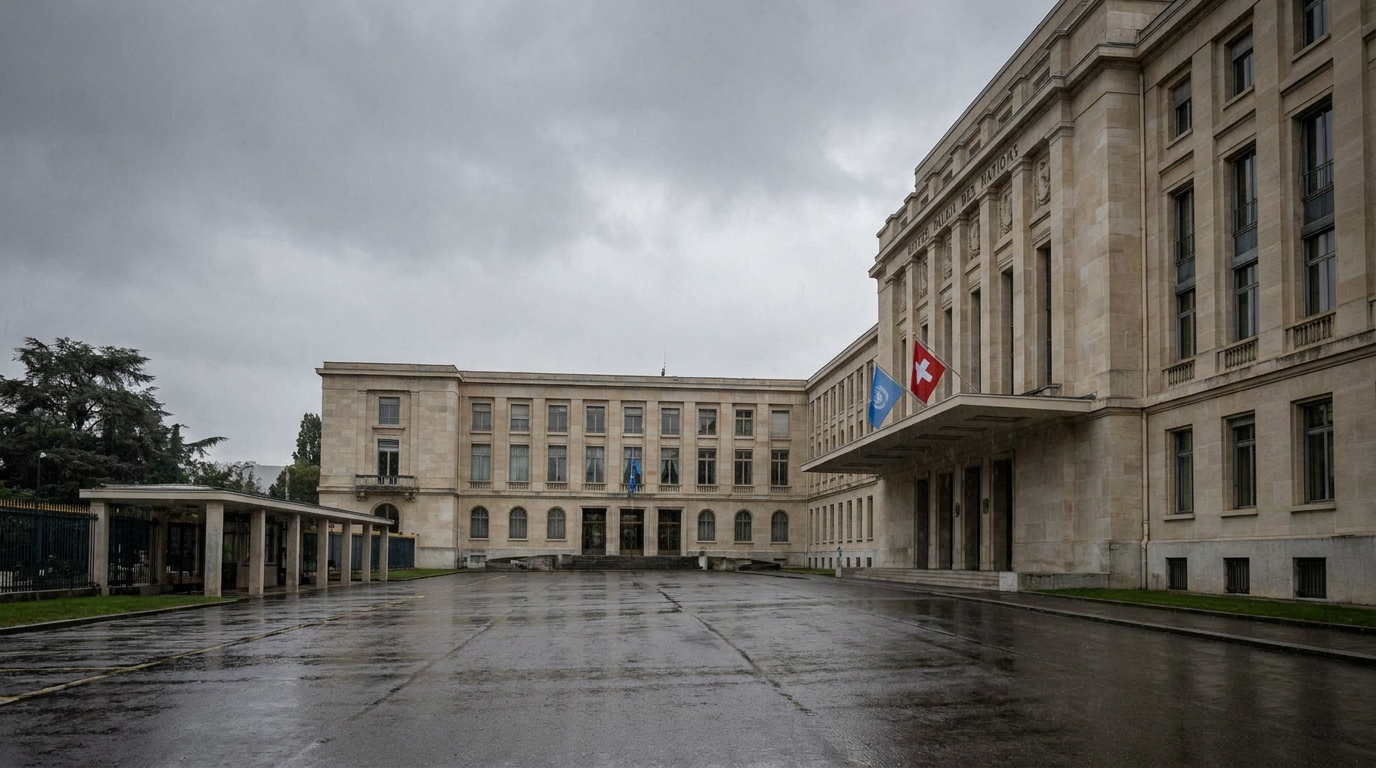
US-Iran Peace Talks in Switzerland Postponed Amid Renewed Lebanon Clashes
10 sources

US-Iran Deal
US-Iran Talks in Switzerland Postponed as Trump's Peace Deal Faces Domestic and Regional Backlash
8 sources

US-Iran Deal
US-Iran Peace Talks Postponed as Regional Violence Flares and Hormuz Remains Mined
8 sources
Every angle. Every day.
Get news politics stories with full source coverage and perspective breakdowns delivered to your inbox.