
U.S. and Iran Sign Preliminary Agreement to End Four-Month Conflict
The United States and Iran have signed a preliminary memorandum of understanding to halt hostilities, lift economic sanctions, and establish a rebuilding fund. The deal, brokered with Pakistan's prime minister, faces intense bipartisan scrutiny in Washington over concerns that it leaves Tehran empowered.
By Factlen Editorial Team
- Congressional Skeptics
- Argues the deal rewards aggression and empowers a hostile regime by providing billions in sanctions relief.
- Geopolitical Analysts
- Views the outcome as a strategic win for Tehran, noting the regime survived the war and emerged financially strengthened.
- U.S. Administration
- Frames the agreement as a major diplomatic victory that ends a costly overseas conflict and secures regional stability.
- International Observers
- Cautiously monitors the 60-day window to see if the preliminary terms can translate into a lasting, verifiable treaty.
What's not represented
- · Israeli Government Officials
- · Iranian Civilians
Why this matters
This agreement halts a major geopolitical conflict that has disrupted global energy markets and shipping through the Strait of Hormuz. However, the proposed $300 billion rebuilding fund and sanctions relief will fundamentally reshape the balance of power in the Middle East, affecting U.S. alliances and regional security for decades.
Key points
- The U.S. and Iran signed a preliminary memorandum of understanding to halt a four-month military conflict.
- The deal includes a proposed $300 billion rebuilding fund and an end to economic sanctions on Tehran.
- Bipartisan U.S. lawmakers have fiercely criticized the agreement, warning it empowers a hostile regime.
- Negotiators now have a 60-day window to translate the preliminary terms into a binding peace treaty.
The United States and Iran have officially signed a preliminary memorandum of understanding, marking a sudden and dramatic halt to a devastating four-month military conflict. Brokered with the assistance of Pakistan's prime minister, the agreement establishes an immediate ceasefire and lays the groundwork for a broader diplomatic resolution. The text of the agreement, released early Thursday, outlines a framework that fundamentally alters the geopolitical landscape of the Middle East. For an administration that initiated the conflict alongside regional allies, the pivot to a negotiated settlement represents a significant shift in foreign policy strategy.[1][6]
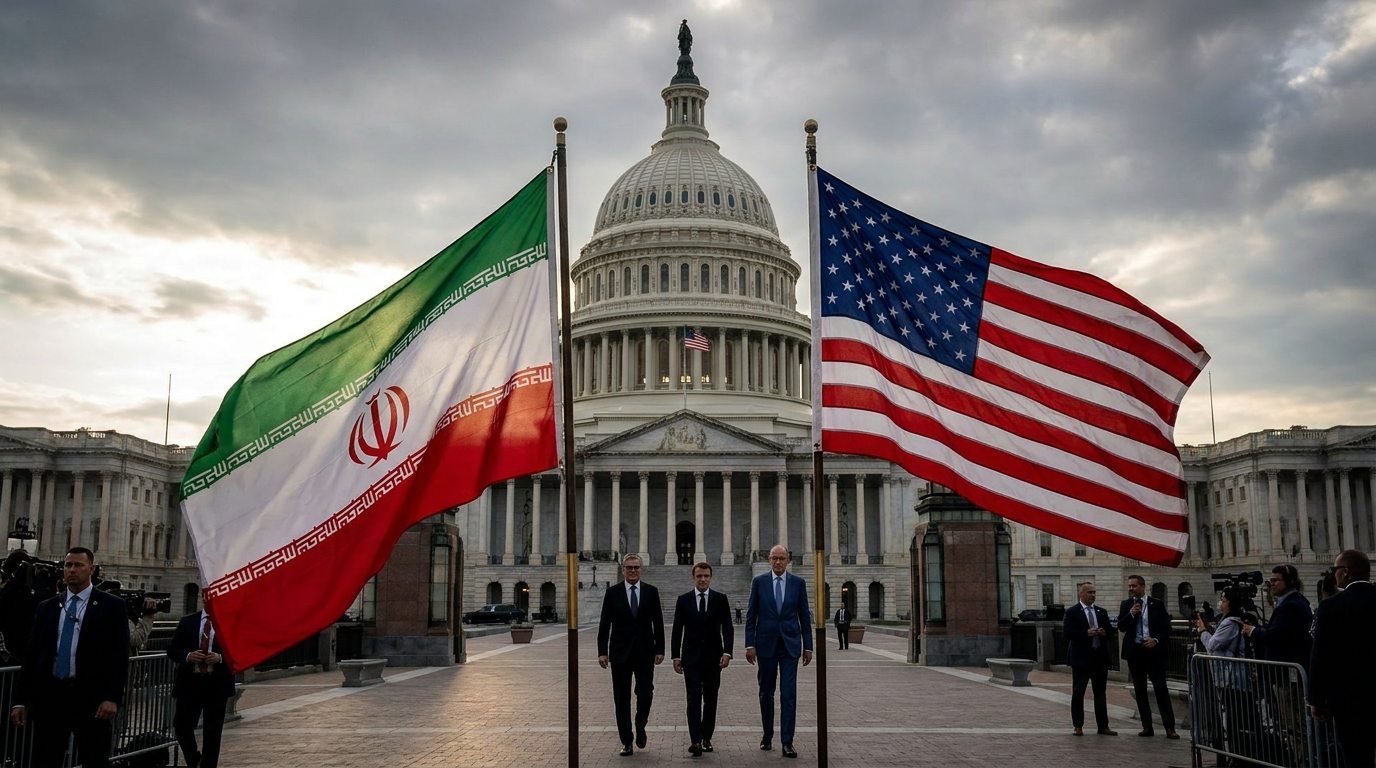
At the center of the preliminary agreement is a sweeping set of economic and political concessions designed to ensure a lasting cessation of hostilities. The memorandum includes provisions for a $300 billion rebuilding fund aimed at repairing infrastructure damaged during the conflict. Furthermore, the United States has agreed to a comprehensive end to economic sanctions that have crippled the Iranian economy for years, coupled with a formal promise not to interfere in Tehran's internal political affairs. These terms represent a stark departure from previous U.S. maximum-pressure campaigns.[3]
The immediate global reaction has been a mix of relief over the de-escalation and intense scrutiny regarding the long-term implications of the deal. European nations and global energy markets are watching closely to see if the preliminary understanding will translate into a permanent treaty. A primary focus remains the Strait of Hormuz, a critical artery for global oil shipments that faced severe disruptions during the fighting. Stabilizing this waterway is a top priority for international observers, alongside renewed discussions concerning the future of Iran's nuclear program.[4]

Within the White House, the agreement is being aggressively framed as a major diplomatic victory. The administration argues that the ceasefire successfully concludes a costly overseas entanglement while securing necessary security guarantees. By finalizing the memorandum, the U.S. leadership appears willing to distance itself from the hardline stance of Israeli leadership, which had been a primary partner in the initial military campaign. The administration's messaging emphasizes the avoidance of a prolonged, unwinnable war in favor of regional stability.[3]
However, the domestic political backlash in Washington has been swift and fiercely bipartisan. Lawmakers from both sides of the aisle have voiced profound skepticism about the terms of the agreement, particularly the financial components. Critics, including prominent figures like Senator Ted Cruz and Representative Adam Schiff, have publicly condemned the prospect of delivering billions of dollars in sanctions relief and rebuilding funds to the Iranian government. They argue that the deal effectively rewards aggression and empowers a regime they describe as fundamentally hostile to U.S. interests.[2]
However, the domestic political backlash in Washington has been swift and fiercely bipartisan.
Geopolitical analysts are echoing many of these congressional concerns, pointing out the stark realities of the conflict's outcome. While the human and economic toll of the four-month war has been severe, the Iranian regime has not only survived the military confrontation but emerged with its grip on power potentially solidified. Observers note that the combination of massive financial influx and the removal of international sanctions leaves Tehran in a significantly stronger strategic position than it held before the conflict began.[5]

The narrative of victory is highly contested, with many experts questioning what the initial military engagement actually achieved. The sudden pivot from a war aimed at degrading Iranian capabilities to a peace deal that funds the country's reconstruction has left allies and analysts searching for a coherent strategic rationale. The agreement has settled the immediate violence largely on Tehran's terms, raising inescapable questions about the ultimate purpose and cost of the four-month campaign.[3][5]
The economic mechanics of the $300 billion rebuilding fund remain a major point of contention and uncertainty. It is not yet clear how much of this capital will come from unfrozen Iranian assets held abroad versus direct international contributions or lifted trade restrictions. Regardless of the exact funding structure, the sudden injection of capital into the Iranian economy is expected to have profound ripple effects across global energy markets. As Iran ramps up oil production and exports without the barrier of sanctions, global crude prices are likely to experience significant volatility.[3][4]

The diplomatic process now enters a critical and highly fragile 60-day window. During this period, negotiators from the U.S., Iran, and international mediators must translate the broad strokes of the memorandum of understanding into a binding, detailed peace treaty. This phase will require navigating complex logistical challenges, including the verification of military drawdowns, the establishment of oversight mechanisms for the rebuilding fund, and the formalization of maritime security protocols in the Persian Gulf.[1][3]
As the dust settles on the immediate conflict, the long-term strategic realignment of the Middle East is already underway. The U.S. decision to prioritize a negotiated exit over continued military pressure signals a potential recalibration of its commitments in the region. For regional powers, particularly Israel and the Gulf states, the prospect of a newly enriched and unconstrained Iran necessitates a rapid reassessment of their own national security postures. The coming weeks will determine whether this preliminary agreement serves as the foundation for lasting peace or merely a pause in a broader regional struggle.[4][5]
How we got here
Feb 2026
Direct military conflict between the United States and Iran begins.
June 18, 2026
A preliminary memorandum of understanding is signed, establishing a ceasefire.
Aug 2026
Deadline for the 60-day negotiation window to finalize a binding peace treaty.
Viewpoints in depth
U.S. Administration
Frames the agreement as a major diplomatic victory that ends a costly overseas conflict.
The White House is aggressively messaging the ceasefire as a necessary and successful pivot away from an unwinnable military entanglement. By securing a halt to hostilities and opening a diplomatic channel, the administration argues it has stabilized a volatile region and protected global energy markets. This perspective emphasizes that ending the war on negotiated terms is preferable to an open-ended conflict, even if it requires distancing the U.S. from the hardline stances of regional allies like Israel.
Congressional Skeptics
Argues the deal rewards aggression and empowers a hostile regime by providing billions in sanctions relief.
A bipartisan coalition of U.S. lawmakers views the memorandum as a dangerous capitulation. Critics point to the $300 billion rebuilding fund and the lifting of economic sanctions as massive financial windfalls that will inevitably be used to fund regional proxy groups and further entrench the current Iranian leadership. From this viewpoint, the agreement sacrifices long-term security for short-term quiet, effectively rewarding Tehran for surviving the four-month military campaign.
Geopolitical Analysts
Views the outcome as a strategic win for Tehran, noting the regime survived the war and emerged financially strengthened.
Many international observers and foreign policy experts argue that the conflict has ultimately been settled on Iran's terms. Despite the heavy infrastructure damage sustained over the last four months, the Iranian government has maintained its grip on power and successfully leveraged the conflict to break the international sanctions regime. Analysts suggest that the combination of a non-interference pledge and a massive influx of reconstruction capital leaves Tehran in a far stronger geopolitical position than it occupied before the war began.
International Observers
Cautiously monitors the 60-day window to see if the preliminary terms can translate into a lasting, verifiable treaty.
European nations and global market analysts are focused on the practical mechanics of the agreement. While there is widespread relief that the immediate violence has stopped and the Strait of Hormuz may reopen to normal shipping, there is deep skepticism about the viability of the 60-day negotiation window. This camp is primarily concerned with how the rebuilding fund will be structured, how military drawdowns will be verified, and whether the two nations can overcome decades of mistrust to sign a binding treaty.
What we don't know
- How the $300 billion rebuilding fund will be financed and administered.
- Whether the U.S. Congress will attempt to block the lifting of economic sanctions.
- How regional allies, particularly Israel and Saudi Arabia, will adjust their security postures in response to the deal.
Key terms
- Memorandum of Understanding (MOU)
- A formal, non-binding agreement between two or more parties outlining the broad terms of a future, legally binding treaty.
- Strait of Hormuz
- A critical, narrow shipping chokepoint between the Persian Gulf and the Gulf of Oman, through which a significant portion of the world's oil supply passes.
Frequently asked
Does this mean the war is officially over?
The agreement establishes an immediate ceasefire and a 60-day window to finalize a binding peace treaty, pausing hostilities while negotiations continue.
What is the $300 billion rebuilding fund?
It is a proposed financial package aimed at repairing infrastructure damaged during the conflict, though the exact funding mechanisms and sources remain under negotiation.
How will this affect global oil prices?
The lifting of economic sanctions would allow Iran to resume full oil exports, which analysts expect will increase global supply and potentially lower crude prices.
Sources
Source coverage
6 outlets
4 viewpoints surfaced






[1]NPRU.S. Administration
Read the full text of Trump's preliminary U.S.-Iran agreement to end the war
Read on NPR →[2]Fox NewsCongressional Skeptics
WATCH: Cruz sounds alarm on Trump Iran deal, warns against handing billions to 'theocratic lunatics'
Read on Fox News →[3]The GuardianGeopolitical Analysts
Trump thinks his freshly signed ceasefire deal is a victory. It is – for Iran
Read on The Guardian →[4]The New York TimesInternational Observers
Iran and the U.S. Have an Understanding. Will It Lead to a Deal?
Read on The New York Times →[5]BBCGeopolitical Analysts
Bowen: US-Iran deal raises inescapable question of what the war was for
Read on BBC →[6]ReutersInternational Observers
U.S. and Iran sign preliminary ceasefire to end four-month war
Read on Reuters →

More in news politics
See all 7 stories →US-Iran Relations
U.S. and Iran Sign Peace Framework, Triggering Sanctions Relief and 60-Day Negotiation Window
8 sources
Second Amendment
Supreme Court Unanimously Strikes Down Federal Gun Ban for Marijuana Users
7 sources

Iran Deal
Trump's $300 Billion Iran Deal Sparks Senate GOP Backlash and Diplomatic Rift with Israel
9 sources
US-Iran Relations
US and Iran Reach Ceasefire MoU Anchored by $300 Billion Financial Agreement
8 sources

Every angle. Every day.
Get news politics stories with full source coverage and perspective breakdowns delivered to your inbox.