
U.S. and Iran Near 60-Day Ceasefire Deal as Trump Cancels Planned Strikes
President Trump announced the cancellation of military strikes against Iran, citing an imminent agreement that would extend the current ceasefire by 60 days and reopen the Strait of Hormuz. While U.S. and Pakistani officials say a final text is ready, Tehran cautions that key sticking points remain unresolved.
By Factlen Editorial Team
- U.S. Administration
- Confident a comprehensive deal is reached, emphasizing it will prevent a nuclear Iran and reopen shipping lanes.
- Iranian Leadership
- Cautious and denying a final agreement is signed, demanding regional concessions and immediate sanctions relief.
- Israeli Government
- Skeptical but compliant with U.S. pressure, focusing on ensuring the final deal dismantles Iran's nuclear infrastructure.
- Regional Mediators
- Optimistic about the diplomatic progress, pushing the narrative that the text is finalized and ready for signature.
What's not represented
- · Lebanese and Gazan Civilians
- · Global Shipping Companies
Why this matters
A finalized ceasefire would de-escalate a major global conflict, reopen one of the world's most critical oil shipping routes, and potentially reshape the geopolitical balance of the Middle East. However, failure to finalize the deal could plunge the region back into a devastating, multi-front war.
Key points
- President Trump canceled planned military strikes on Iran, announcing an imminent peace agreement.
- The draft deal includes a 60-day ceasefire extension and the reopening of the Strait of Hormuz.
- The U.S. would lift its naval blockade on Iranian ports and offer temporary sanctions waivers.
- Iran's foreign ministry states no final decision has been made, demanding an end to Israeli operations in Lebanon.
- Israeli Prime Minister Benjamin Netanyahu publicly supported the ceasefire despite reportedly being caught off guard.
- Mediators from Pakistan and Qatar claim the final text of the agreement is ready for signature.
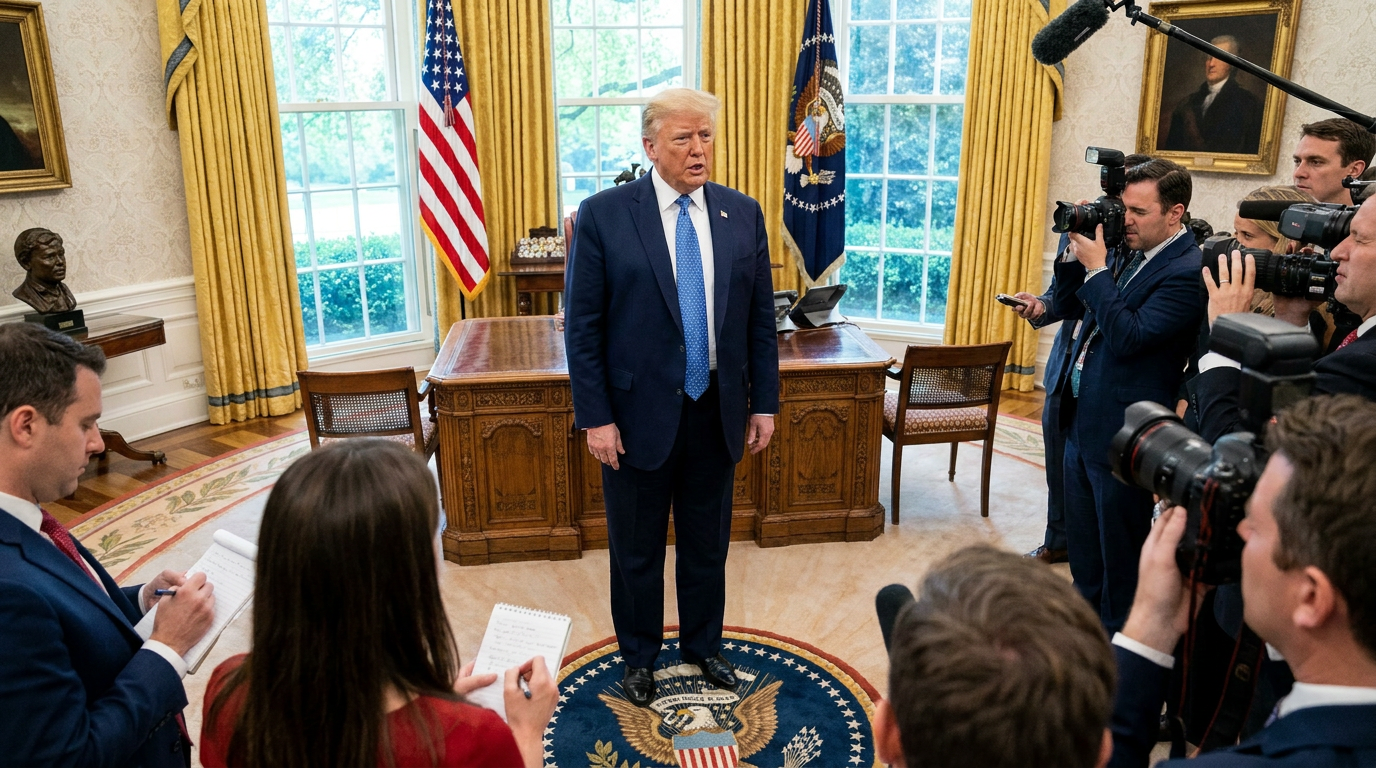
The United States and Iran appear to be on the verge of a major diplomatic breakthrough, with President Donald Trump abruptly canceling planned military strikes on Thursday to announce that a "great settlement" is imminent. The sudden pivot comes after days of escalating tensions and renewed American bombardments across southern Iran, which had threatened to shatter a fragile truce. Speaking from the Oval Office, Trump claimed that the highest levels of Iranian leadership had approved a draft agreement that would pause the conflict and pave the way for a permanent peace treaty.[2][4][5]
The region has been teetering on the edge of a wider war since the initial outbreak of hostilities earlier this year. A two-week ceasefire, brokered by Pakistan in April, had been extended indefinitely but was marred by repeated violations from both sides. The situation deteriorated rapidly this week when the U.S. launched a wave of strikes targeting Iranian air-defense systems and command centers following the downing of an American helicopter over the Strait of Hormuz.[4][7]
At the center of the emerging diplomatic framework is a Memorandum of Understanding (MoU) that would extend the current ceasefire for an additional 60 days. During this two-month window, the parties would engage in high-stakes negotiations aimed at resolving the core disputes that ignited the war. U.S. officials, speaking on the condition of anonymity, described the deal as a five-point, performance-based framework where Tehran would receive economic benefits only after fulfilling specific security obligations.[1][2][3]
A critical component of the draft agreement focuses on restoring global maritime trade. The MoU reportedly mandates the reopening of the Strait of Hormuz, with a goal of returning to pre-war shipping volumes within 30 days. In exchange, the United States would lift its crippling naval blockade on Iranian ports. Furthermore, the U.S. would grant temporary sanctions waivers, allowing Tehran to resume selling oil on the global market for the duration of the 60-day ceasefire.[2][3]

The most contentious issue—Iran's nuclear program—would be the primary focus of the 60-day negotiation period. The Trump administration claims that the final agreement will require Iran to commit indefinitely to never procuring or developing nuclear weapons, a significant departure from previous diplomatic efforts that envisioned 10- or 20-year sunsets. The deal would also reportedly require the complete dismantling of Iran's nuclear enrichment infrastructure.[2][6]
The most contentious issue—Iran's nuclear program—would be the primary focus of the 60-day negotiation period.
Despite the optimism emanating from Washington, Tehran has offered a noticeably more cautious assessment. The Iranian foreign ministry and state media outlets quickly pushed back against the narrative that a deal was finalized, stating that no "final decision" or conclusion has been reached. Iranian officials emphasized that the current text does not commit Tehran to ceding management of the Strait of Hormuz, framing the MoU merely as an agreement to enter into further negotiations.[1][3]
Iran is also tying the bilateral ceasefire to broader regional conflicts. Tehran has demanded that any agreement to extend the truce must include a definitive end to Israeli military operations against Hezbollah in Lebanon and Hamas in Gaza. The Lebanese Ministry of Health reported that Israeli attacks had killed more than 3,700 people in Lebanon as of Thursday, making the intertwined conflicts a major sticking point for Iranian negotiators.[3][4]

The sudden diplomatic pivot caught the Israeli government off guard. Prime Minister Benjamin Netanyahu, who had been coordinating closely with the U.S. on military strategies against Iran, reportedly viewed the pending deal as a "bitter pill." Having prepared for a decisive military confrontation, Israeli leadership was forced to rapidly adjust its posture when Washington signaled its intent to pursue a negotiated settlement instead.[1][5]
Behind closed doors, the U.S. applied immense pressure on Israel to accept the ceasefire. Reports indicate that President Trump explicitly warned Netanyahu that escalating military action could leave Israel isolated on the global stage. The blunt directive from Washington effectively constrained Israel's ability to launch unilateral strikes, forcing Netanyahu to publicly halt the fire.[5]
Publicly, the Israeli government has pivoted to emphasize its alignment with the U.S. on the nuclear issue. Netanyahu's office released a statement confirming the ceasefire and expressing appreciation for Trump's commitment that the final agreement will dismantle Iran's nuclear capabilities and halt its support for regional proxy groups. Netanyahu reiterated that as long as he is prime minister, Iran will not be allowed to acquire nuclear weapons.[5][6]

Regional mediators have played a crucial role in bridging the gaps between Washington and Tehran. Pakistan, which brokered the initial April truce, and Qatar have been instrumental in facilitating the indirect talks. Pakistani officials expressed high confidence in the process, stating that a "final, agreed upon text" had been reached and that negotiators were merely finalizing the technical details of the document.[1][3][7]
The immediate next steps remain highly fluid, but the White House is pushing for a rapid formalization of the MoU. President Trump suggested that a signing ceremony could take place in Europe as soon as this weekend. While Trump indicated he would not attend the signing in person, he announced that Vice President JD Vance would travel to represent the United States, signaling the administration's commitment to finalizing the historic pause in hostilities.[2][3]
How we got here
February 2026
U.S. and Israel launch major strikes against Iranian military and government targets following escalating tensions.
April 8, 2026
The U.S. and Iran agree to a fragile two-week ceasefire mediated by Pakistan, which is later extended but repeatedly violated.
June 10, 2026
U.S. launches renewed strikes across southern Iran after an American helicopter is downed over the Strait of Hormuz.
June 11, 2026
President Trump abruptly cancels further strikes, announcing that a comprehensive peace settlement is imminent.
Viewpoints in depth
U.S. Administration's view
The White House believes a historic, comprehensive settlement is imminent.
Trump and his officials portray the emerging deal as a definitive victory that will permanently dismantle Iran's nuclear ambitions and stabilize global shipping. They emphasize a performance-based framework where Iran only receives economic relief after proving compliance, framing the agreement as a win that allies, including Israel, will ultimately accept.
Iranian Leadership's view
Tehran remains cautious, demanding concrete economic relief and regional concessions before signing.
Iranian officials and state media are actively downplaying the imminence of a deal, insisting that no final decision has been made. They view the negotiations as a way to lift crippling blockades and regain access to frozen assets, but refuse to formally cede control over the Strait of Hormuz. Furthermore, they tie any lasting peace to the cessation of Israeli military operations against their allies in Lebanon and Gaza.
Israeli Government's view
Israel is highly skeptical of the terms but constrained by immense U.S. pressure.
Prime Minister Benjamin Netanyahu views the sudden diplomatic pivot as a bitter pill, having previously prepared for a broader military confrontation alongside the U.S. While publicly praising Trump's commitment to preventing a nuclear Iran, Israeli leadership fears the 60-day ceasefire will simply allow Tehran to regroup. However, explicit warnings from Washington against unilateral escalation have forced Israel to publicly accept the pause.
What we don't know
- Whether Iran will actually sign the agreement without a guaranteed halt to Israeli military operations in Lebanon and Gaza.
- The exact mechanisms that will be used to verify the dismantling of Iran's nuclear enrichment infrastructure.
- How long the temporary sanctions waivers will last if the 60-day negotiation period fails to produce a permanent treaty.
Key terms
- Memorandum of Understanding (MoU)
- A formal agreement between two or more parties that outlines the broad outlines of a deal before a final, legally binding treaty is signed.
- Strait of Hormuz
- A narrow, strategically vital waterway between the Persian Gulf and the Gulf of Oman through which a significant portion of the world's oil supply passes.
- Naval Blockade
- An effort by a country to cut off maritime traffic, trade, and supplies to a specific port or nation using naval forces.
- Enrichment Infrastructure
- The facilities and centrifuges used to process uranium, which can be used for civilian nuclear energy or, at higher purities, for nuclear weapons.
Frequently asked
Is the war between the U.S. and Iran officially over?
Not yet. The proposed agreement is a Memorandum of Understanding for a 60-day ceasefire extension, during which a permanent peace treaty would be negotiated.
What happens to the Strait of Hormuz?
Under the draft deal, the U.S. would lift its naval blockade, and shipping volumes through the vital waterway are expected to return to pre-war levels within 30 days.
How does this affect Israel's conflicts in Lebanon and Gaza?
Iran is demanding that the ceasefire include a halt to Israeli operations in Lebanon and Gaza, though it remains unclear if the U.S. and Israel will formally agree to those terms.
Will Iran be allowed to keep its nuclear program?
The U.S. claims the final agreement will require Iran to indefinitely commit to never procuring nuclear weapons and to dismantle its enrichment infrastructure, which will be negotiated during the 60-day pause.
Sources
Source coverage
7 outlets
4 viewpoints surfaced







[1]AxiosIsraeli Government
Trump's pending Iran deal is bitter pill for Netanyahu
Read on Axios →[2]TIMEU.S. Administration
Ceasefire Deal Within Reach, U.S. and Tehran Say
Read on TIME →[3]CBS NewsRegional Mediators
Live Updates: 'Final, agreed upon text' of U.S.-Iran peace deal has been reached, Pakistan says
Read on CBS News →[4]The GuardianIranian Leadership
Is the Iran ceasefire over? What the latest US attacks tell us
Read on The Guardian →[5]Fox NewsU.S. Administration
Trump vows 'total victory' over iran within weeks as Netanyahu confirms ceasefire
Read on Fox News →[6]Al ArabiyaIsraeli Government
Netanyahu says in 'full agreement' with Trump for Iran not to acquire nuclear weapons
Read on Al Arabiya →[7]WikipediaRegional Mediators
2026 Iran war ceasefire
Read on Wikipedia →


Every angle. Every day.
Get news politics stories with full source coverage and perspective breakdowns delivered to your inbox.