
Trump Rejects Leaked Iran Ceasefire Terms as 'Fake News' Amid Fragile Negotiations
U.S. President Donald Trump dismissed leaked details of a proposed U.S.-Iran peace agreement as fabricated, accusing Tehran of negotiating in bad faith. The dispute over the draft 'Islamabad Memorandum of Understanding' highlights stark disagreements over nuclear enrichment, frozen assets, and control of the Strait of Hormuz.
By Adel Khoury
Share this story
U.S. President Donald Trump has forcefully dismissed leaked details of a proposed peace agreement with Iran as fabricated, casting sudden doubt on the final stages of negotiations to end the months-long conflict. Just hours after claiming a diplomatic breakthrough was "pretty much all wrapped up," Trump accused Tehran of negotiating in bad faith after Iranian state media published what it claimed were the terms of the impending deal.[1]
The controversy centers on a draft framework known as the "Islamabad Memorandum of Understanding," which has been painstakingly brokered by Pakistani and Qatari mediators. On Friday, Iran's official IRNA and semi-official Mehr news agencies broadcast a 14-point list of purported concessions, painting the draft as a significant diplomatic victory for the Islamic Republic.
According to the Iranian outlets, the memorandum would establish a 60-day extension to the current fragile ceasefire. During this period, the strategic Strait of Hormuz would reopen to pre-war shipping volumes, though Tehran claimed it would retain ultimate authority over the waterway. The leak also asserted that the U.S. would unfreeze $24 billion in Iranian financial assets, with half of the funds made available immediately upon signing.[2]
Perhaps most contentiously, the Iranian state reports claimed that while the future of Iran's nuclear program would be negotiated during the 60-day window, Tehran would maintain its fundamental right to enrich uranium and keep its enriched stockpiles within its borders.
Trump immediately took to social media to denounce the reports, declaring that the leaked terms were "fake news" that had "NOTHING to do with the terms that were agreed to, in writing." He characterized the Iranian leadership as "dishonorable people," warning that they needed to get their act together quickly if they wanted to avoid a resumption of devastating U.S. military strikes.[1]
The U.S. administration quickly mobilized to counter the Iranian narrative. Vice President J.D. Vance clarified that no frozen funds would be released simply as a reward for signing a document or attending a meeting. Instead, Vance emphasized that any economic relief would be strictly sequenced and entirely dependent on Iran meeting verifiable compliance obligations.
In Tehran, senior officials attempted to walk back the state media's aggressive framing without entirely disavowing the progress made. Iranian Foreign Minister Abbas Araghchi stated that an agreement had "never been closer," but he explicitly urged domestic media outlets to refrain from speculating about the contents of the deal until it was finalized. Foreign Ministry spokesman Esmail Baghaei echoed this sentiment, confirming that large portions of the text were complete but stressing that no final decision had been reached.[4]
Diplomatic sources indicate that negotiators in Doha and Islamabad have indeed reached an "agreement in principle" that bridges the gap between Washington and Tehran. However, the final text still requires the ultimate approval of Iranian Supreme Leader Mojtaba Khamenei, leaving the process vulnerable to last-minute domestic political maneuvering within Iran's hardline factions.[3]
The diplomatic whiplash occurs against the backdrop of a ceasefire that remains highly volatile on the ground. Despite the pause in major U.S. and Israeli airstrikes, regional skirmishes continue to claim lives. This week, a drone attack off the coast of Oman struck a commercial vessel, killing three Indian sailors in an incident that Trump condemned as "totally unacceptable."[1]
The negotiations are further complicated by Israel's parallel military objectives. Israeli Prime Minister Benjamin Netanyahu stated Friday that he and Trump are in "full agreement" regarding the absolute necessity of preventing Iran from acquiring a nuclear weapon. Meanwhile, Israel has continued its military operations against the Iranian-backed Hezbollah militia in Lebanon, insisting that its northern security must be guaranteed regardless of the U.S.-Iran diplomatic track.[5]
The intertwined conflicts have reportedly caused friction between Washington and Jerusalem. Trump acknowledged in a recent interview that he was slightly perturbed that Israel's ongoing operations in Lebanon were complicating the broader peace talks with Tehran, though he maintained that his working relationship with Netanyahu remains solid.[5]
For the White House, the pressure to finalize the Islamabad Memorandum is mounting. The prolonged closure of the Strait of Hormuz—coupled with the U.S. naval blockade on Iranian ports—has kept global energy prices elevated and disrupted international supply chains. As the conflict approaches its 100th day, the gap between the negotiating table and the public rhetoric threatens to unravel the most significant opportunity for peace since the war began.[2][6]
Viewpoints in depth
The U.S. Administration's Stance
Washington insists that any agreement must permanently dismantle Iran's nuclear ambitions and condition financial relief on strict compliance.
For the White House, the Islamabad Memorandum is a mechanism to enforce Iranian capitulation on key security issues without committing to an endless regional war. U.S. officials, including Vice President J.D. Vance, have been adamant that Tehran will not receive a windfall of cash simply for signing a document. Instead, the U.S. views the 60-day ceasefire as a probationary period where sanctions relief is doled out only as Iran verifiably dismantles its enrichment capabilities and guarantees unimpeded international access to the Strait of Hormuz.
The Iranian Leadership's Stance
Tehran views the draft agreement as a phased process that preserves its right to enrich uranium while securing immediate economic relief.
Iranian officials are navigating intense domestic pressure, balancing the devastating economic toll of the war against the ideological demands of hardline factions. By leaking favorable terms through state media, Tehran is attempting to project strength and frame the ceasefire as a U.S. concession. The Iranian negotiating posture insists that the Strait of Hormuz remains under its sovereign jurisdiction and that its nuclear program—framed as a civilian right—cannot be entirely dismantled, setting up a fundamental clash with Washington's red lines.
Israel and Regional Allies' Stance
Regional powers prioritize the complete eradication of Iran's nuclear threat and the cessation of proxy militia attacks.
For Israel, the U.S.-Iran diplomatic track is secondary to the existential threat posed by Tehran's nuclear program and its network of proxy militias. Prime Minister Benjamin Netanyahu has made it clear that Israel will not be bound by an agreement that leaves Iran's enrichment infrastructure intact. Consequently, Israel has maintained its military pressure on Hezbollah in Lebanon, arguing that true regional stability is impossible as long as Iranian-funded groups continue to operate on its borders, even if those strikes complicate Washington's broader peace efforts.
Key points
- President Trump dismissed leaked details of a U.S.-Iran peace deal as 'fake news.'
- Iranian state media claimed the deal allows Tehran to retain control of the Strait of Hormuz.
- The leaked draft also asserted Iran would receive immediate access to frozen funds.
- U.S. officials insist any financial relief will be strictly tied to verifiable compliance.
What we don’t know
- Whether Iranian Supreme Leader Mojtaba Khamenei will ultimately approve the draft agreement.
- The exact sequencing of sanctions relief versus nuclear compliance in the actual, non-leaked text.
- How Israel will respond if the U.S. signs a deal that allows Iran to maintain any level of uranium enrichment.
How we got here
Feb 2026
The U.S. and Israel launch large-scale strikes on Iran, marking the start of the 2026 Iran war.
April 8, 2026
A temporary two-week ceasefire is brokered by Pakistan, pausing major hostilities.
June 11, 2026
June 12, 2026
Iranian state media leaks alleged terms of the agreement, prompting Trump to denounce them as 'fake news'.
- U.S. Administration
- Argues that any deal must ensure the Strait of Hormuz remains open and that Iran permanently abandons its nuclear ambitions before receiving sanctions relief.
- Iranian Leadership
- Maintains that Tehran will not surrender control of the Strait of Hormuz or its right to enrich uranium, viewing the deal as a phased process requiring immediate financial relief.
- Regional Allies
- Prioritizes the complete dismantling of Iran's nuclear capabilities and the cessation of proxy attacks, with Israel continuing military operations until its security is guaranteed.
Perspectives this story doesn't cover
- Global Energy Markets
- Pakistani and Qatari Mediators
Sources
Source coverage
6 outlets
3 viewpoints surfaced






- [1]Al JazeeraIranian Leadership
Trump blasts Iranian media, says leaked ceasefire deal terms are untrue
Read on Al Jazeera → - [2]AxiosU.S. Administration
What's in the Iran deal Trump says he's ready to sign
Read on Axios → - [3]Anadolu AgencyIranian Leadership
Iran, US reach 'agreement in principle' on ceasefire, Tehran tells mediators: Report
Read on Anadolu Agency → - [4]The GuardianRegional Allies
US-Iran peace deal remains elusive as choice of US targets draws legal questions | First Thing
Read on The Guardian → - [5]PBSRegional Allies
Trump acknowledges criticizing Netanyahu as 'crazy' in phone call over Lebanon fighting
Read on PBS → - [6]Fox NewsU.S. Administration
Trump says he's canceled Iran strikes, adds potential deal-signing 'to be announced shortly'
Read on Fox News →

More in News & Politics
See all →US-Israel Relations
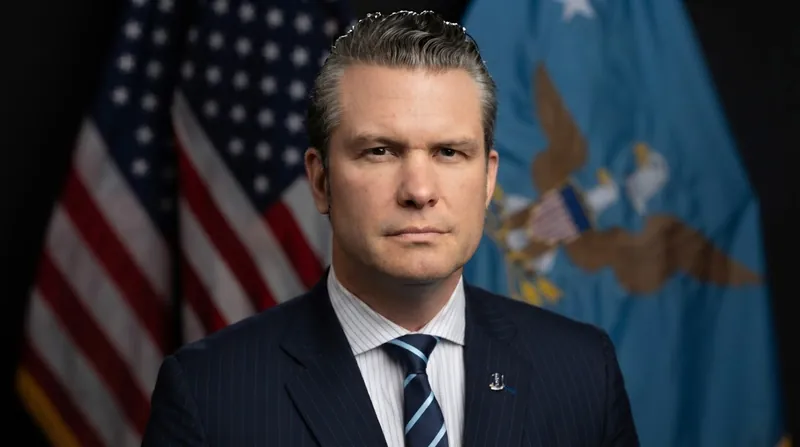
US Defense Secretary Hegseth Makes Unannounced Visit to Israel Ahead of Election
6 sources
Humanitarian Aid
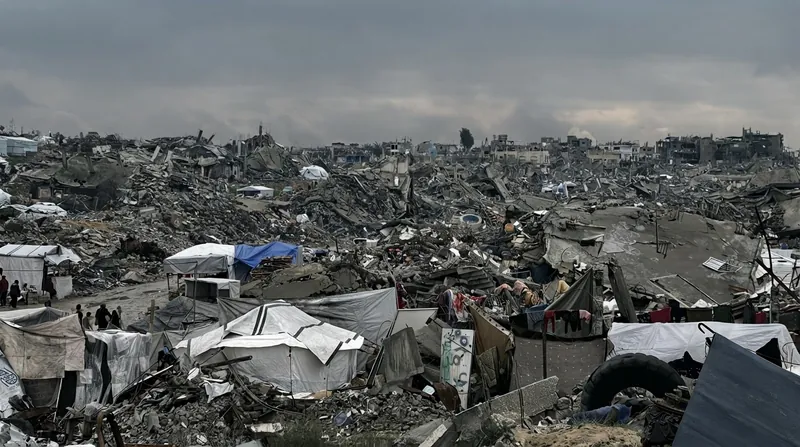
WFP Halts Gaza Food Aid for 500,000 People Citing Severe Funding Shortage
4 sources
Presidential Runoff
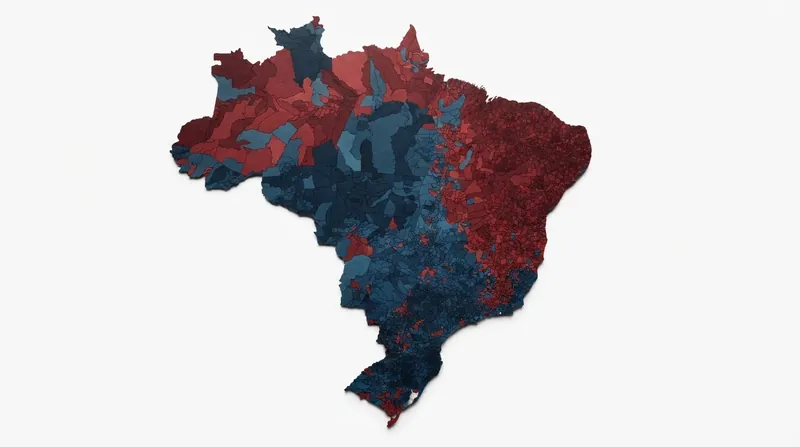
Lula and Flávio Bolsonaro Clash in First Presidential Runoff Debate
5 sources
Political Unrest
Fire Engulfs Albanian Supreme Court as Anti-Government Protests Enter Fifth Day
6 sources

Comments
Every angle. Every day.
Get News & Politics stories with full source coverage and perspective breakdowns, free every day.