
Trump Claims US-Iran Peace Agreement Reached as Tehran Denies Final Deal and Hormuz Blockade Turns Deadly
President Trump announced a pending peace agreement with Iran and canceled planned military strikes, but Iranian officials quickly contradicted the claim, stating no final conclusion has been reached. The diplomatic confusion unfolds as India issues a strong protest over the deaths of three Indian sailors in a U.S. strike enforcing the Strait of Hormuz blockade.
By Factlen Editorial Team
- U.S. Policy Defenders
- View the proposed agreement as a comprehensive victory that neutralizes Iran's nuclear threat through maximum pressure.
- Diplomatic Skeptics
- Emphasize the contradictions between Washington and Tehran, noting that key Iranian red lines remain unresolved.
- Affected Maritime Nations
- Focus on the collateral damage of the geopolitical standoff, demanding an immediate end to strikes on commercial shipping.
- Middle East Security Watchers
- Prioritize the dismantling of Iran's nuclear infrastructure and proxy networks as the only acceptable outcome of negotiations.
What's not represented
- · Families of the deceased Indian seafarers
- · Independent global shipping insurers
Why this matters
A finalized U.S.-Iran peace deal would end months of devastating regional conflict, reopen the critical Strait of Hormuz, and stabilize global energy markets. However, the stark contradiction between Washington and Tehran—coupled with deadly U.S. strikes on commercial shipping—threatens to collapse the fragile diplomatic progress and plunge the Middle East back into full-scale war.
Key points
- President Trump announced that a U.S.-Iran peace agreement is finalized and canceled planned military strikes on Iranian oil infrastructure.
- Iranian officials quickly contradicted the claim, stating that the agreement remains under review and red lines have not been met.
- The proposed deal reportedly includes a 60-day ceasefire, the reopening of the Strait of Hormuz, and nuclear negotiations.
- Amid the diplomatic confusion, a U.S. strike enforcing the naval blockade killed three Indian sailors on a commercial oil tanker.
- India issued a strong diplomatic protest to the United States, demanding an immediate end to attacks on merchant shipping.
The whiplash of diplomacy and violence in the Middle East reached a new peak on Thursday as U.S. President Donald Trump declared that a comprehensive peace agreement with Iran had been reached, abruptly canceling a wave of planned military strikes. Speaking from the Oval Office, Trump asserted that a "great settlement" was in its final stages and could be signed in Europe as early as this weekend. The announcement promised an end to a three-month war that has devastated the region and choked global energy supplies. Yet, within hours, Iranian officials flatly contradicted the president's narrative, stating that no final decision had been made and accusing Washington of projecting a fictitious diplomatic victory.[1][2]
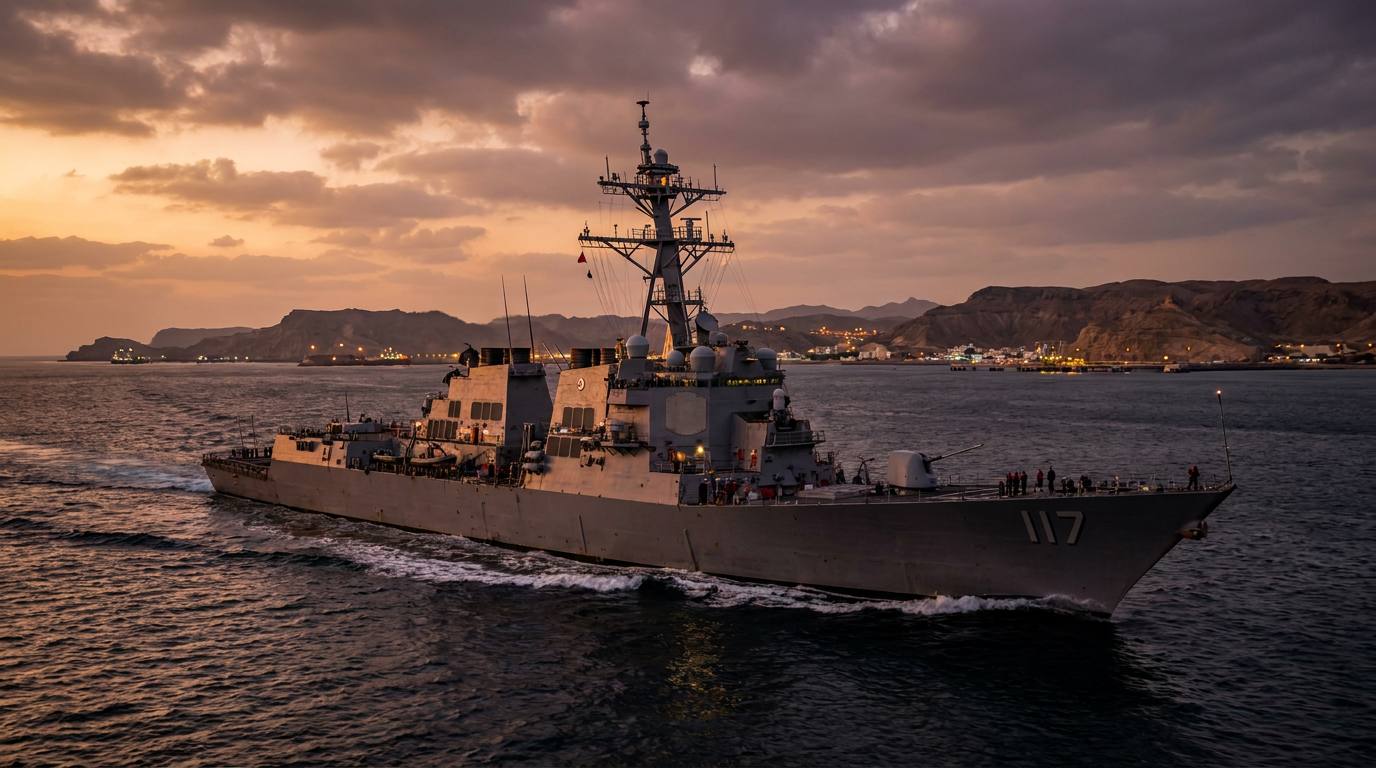
The diplomatic confusion unfolded against a backdrop of escalating bloodshed in the Gulf of Oman, where the U.S. military's ongoing naval blockade of Iranian ports claimed its first commercial casualties. Three Indian sailors were killed when U.S. forces fired precision Hellfire missiles into the engine room of the Palau-flagged oil tanker MT Settebello. The U.S. Central Command stated the vessel was attempting to transport sanctioned Iranian oil and had repeatedly ignored directions from American forces. The incident has ignited a fierce diplomatic backlash from New Delhi, complicating Washington's efforts to project stability.[3][5][6]
Trump's declaration of peace marked a dizzying reversal from his posture just hours earlier. On Wednesday evening, the president had taken to social media to threaten that the United States would hit Iran "VERY HARD TONIGHT." He outlined a plan to seize Kharg Island—the nerve center of Iran's oil export industry—and assume "total control" of the country's oil and gas markets, comparing the strategy to U.S. actions in Venezuela. Those strikes were called off at the eleventh hour, with Trump citing sudden, breakthrough progress with the highest levels of Iranian leadership.[7][8]
According to details leaked to Axios and CBS News, the proposed Memorandum of Understanding (MoU) would establish a 60-day ceasefire extension, encompassing the parallel conflict in Lebanon. Crucially, the framework reportedly includes provisions for reopening the Strait of Hormuz to commercial shipping without tolls, while initiating formal negotiations over Iran's enriched uranium stockpile. Trump claimed the conceptual framework had been approved by all involved parties, including regional stakeholders like Saudi Arabia, the United Arab Emirates, and Qatar, framing it as a comprehensive regional reset.[1][4]

"The strait will officially open as soon as we sign, which could be soon, very soon, maybe over the weekend in Europe," Trump told reporters, adding that Vice President JD Vance might travel to sign the document on behalf of the United States. The president emphasized that the core achievement of the pact would be an ironclad guarantee that Iran would never acquire a nuclear weapon, a central justification for the U.S. military campaign that has heavily disrupted the Middle East over the past three months.[2][4]
military campaign that has heavily disrupted the Middle East over the past three months.
Tehran's response was swift and dismissive, pouring cold water on the prospect of an imminent signing ceremony. Iranian Foreign Ministry spokesman Esmaeil Baqaei released a statement clarifying that while large portions of a negotiated text had been drafted, "Iran has not reached a final conclusion on the agreement." Baqaei emphasized that the proposal was still under intense review by the country's highest decision-making bodies and that Tehran would absolutely not compromise on its established red lines to secure a rushed deal.[1][2]
Iranian state-linked media went further, actively dismantling the U.S. narrative. The Fars News Agency, which maintains close ties to the Islamic Revolutionary Guard Corps, described Trump's claims as a "mix of truth and lies." The agency denied that Iran had agreed to reopen the Strait of Hormuz without conditions or to dismantle its nuclear material under the current draft. Furthermore, Fars highlighted a major unresolved Iranian demand entirely omitted by Trump: the immediate release of billions of dollars in frozen Iranian assets held in international banks.[1][2]

While the political maneuvering continues in Washington and Tehran, the situation on the water remains highly volatile. The U.S. naval blockade, initiated in April to cut off Iranian revenues, has severely restricted maritime traffic through the Strait of Hormuz, a critical chokepoint that normally handles roughly 20 percent of the world's oil supply. The blockade has increasingly targeted the so-called "shadow fleet"—older vessels sailing under flags of convenience to obscure the transport of sanctioned oil.[5][6]
The strike on the MT Settebello has brought the human cost of this blockade into sharp relief. Following the missile strike, the vessel suffered an engine fire, prompting a rescue operation by the Omani Navy that saved 21 crew members. However, three Indian nationals—identified as a chief engineer, a deck cadet, and a fitter—were killed in the blast. The Indian government, which supplies nearly 15 percent of the global maritime workforce, reacted with immediate outrage.[3][5]
India's Ministry of External Affairs summoned the U.S. chargé d'affaires in New Delhi to deliver a formal demarche, issuing a "strong protest" over the deaths. "These attacks must cease and end," stated foreign ministry spokesperson Randhir Jaiswal, publicly acknowledging for the first time that U.S. forces had targeted three separate merchant ships carrying Indian crews over the past week. With over 18,000 Indian seafarers currently operating in the Gulf region, domestic pressure is mounting on Prime Minister Narendra Modi to ensure their safety.[3][6]

The broader geopolitical implications of the potential MoU are also rippling through the Middle East. Israeli Prime Minister Benjamin Netanyahu, whose government has been deeply skeptical of diplomatic engagement with Tehran, held a phone call with Trump following the announcement. While Netanyahu's office explicitly noted that Israel is not a party to the MoU, it released a statement expressing appreciation for Trump's commitment that any final agreement would mandate the dismantling of Iran's enrichment infrastructure and halt its support for regional proxy groups.[1][4]
The coming days will test whether the proposed MoU is a genuine diplomatic off-ramp or another mirage in a conflict defined by misdirection. If the agreement collapses, the U.S. has signaled its readiness to resume devastating strikes on Iranian infrastructure, while Tehran has demonstrated its capacity to disrupt global shipping and target U.S. allies in the Gulf. For the thousands of commercial sailors navigating the Strait of Hormuz, the difference between a signed deal and a collapsed negotiation is a matter of life and death.[2][7][8]
How we got here
April 2026
The U.S. and Iran agree to a fragile temporary ceasefire, which is repeatedly violated over the ensuing months.
June 10, 2026
U.S. forces strike the MT Settebello in the Gulf of Oman, killing three Indian sailors.
June 11, 2026
Trump threatens to seize Kharg Island and launch major strikes on Iran.
June 12, 2026
Trump cancels strikes and claims a peace deal is reached; Iran denies a final agreement.
Viewpoints in depth
The U.S. Administration's View
Washington frames the potential agreement as a definitive victory that neutralizes Iran's nuclear threat.
President Trump and his allies argue that the 'maximum pressure' campaign, including severe naval blockades and the threat of devastating strikes on Kharg Island, has successfully forced Tehran to the negotiating table. From this perspective, the proposed Memorandum of Understanding is a comprehensive win that secures the Strait of Hormuz, protects global energy markets, and ensures Iran will never develop a nuclear weapon, all without requiring a full-scale ground invasion.
Tehran's View
Iran views the U.S. claims of a finalized deal as premature and insists on the lifting of sanctions.
Iranian officials and state-linked media characterize the U.S. announcements as a 'mix of truth and lies' designed for domestic political consumption. Tehran maintains that while a draft exists, no final conclusion has been reached by its supreme decision-making bodies. For Iran, any viable peace agreement must include the immediate release of billions in frozen assets and the total lifting of international sanctions, red lines they claim Washington is attempting to gloss over.
New Delhi's View
India is increasingly alarmed by the collateral damage of the U.S. naval blockade on its citizens.
For the Indian government and the global maritime industry, the geopolitical standoff has become an immediate crisis of citizen safety. With over 18,000 Indian seafarers operating in the Gulf, New Delhi views the U.S. strikes on commercial vessels like the MT Settebello as unacceptable collateral damage. Indian officials are demanding an immediate cessation of strikes on merchant shipping, arguing that the U.S. blockade is recklessly endangering the lives of neutral maritime workers.
What we don't know
- Whether Iran's Supreme Leader has actually reviewed or approved any part of the Memorandum of Understanding.
- If the U.S. will alter its rules of engagement for the naval blockade following India's diplomatic protest.
- How the proposed 60-day ceasefire would be enforced in Lebanon alongside the Gulf.
Key terms
- Memorandum of Understanding (MoU)
- A formal agreement between two or more parties that outlines the terms and details of an understanding, often serving as the foundation for a legally binding treaty.
- Strait of Hormuz
- A narrow, strategically critical waterway between the Persian Gulf and the Gulf of Oman, through which roughly 20 percent of the world's oil supply passes.
- Shadow Fleet
- A network of older commercial ships that use deceptive tactics, such as sailing under foreign flags or turning off tracking transponders, to transport sanctioned goods like Iranian oil.
- Kharg Island
- An Iranian island in the Persian Gulf that serves as the country's primary sea terminal for exporting crude oil.
- Demarche
- A formal diplomatic representation or protest delivered by one government to another.
Frequently asked
Is the war between the U.S. and Iran officially over?
No. While President Trump claimed a peace agreement is ready to be signed, Iranian officials stated that no final decision has been made and the text is still under review.
Why did the U.S. military strike the MT Settebello?
The U.S. Central Command stated the Palau-flagged tanker was attempting to transport sanctioned Iranian oil and ignored repeated directions from American forces enforcing a naval blockade.
How did India respond to the tanker strike?
India issued a 'strong protest' and summoned a senior U.S. diplomat in New Delhi after three Indian sailors were killed in the strike, demanding an end to attacks on commercial shipping.
What are the terms of the proposed peace deal?
The reported Memorandum of Understanding includes a 60-day ceasefire, the reopening of the Strait of Hormuz to commercial shipping, and a framework for negotiations regarding Iran's enriched uranium.
Sources
Source coverage
8 outlets
4 viewpoints surfaced








[1]CBS NewsDiplomatic Skeptics
Iran Updates: Trump claims 'settlement' to end war reached, but Tehran says no 'final conclusion' yet
Read on CBS News →[2]The GuardianDiplomatic Skeptics
Middle East crisis live: Iran says no final peace agreement reached, after Trump claims deal could be signed soon
Read on The Guardian →[3]The HinduAffected Maritime Nations
U.S. Navy attacked 3 merchant vessels with Indian seafarers; these strikes must stop: India's firm message to Washington
Read on The Hindu →[4]AxiosU.S. Policy Defenders
What's in the Iran deal Trump says he's ready to sign
Read on Axios →[5]The Jerusalem PostMiddle East Security Watchers
US strikes to enforce Strait of Hormuz blockade kill three Indian sailors
Read on The Jerusalem Post →[6]Al JazeeraAffected Maritime Nations
US-Iran ceasefire? Not for Indian sailors being killed in Hormuz
Read on Al Jazeera →[7]PBS NewsU.S. Policy Defenders
Trump threatens to take 'total control' of Iran's oil industry with major strikes
Read on PBS News →[8]Fox NewsU.S. Policy Defenders
Why Trump keeps flipping on Iran: A president who sees the world as he wants it to be
Read on Fox News →

Every angle. Every day.
Get news politics stories with full source coverage and perspective breakdowns delivered to your inbox.