
Trump Administration Opens Endangered Species Habitats to Logging and Mining in Major EPA Policy Shift
The Environmental Protection Agency has finalized a sweeping rule change that reclassifies millions of acres of protected federal land, allowing commercial resource extraction in previously restricted critical habitats.

- Economic Deregulation Advocates
- Focuses on the economic benefits of removing bureaucratic barriers to domestic resource extraction.
- Environmental Conservationists
- Prioritizes the preservation of biodiversity and warns against the ecological damage of industrial expansion.
- Administrative & Legal Observers
- Analyzes the policy shift through the lens of executive power, statutory interpretation, and upcoming court battles.
Perspectives this story doesn't cover
- Indigenous tribes whose ancestral lands and local ecosystems may be affected by new mining and logging operations.
- Local rural municipal leaders who must balance the promise of new industry jobs with potential environmental degradation.
Fast facts
- The EPA and Interior Department finalized a rule opening 45 million acres of protected habitat to commercial use.
- The policy redefines 'critical habitat' to exclude areas not currently occupied by endangered species.
- Industry groups project the rollback could generate $12.5 billion in revenue over a decade.
- Environmental organizations warn the shift threatens over 300 vulnerable species.
- Legal challenges from environmental groups and Democratic-led states are expected immediately.
Why this matters
This policy shift fundamentally alters how the federal government balances economic development with conservation, immediately opening up to 45 million acres of public land to commercial use while triggering what is likely to be a decade-long legal battle over the survival of hundreds of vulnerable species.
How we got here
1973
The Endangered Species Act is signed into law, establishing federal protections for vulnerable wildlife and their habitats.
2019
The first Trump administration introduces rules narrowing the definition of critical habitat, which are later reversed by the Biden administration.
Early 2025
The newly inaugurated Trump administration directs the EPA and Interior Department to draft a comprehensive overhaul of habitat regulations.
July 11, 2026
The final rule is published, officially opening millions of acres of unoccupied critical habitat to commercial extraction.
The Trump administration has finalized a sweeping overhaul of federal environmental regulations, issuing a new joint rule from the Environmental Protection Agency and the Department of the Interior that effectively opens millions of acres of previously protected endangered species habitats to commercial logging, mining, and drilling. The directive marks one of the most significant rollbacks of federal land protections in modern U.S. history, fundamentally altering the enforcement of the 1973 Endangered Species Act.[1][3]
The new policy centers on a reinterpretation of the "critical habitat" provision. Under the revised framework, federal lands that are not currently occupied by an endangered species—even if scientists deem those areas essential for the species' future recovery or climate-driven migration—can no longer be strictly cordoned off from economic development. This removes preemptive federal restrictions that have historically blocked industrial leasing on vast tracts of public land.[3][6]
Administration officials estimate the rule change will affect roughly 45 million acres of federal land, primarily concentrated in the dense timber regions of the Pacific Northwest, the mineral-rich Mountain West, and parts of the Appalachian basin. By removing these preemptive restrictions, the EPA argues it is eliminating bureaucratic red tape that has long stifled rural economies, delayed infrastructure projects, and hampered domestic supply chains.[1][2]
Industry groups and market analysts have responded enthusiastically to the regulatory shift. Timber and domestic mining stocks saw an immediate rally following the announcement, with industry projections suggesting the rollback could unlock up to $12.5 billion in new revenue over the next decade. Proponents argue this expansion is critical to reducing U.S. reliance on foreign imports for critical minerals and construction materials, framing the move as a matter of national economic security.[2][4]
Industry groups and market analysts have responded enthusiastically to the regulatory shift.
EPA leadership defended the move as a necessary modernization of an antiquated statute that had drifted from its original intent. In a joint press release, the administration stated that for too long, environmental mandates have prioritized hypothetical habitats over real American jobs. The new rule, officials argue, ensures that conservation efforts are grounded in actual species presence rather than speculative ecological modeling.
Conservation organizations and climate scientists have fiercely condemned the policy shift, characterizing it as an existential threat to North American biodiversity. Environmental advocates warn that stripping protections from unoccupied but essential habitats will push over 300 vulnerable species closer to extinction. They argue that as climate change alters ecosystems, wildlife must be able to migrate to new territories to survive, making these buffer zones more critical than ever.[3][5]
The rule represents the culmination of a long-standing conservative legal effort to narrow the scope of the Endangered Species Act. While previous administrations have debated the exact definition of "habitat" and attempted smaller-scale revisions, this joint EPA-Interior directive is the most aggressive administrative action to date to prioritize economic utility over preemptive conservation on federal lands.[1][6]
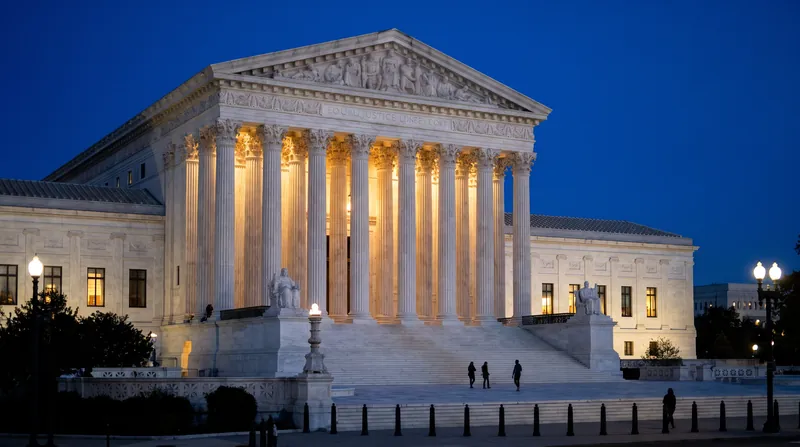
The policy is slated to take effect in 60 days, but immediate legal challenges are guaranteed. A coalition of major environmental groups and several Democratic-led states have already announced their intention to file emergency injunctions in federal court. This sets the stage for a protracted, high-stakes legal battle over executive authority and environmental stewardship that legal analysts expect will ultimately reach the Supreme Court.[1][5][6]
Viewpoints in depth
The Administration & Industry
Argues the rule modernizes outdated regulations and boosts domestic production.
Proponents of the rule change, including the EPA, the Department of the Interior, and major industry lobbying groups, argue that the Endangered Species Act has been weaponized to block vital economic development. They contend that designating 'unoccupied' land as critical habitat is regulatory overreach that harms rural communities. By restricting protections only to areas where species currently live, they believe the U.S. can secure its supply chains for timber and critical minerals while maintaining reasonable conservation standards.
Conservationists & Climate Scientists
Warns the rollback will accelerate extinction rates and destroy vital ecosystems.
Environmental advocates and wildlife biologists view the policy as a catastrophic dismantling of America's bedrock conservation law. They argue that protecting unoccupied habitat is essential for species recovery, especially as climate change alters ecosystems and forces wildlife to migrate. Without these buffer zones, they warn that isolated populations will be cut off from resources, leading to a rapid decline in biodiversity and irreversible damage to federal lands.
Sources
Source coverage
6 outlets
3 viewpoints surfaced






- [1]ReutersAdministrative & Legal Observers
EPA finalizes rule opening protected habitats to commercial extraction
Read on Reuters → - [2]Fox NewsEconomic Deregulation Advocates
Obama Center engineer fires back at online critics ripping architecture as 'monstrous insult'
Read on Fox News → - [3]The New York TimesEnvironmental Conservationists
In Sweeping Shift, Trump Administration Strips Protections From Millions of Acres
Read on The New York Times → - [4]The Wall Street JournalEconomic Deregulation Advocates
Mining and Timber Stocks Rally as EPA Eases Critical Habitat Rules
Read on The Wall Street Journal → - [5]The GuardianEnvironmental Conservationists
EPA to open habitats of endangered species to logging and mining
Read on The Guardian → - [6]PoliticoAdministrative & Legal Observers
Inside the EPA's fast-tracked habitat rule rewrite
Read on Politico →
Comments
More in News & Politics
See all →Trade Dispute Resolution
Bypassing the Appellate Body: How 53 WTO Members Use the MPIA to Settle Trade Disputes
7 sources

International Court of Justice
Germany Asks ICJ to Dismiss Nicaragua's Case Over Arms Exports to Israel
7 sources

IMF Quotas
The Four Variables That Dictate Voting Power Inside the International Monetary Fund
7 sources

Saxony-Anhalt Election
AfD Secures Historic Plurality in Saxony-Anhalt State Election as CDU Support Collapses
6 sources

Every angle. Every day.
Get News & Politics stories with full source coverage and perspective breakdowns delivered to your inbox.