
The Ultimate 2026 E-Bike Buying Guide: Classes, Motors, and Batteries Explained
Navigating the electric bike market requires understanding a new vocabulary of motors, watt-hours, and legal classes. This comprehensive guide breaks down the essential specifications to help you find the perfect ride.
By Factlen Editorial Team
- Urban Commuters
- Prioritizing simplicity, low maintenance, and cost-effectiveness for daily paved transit.
- Performance & Cargo Cyclists
- Demanding maximum torque, extended range, and dynamic handling for challenging terrain and heavy loads.
- Safety & Regulatory Advocates
- Focusing on fire safety certifications, robust braking systems, and responsible trail etiquette.
What's not represented
- · Traditional acoustic bicycle purists
- · Pedestrian advocates concerned about trail speeds
Why this matters
An e-bike is a significant financial investment that can replace your car and transform your daily commute. Understanding the technical specifications ensures you don't overpay for unnecessary features or end up with a battery that leaves you stranded.
Key points
- E-bikes are divided into three regulatory classes that dictate top speed (20 or 28 mph) and throttle availability.
- Hub motors offer affordable, low-maintenance power for flat city commutes.
- Mid-drive motors leverage the bike's gears to provide superior torque for steep hills and heavy cargo.
- Watt-hours (Wh), not Amp-hours, are the only accurate metric for determining an e-bike's true battery range.
- UL 2849 safety certification is a critical requirement in 2026 to prevent battery fire hazards.
- Hydraulic disc brakes are highly recommended to safely stop the increased weight and speed of an e-bike.
Electric bicycles have rapidly evolved from a niche novelty into a dominant force in modern transportation, fundamentally reshaping how people navigate their cities and neighborhoods in 2026. By flattening steep hills, eliminating the sweat factor from daily commutes, and offering a viable alternative to car trips, e-bikes are making cycling accessible to a vastly broader demographic. Whether you are a daily commuter looking to bypass gridlock, a parent hauling groceries and children, or a recreational rider seeking to extend your weekend range, the right electric bike can transform transit from a tedious chore into the highlight of your day.[11]
However, stepping into an e-bike shop or browsing online catalogs can quickly feel like enrolling in an electrical engineering course. Shoppers are immediately bombarded with a dizzying array of technical jargon, from Volts and Amp-hours to Newton-meters of torque and regulatory class numbers. Making an informed purchase requires cutting through this marketing noise to understand how these components actually impact the ride. This comprehensive guide breaks down the core specifications, helping you match the right technology to your specific riding environment and budget without overpaying for unnecessary features.[1][2]
The first and most crucial decision when selecting an e-bike is navigating the three-tier regulatory class system, which dictates not only how the bike delivers power but also where you are legally permitted to ride it. Class 1 e-bikes are widely considered the most natural and universally accepted category. They operate strictly on a pedal-assist basis, meaning the motor only engages when the rider is actively pedaling, and the assistance smoothly cuts off once the bike reaches 20 miles per hour. Because they closely mimic the feel of a traditional bicycle, Class 1 models are permitted on almost all municipal bike paths and mountain bike trails.[7][8]
Class 2 e-bikes share the same 20 miles per hour maximum speed limit as their Class 1 counterparts, but they introduce a crucial additional feature: a throttle. This allows the rider to propel the bike forward without pedaling at all, operating much like a lightweight electric moped. The throttle is particularly invaluable for getting a heavy, cargo-loaded bike moving from a dead stop at a traffic light, or for providing a brief physical reprieve during a long, exhausting commute. However, because of this throttle capability, Class 2 bikes are sometimes restricted from certain natural surface trails and pedestrian-heavy boardwalks.[8][9]

For riders who need to cover longer distances or safely keep pace with vehicular traffic on suburban roads, Class 3 e-bikes offer a significant step up in speed. These models provide pedal assistance up to a brisk 28 miles per hour. While they drastically reduce commute times, this higher top speed comes with stricter regulatory strings attached. Class 3 e-bikes are frequently banned from multi-use pedestrian paths, and many jurisdictions require riders to be at least 16 or 17 years old and mandate the use of a helmet at all times.[7][8][9]
Once you have determined the appropriate legal class for your local infrastructure, the next major architectural choice is the motor type. The e-bike market is currently divided into two primary engineering designs: hub motors and mid-drive motors. The physical location of the motor fundamentally alters the bike's center of gravity, dictates how it delivers power to the pavement, and determines how much maintenance the drivetrain will require over its lifespan. Understanding this distinction is critical to matching the bike's capabilities with the specific terrain you plan to conquer daily.[10]
Hub motors are the older and more common technology, housed directly inside the center of either the front or, more typically, the rear wheel. Because they push the wheel directly, they operate entirely independently of the bicycle's chain and gear shifting system. This isolation makes hub motors generally more affordable, easier to manufacture, and significantly gentler on the bike's drivetrain components. For riders navigating relatively flat city streets or casual paved paths, a hub motor provides a reliable, low-maintenance, and highly effective propulsion system.[10]
Hub motors are the older and more common technology, housed directly inside the center of either the front or, more typically, the rear wheel.
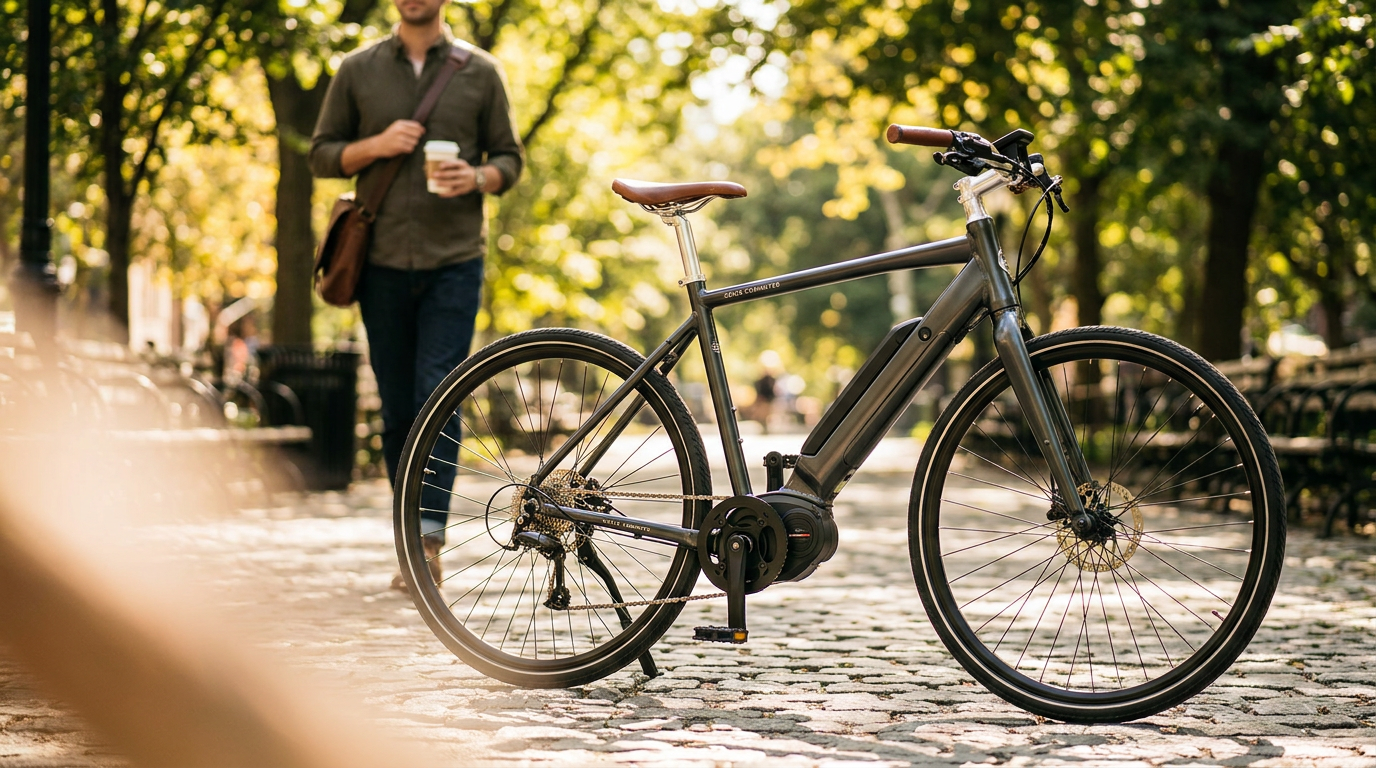
The primary limitation of a hub motor becomes apparent when the road tilts upward. Because it cannot leverage the bicycle's mechanical gears, a hub motor can bog down, overheat, and rapidly drain the battery on long, steep inclines. This is exactly where mid-drive motors excel. Positioned centrally at the bike's bottom bracket—right between the pedals—mid-drive motors transfer their power directly through the bicycle's chain and rear cassette.[10]
By utilizing the bike's existing gear ratios, a mid-drive motor operates much like a car's transmission, allowing it to multiply its torque efficiently. This makes mid-drives the undisputed champions for climbing steep mountain trails, hauling heavy cargo, or navigating extremely hilly cities. Furthermore, their central placement provides a highly balanced center of gravity, resulting in superior handling. The trade-off is a higher initial purchase price and increased wear and tear on the chain and gears, requiring more frequent drivetrain maintenance.[10]

When evaluating any motor's actual pulling power, the critical metric to look for is its torque rating, measured in Newton-meters (Nm). Torque is the raw rotational force that gets you off the line and pushes you up a hill. A motor offering 30 to 40 Nm is perfectly adequate for flat urban commuting. Moving up to 50 to 60 Nm hits the sweet spot for moderate inclines and versatile daily use. However, for heavy fat-tire builds, cargo hauling, or aggressive off-road mountain biking, experts recommend seeking out a high-torque motor pushing 80 Nm or more to prevent stalling under heavy loads.[3]
Of course, even the most powerful motor is useless without an adequate energy supply. The battery acts as the e-bike's fuel tank, and understanding its capacity is the single most important factor in predicting your real-world range. Shoppers are frequently bombarded with Voltage (V) and Amp-hour (Ah) ratings, which can be highly misleading when viewed in isolation. The only universal metric that truly dictates how far you can ride is Watt-hours (Wh).[4][5][6]
Watt-hours represent the total volume of energy stored in the battery pack, and calculating it is remarkably straightforward: simply multiply the Volts by the Amp-hours. For example, a 48-Volt battery with a 10 Amp-hour rating yields a total capacity of 480 Watt-hours. A 36-Volt battery with a 15 Amp-hour rating might sound larger due to the higher Ah number, but it actually contains more than 10% less total energy (540 Wh vs 480 Wh). Comparing Watt-hours is the only accurate way to evaluate the true range potential of two different e-bikes.[5][6]

As a general baseline for 2026 models, a compact 300 to 400 Wh battery is suitable for lightweight bikes intended for short, flat commutes. The industry standard for a reliable, mid-range commuter bike sits between 500 and 700 Wh, which typically delivers a comfortable 20 to 50 miles of real-world range depending on rider weight, terrain, and the level of motor assistance used. For heavy cargo bikes, long-distance touring, or exploring remote mountain paths, riders should look for capacities exceeding 700 Wh or consider dual-battery systems to avoid range anxiety.[4]
Beyond performance specifications, battery safety has become the paramount concern in 2026. Following a series of highly publicized lithium-ion battery fires in recent years, strict safety regulations are rolling out globally. Buyers must ensure their prospective e-bike carries a recognized, rigorous safety certification, such as UL 2849 in North America or EN 15194 in Europe. These certifications guarantee that the entire electrical system—including the battery, motor, and charger—has been exhaustively tested against thermal runaway and fire hazards.[1][3]
Because electric bikes are significantly heavier than traditional bicycles and routinely travel at higher speeds, robust stopping power is a critical, non-negotiable safety feature. Industry experts strongly recommend hydraulic disc brakes over traditional mechanical cables. Hydraulic systems provide superior heat dissipation, require less hand strength to operate, and deliver reliable, immediate stopping power even in wet or muddy conditions, which is essential when bringing a 65-pound motorized vehicle to a sudden halt.[3]

Finally, while online direct-to-consumer brands often offer tempting budget prices, the long-term value of a local test ride and dealer support cannot be overstated. Testing a bike in person allows you to feel the stark difference between a jerky cadence sensor and a smooth, responsive torque sensor. More importantly, purchasing through a local shop ensures you have access to specialized mechanical support and firmware updates, keeping your investment running safely and smoothly for years of adventure.[1][2]
Viewpoints in depth
The Urban Commuter's View
Prioritizing simplicity, low maintenance, and cost-effectiveness for daily paved transit.
For daily city commuters, the ideal e-bike is a reliable appliance rather than a high-performance athletic machine. This camp strongly advocates for hub motors, pointing out that isolating the motor from the bicycle's drivetrain drastically reduces chain wear and the need for frequent mechanical tune-ups. They generally prefer Class 1 or Class 2 setups, as top speeds of 20 mph are more than sufficient for navigating congested bike lanes and stopping safely at urban intersections. For these riders, a 500 Wh battery and a throttle for quick starts at traffic lights represent the perfect balance of utility and affordability.
The Performance & Cargo Cyclist's View
Demanding maximum torque, extended range, and dynamic handling for challenging terrain and heavy loads.
Riders tackling steep mountain trails or replacing their minivans with heavy-duty cargo bikes view e-bikes through a lens of raw capability. This perspective insists on mid-drive motors, arguing that the ability to multiply motor torque through the bike's mechanical gears is non-negotiable for climbing 15% grades without stalling. They prioritize high-capacity batteries (700 Wh or more) to offset the massive energy drain of hauling cargo or grinding up fire roads. While acknowledging the higher upfront cost and increased drivetrain wear, this camp believes the superior balance, natural pedal feel of a torque sensor, and hill-flattening power easily justify the investment.
The Safety & Regulatory Advocate's View
Focusing on fire safety certifications, robust braking systems, and responsible trail etiquette.
As e-bikes proliferate, safety advocates and municipal regulators are increasingly focused on the physical and legal risks of the technology. Their primary concern is battery integrity, strictly advising buyers to reject any e-bike lacking UL 2849 or EN 15194 certification to prevent catastrophic lithium-ion fires. Furthermore, this camp emphasizes the necessity of hydraulic disc brakes to safely halt heavy, fast-moving bikes. They also advocate for strict adherence to class regulations, warning that riding high-speed Class 3 bikes or throttle-heavy Class 2 models on crowded pedestrian paths threatens to provoke legislative backlashes that could restrict e-bike access for everyone.
What we don't know
- How municipal regulations will evolve to handle the increasing prevalence of high-speed Class 3 e-bikes on shared pedestrian paths.
- Whether the industry will standardize battery mounts to allow for universal replacements, or keep relying on proprietary designs.
- How effectively global recycling infrastructure will scale to handle the influx of depleted lithium-ion e-bike batteries over the next decade.
Key terms
- Watt-hour (Wh)
- The total energy capacity of a battery, calculated by multiplying Volts by Amp-hours, which determines the bike's real-world range.
- Torque (Nm)
- The rotational pulling force of the motor, measured in Newton-meters, which dictates how well the bike accelerates and climbs steep hills.
- Mid-Drive Motor
- An electric motor positioned at the bike's pedals that transfers power through the chain and gears, offering superior hill-climbing ability.
- Hub Motor
- An electric motor housed directly inside the center of the front or rear wheel, offering a simpler, lower-maintenance propulsion system.
- Cadence Sensor
- A basic sensor that turns the motor on simply because the pedals are rotating, often resulting in a sudden, jerky burst of power.
- Torque Sensor
- An advanced sensor that measures exactly how hard the rider is pushing on the pedals, delivering a smooth, proportional amount of motor assistance.
Frequently asked
How much should I expect to spend on a reliable e-bike?
A reliable entry-level e-bike from a reputable brand typically starts around $1,000 to $1,500. Mid-range commuter bikes with better components and UL-certified batteries usually range from $2,000 to $3,500.
Can I ride an electric bike in the rain?
Yes, most modern e-bikes are highly water-resistant and designed to be ridden in the rain. However, they are not fully waterproof, so you should never submerge the motor or battery in deep water.
Do I need a driver's license or insurance to ride an e-bike?
In most jurisdictions, Class 1 and Class 2 e-bikes do not require a license, registration, or insurance. Class 3 e-bikes may have age restrictions, but typically still avoid licensing requirements. Always check your local municipal laws.
How long will an e-bike battery last before it needs replacing?
A quality lithium-ion e-bike battery typically lasts between 500 and 1,000 full charge cycles. For the average rider, this translates to roughly 3 to 5 years of regular use before the capacity significantly degrades.
Sources
Source coverage
11 outlets
3 viewpoints surfaced











[1]BikelineUrban Commuters
E-bike buying guide for beginners
Read on Bikeline →[2]Electric Bike AdvisorSafety & Regulatory Advocates
The Beginner's E-Bike Buying Guide (2026 Edition)
Read on Electric Bike Advisor →[3]Seemoon EbikePerformance & Cargo Cyclists
2026 E-Bike Buying Guide
Read on Seemoon Ebike →[4]GyroorboardPerformance & Cargo Cyclists
Introduction to E-Bike Battery Capacity
Read on Gyroorboard →[5]KirbebikePerformance & Cargo Cyclists
Understanding Battery Capacity: Ah vs Wh Explained
Read on Kirbebike →[6]Ride1UpSafety & Regulatory Advocates
Why Watt-Hours Matter More for Ebike Range
Read on Ride1Up →[7]Pedego Electric BikesSafety & Regulatory Advocates
Understanding Electric Bike Classes
Read on Pedego Electric Bikes →[8]AventonUrban Commuters
Finding Your Ebike Class
Read on Aventon →[9]Priority BicyclesUrban Commuters
E-bike classes explained
Read on Priority Bicycles →[10]EveloPerformance & Cargo Cyclists
How Mid-Drive and Hub Motors Work
Read on Evelo →[11]Factlen Editorial TeamSafety & Regulatory Advocates
Synthesis by Factlen editorial team
Read on Factlen Editorial Team →


Every angle. Every day.
Get shopping stories with full source coverage and perspective breakdowns delivered to your inbox.