
Inside the High-Stakes U.S.-Iran Peace Talks in Switzerland
U.S. and Iranian delegations have converged on a Swiss Alpine resort to negotiate a permanent settlement following the February war, with Pakistan and Qatar mediating the complex 60-day diplomatic process.
By Factlen Editorial Team
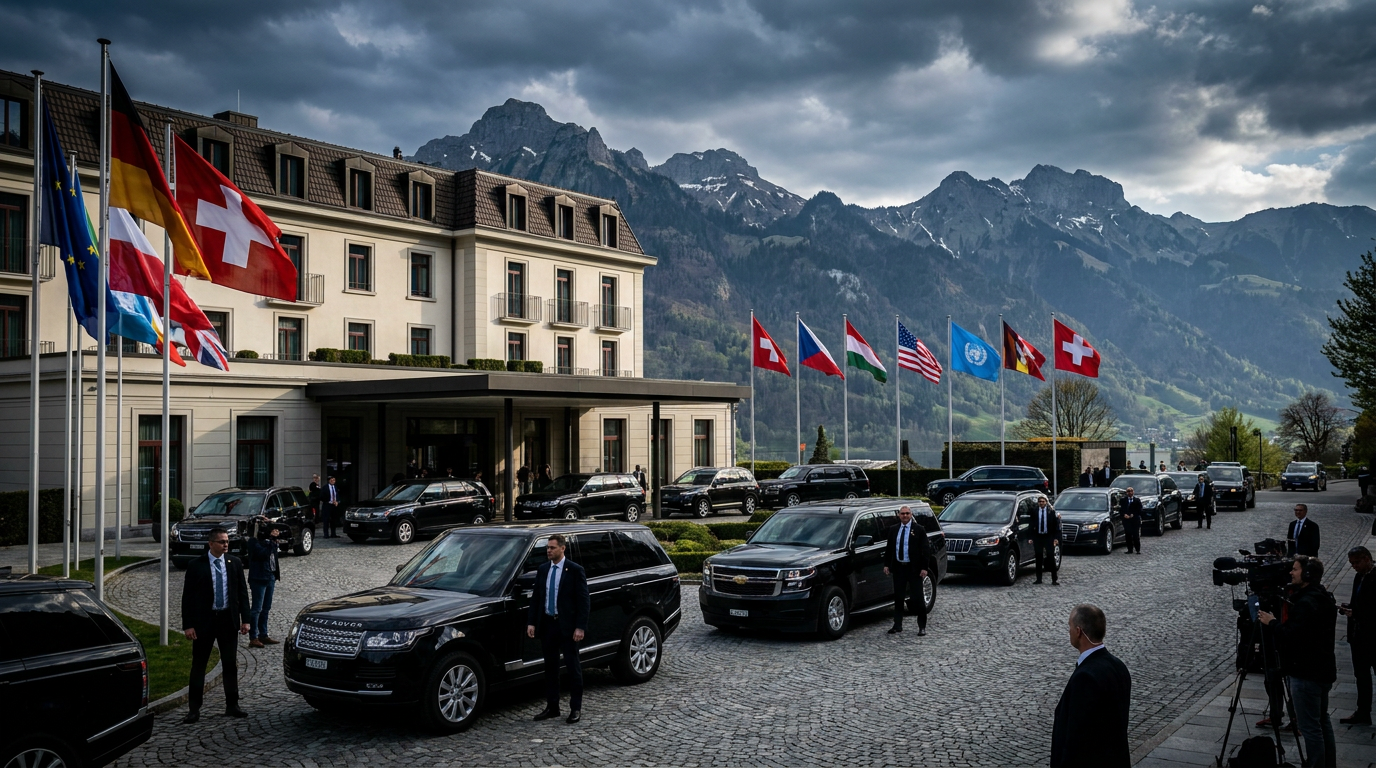
- U.S. Administration
- Focused on securing a comprehensive deal that caps Iran's nuclear program and stops Hezbollah attacks on Israel.
- Iranian Leadership
- Demanding immediate, verifiable sanctions relief and economic unfreezing in exchange for concessions.
- Regional Mediators
- Prioritizing regional stability and the prevention of a broader war that would disrupt global energy markets.
What's not represented
- · Israeli Government
- · Lebanese Civilians
- · European Union Allies
Why this matters
These negotiations will determine whether the fragile ceasefire holding back a broader Middle East war can survive. A successful settlement would reopen the Strait of Hormuz and stabilize global energy markets, while a collapse could trigger immediate military escalation and severe economic shocks.
Key points
- U.S. and Iranian delegations have arrived in Switzerland for direct proximity talks.
- The negotiations aim to turn a fragile ceasefire into a permanent political settlement.
- A 60-day window has been established to resolve nuclear, economic, and regional issues.
- Pakistan has emerged as a crucial mediator, bridging communication gaps between the two sides.
- The talks were briefly delayed by cross-border violence between Israel and Hezbollah in Lebanon.
After days of logistical uncertainty and near-collapses, senior delegations from the United States and Iran have converged on the Bürgenstock resort in the Swiss Alps. The high-stakes summit marks the beginning of a critical 60-day negotiation window aimed at transforming a fragile wartime memorandum into a comprehensive political settlement. Vice President JD Vance is leading the American delegation, accompanied by presidential envoys Jared Kushner and Steve Witkoff. On the Iranian side, Parliament Speaker Mohammad Bagher Ghalibaf and Foreign Minister Abbas Araghchi have arrived with a cadre of senior banking and oil officials, signaling Tehran's intense focus on economic relief.[1][2][3]
The path to Switzerland has been fraught with diplomatic peril. The talks were originally scheduled to begin on Friday but were abruptly postponed when cross-border violence erupted between Israel and the Iran-backed militant group Hezbollah in southern Lebanon. The White House temporarily halted Vance's departure, while Iranian officials threatened to suspend their participation entirely, citing the ongoing Israeli strikes. It took urgent, round-the-clock interventions by Swiss, Qatari, and Pakistani intermediaries to salvage the schedule and secure a localized ceasefire in Lebanon, allowing the delegations to finally board their respective flights.[4][5][6]
To understand the gravity of the Bürgenstock summit, one must look back to February 28, when joint U.S. and Israeli military strikes on Iranian territory ignited a direct, albeit brief, regional war. The conflict immediately disrupted global shipping, effectively closing the Strait of Hormuz—a vital maritime chokepoint that handles roughly a fifth of the world's daily oil consumption. The ensuing economic shockwaves and the threat of a spiraling, multi-front conflagration forced both Washington and Tehran to seek an off-ramp, culminating in a digitally signed memorandum of understanding earlier this week.[2][3][6]

The structure of the current negotiations is highly unorthodox. Because the United States and Iran do not maintain formal diplomatic relations, the two sides are not expected to sit at the same table immediately. Instead, the talks are operating through a complex proximity format. Mediators will shuttle between separate rooms, carrying technical proposals and political demands back and forth. This format relies heavily on the trust established by the mediating parties, who must accurately translate not just the text of the proposals, but the political red lines of each delegation.[2][5]
While Switzerland is providing the neutral venue and Qatar is leveraging its deep financial ties to both sides, Pakistan has emerged as the most surprising and arguably most crucial intermediary in this crisis. Islamabad's involvement began almost by accident but quickly became indispensable. Sharing a long, porous border with Iran and maintaining deep security ties with the United States, Pakistan possessed the unique ability to communicate directly with military and civilian leadership in both capitals. Prime Minister Shehbaz Sharif provided the diplomatic framework, while Army Chief Field Marshal Asim Munir utilized his direct lines to the Pentagon and the Iranian Revolutionary Guard Corps to de-escalate the immediate military crisis.[1][4]

Islamabad's involvement began almost by accident but quickly became indispensable.
For the Trump administration, the primary objectives in Switzerland are twofold: permanently capping Iran's nuclear program and neutralizing the threat posed by Hezbollah to northern Israel. Speaking to reporters before his departure from Joint Base Andrews, Vice President Vance explicitly linked the two issues, stating that progress on the nuclear front and the Lebanon ceasefire were the two big things the U.S. team would focus on. By allowing Iran to introduce the Israel-Hezbollah conflict into the bilateral negotiations, the U.S. has signaled a willingness to treat the region's various flashpoints as an interconnected puzzle rather than isolated crises.[1][3][7]
Tehran's delegation arrives with a fundamentally different set of priorities. The inclusion of senior banking and oil executives in Ghalibaf's team underscores that Iran's primary goal is the immediate lifting of economic sanctions and the unfreezing of international assets. The Iranian economy has been severely battered by years of isolation and the recent military confrontation. For the Iranian leadership, any agreement to curtail its nuclear ambitions or rein in its regional proxies must be met with guaranteed, verifiable economic relief. However, hardliners in Tehran, including Ghalibaf himself, have publicly warned that any breach of the preliminary ceasefire will be met with a decisive response.[2][6]
The memorandum of understanding signed earlier this week established a strict 60-day window to hammer out the details of a final accord. This timeline is designed to prevent the negotiations from dragging into an open-ended stalemate, a tactic both sides have accused the other of employing in the past. During this period, the U.S. has pledged to pause new military actions, while Iran has agreed to halt further enrichment of uranium at highly sensitive facilities. If a comprehensive deal is not reached by the end of the 60 days, the preliminary ceasefire will expire, raising the specter of renewed hostilities.[2][6]
The presence of Jared Kushner and Steve Witkoff on the ground in Switzerland highlights the personalized nature of the Trump administration's foreign policy. Both men were instrumental in brokering the Abraham Accords during Trump's first term and have spent the past several days working through the technical elements of the current negotiation. Their involvement suggests that the White House is looking for a transactional, deal-making approach to the crisis, potentially bypassing traditional State Department channels to offer economic incentives directly to Iranian power brokers.[2][3][7]

The outcome of the Bürgenstock talks will have profound implications for the broader Middle East. A successful agreement could pave the way for a new security architecture in the Persian Gulf, potentially easing tensions between Iran and U.S. allies like Saudi Arabia and the United Arab Emirates. Conversely, a failure to reach a deal would not only reignite the direct U.S.-Iran conflict but could also trigger a wider regional war, drawing in proxy forces in Iraq, Syria, and Yemen. The stakes are particularly high for Lebanon, where the fragile truce between Israel and Hezbollah remains intrinsically tied to the success of the Swiss negotiations.[3][4][7]
Despite the resumption of talks, deep skepticism remains on both sides. The logistics of the negotiations are incredibly complex, and the political environment in both Washington and Tehran is highly volatile. Any proposed concessions will face fierce opposition from hardline factions domestically. As the technical teams begin their grueling work in the Swiss Alps, the world watches to see if this unprecedented diplomatic gamble can finally break the cycle of escalation that has brought the Middle East to the brink of catastrophe.[2][5][6]
How we got here
Feb 28, 2026
Joint U.S. and Israeli military strikes on Iranian territory ignite a brief regional war.
Early June 2026
A fragile memorandum of understanding is signed, establishing a ceasefire and a 60-day negotiation window.
June 18, 2026
Talks are abruptly postponed due to escalating violence between Israel and Hezbollah in Lebanon.
June 20, 2026
Following urgent mediation, a localized truce in Lebanon holds, and delegations depart for Switzerland.
June 21, 2026
Technical negotiations officially begin at the Bürgenstock resort.
Viewpoints in depth
U.S. Administration
Seeking to permanently cap Iran's nuclear program and secure Israel's northern border.
The Trump administration views these talks as an opportunity to secure a comprehensive, transactional deal that neutralizes Iran's most potent threats. By bringing figures like Jared Kushner and Steve Witkoff to the table, the White House is signaling a desire for a grand bargain that links nuclear containment directly to regional security, specifically the cessation of Hezbollah's attacks on Israel. The U.S. strategy relies on maintaining maximum economic pressure while offering targeted sanctions relief as a carrot.
Iranian Leadership
Prioritizing immediate economic relief and the unfreezing of international assets.
For Tehran, the primary objective is economic survival. The inclusion of top banking and oil officials in the delegation indicates that Iran will not accept vague promises of future relief; they are demanding immediate, verifiable lifting of sanctions. Iranian negotiators are attempting to leverage their regional proxy network—particularly Hezbollah—as a bargaining chip to extract maximum economic concessions, while hardliners at home warn against any perceived capitulation to Washington.
Regional Mediators
Focused on preventing a broader war that would destabilize the entire Middle East and South Asia.
Countries like Pakistan and Qatar are driven by the urgent need for regional stability. For Islamabad, a full-scale U.S.-Iran war on its border would be disastrous for its own security and economy. By stepping in as indispensable mediators, these nations are not only preventing a regional conflagration but also elevating their own diplomatic status on the global stage, proving their utility to both Washington and Tehran.
What we don't know
- Whether hardline factions in either Washington or Tehran will accept the compromises necessary for a final deal.
- How the ongoing, fragile ceasefire in Lebanon will impact the broader negotiations if violence flares up again.
- The exact sequence of sanctions relief versus nuclear concessions being proposed by the mediators.
Key terms
- Proximity Talks
- A diplomatic format where opposing sides do not meet face-to-face, but instead communicate through mediators shuttling between separate rooms.
- Strait of Hormuz
- A critical maritime chokepoint between the Persian Gulf and the Gulf of Oman, through which roughly 20% of the world's oil supply passes.
- Memorandum of Understanding
- A formal, non-binding agreement outlining the terms and details of an understanding, used here as the framework for the preliminary ceasefire.
Frequently asked
Why are the talks happening in Switzerland?
Switzerland has a long history of diplomatic neutrality and frequently serves as the 'protecting power' representing U.S. interests in Iran, making it an ideal neutral venue for high-stakes negotiations.
Why is Pakistan mediating?
Pakistan shares a long border with Iran and maintains deep military and diplomatic ties with the United States, uniquely positioning it to communicate with leadership in both Washington and Tehran.
What happens if the 60-day window expires?
If a comprehensive settlement is not reached within 60 days, the preliminary ceasefire will expire, significantly raising the risk of renewed military conflict between the U.S. and Iran.
Sources
Source coverage
7 outlets
3 viewpoints surfaced







[1]NYT
Mideast Live Updates: New Round of U.S.-Iran Talks Set to Start in Switzerland
Read on NYT →[2]RFE/RLIranian Leadership
US-Iran Talks Revived As Vance Heads To Switzerland For High-Stakes Push
Read on RFE/RL →[3]CBS NewsU.S. Administration
Vice President JD Vance departs for Switzerland for direct peace talks with Iran
Read on CBS News →[4]Asia TimesRegional Mediators
Pakistan's role in the US-Iran talks
Read on Asia Times →[5]South China Morning PostU.S. Administration
US-Iran talks in Switzerland delayed, White House says Vance still ready to go
Read on South China Morning Post →[6]Channel News AsiaIranian Leadership
Switzerland says US-Iran talks planned for Friday are off
Read on Channel News Asia →[7]NDTVRegional Mediators
US-Iran Peace Talks Live Updates: JD Vance, Iranian Delegation Arrive In Switzerland
Read on NDTV →

More in news politics
See all 6 stories →Bolivia Crisis
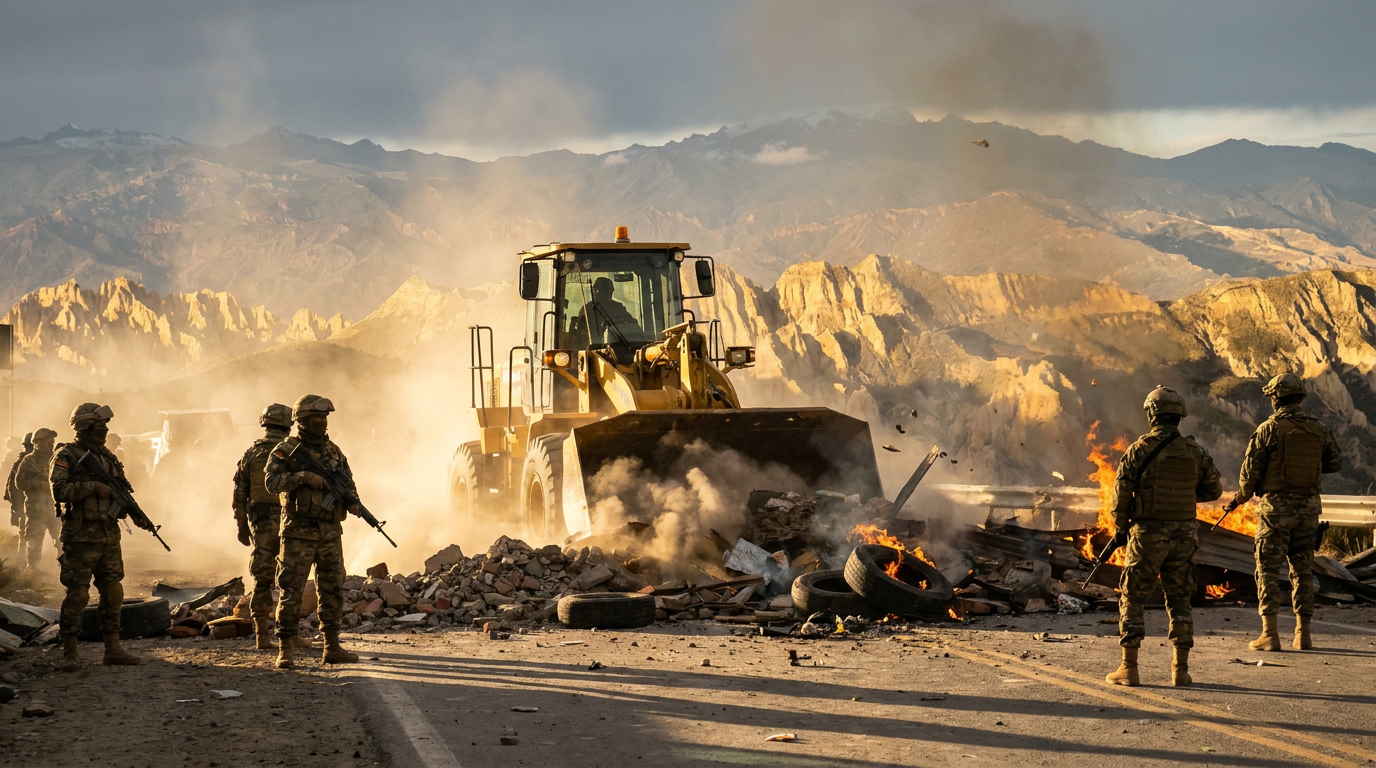
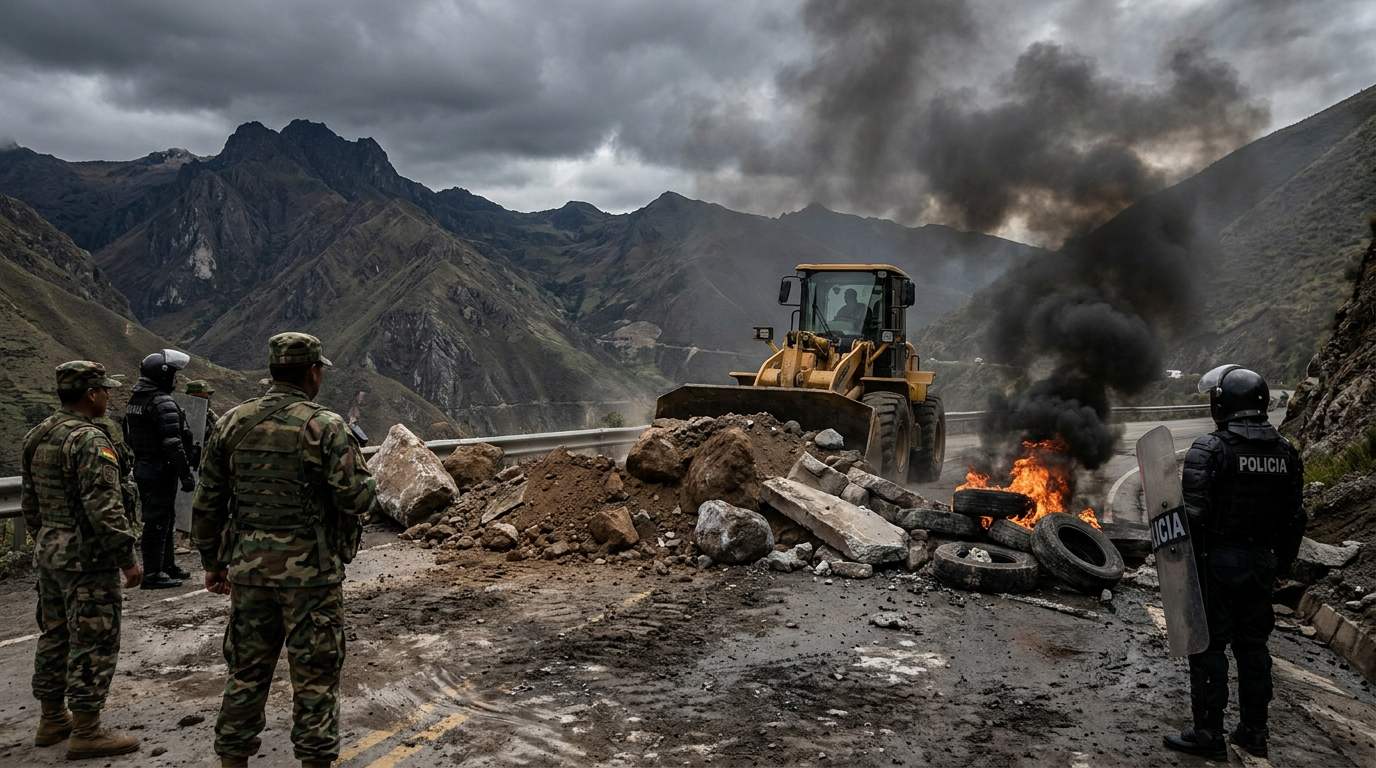
Bolivian President Declares State of Emergency, Deploys Military to Clear Protest Blockades
6 sources
Bolivia Crisis
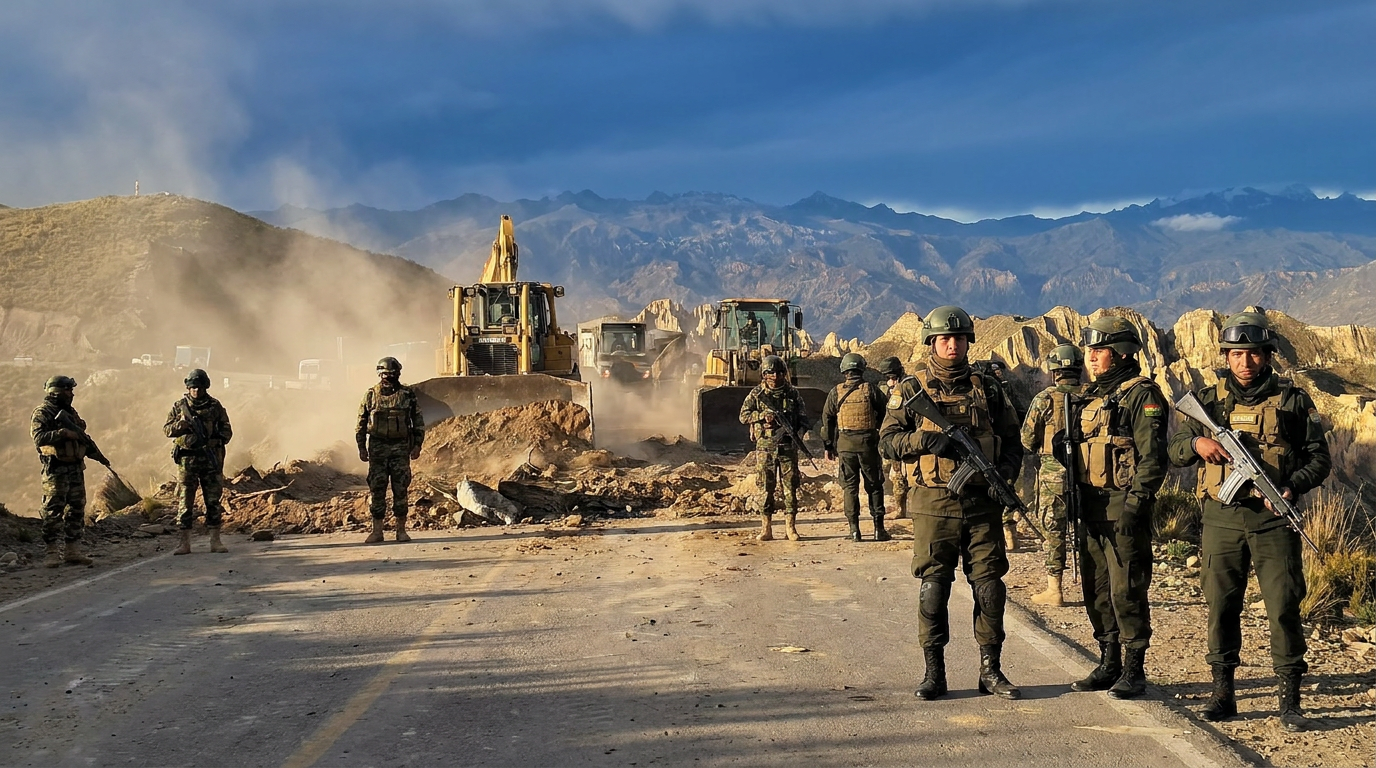
Bolivian President Declares State of Emergency, Deploys Military to Clear Protest Blockades
6 sources
U.S.-Iran Talks
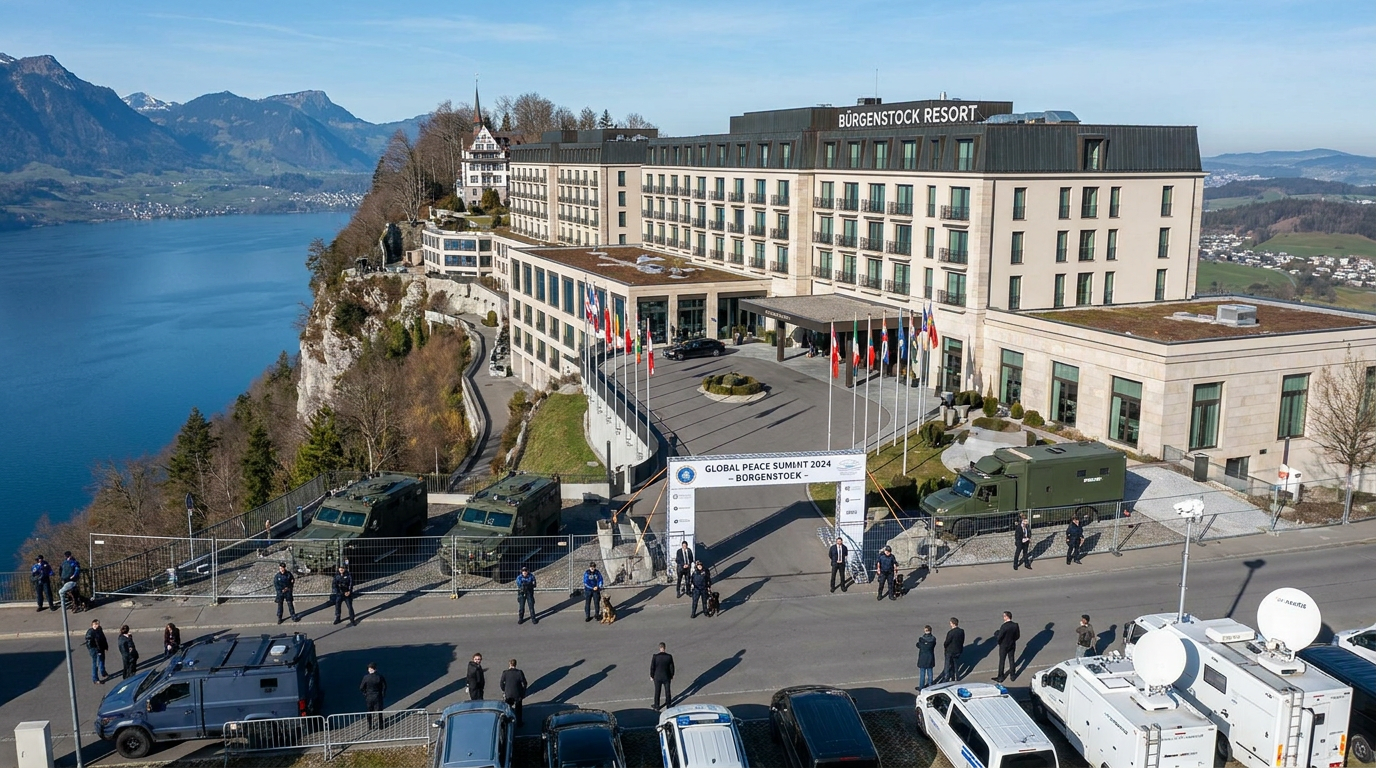
U.S. and Iran Open High-Stakes Negotiations in Switzerland Amid Regional Flare-Ups
8 sources
Bolivia Blockades
Bolivian President Declares State of Emergency, Deploys Military to Clear 50-Day Blockades
6 sources
Every angle. Every day.
Get news politics stories with full source coverage and perspective breakdowns delivered to your inbox.