
The Science of 'Movement Snacks': Why Micro-Dosing Mobility Outperforms Long Stretching Sessions
Exercise physiologists are increasingly recommending short, frequent bursts of activity over single, intense workouts to combat the metabolic and physical damage of prolonged sitting. These 'movement snacks' are proving highly effective at lubricating joints and slashing blood sugar spikes.
By Factlen Editorial Team

- Metabolic & Longevity Researchers
- Focus on how frequent, low-intensity movement regulates blood sugar and mitigates the cardiovascular risks of prolonged sitting.
- Mobility & Biomechanics Experts
- Emphasize the mechanical benefits of frequent movement for lubricating joints and preventing postural degradation.
- Strength & Conditioning Specialists
- Caution that while movement snacks are excellent for baseline health, they cannot replace the heavy resistance training needed for bone density.
What's not represented
- · Corporate HR departments managing workplace productivity
- · Physical therapists treating chronic desk-related injuries
Why this matters
Prolonged sitting fundamentally alters your metabolism and stiffens your joints in ways a single daily workout cannot fix. Adopting 'movement snacks' offers a scientifically proven, low-effort method to dramatically lower blood sugar spikes, reduce blood pressure, and maintain lifelong mobility without spending extra hours in the gym.
Key points
- Prolonged sitting creates a distinct physiological state that a single 45-minute daily workout cannot fully reverse.
- Movement snacks are short, 30-second to five-minute bursts of gentle activity designed to break up sedentary time.
- Because joints lack direct blood supply, they rely entirely on frequent movement to circulate lubricating synovial fluid.
- A 2023 study found that walking for five minutes every half hour reduces post-meal blood sugar spikes by 58%.
- While excellent for metabolic and joint health, movement snacks do not replace the heavy resistance training needed for bone density.
The modern desk worker faces a unique physiological dilemma: sitting completely still for 10 to 15 hours a day, and then attempting to undo the metabolic damage with a frantic, 45-minute session at the gym. For decades, this "weekend warrior" or daily binge-and-purge approach to fitness was considered the gold standard for busy professionals. However, a growing consensus among exercise physiologists and biomechanics experts suggests that this model is fundamentally flawed.[2][6]
The human body was not designed to remain static for prolonged periods. When an individual sits for hours on end, the body enters a distinct physiological state that a single, isolated workout struggles to counteract. Blood flow slows, insulin sensitivity drops, and connective tissues begin to stiffen.[1][2]
In response, a new paradigm is rapidly gaining traction in both medical and fitness communities: the "movement snack." Also referred to as "snacktivity" or micro-dosing mobility, the concept involves breaking up sedentary time with short, intentional bursts of physical activity sprinkled throughout the day.[3][6]
These movement snacks are not designed to leave you breathless or drenched in sweat. Instead, they consist of gentle, controlled movements—such as slow bodyweight squats, hip hinges, or a brief walk—lasting anywhere from 30 seconds to five minutes. What began as a niche biohacking trend has now evolved into mainstream, science-backed medical advice.[1][7]

To understand why micro-dosing mobility is so effective, it is necessary to look at the biomechanics of human joints. Unlike muscles, which are supported by a rich and constant blood supply, joints and cartilage are largely avascular. They do not have their own direct circulation system to deliver nutrients and clear out cellular waste.[7]
Instead, joints rely entirely on movement to circulate synovial fluid, a thick liquid that acts as the body's natural lubricant. Every time a joint bends and extends, it acts like a sponge, squeezing out old fluid and pulling in fresh, nutrient-rich synovial fluid. In this sense, movement snacks act as a regular oiling of the joints, keeping them supple and healthy.[1][7]
When the body remains locked in a chair for eight hours, this lubrication process halts. Connective tissues begin to stiffen, and muscles physically adapt to their shortened positions. Over time, this leads to the classic postural degradation of the modern office worker: tight hip flexors, rounded shoulders, and chronic lower back pain.[1][6]
When the body remains locked in a chair for eight hours, this lubrication process halts.
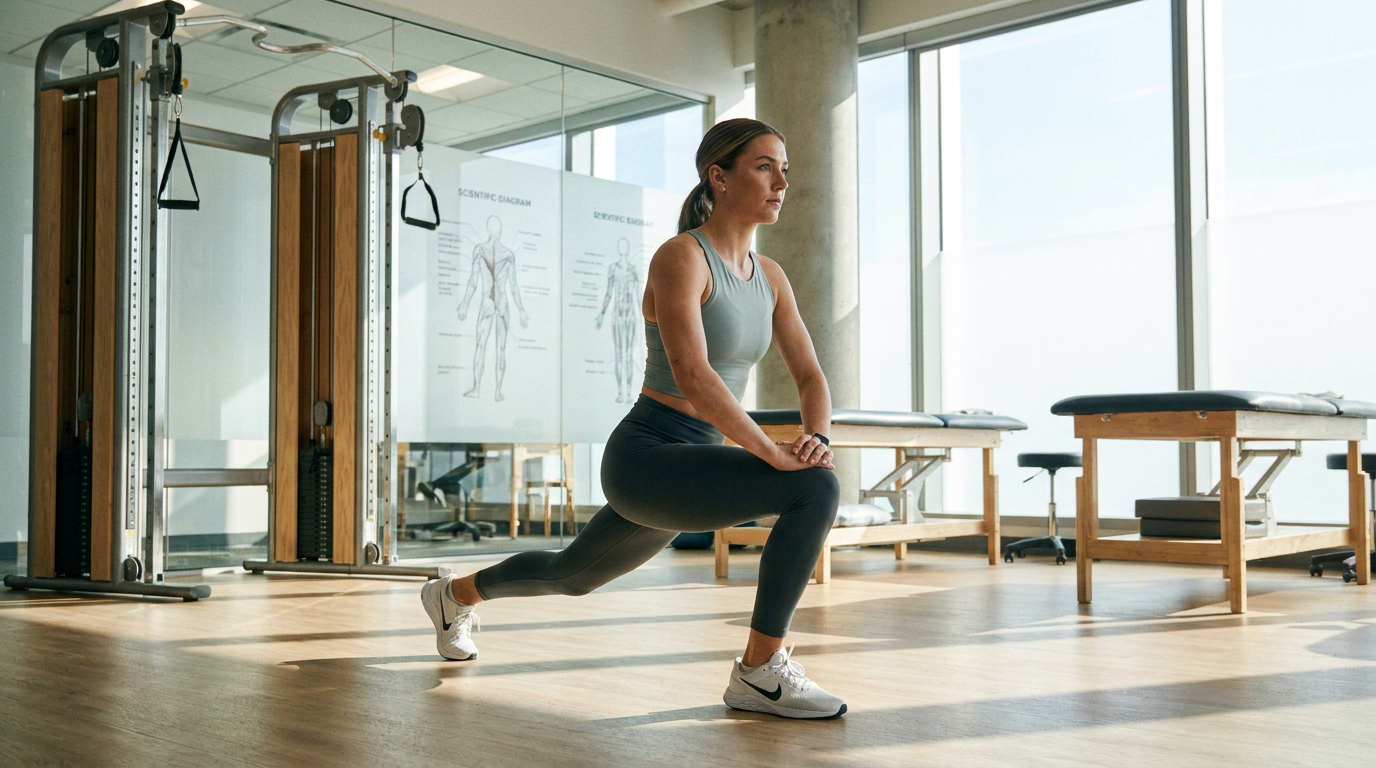
Frequent, brief movements actively interrupt this tissue adaptation. Taking just two minutes to perform shoulder circles and lunges reinforces healthy movement patterns and prevents the nervous system from permanently locking the body into a chair-shaped posture. It is a proactive defense against the slow creep of immobility.[1][3]
Beyond the mechanical benefits to the joints, the metabolic impacts of exercise snacking are proving to be profound. A landmark 2023 study from Columbia University sought to find the exact minimum dose of movement required to offset the cardiovascular harms of prolonged sitting.[2]

The researchers discovered that just five minutes of light walking every 30 minutes was the optimal intervention. The results were striking: this specific protocol lowered post-meal blood sugar spikes by 58% compared to continuous sitting, and significantly reduced overall blood pressure. Even a one-minute walk every hour produced measurable metabolic benefits.[2]
Other researchers have found that even smaller, desk-bound interventions can yield outsized returns. A study from the University of Houston highlighted the unique power of the soleus—a small, flat muscle deep in the calf. By performing seated heel raises, or "soleus push-ups," subjects were able to drop post-meal blood sugar spikes by up to 52%, simply by activating this highly fatigue-resistant muscle while sitting.[8]
Cardiovascular health and longevity also benefit from what researchers call Vigorous Intermittent Lifestyle Physical Activity, or VILPA. Experts note that short, sporadic bursts of vigorous movement—such as rapidly climbing a flight of stairs or carrying heavy groceries—can significantly boost cardiorespiratory fitness and lower mortality risk, without ever stepping foot in a gym.[4]

Psychologically, the movement snack philosophy removes the highest barrier to exercise: activation energy. Carving out an hour for a traditional workout requires scheduling, a change of clothes, and significant mental effort. A two-minute movement snack requires none of these, making it a highly sustainable habit for overwhelmed professionals.[3][6]
However, sports scientists and strength specialists caution against viewing snacktivity as a complete replacement for all traditional exercise. While micro-dosing movement excels at metabolic regulation and joint lubrication, it lacks the sustained mechanical tension required to trigger certain biological adaptations.[5][7]

Specifically, moderate to high-intensity resistance training remains absolutely essential for building maximum strength and increasing bone mineral density. The principle of osteogenic loading dictates that bones must be subjected to heavy, challenging loads to prevent age-related decline, such as osteoporosis and sarcopenia.[5]
Ultimately, the rise of the movement snack reframes fitness not as a grueling daily chore to be checked off a list, but as a continuous, integrated part of human biology. It proves that when it comes to joint longevity and metabolic health, small, consistent inputs quietly outperform dramatic, infrequent interventions.[3][7]
How we got here
Early 2000s
The 'weekend warrior' model dominates fitness advice, encouraging long, intense workouts to offset sedentary workweeks.
2022
University of Houston researchers publish findings on the soleus push-up, proving that micro-movements can drastically alter metabolic health.
2023
A landmark Columbia University study establishes that five minutes of light walking every 30 minutes is the optimal dose to counteract prolonged sitting.
2025–2026
The 'movement snack' transitions from a niche biohacking concept to mainstream medical and occupational health guidance.
Viewpoints in depth
Metabolic & Longevity Researchers
Focus on how frequent, low-intensity movement regulates blood sugar and mitigates the cardiovascular risks of prolonged sitting.
For metabolic researchers, the primary danger of modern life is not a lack of intense exercise, but the sheer volume of uninterrupted sitting. They point to data showing that prolonged stillness fundamentally alters how the body processes glucose and fats, creating a physiological state that a single daily workout cannot fully reverse. By introducing 'movement snacks' every 30 to 60 minutes, this camp argues that individuals can continuously clear glucose from the bloodstream, lower insulin demand, and significantly reduce long-term cardiovascular risks.
Mobility & Biomechanics Experts
Emphasize the mechanical benefits of frequent movement for lubricating joints and preventing postural degradation.
Biomechanics experts view the body as a mechanical system that requires constant lubrication. Because joints and cartilage lack a direct blood supply, they rely entirely on movement to circulate synovial fluid—the body's natural joint lubricant. From this perspective, sitting still for eight hours is akin to letting a machine rust. They advocate for micro-dosing mobility to constantly 'oil' the joints, interrupt the stiffening of connective tissues, and prevent the nervous system from permanently adapting to a hunched, chair-bound posture.
Strength & Conditioning Specialists
Caution that while movement snacks are excellent for baseline health, they cannot replace the heavy resistance training needed for bone density.
While fully supportive of breaking up sedentary time, strength and conditioning purists warn against viewing movement snacks as a complete fitness solution. They emphasize the principle of 'osteogenic loading'—the requirement that bones and muscles be subjected to significant mechanical stress to grow stronger. A two-minute bodyweight squat is fantastic for blood flow, they argue, but it does not provide the progressive overload necessary to combat age-related muscle loss (sarcopenia) or build the bone mineral density required to prevent osteoporosis.
What we don't know
- The exact long-term impact of movement snacks on severe, pre-existing joint degeneration remains under study.
- It is still unclear if the metabolic benefits of micro-dosing movement compound indefinitely or plateau after a certain number of daily interventions.
Key terms
- Synovial Fluid
- A thick liquid located between joints that reduces friction and provides nutrients to cartilage, which is stimulated and circulated by movement.
- VILPA
- Vigorous Intermittent Lifestyle Physical Activity; short, sporadic bursts of vigorous movement done as part of daily living, such as rapidly climbing stairs.
- Sarcopenia
- The age-related loss of skeletal muscle mass and strength, which requires progressive resistance training to combat.
- Soleus Muscle
- A flat muscle deep in the calf that is highly resistant to fatigue and plays a unique, outsized role in blood sugar regulation when activated.
- Osteogenic Loading
- High-impact or heavy resistance exercise that subjects the bones to mechanical stress, stimulating them to increase in density and strength.
Frequently asked
What exactly is a movement snack?
A movement snack is a short, intentional burst of physical activity lasting anywhere from 30 seconds to five minutes, performed multiple times a day to break up prolonged sitting.
Can movement snacks replace my regular workout?
They are excellent for joint mobility and metabolic health, but experts emphasize that you still need dedicated, moderate-to-high intensity resistance training to build maximum strength and bone density.
Do I need to sweat for it to count?
No. Gentle movements like slow bodyweight squats, hip hinges, or light walking are highly effective for lubricating joints and regulating blood sugar without causing fatigue.
What is the soleus push-up?
It is a seated heel-raise exercise that activates a specific, highly fatigue-resistant calf muscle, proven to significantly lower blood glucose and insulin demand even while sitting at a desk.
Sources
Source coverage
8 outlets
3 viewpoints surfaced








[1]Marie ClaireMobility & Biomechanics Experts
Movement snacks are trending as a simple, cost-effective, and science-backed way to get in your best shape ever
Read on Marie Claire →[2]Athalon FitnessMetabolic & Longevity Researchers
The Science of Micro-Dosing Movement: Why Your Desk Is More Dangerous Than You Think
Read on Athalon Fitness →[3]Living.FitMobility & Biomechanics Experts
Exercise Snacks: Why These Tiny Workouts Actually Work
Read on Living.Fit →[4]FoundMyFitnessMetabolic & Longevity Researchers
How short bursts of movement boost energy, longevity, and metabolic health
Read on FoundMyFitness →[5]Healthy Bones AustraliaStrength & Conditioning Specialists
Exercise Prescription to Support the Management of Osteoporosis
Read on Healthy Bones Australia →[6]SnackmentsMobility & Biomechanics Experts
What is an exercise snack and why does it work?
Read on Snackments →[7]Factlen Editorial TeamMobility & Biomechanics Experts
Synthesis by Factlen editorial team
Read on Factlen Editorial Team →[8]Dr. Chris MillerMetabolic & Longevity Researchers
Micro-dosing mobility and the soleus push-up
Read on Dr. Chris Miller →
Every angle. Every day.
Get fitness stories with full source coverage and perspective breakdowns delivered to your inbox.