
The Science of Heart Rate Variability: How Your Nervous System Dictates Fitness Recovery
Heart rate variability (HRV) has become the gold-standard metric for fitness wearables, offering a direct window into the body's autonomic nervous system. Understanding how to track and interpret this data can help athletes optimize recovery and avoid overtraining.
By Factlen Editorial Team
- Sports Scientists & Clinicians
- Prioritize clinical accuracy and long-term trends over daily consumer readiness scores.
- Wearable Tech Advocates
- Value the behavioral changes driven by continuous, frictionless data collection.
- Traditional Strength Coaches
- Rely on subjective athlete feedback and progressive overload rather than algorithmic readiness.
What's not represented
- · Amateur athletes experiencing data fatigue
- · Sports psychologists concerned with the nocebo effect
Why this matters
Understanding HRV transforms recovery from a guessing game into a measurable science. By tracking how your nervous system responds to stress, you can optimize your workouts, prevent overtraining, and make informed decisions about when to push hard and when to rest.
Key points
- HRV measures the microscopic time fluctuations between consecutive heartbeats.
- A higher HRV indicates a dominant parasympathetic nervous system, signaling good recovery.
- Intense exercise temporarily suppresses HRV by activating the sympathetic 'fight or flight' response.
- Consumer wearables use optical sensors to track nocturnal HRV, with smart rings showing high accuracy.
- Rolling 7-day HRV trends are far more useful for guiding training than single daily scores.
- Breathwork and cold water immersion can actively stimulate the vagus nerve to improve HRV.
Waking up and checking a "readiness score" is the new morning routine for millions of athletes and fitness enthusiasts. Behind the proprietary algorithms of devices like Oura, WHOOP, and Garmin lies a single, heavily researched biological metric: Heart Rate Variability (HRV).[1]
Unlike resting heart rate, which simply counts total beats per minute, HRV measures the microscopic fluctuations in time between consecutive heartbeats—known as the R-R interval. If your heart beats 60 times a minute, it is not beating exactly once every second; the gaps might be 0.9 seconds, then 1.1 seconds, then 0.95 seconds.[1][3]
While we often associate a steady, metronomic heartbeat with robust health, in the context of resting HRV, variability is actually a sign of physiological resilience. A highly variable heart rate indicates a cardiovascular system that is constantly receiving, processing, and adapting to signals from the brain.[1]
To understand why this variability occurs, one must look at the Autonomic Nervous System (ANS), the body's subconscious control center. The ANS is divided into two competing branches: the sympathetic nervous system and the parasympathetic nervous system.[3]

The sympathetic branch acts as the body's "fight or flight" accelerator. When activated by stress—whether from a heavy deadlift, a looming work deadline, or a poor night's sleep—it releases adrenaline, raises the heart rate, and forces the heart to beat in a highly uniform, metronomic pattern, drastically reducing variability.[3]
Conversely, the parasympathetic branch, driven largely by the vagus nerve, acts as the brakes. It promotes "rest and digest" functions, slowing the heart rate down and increasing the variability between beats. A high HRV is the ultimate biological signature of a parasympathetic system in full control.[5]
During an intense workout, the sympathetic nervous system naturally dominates. HRV plummets as the heart beats rapidly and uniformly to pump oxygen to working muscles. The true test of an athlete's fitness, however, is what happens after the workout ends and the recovery period begins.[3][5]
Sports scientists refer to this post-exercise recovery phase as "parasympathetic reactivation." A fit, well-recovered athlete will see their vagal tone reassert itself quickly, returning their HRV to baseline within hours. If an athlete is overtrained or under-recovered, the sympathetic nervous system remains chronically elevated, and HRV stays suppressed for days.[5]

If an athlete is overtrained or under-recovered, the sympathetic nervous system remains chronically elevated, and HRV stays suppressed for days.
Historically, capturing this precise autonomic data required a laboratory electrocardiogram (ECG). Today, consumer wearables use photoplethysmography (PPG)—optical sensors that shine light into the skin to measure microscopic blood volume changes with every pulse.[2][6]
Independent validation of these optical sensors is crucial for athletes relying on the data. A recent 2025 study published by The Physiological Society analyzed over 500 nights of sleep data, comparing popular wearables against a gold-standard 1,000 Hz ECG chest strap.[4]
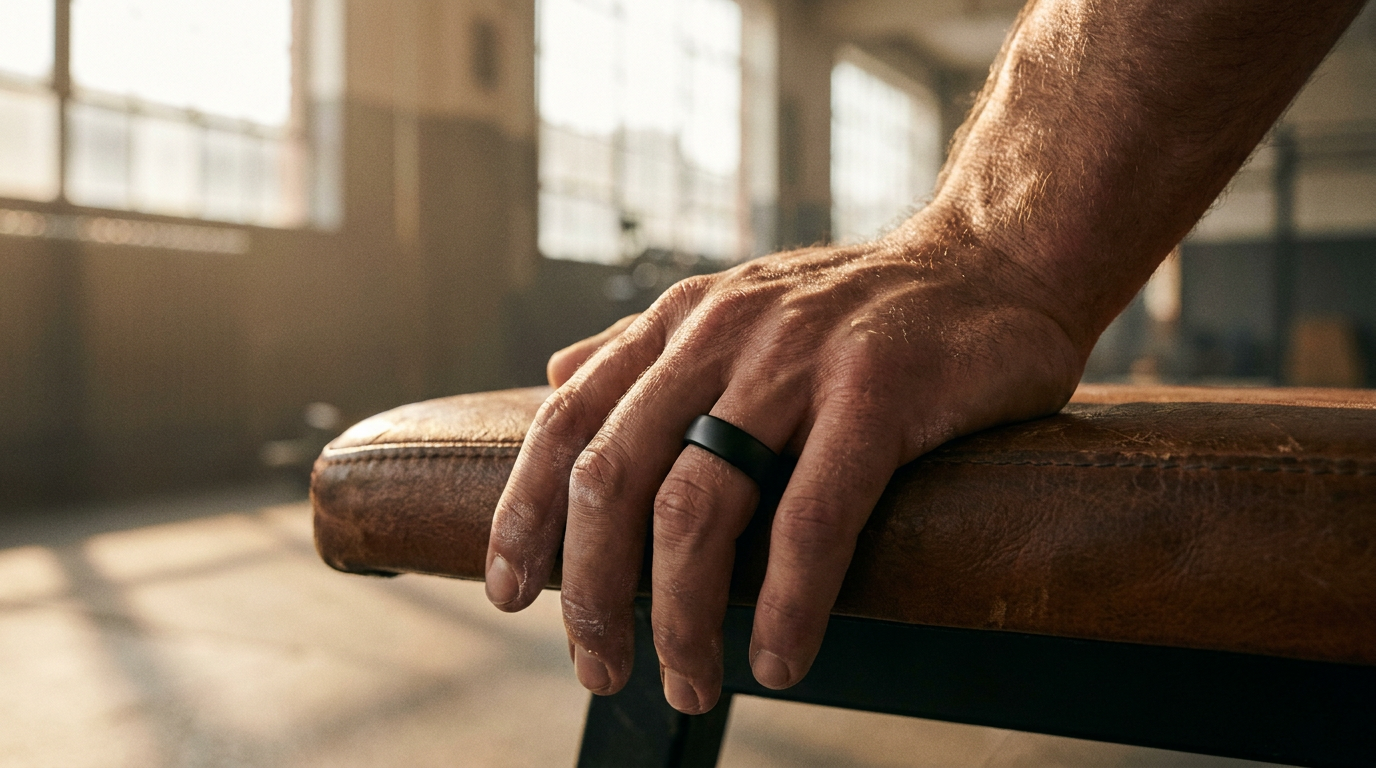
The researchers found that finger-worn devices like the Oura Ring Gen 3 and Gen 4, along with the WHOOP 4.0 strap, showed the strongest agreement for nocturnal HRV. Wrist-worn optical sensors generally performed well but occasionally struggled with precise R-R interval timing compared to the clinical baseline.[4]
The primary catch with PPG technology is its extreme sensitivity to motion artifact. Because even slight movements can distort the optical signal, daytime HRV readings from wrist-worn devices are notoriously noisy. This is why the most reliable consumer data is captured overnight, while the user is asleep and perfectly still.[2][6]

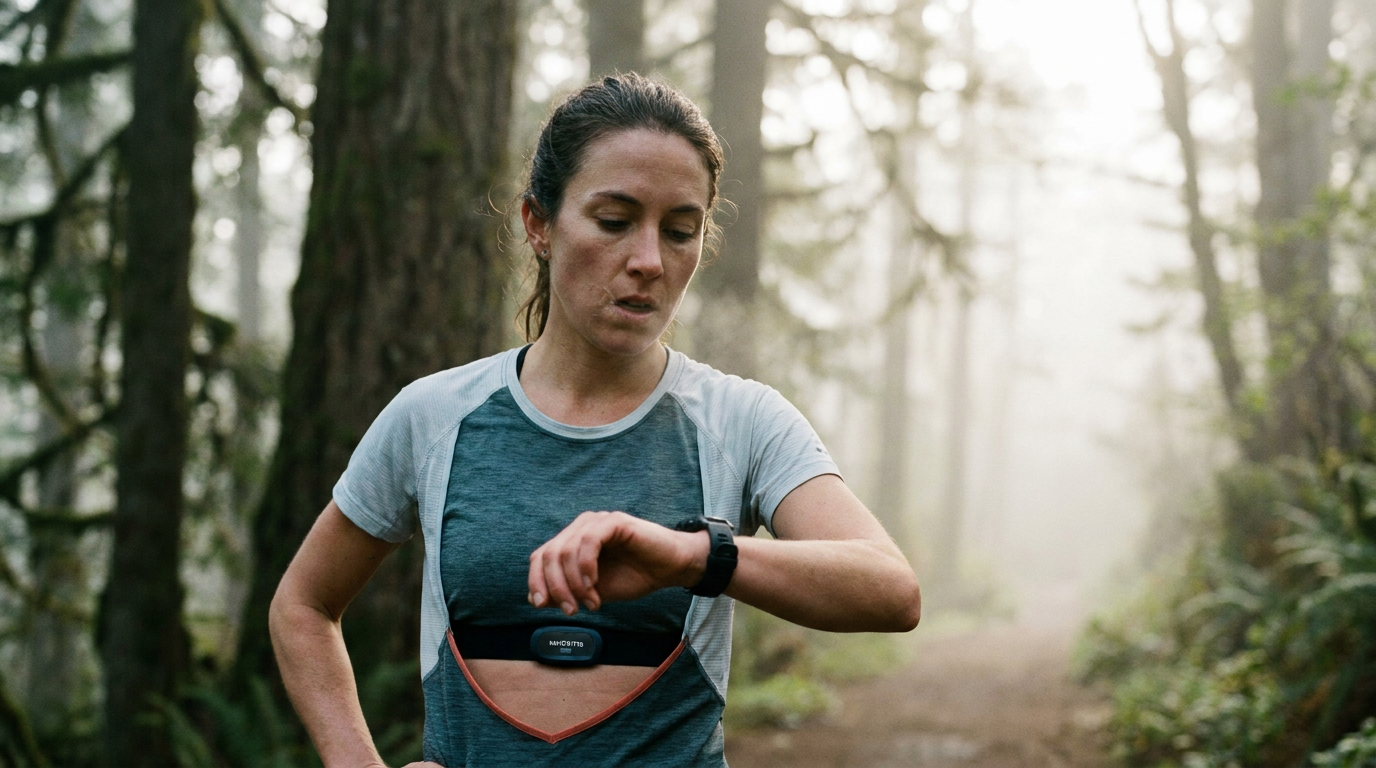
For athletes requiring clinical precision—such as those using HRV to dictate that exact day's training intensity—the Polar H10 chest strap remains the undisputed gold standard. It measures the heart's electrical signals directly, bypassing the optical noise that plagues wrist and finger wearables.[6]
Regardless of the device, most platforms calculate HRV using a formula called RMSSD (Root Mean Square of Successive Differences). Because RMSSD is mathematically weighted to highlight fast, vagally-mediated changes in heart rate, it is the preferred metric for assessing parasympathetic recovery.[3]
Sports scientists emphasize that a single day's HRV score is largely meaningless in isolation. The true value lies in the Coefficient of Variation (CV)—the rolling 7-day or 30-day trend. A stable, gradually rising baseline indicates positive adaptation to a training program, while wild daily swings often precede illness or overtraining.[3]
Can an athlete actively improve their HRV? Yes. Beyond standard recovery protocols like sleep and nutrition, targeted interventions can stimulate the vagus nerve. Resonant frequency breathing—often practiced as a 4-second inhale followed by a 6-second exhale—has been shown to acutely increase parasympathetic tone.[1]

Physical interventions also play a significant role in autonomic recovery. Research from the University of Queensland has demonstrated that hydrotherapy, particularly cold water immersion, accelerates cardiac parasympathetic reactivation in the acute post-exercise window, helping athletes bounce back faster for subsequent sessions.[5]
Ultimately, Heart Rate Variability is the most accessible, non-invasive window into the human nervous system available today. When used as a long-term compass rather than a strict daily rulebook, it empowers individuals to balance the stress of training with the biology of recovery, ensuring that hard work translates into actual fitness gains.[1][6]
How we got here
1960s
HRV is first used clinically to monitor fetal distress during labor.
1990s
Sports scientists begin using ECG machines to track autonomic fatigue in elite endurance athletes.
2010s
Bluetooth chest strap monitors make daily HRV tracking accessible to amateur athletes.
2020s
Optical PPG sensors in smart rings and watches automate nocturnal HRV tracking for the general public.
Viewpoints in depth
Sports Scientists & Clinicians
Prioritize clinical accuracy and long-term trends over daily consumer readiness scores.
This camp emphasizes that while consumer wearables are improving, the gold standard remains the electrocardiogram (ECG). They argue that single-day HRV scores are too noisy to dictate daily training loads reliably. Instead, clinicians focus on the 7-day or 30-day Coefficient of Variation (CV) to ensure an athlete is adapting to their training block, warning that over-indexing on a single bad morning score can lead to the 'nocebo effect' and detraining.
Wearable Tech Advocates
Value the behavioral changes driven by continuous, frictionless data collection.
Proponents of smart rings and optical wristbands argue that the friction of putting on a chest strap every morning prevents consistent data collection for the average person. They maintain that even if optical sensors (PPG) have a slight margin of error compared to an ECG, the ability to automatically track nocturnal HRV every single night provides a massive net benefit. For this camp, the 'readiness score' is a powerful behavioral tool that encourages users to prioritize sleep and active recovery.
Traditional Strength Coaches
Rely on subjective athlete feedback and progressive overload rather than algorithmic readiness.
Many veteran coaches remain skeptical of algorithmic recovery metrics, arguing that HRV cannot distinguish between physical muscle damage and psychological life stress. They point out that athletes frequently set personal records on days when their wearable dictates they should rest. This camp prefers subjective metrics—like the Rate of Perceived Exertion (RPE) and simple grip-strength tests—arguing that athletes must learn to listen to their bodies rather than outsourcing their training decisions to a screen.
What we don't know
- Whether HRV-guided training definitively outperforms traditional pre-planned periodization for elite strength athletes.
- How to perfectly isolate physical training stress from psychological life stress in HRV algorithms.
- The exact long-term psychological impact of daily algorithmic readiness scores on amateur athletes.
Key terms
- Heart Rate Variability (HRV)
- The fluctuation in the time intervals between consecutive heartbeats.
- Autonomic Nervous System (ANS)
- The subconscious control center of the nervous system, responsible for regulating involuntary functions like heart rate and digestion.
- Parasympathetic Nervous System (PNS)
- The 'rest and digest' branch of the ANS that slows the heart rate and promotes recovery.
- Sympathetic Nervous System (SNS)
- The 'fight or flight' branch of the ANS that elevates heart rate and prepares the body for stress.
- RMSSD
- Root mean square of successive differences; the standard mathematical formula used by most wearables to calculate HRV.
- Vagal Tone
- The activity of the vagus nerve, which serves as the main biological driver of the parasympathetic nervous system.
Frequently asked
Is a higher HRV always better?
Generally, a higher HRV indicates better fitness and recovery. However, an unusually high spike can sometimes indicate acute fatigue or illness, which is why tracking long-term trends is more important than daily numbers.
Can I measure HRV with my phone?
Yes, several apps use your smartphone's camera to measure the pulse in your fingertip (photoplethysmography), which can provide a reasonably accurate HRV reading if done while perfectly still.
Why does my HRV drop after a hard workout?
Intense exercise triggers your sympathetic nervous system (fight or flight), which reduces the variation between heartbeats. A healthy body will see HRV rebound as the parasympathetic system takes over during recovery.
Which wearable is the most accurate for HRV?
Independent studies consistently point to ECG chest straps like the Polar H10 as the gold standard, while the Oura Ring and WHOOP strap lead the consumer wearable market for nocturnal HRV tracking.
Sources
Source coverage
6 outlets
3 viewpoints surfaced






[1]Factlen Editorial TeamWearable Tech Advocates
Synthesis by Factlen editorial team
Read on Factlen Editorial Team →[2]Physiological MeasurementSports Scientists & Clinicians
Feasible assessment of recovery and cardiovascular health: Accuracy of nocturnal HR and HRV assessed via ring PPG
Read on Physiological Measurement →[3]MDPI SportsSports Scientists & Clinicians
Methodological Considerations for Using Heart Rate Variability (HRV) to Monitor Training Adaptations
Read on MDPI Sports →[4]The Physiological SocietyWearable Tech Advocates
Validation of consumer wearable devices for resting heart rate and heart rate variability during sleep
Read on The Physiological Society →[5]University of QueenslandSports Scientists & Clinicians
Heart rate variability as a tool to monitor cardiac parasympathetic function during short- and long-term recovery from exercise
Read on University of Queensland →[6]SportsmithTraditional Strength Coaches
Wearable accuracy: How do the most popular devices stack up?
Read on Sportsmith →
Every angle. Every day.
Get fitness stories with full source coverage and perspective breakdowns delivered to your inbox.