
The Science of EV Battery Longevity: What Actually Causes Degradation
Data from thousands of electric vehicles reveals that modern battery packs degrade at just 1.8% per year, but daily charging habits and thermal management play a critical role in extending their lifespan.
By Factlen Editorial Team
- Battery Chemists & Researchers
- Focuses on the microscopic electrochemical mechanisms that cause physical wear inside the battery cells.
- Fleet Data Analysts
- Analyzes real-world telematics data from thousands of vehicles to determine actual degradation rates.
- Automotive Service Centers
- Focuses on practical consumer habits and preventative maintenance to maximize vehicle lifespan.
- Industry Synthesis
- Aggregates scientific models, fleet data, and service center advice into actionable consumer guidance.
What's not represented
- · Used EV Buyers
- · Solid-State Battery Developers
Why this matters
Battery replacement anxiety is the number one barrier for prospective electric vehicle buyers. Understanding the actual science of battery degradation—and the simple daily habits that prevent it—empowers drivers to maximize their vehicle's lifespan and protects their financial investment.
Key points
- Modern EV batteries degrade at an average rate of just 1.8% per year, meaning they will likely outlast the vehicle's chassis.
- Keeping the battery's daily state of charge between 20% and 80% is the most effective way to prevent chemical degradation.
- Frequent use of DC fast chargers generates excess heat that can accelerate capacity loss over a decade of ownership.
- Active liquid cooling systems in modern EVs drastically reduce thermal stress compared to older air-cooled models.
- Leaving the vehicle plugged in during extreme weather allows the thermal management system to protect the battery without draining its own power.
For prospective electric vehicle buyers, the single greatest source of anxiety is the battery. The fear that an EV will require a catastrophic, $15,000 battery replacement after just a few years of commuting is a persistent myth, often fueled by our collective experience with rapidly degrading smartphone batteries. But a two-ton vehicle is engineered entirely differently than a pocket-sized consumer electronic device. Modern EVs employ sophisticated chemical buffers and thermal management systems designed specifically to prevent the kind of rapid capacity loss seen in smaller gadgets. Understanding the science of how these massive power packs actually age can help drivers maximize their investment and eliminate range anxiety for good.[7]
Real-world data paints a highly reassuring picture for current and future owners. According to Geotab, a telematics company that tracks diagnostic data from over 10,000 electric vehicles across various climates and use cases, the average EV battery degrades at a rate of just 1.8 percent per year. At that gradual pace, a vehicle purchased with 300 miles of original range will still offer roughly 273 miles of range after a full decade of daily driving. This data strongly contradicts the narrative that EV batteries are fragile components requiring frequent replacement.[1]
The consensus among automotive engineers and fleet analysts is that modern EV battery packs are designed to last 15 to 20 years, effectively outliving the mechanical chassis of the car itself under normal operating conditions. However, that 1.8 percent average is not a universal guarantee. Some vehicles degrade slightly faster, while others retain almost all of their original capacity after years on the road. The difference largely comes down to how the vehicle is charged, where it is parked, and the underlying chemistry of the cells.[1][7]
To understand why some batteries outlast others, it is necessary to look at the microscopic mechanism of degradation. Lithium-ion batteries generate power by shuttling lithium ions back and forth between a cathode and an anode through a liquid electrolyte. Over time, this physical movement and the accompanying chemical reactions cause microscopic wear and tear within the cell architecture. Researchers at the National Renewable Energy Laboratory (NREL) study these electrochemical and mechanical stress-induced degradation mechanisms to build predictive models for battery lifespans.[2]
Battery researchers divide this wear into two distinct categories: cyclic aging and calendar aging. Cyclic aging is the physical wear caused by the active process of charging and discharging the battery as the vehicle is driven. Calendar aging, on the other hand, is the inevitable chemical breakdown that occurs over time, regardless of whether the vehicle is driven 100 miles a day or parked in a garage for a month. Both types of aging are heavily influenced by how the driver manages the battery's energy levels.[2][7]

The single most effective way an owner can slow both cyclic and calendar aging is by managing the vehicle's State of Charge (SoC)—the percentage of energy currently held in the pack. Dealership service centers universally advise drivers to keep their daily charge level between 20 percent and 80 percent. Modern EVs make this effortless by allowing owners to set a maximum charge limit in the vehicle's infotainment screen or smartphone app, ensuring the car automatically stops pulling power once it hits the 80 percent threshold.[4][5][6]
Why is charging to 100 percent considered so damaging for daily use? When a lithium-ion cell is packed to its absolute maximum capacity, the internal voltage is at its highest point. This high-voltage state creates immense chemical stress, accelerating the breakdown of the liquid electrolyte and causing the internal resistance of the battery to rise. Over time, this stress permanently reduces the amount of energy the cell can store. Charging to 100 percent is perfectly safe for occasional long road trips, but it should not be the default daily setting.[2][7]
Conversely, draining the battery to zero is equally harmful. "Running your EV down to 0% regularly is just as damaging as overcharging," notes the service division at Northstar Kia. Deep discharges force the battery to operate at critically low voltages, which can cause the copper components inside the cell to dissolve. If the vehicle is left at a zero percent state of charge for an extended period, it can trigger irreversible chemical degradation that permanently cripples the battery's ability to hold a charge.[4]
Conversely, draining the battery to zero is equally harmful.
The second major factor dictating battery longevity is heat. High temperatures act as a catalyst for unwanted chemical side-reactions inside the battery cells, accelerating the calendar aging process and breaking down the cell structure. This is why the type of charging infrastructure a driver relies on matters immensely for the long-term health of the vehicle. Pumping electricity into a battery naturally generates thermal energy, and managing that heat is the primary job of the vehicle's internal computers.[1][2]
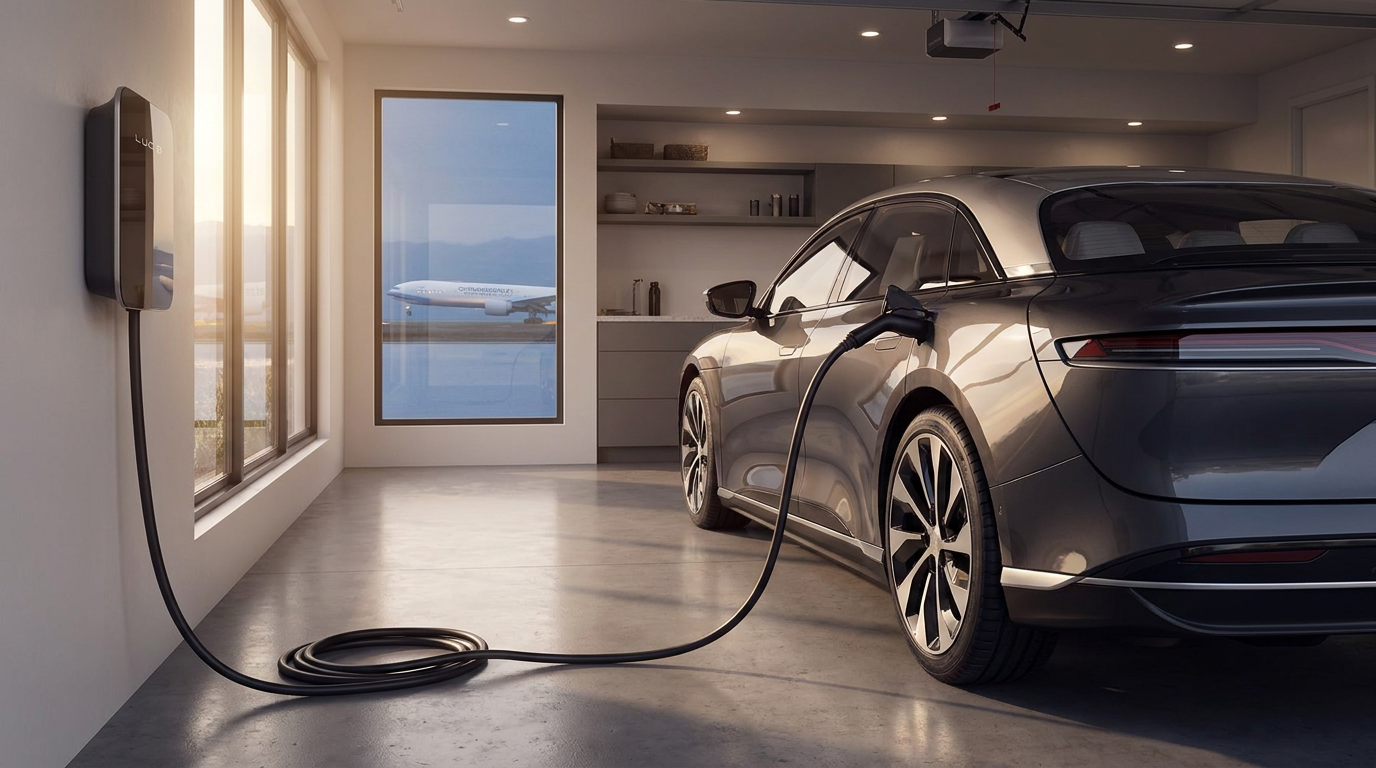
Level 2 charging—the standard 240-volt systems typically installed in residential garages and workplace parking lots—delivers electricity slowly and steadily, generating minimal heat. In contrast, Direct Current (DC) Fast Charging stations pump massive amounts of energy directly into the battery in a matter of minutes. While incredibly convenient for highway travel, this high-speed energy transfer causes internal temperatures to spike rapidly, placing significant thermal stress on the battery cells. Frequent reliance on these ultra-fast chargers can compound this stress over years of ownership.[2][5]
A comprehensive study by the Oak Ridge National Laboratory (ORNL) modeled the long-term impacts of these different charging behaviors on vehicle hardware. The researchers found that relying exclusively on 60-kilowatt DC fast chargers every single day could result in up to 22 percent less battery capacity over a 10-year timespan when compared to a baseline of daily Level 1 or Level 2 charging. This data underscores the importance of treating fast chargers as a tool for road trips rather than a daily refueling solution.[3]

However, researchers at the National Renewable Energy Laboratory point out that the damage from fast charging is heavily mitigated by modern automotive engineering. NREL's data shows that while fast charging does increase stress, the difference in degradation is relatively small if the vehicle is equipped with a robust thermal management system. The vehicle's computers actively monitor cell temperatures during a fast-charging session and will intentionally throttle the charging speed if the pack gets too hot, protecting the chemistry from catastrophic damage.[2]
Thermal management is the crucial dividing line between early electric vehicles and modern ones. Early models, such as the 2015 Nissan Leaf, relied on passive air cooling, which left the battery highly vulnerable to hot climates and the intense heat generated by fast charging. Today, almost all modern EVs utilize active liquid cooling systems that pump specialized coolant through the battery pack to maintain an optimal temperature, much like a radiator cools a combustion engine. This active cooling drastically reduces the thermal stress placed on the cells.[1][4]
Geotab's extensive fleet data confirms the massive advantage of liquid cooling technology in real-world applications. Vehicles equipped with active thermal management show significantly flatter degradation curves, even when subjected to frequent fast charging, compared to their air-cooled predecessors. The data reveals that a liquid-cooled pack degrades at a fraction of the rate of an air-cooled pack under identical environmental conditions. When shopping for a used electric vehicle, automotive experts strongly advise buyers to prioritize models equipped with liquid-cooled battery packs, as they offer far greater long-term reliability and capacity retention.[1][7]
Environmental temperatures also play a significant role in the calendar aging of the battery pack. Vehicles parked outside in scorching summer heat experience faster chemical breakdown than those kept in temperate environments, as the ambient heat penetrates the pack and accelerates internal reactions. Automotive experts recommend parking in shaded areas or garages whenever possible to minimize this passive heat exposure. Furthermore, leaving the vehicle plugged into a Level 2 charger during extreme weather—both hot and cold—is highly recommended by manufacturers to protect the cells.[4][6]

When an EV is plugged in, it can pull electricity directly from the wall grid to run its thermal management system, keeping the battery cool in the summer and warm in the winter without draining its own internal reserves. This practice, known as preconditioning, is vital for long-term health. It ensures the battery is always resting at its ideal temperature, drastically reducing the environmental stress that leads to premature capacity loss. Preconditioning also ensures that the vehicle is operating at peak efficiency the moment the driver pulls out of the driveway.[4][6]
What remains uncertain is how emerging battery chemistries will alter these established best practices. While most current EVs use Nickel Manganese Cobalt (NMC) cells, automakers are increasingly shifting toward Lithium Iron Phosphate (LFP) batteries for standard-range models. LFP cells are slightly less energy-dense, but they are highly resilient to cyclic degradation. In fact, some manufacturers utilizing LFP chemistry actually recommend that owners charge their vehicles to 100 percent at least once a week to help the battery management system accurately calibrate its sensors.[1][2][7]
Ultimately, the data suggests that EV owners do not need to obsess over battery health to see their vehicles last a decade or more. By relying primarily on Level 2 home charging, setting a daily 80 percent charge limit, and letting the vehicle's internal computers manage the temperature, drivers can easily preserve their range. With basic, mindful habits, the modern electric vehicle battery is more than capable of outliving the car it powers, transforming range anxiety from a daily concern into an outdated myth.[1][4][7]
How we got here
Early 2010s
First-generation mass-market EVs launch, largely relying on passive air cooling which leads to accelerated degradation in hot climates.
Mid 2010s
Automakers transition to active liquid cooling systems, drastically improving the thermal stability and lifespan of lithium-ion packs.
2020
Geotab releases comprehensive fleet data showing modern EV batteries degrade at an average of just 1.8% per year.
2023
Oak Ridge National Laboratory publishes modeling data quantifying the long-term impacts of daily DC fast charging versus Level 2 charging.
2025–2026
Automakers increasingly adopt LFP (Lithium Iron Phosphate) chemistries for standard-range vehicles, offering even greater resilience to cyclic aging.
Viewpoints in depth
Battery Chemists & Researchers
Focuses on the microscopic electrochemical mechanisms that cause physical wear inside the battery cells.
Researchers at institutions like NREL and ORNL view battery longevity through the lens of thermal stress and chemical breakdown. They emphasize that high voltages (charging to 100%) and high temperatures (from DC fast charging or ambient weather) accelerate side reactions that increase internal resistance. Their predictive models show that while degradation is inevitable, active thermal management systems are the most critical engineering solution to slow the process down.
Fleet Data Analysts
Analyzes real-world telematics data from thousands of vehicles to determine actual degradation rates.
Organizations like Geotab look past laboratory stress tests and focus on how batteries perform on actual roads over years of use. Their data reveals a highly optimistic picture, showing an average degradation rate of just 1.8% per year across modern EVs. They argue that while extreme charging habits do cause harm, the real-world impact is often less severe than consumers fear, especially in vehicles equipped with liquid cooling systems.
Automotive Service Centers
Focuses on practical consumer habits and preventative maintenance to maximize vehicle lifespan.
Dealership technicians and service centers emphasize actionable daily habits over chemical theory. They advocate for the "20/80 rule"—keeping the battery between 20% and 80% charge for daily driving—and strongly advise against relying on DC fast chargers for routine top-ups. Their primary concern is educating drivers to use preconditioning and smart charging limits to prevent the deep discharges and thermal stress that lead to costly out-of-warranty replacements.
What we don't know
- How the widespread adoption of Lithium Iron Phosphate (LFP) chemistries will alter long-term degradation averages compared to traditional NMC cells.
- The exact secondary-market value of degraded battery packs once they are repurposed for stationary grid storage.
Key terms
- State of Charge (SoC)
- The current energy level of the battery expressed as a percentage, similar to the battery indicator on a smartphone.
- DC Fast Charging
- High-speed public charging stations that deliver direct current straight to the battery, capable of adding hundreds of miles of range in minutes but generating significant heat.
- Level 2 Charging
- Standard 240-volt charging typically installed in homes or workplaces, which delivers energy slowly and generates minimal thermal stress.
- Thermal Management System
- The vehicle's internal network of pumps and coolant that actively regulates the temperature of the battery pack to prevent overheating or freezing.
- Preconditioning
- The process of using grid power to warm up or cool down the battery to its optimal operating temperature before driving.
Frequently asked
Is it bad to charge my EV to 100% every night?
Yes. Keeping a lithium-ion battery at its maximum voltage creates chemical stress that accelerates degradation. Experts recommend setting your daily charge limit to 80% and only charging to 100% before long road trips.
Does fast charging ruin the battery?
Frequent use of DC fast chargers generates excess heat, which can accelerate capacity loss over time. However, modern EVs with active liquid cooling systems mitigate much of this damage, making occasional fast charging perfectly safe.
How long will an electric car battery actually last?
Real-world fleet data shows that modern EV batteries degrade by an average of just 1.8% per year. Under normal conditions, the battery pack is designed to last 15 to 20 years, often outliving the vehicle's chassis.
Sources
Source coverage
7 outlets
4 viewpoints surfaced







[1]GeotabFleet Data Analysts
EV Battery Health Insights: Data From 10,000 Cars
Read on Geotab →[2]National Renewable Energy LaboratoryBattery Chemists & Researchers
Predictive Models of Li-ion Battery Lifetime
Read on National Renewable Energy Laboratory →[3]Oak Ridge National LaboratoryBattery Chemists & Researchers
Estimate long-term impact on battery degradation by considering electric vehicle real-world end-use factors
Read on Oak Ridge National Laboratory →[4]Northstar KiaAutomotive Service Centers
7 Mistakes People Make With EV Battery
Read on Northstar Kia →[5]Dick LovettAutomotive Service Centers
Maximise Your EV Battery Life
Read on Dick Lovett →[6]Bowen Scarff FordAutomotive Service Centers
EV Battery Maintenance Best Practices
Read on Bowen Scarff Ford →[7]Factlen Editorial TeamIndustry Synthesis
Synthesis by Factlen editorial team
Read on Factlen Editorial Team →
More in automotive
See all 34 stories →EV Showdown
2026 Rivian R2 vs. Tesla Model Y: The Ultimate Midsize EV Showdown
7 sources
Grid Tech
How Bidirectional Charging is Turning EVs into Home Power Plants
8 sources
Battery Tech
Solid-State EV Batteries Move From Lab to Assembly Line in 2026
9 sources

Smart Transmissions
The Death of the Clutch Lever: How Smart Transmissions are Rewiring the Motorcycle
7 sources

Every angle. Every day.
Get automotive stories with full source coverage and perspective breakdowns delivered to your inbox.