
The Science of Animal-Free Dairy: How Microbes Are Brewing Real Ice Cream and Cheese
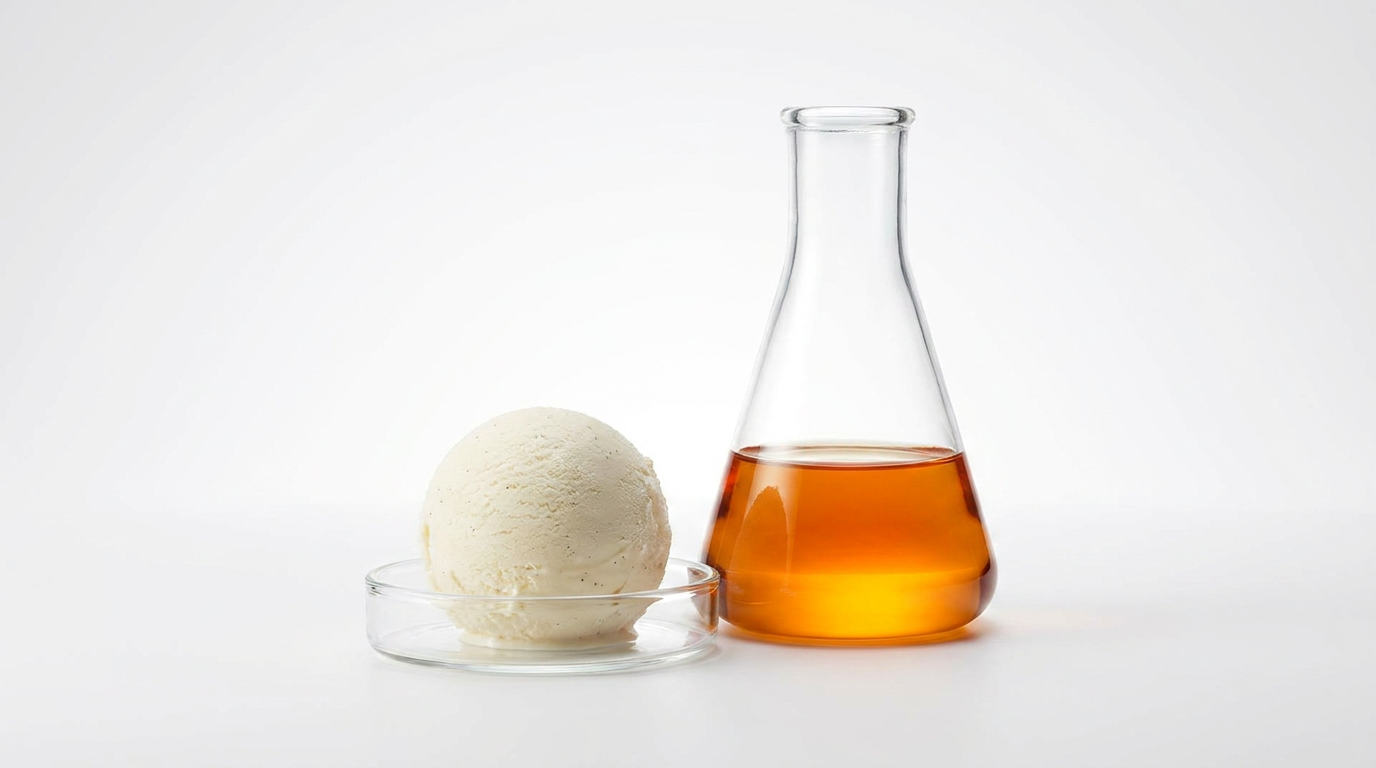
Precision fermentation is allowing food scientists to produce bio-identical milk proteins without cows. The technology promises the exact taste and texture of traditional dairy with a fraction of the environmental footprint.
By Factlen Editorial Team
- Food Tech Innovators
- Argue that precision fermentation offers the exact taste and texture of dairy without the environmental or ethical toll of animal agriculture.
- Environmental Analysts
- Focus on the drastic reduction in greenhouse gas emissions, land use, and water consumption compared to traditional dairy.
- Traditional Dairy Advocates
- Concerned with labeling transparency and protecting the legal definition of milk and cheese from lab-grown competitors.
- Vegan Consumers
- Split on acceptance; some embrace the animal-free aspect, while others are hesitant to consume bio-identical animal proteins.
What's not represented
- · Dairy Farmers
- · Allergy Advocacy Groups
Why this matters
By decoupling dairy proteins from animal agriculture, precision fermentation offers a pragmatic solution to the massive climate impact of traditional farming without forcing consumers to compromise on the taste and texture of their favorite foods.
Key points
- Precision fermentation uses genetically programmed microbes to produce bio-identical whey and casein proteins.
- The resulting proteins are molecularly identical to cow's milk but are produced without any animal involvement.
- Life-cycle assessments show the microbial process uses up to 25 times less land and drastically cuts greenhouse gas emissions.
- Because the proteins are real dairy, they provide the exact melting and stretching qualities missing from plant-based cheeses.
- Recent FDA clearances for recombinant casein and whey are paving the way for mass commercialization in the US market.
For decades, the holy grail of the alternative protein industry has been a vegan cheese that actually melts and an ice cream that doesn't taste faintly of oats or almonds. Plant-based alternatives have made massive strides, but they fundamentally rely on starches, oils, and plant proteins that cannot perfectly mimic the unique molecular behavior of cow's milk.
That compromise is rapidly becoming obsolete. A growing cohort of food technology companies has bypassed plant-based approximations entirely, opting instead to produce actual dairy proteins—without a single cow involved. The resulting products are already appearing on grocery store shelves, offering the exact taste, texture, and functionality of traditional dairy.
The engine behind this shift is a technology called precision fermentation. While humans have used traditional fermentation for millennia to brew beer and culture yogurt, precision fermentation is a highly targeted evolution of that process. It uses genetically programmed microorganisms, such as yeast or fungi, to act as microscopic factories that produce specific complex organic molecules.[5]
The process begins by taking the genetic blueprint for cow's milk proteins—specifically whey and casein—from a digitized database. This DNA sequence is inserted into the microflora. The microbes are then placed in large stainless-steel fermentation tanks, similar to those used in a brewery, and fed a diet of simple plant-based sugars and nutrients.[1][6]

As the microbes consume the sugars, they follow their new genetic instructions and secrete proteins that are molecularly identical to those found in cow's milk. Once the fermentation is complete, the liquid is filtered to remove the microorganisms entirely. What remains is a pure milk protein isolate that can be dried into a powder and used to create ice cream, cream cheese, and milk.[1][6]
Because the final product is built from the protein up, it is entirely free of lactose, cholesterol, hormones, and antibiotics. However, because the proteins are bio-identical to cow's milk, they trigger the exact same dairy allergies, making clear labeling a critical safety requirement for manufacturers.[1][6]
While the application to consumer dairy is relatively new, the underlying science is deeply established. Since the 1980s, precision fermentation has been used to produce synthetic human insulin; today, 99% of the global insulin supply is manufactured this way, replacing a process that once required 50,000 slaughtered pigs to produce a single kilogram. The technology is also used to produce chymosin, the rennet enzyme used in the vast majority of modern cheese production.[1]
While the application to consumer dairy is relatively new, the underlying science is deeply established.
The primary driver pushing this technology into the dairy aisle is the climate crisis. Traditional dairy production is heavily resource-intensive; producing just one kilogram of regular milk protein can release up to 72 kilograms of carbon dioxide-equivalent emissions. Cows require massive amounts of land, water, and feed, and they produce significant quantities of methane, a potent greenhouse gas.[2]
By shifting production from the farm to the bioreactor, the environmental savings are staggering. Independent life-cycle assessments indicate that precision-fermented proteins have a 53% to 100% lower environmental impact than animal-based proteins. When powered by renewable energy, the microbial process requires up to 25 times less land and generates eight times less global warming potential per kilogram of protein.[1]

The commercial viability of animal-free dairy was first proven by Perfect Day, a California-based startup that successfully commercialized precision-fermented whey. Their proteins are now the foundational ingredient in several consumer brands, including Brave Robot ice cream and Smitten. The technology has even attracted legacy food conglomerates; General Mills recently launched Bold Cultr, a cream cheese brand utilizing Perfect Day's animal-free whey.[3][5]
But while whey protein is excellent for ice cream and cream cheese, the ultimate prize is casein. Casein makes up about 80% of the protein in cow's milk and is uniquely responsible for the stretching, melting, and bubbling characteristics of hard cheeses. Replicating casein through fermentation has proven scientifically complex because it requires the microbes to assemble the proteins into specific micelle structures.[8]
Recent regulatory breakthroughs suggest the casein code has been cracked. In June 2026, Berlin-based food-tech company Formo received a "No Questions" letter from the U.S. Food and Drug Administration (FDA) for its precision fermentation-derived casein protein. This effectively grants the ingredient Generally Recognized As Safe (GRAS) status, clearing the path for realistic, meltable animal-free cheese in the American market.[8]

Formo's milestone follows closely on the heels of Verley, a French biotechnology firm that secured FDA clearance for two of its precision-fermented whey proteins in late 2025. These rapid regulatory approvals highlight a maturing industry that is moving past the proof-of-concept phase and preparing for massive commercial scale.[4][8]
As these products proliferate, they are sparking complex debates over nomenclature and identity. Traditional dairy lobbies argue that terms like "milk" and "cheese" should be legally reserved for the lacteal secretions of hooved mammals. In response, regulatory bodies and startups have gravitated toward terms like "non-animal whey protein" or "animal-free dairy" to communicate both the presence of dairy allergens and the absence of the animal.[2][8]
The technology is also challenging traditional dietary definitions. Because precision-fermented dairy involves no animal exploitation or slaughter, many consider it ethically vegan. However, academic surveys show that the vegan community is split; a significant portion of plant-based consumers remain hesitant to consume bio-identical animal proteins, regardless of their origin, and reject the idea that the resulting products can be labeled "vegan."[6][7]
Despite these semantic hurdles, the trajectory of precision fermentation is clear. By decoupling the protein from the animal, food scientists are offering a pragmatic solution to one of the food system's most intractable climate challenges. The dairy aisle of the future may look exactly like the one we have today—it just won't require a single cow to stock it.
How we got here
1980s
Precision fermentation is first utilized to produce synthetic human insulin, replacing the need for animal pancreases.
2019
Perfect Day introduces the first commercially available animal-free dairy ice cream.
Late 2021
General Mills launches Bold Cultr, becoming the first major food conglomerate to release a product using animal-free dairy proteins.
October 2025
French biotech firm Verley receives an FDA 'No Questions' letter for its precision-fermented whey proteins.
June 2026
Formo achieves a critical FDA milestone for its recombinant casein, clearing the path for realistic, meltable animal-free cheese in the US.
Viewpoints in depth
Food Tech Innovators
Argue that precision fermentation is the only way to replicate dairy without the climate impact.
Startups like Perfect Day and Formo argue that consumers shouldn't have to compromise on taste or texture to eat sustainably. By producing bio-identical whey and casein, they believe they can capture the massive segment of flexitarian consumers who reject current plant-based cheeses because they fail to melt or stretch properly. They view the technology not as a substitute, but as an upgrade to the traditional agricultural supply chain.
Environmental Analysts
Focus on the staggering resource efficiency of microbial protein production.
Climate scientists and environmental analysts point to life-cycle assessments showing that precision fermentation requires a fraction of the land and water used by traditional dairy farming. Because the process eliminates the methane emissions produced by cows and the massive agricultural footprint required to grow cattle feed, analysts view acellular agriculture as a critical tool for meeting global emission reduction targets while still feeding a growing population.
Traditional Dairy Sector
Concerned with protecting the legal definitions of dairy products and ensuring transparent labeling.
The traditional dairy industry argues that terms like 'milk' and 'cheese' should be legally reserved for the lacteal secretions of hooved mammals. They express concern that labeling lab-grown proteins as 'animal-free dairy' could confuse consumers, particularly regarding nutritional profiles and allergen risks. Lobbying efforts are heavily focused on forcing these new products to use distinct, alternative terminology on grocery store shelves.
Vegan & Plant-Based Consumers
Divided on whether bio-identical animal proteins align with a plant-based lifestyle.
The introduction of precision-fermented dairy has sparked a philosophical debate within the vegan community. Ethical vegans often embrace the technology because it completely removes animal exploitation and suffering from the equation. However, dietary vegans and those who follow whole-food, plant-based diets frequently reject the products, arguing that they still contain inflammatory animal proteins and represent highly processed food tech rather than natural plant nutrition.
What we don't know
- How quickly precision-fermented casein can achieve price parity with heavily subsidized traditional dairy.
- Whether traditional dairy lobbies will successfully pass legislation banning the use of terms like 'cheese' and 'milk' for these products.
- How the broader public will react to consuming bio-identical animal proteins produced by genetically engineered microbes once the products hit mass-market scale.
Key terms
- Precision Fermentation
- A process that uses genetically programmed microorganisms, like yeast or fungi, to produce specific complex organic molecules.
- Recombinant Casein
- A nature-identical milk protein produced by microbes rather than cows, responsible for the melting and stretching qualities of cheese.
- Acellular Agriculture
- Producing animal products without using live animals or animal cells, typically by harvesting proteins secreted by microbes.
- GRAS (Generally Recognized As Safe)
- An FDA designation indicating that an ingredient is safe for consumption based on scientific consensus.
- Microflora
- Microscopic organisms, such as specific strains of yeast or fungi, used as the 'factories' in the fermentation process.
Frequently asked
Is precision-fermented dairy safe for people with dairy allergies?
No. Because the proteins produced are molecularly identical to those found in cow's milk, they will trigger the exact same dairy allergies.
Does the final product contain genetically modified organisms (GMOs)?
No. While genetically engineered microbes are used to produce the proteins, they are completely filtered out of the final product, leaving only pure protein.
Is animal-free dairy considered vegan?
It depends on the definition. It involves no animal exploitation, making it ethically vegan for many, but it does contain bio-identical animal proteins, which some plant-based consumers avoid.
Why is casein so important for making vegan cheese?
Casein is the specific family of proteins responsible for the melting, stretching, and bubbling characteristics of traditional dairy cheese, which plant-based starches struggle to replicate.
Sources
Source coverage
8 outlets
4 viewpoints surfaced







[1]Green QueenEnvironmental Analysts
Animal-Free Milk: What Precision Fermentation Dairy LCAs Tell Us
Read on Green Queen →[2]Earth911Environmental Analysts
How Precision Fermentation Could Rewrite Milk's Climate Equation
Read on Earth911 →[3]Food DiveTraditional Dairy Advocates
General Mills launches animal-free dairy cheese brand Bold Cultr
Read on Food Dive →[4]Cultivated XFood Tech Innovators
Verley's Precision-Fermented Dairy Proteins Cleared by FDA for US Market
Read on Cultivated X →[5]The Food InstituteFood Tech Innovators
Precision Fermentation Promises a More Sustainable Future
Read on The Food Institute →[6]Food FrontierVegan Consumers
What is 'animal-free dairy'? Change Foods explains
Read on Food Frontier →[7]Frontiers in NutritionVegan Consumers
Perceptions and acceptance of yeast-derived dairy in British Columbia, Canada
Read on Frontiers in Nutrition →Animal-Free Dairy Gets a Boost: Precision Fermentation Casein Clears Major FDA Hurdle
Read on Green Queen →
Every angle. Every day.
Get food drink stories with full source coverage and perspective breakdowns delivered to your inbox.