
The Road to LA 2028: Early Contenders and Rising Stars for the Next Summer Olympics
With the 2028 Summer Olympics in Los Angeles two years away, a new generation of athletes is preparing to challenge established champions on the global stage. From track phenom Quincy Wilson to international swimming stars like Leon Marchand, early projections highlight a historic transitional era for the Games.
The two-year countdown to the 2028 Summer Olympics in Los Angeles is officially underway. As the sporting world pivots from the legacy of Paris 2024, early projections are already taking shape for the athletes poised to define the LA28 Games. Scheduled to kick off on July 14, 2028, the event will mark the third time Los Angeles has hosted the Summer Olympics, joining London and Paris in that exclusive historical club.
For Team USA, the prospect of competing on home soil is amplifying the stakes for both established legends and rising prodigies. On the track, the spotlight is firmly on Quincy Wilson. At just 16 years old during the Paris Games, Wilson became the youngest American track athlete in history, running the leadoff leg in the 4x400-meter relay heats and ultimately sharing in the team's gold medal. By 2028, Wilson will be 20, and track analysts are already predicting he could be the centerpiece of the American sprinting corps.[4]
Wilson is part of a broader youth movement within the American delegation. Athletes like 20-year-old wrestler Amit Elor, who dominated her field in Paris, and 20-year-old tennis phenom Coco Gauff are perfectly positioned to hit their athletic primes in Los Angeles. They will be joined by established superstars like Sydney McLaughlin-Levrone and Noah Lyles, who are expected to defend their titles in front of a massive domestic crowd.[1]
In the pool, the narratives are equally compelling. Katie Ledecky, already the most decorated female athlete in Olympic history with nine gold medals, has stated she is taking a year-by-year approach to her future. However, if she chooses to compete in her early 30s, she will instantly be considered a gold-medal favorite in the distance freestyle events, adding another chapter to an already legendary career.
The international swimming landscape, however, is rapidly evolving. Canada's Summer McIntosh, who captured three gold medals in Paris at the age of 17, is widely expected to fully take control of women's swimming by 2028. Analysts note that her versatility across the freestyle, butterfly, and individual medley events makes her a generational threat, with her path only complicated by the sheer number of events she could realistically win.[3]
On the men's side, France's Leon Marchand is looking to build on his spectacular four-gold performance in Paris. With another Olympic cycle of development, Marchand has the opportunity in Los Angeles to make a legitimate case for himself as the sport's greatest of all time, chasing the historic benchmarks set by Michael Phelps.
The LA28 swimming program will also feature a significant structural change. World Aquatics has successfully pushed for the inclusion of 50-meter sprint events in breaststroke, backstroke, and butterfly. This addition is expected to alter the competitive landscape, potentially encouraging veterans like Great Britain's Adam Peaty—who narrowly missed gold in the 100-meter breaststroke in Paris—to extend their careers for a shot at the shorter, less grueling distances.
Beyond the traditional Olympic staples, Los Angeles will introduce several new sports to the core program, most notably flag football. The inclusion of the non-contact gridiron sport has drawn massive interest from active NFL players. Philadelphia Eagles quarterback and Super Bowl champion Jalen Hurts has already served as a global ambassador for the sport and is considered a top candidate to represent Team USA, bringing unprecedented star power to the Olympic debut.
The basketball tournament will also mark a generational transition. The Paris Games felt like a farewell tour for the defining American trio of LeBron James, Stephen Curry, and Kevin Durant. As Team USA turns the page, 24-year-old Minnesota Timberwolves guard Anthony Edwards is projected to step into the primary leadership role. He will face a formidable international field, spearheaded by a maturing French squad built around Victor Wembanyama.
Gymnastics fans are holding out hope for one final run from Simone Biles. While her participation remains one of the biggest question marks heading into the cycle, a return to the Olympic stage in a city built for stars would provide a cinematic conclusion to her iconic career.
The organizational backdrop of the LA28 Games is unique. Awarded simultaneously with Paris in 2017 after a string of bid withdrawals by other cities, Los Angeles is relying entirely on existing and temporary infrastructure, including iconic venues like the Los Angeles Memorial Coliseum and the Rose Bowl. This approach shifts the focus entirely onto the athletic performances rather than construction timelines.[2]
As the qualification windows begin to open over the next 18 months, these early contenders will face the grueling reality of national trials and world championships. While the current projections are based on raw talent and recent trajectories, the road to Los Angeles will undoubtedly feature surprise breakthroughs and unforeseen challenges, setting the stage for a historic homecoming for the Summer Games.[2]
Key points
- Los Angeles will host the 2028 Summer Olympics from July 14 to 30, marking its third time hosting the Games.
- American track prodigy Quincy Wilson, who debuted at age 16, is projected to be a centerpiece of Team USA.
- International swimming stars Leon Marchand and Summer McIntosh are poised to dominate the pool.
- The addition of 50-meter sprint events could encourage veteran swimmers to extend their Olympic careers.
- Flag football will make its Olympic debut, with NFL stars like Jalen Hurts expressing interest in competing.
How we got here
Sep 2017
The IOC simultaneously awards the 2024 Games to Paris and the 2028 Games to Los Angeles.
Aug 2024
The Paris 2024 Olympics conclude, officially starting the four-year countdown to LA28.
Mar 2025
World Aquatics finalizes the proposal to add 50-meter sprint events to the Olympic program.
Jul 2028
The Los Angeles 2028 Summer Olympics are scheduled to begin.
- Home Nation Optimists
- Focuses on the depth of the American talent pool and the advantage of competing on domestic soil.
- Global Swimming Analysts
- Highlights the shifting power dynamics in the pool driven by international phenoms and new events.
- Olympic Historians
- Contextualizes the LA28 Games within the broader history of the Olympic movement.
Perspectives this story doesn't cover
- Athletes from developing nations facing qualification funding hurdles
- Local Los Angeles residents concerned about transit and infrastructure impacts
Sources
Source coverage
4 outlets
3 viewpoints surfaced



- [1]Team USAHome Nation Optimists
Team USA Track & Field News
Read on Team USA → - [2]Olympics.comOlympic Historians
Los Angeles 2028: Athletes to watch
Read on Olympics.com → - [3]SwimSwamGlobal Swimming Analysts
An Early Look at Swimming Contenders for LA 2028
Read on SwimSwam → - [4]FloTrackHome Nation Optimists
Way-Too-Early Picks For The 2028 LA Olympics
Read on FloTrack →
More in Sports
See all →Anti-Doping Rules
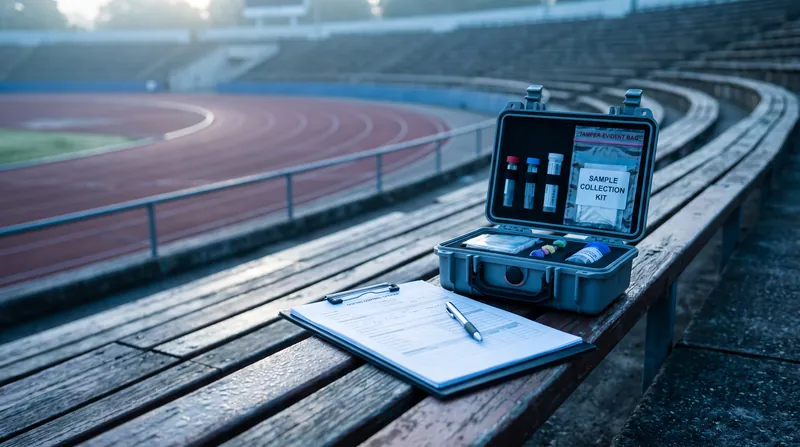
The 60-Minute Window and Three-Strike Rule: How WADA's 'Whereabouts' System Actually Works
4 sources
Olympic Bidding
The 'Continuous Dialogue' Model: How the IOC Selects Future Olympic Host Cities Without a Formal Bidding Process
6 sources
Anti-Doping Law
Strict Liability: Why the WADA Code Holds Athletes Responsible for Prohibited Substances Regardless of Intent
7 sources

Host Selection
How the IOC's 'Targeted Dialogue' System Replaced the Olympic Bidding War
4 sources
Comments
Every angle. Every day.
Get Sports stories with full source coverage and perspective breakdowns, free every day.