
The Rise of 'Microdosing' GLP-1 Medications: Wellness Trend or Medical Risk?
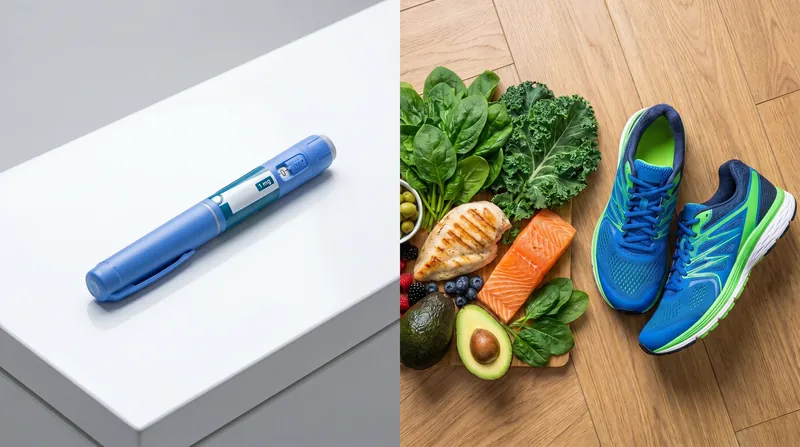
A growing number of patients are taking sub-therapeutic doses of weight-loss drugs like Ozempic and Wegovy to minimize side effects and stretch supplies, sparking debate among medical professionals.

In short
- Microdosing involves taking 10% to 25% of the standard starting dose of GLP-1 medications.
- The practice primarily aims to reduce severe gastrointestinal side effects like nausea and fatigue.
- Patients use 'click counting' or compounded vials to stretch supplies and lower monthly costs.
The introduction of GLP-1 receptor agonists like Ozempic and Wegovy has undeniably transformed the landscape of metabolic health and obesity treatment, offering unprecedented results for millions. However, as the initial wave of enthusiasm settles, a significant hurdle has become apparent: the intense side effects and prohibitive costs that force a substantial number of patients to abandon their treatment plans entirely.
For many, the journey to better health is derailed by debilitating nausea, gastrointestinal distress, and a price tag that can easily exceed $1,000 per month out-of-pocket. This high barrier to entry and continuation has left a gap in care for those who desperately need metabolic support but cannot tolerate the aggressive standard protocols.
In response to these challenges, a grassroots movement has steadily gained momentum, driven by patients and forward-thinking medical professionals who are turning to a practice known as "microdosing." This approach involves administering a mere fraction of the standard starting dose, aiming to achieve a gentler, more manageable metabolic reset.
Rather than forcing the body to rapidly adapt to a high influx of medication, microdosing seeks to coax the metabolic system into alignment. It represents a paradigm shift from a one-size-fits-all pharmaceutical model to a highly personalized, patient-centric approach that prioritizes long-term tolerability over rapid, dramatic weight loss.
To understand the scale of this shift, one must look at the numbers. Standard titration protocols for medications like semaglutide typically begin at 0.25 milligrams weekly, a dose designed to quickly establish a therapeutic baseline. In contrast, microdosers often start their regimens at whisper-thin doses—sometimes as low as 0.05 to 0.1 milligrams per week.
This represents just 10 to 25 percent of the conventional starting line. By drastically lowering the initial exposure, patients and their doctors are attempting to find the minimum effective dose, challenging the long-held medical assumption that more medication inherently equates to better or more efficient outcomes.[1]
The primary catalyst for this sub-therapeutic approach is the urgent need to mitigate severe side effects, which are notoriously dose-dependent in GLP-1 therapies. Patients frequently report that standard doses induce severe nausea, vomiting, constipation, and an extreme, unshakeable fatigue that interferes with daily life.
For individuals juggling careers, families, and active lifestyles, these side effects are not merely inconvenient; they are dealbreakers. Microdosing offers a potential lifeline, allowing these individuals to access the metabolic benefits of the drug without sacrificing their day-to-day quality of life or being forced to choose between obesity and constant illness.[2]
By introducing the medication at such a reduced volume, patients consistently report a much smoother adaptation period. Instead of the intense, sometimes distressing food aversion that characterizes higher doses, microdosing appears to support a more natural sense of satiety.
Users describe feeling a gentle reduction in "food noise"—the constant, intrusive thoughts about eating—which allows them to make mindful, healthier dietary choices without feeling physically repulsed by meals. This subtle shift empowers patients to build sustainable nutritional habits, positioning the medication as a supportive tool rather than a blunt instrument that overrides the body's natural signals.
Beyond physical comfort, profound financial pressures serve as an equally powerful driver for the microdosing trend. With branded GLP-1 pens costing upwards of $1,000 to $1,200 out-of-pocket monthly, the financial burden is unsustainable for the average consumer, especially given that many insurance providers refuse to cover these drugs for weight loss alone.
By stretching a single branded pen over several months, or by utilizing lower-dose compounded versions from licensed pharmacies, patients can dramatically reduce their monthly expenditure to between $150 and $300. This economic workaround has effectively democratized access to a class of drugs that was rapidly becoming a luxury good.
The mechanics of how patients actually achieve these microdoses vary, often requiring a degree of ingenuity. Some patients utilize a technique colloquially known as "click counting" on adjustable, multi-dose injection pens. Because these pens dispense medication based on a twisting mechanism that clicks audibly, users calculate the exact number of clicks required to dispense a fraction of the intended dose.
While this off-label method allows for precise, customized dosing, it requires patients to act as their own pharmacists, navigating the physical limitations of the pen hardware to achieve their desired sub-therapeutic volume.
Alternatively, a growing number of patients are turning to licensed compounding pharmacies, which provide the active pharmaceutical ingredients in traditional vials accompanied by insulin syringes. This method allows for highly granular control over the weekly injection volume, enabling patients to draw up exact, minute doses. However, this approach introduces new variables into the self-administration process. Drawing from a vial requires a steady hand, a clear understanding of volumetric dosing, and strict adherence to sterile techniques, shifting a significant amount of medical responsibility directly onto the patient's shoulders.[1]
The success of the microdosing trend has highlighted the clinical reality of "super responders"—a subset of individuals whose metabolic systems are exquisitely sensitive to GLP-1 receptor agonists. For these patients, standard doses are massive overcorrections. They may achieve significant improvements in insulin sensitivity, appetite regulation, and weight loss without ever needing to escalate to the FDA-approved maintenance doses. Acknowledging the existence of super responders challenges the rigid titration schedules mandated by regulatory bodies, suggesting that human metabolism is far too diverse to be neatly categorized into a single dosing algorithm.[2]
Interestingly, the conversation around microdosing is expanding beyond mere weight loss. Some progressive physicians are exploring the use of sub-therapeutic GLP-1 doses for their secondary, systemic benefits. Early anecdotal evidence suggests that these microdoses may help reduce systemic inflammation, stabilize erratic blood sugar levels, and provide crucial metabolic support for women navigating the hormonal fluctuations of perimenopause and polycystic ovary syndrome (PCOS). In these contexts, the goal is not to shed pounds rapidly, but to achieve a state of metabolic harmony and hormonal balance using the lightest possible pharmaceutical touch.
Despite the wave of patient enthusiasm, the broader medical establishment remains deeply divided on the issue. Many traditional endocrinologists and obesity medicine specialists issue stark warnings that microdosing operates entirely outside the bounds of rigorous, large-scale clinical trials. They caution that the FDA-approved dosing schedules were meticulously developed to ensure efficacy, and that deviating from them means entering uncharted medical territory. For these practitioners, the lack of peer-reviewed data on sub-therapeutic dosing is a massive red flag, raising concerns that patients are essentially participating in an unregulated, decentralized medical experiment.
Critics further point out that while microdosing undeniably reduces gastrointestinal side effects, there is absolutely no robust data to confirm that these tiny doses provide the profound cardiovascular and long-term metabolic protections proven at higher dosages.
Landmark studies have shown that standard doses of GLP-1s can significantly reduce the risk of heart attacks and strokes in vulnerable populations. Skeptics worry that by opting for a microdose, patients might be experiencing a placebo effect regarding weight loss while entirely missing out on the invisible, life-saving cardiovascular benefits that the drugs were originally designed to deliver.
Practical safety concerns also loom large over the microdosing movement. When patients manually draw medication from vials over extended periods, the risk of bacterial contamination increases significantly, especially if the vial is kept longer than standard safety guidelines recommend.
Similarly, subverting the intended use of pre-filled pens through click counting can lead to dosing errors, mechanical failure of the pen, or the degradation of the medication if it is stored for months on end. These logistical risks highlight the inherent dangers of DIY medical workarounds, even when undertaken with the best of intentions.[1]
Nevertheless, the overwhelming consumer demand for personalized, tolerable dosing has spurred the creation of a new micro-economy within the healthcare sector. A wave of specialized telehealth platforms and longevity clinics has emerged, explicitly advertising medically supervised microdosing protocols.
These services aim to bridge the gap between patient desire and medical safety, offering the lower doses that patients crave but wrapping them in professional oversight, regular blood work, and lifestyle coaching. By formalizing the microdosing process, these clinics are attempting to legitimize the practice and bring it out of the shadows of social media forums.[2]
The physicians leading these specialized clinics argue passionately that the rigid, one-size-fits-all titration schedules mandated by regulatory agencies are fundamentally flawed because they fail to account for individual metabolic diversity. They advocate for a "start low, go slow, and stay low if it works" philosophy. In their view, if a patient is achieving their health goals and feeling vibrant on a fraction of the standard dose, forcing them to increase their dosage simply to satisfy a generalized clinical guideline is not just unnecessary—it is bad medicine.
The microdosing phenomenon is also gaining significant traction among a different demographic: patients who have already reached their target weight and are terrified of the well-documented rebound effect. For these individuals, microdosing serves as a sustainable, low-dose maintenance strategy. Rather than stopping the medication cold turkey—which often leads to rapid weight regain and a return of intense food noise—they use microdoses as a gentle metabolic stabilizer. This approach allows them to maintain their hard-won health gains indefinitely, transforming a short-term intervention into a long-term lifestyle management tool.
Ultimately, the rise of GLP-1 microdosing underscores a much broader and highly encouraging shift in patient behavior. It represents a move away from the desire for rapid, extreme bodily interventions and toward sustainable, long-term wellness strategies. Patients are no longer willing to accept debilitating side effects as the unavoidable price of health. Instead, they are demanding nuance, personalization, and treatments that integrate seamlessly into their lives. This proactive, empowered approach to healthcare is a profoundly positive development, signaling a future where patients are active collaborators in their medical journeys.
Ultimately, the rise of GLP-1 microdosing underscores a much broader and highly encouraging shift in patient behavior.
As anecdotal success stories continue to mount and the microdosing community grows, immense pressure is building on pharmaceutical companies and academic researchers to catch up. There is a growing chorus of calls to fund formal, large-scale studies into lower-dose efficacy. If clinical trials eventually validate what these patients and pioneering doctors already believe, it could officially democratize access to these life-changing drugs, rewriting the guidelines for metabolic care and proving that sometimes, in the realm of modern medicine, less truly is more.[1]
Key terms
- GLP-1 receptor agonist
- A class of medications that mimic a naturally occurring hormone to regulate appetite, insulin, and blood sugar.
- Microdosing
- The practice of taking a fraction of a standard medical dose to minimize side effects while maintaining some benefits.
- Click counting
- A DIY method of measuring partial doses from an adjustable injection pen by counting the audible mechanical clicks.
- Compounded medication
- Custom-made drugs mixed by a licensed pharmacy, often used when standard versions are in shortage or too expensive.
- Titration
- The medical process of gradually increasing a medication dose over time to allow the body to adjust.
- Super responder
- A patient whose body is highly sensitive to a medication, achieving significant results at very low doses.
Frequently asked
Is microdosing GLP-1 medications FDA approved?
No. Microdosing is considered an off-label use and is not currently supported by FDA guidelines or large-scale clinical trials.
How much money can microdosing save?
While branded pens can cost over $1,000 a month, stretching a pen or using compounded microdoses can reduce costs to between $150 and $300.
Does microdosing still cause weight loss?
Anecdotal reports suggest it works for highly sensitive individuals, but there is no robust clinical proof of its efficacy compared to standard doses.
What are the risks of click counting?
Manually adjusting pens can lead to inaccurate dosing, and keeping a single pen longer than its intended use period increases the risk of bacterial contamination.
Can I microdose for maintenance?
Some patients and clinics use microdosing to maintain weight loss after reaching their goal, though this practice also lacks long-term clinical study.
Viewpoints in depth
Personalized Medicine Advocates
Physicians and patients who believe standard doses are too aggressive for many metabolisms.
This camp argues that the rigid, one-size-fits-all titration schedules mandated by the FDA fail to account for individual metabolic diversity. They point to 'super responders' who achieve significant health benefits—such as reduced inflammation, stabilized blood sugar, and weight loss—on a fraction of the standard dose. For these advocates, microdosing is not a risky workaround, but the future of nuanced, patient-centric care that prioritizes long-term tolerability over rapid results.
Regulatory & Safety Purists
Medical traditionalists warning against the risks of off-label, unproven dosing strategies.
Endocrinologists and regulatory experts in this camp emphasize that GLP-1 medications were approved based on massive, rigorous clinical trials that proved efficacy at specific doses. They warn that sub-therapeutic microdosing operates in an evidence vacuum. Beyond the lack of proven long-term cardiovascular benefits, they highlight acute safety risks: bacterial contamination from repeatedly drawing from vials, and dosing errors caused by manually 'click counting' on pre-filled pens.
Cost-Burdened Patients
Individuals utilizing microdosing primarily as a financial necessity to access care.
For many patients, the microdosing trend is less about biological sensitivity and entirely about economics. With branded pens costing upwards of $1,000 a month and insurance frequently denying coverage for weight loss, stretching a pen or buying lower-dose compounded versions is the only way to afford treatment. This group views microdosing as a necessary democratization of a life-changing drug that would otherwise be reserved exclusively for the wealthy.
- Metabolic Optimizers
- Focus on gentle habit building and minimizing severe side effects.
- Clinical Skeptics
- Emphasize the lack of trial data and the physical risks of DIY dosing.
- Access Advocates
- View the trend as a vital workaround for prohibitive drug costs.
Perspectives this story doesn't cover
- Pharmaceutical Manufacturers (companies producing branded pens who lose revenue and control over dosing regimens)
- Health Insurance Providers (entities that currently deny coverage for off-label or compounded use, driving the out-of-pocket market)
Sources
Source coverage
2 outlets
3 viewpoints surfaced


- [1]The Guardian
Wegovy weight-loss pills to be available for patients in UK to buy
Read on The Guardian → - [2]Cleveland Clinic
What Is Microdosing GLP-1s?
Read on Cleveland Clinic →
More in Health
See all →Pharmacokinetics
Taking Proton Pump Inhibitors 30 to 60 Minutes Before Meals Synchronizes Peak Blood Levels With Food-Stimulated H+/K+-ATPase Pumps
4 sources

Hemodialysis Tech
How Hemodialysis Uses Countercurrent Flow and a Semipermeable Membrane to Clear Uremic Toxins
7 sources
Receptor Mechanics
How Benzodiazepines Increase Chloride Ion Flux by Positive Allosteric Modulation of the GABA-A Receptor
9 sources

Lung Cancer
Novel Targeted Therapy Zidesamtinib Achieves 94% Response Rate in Pivotal Trial for ROS1-Positive Lung Cancer
5 sources

Comments
Every angle. Every day.
Get Health stories with full source coverage and perspective breakdowns, free every day.