
The Rise of Astrotourism: Why Travelers Are Chasing the Dark
As light pollution erases the stars for 83 percent of the global population, a booming travel movement is turning pristine night skies into a highly sought-after ecological resource.
By Factlen Editorial Team
- Conservationists & Astronomers
- Advocates who view the preservation of the night sky as an urgent ecological and scientific imperative.
- Rural Communities
- Remote towns that utilize their lack of modern infrastructure as a lucrative economic asset.
- Travel Industry Operators
- Agencies and tour companies capitalizing on the surging consumer demand for pristine celestial experiences.
What's not represented
- · Indigenous communities whose ancestral sky knowledge is utilized
- · Urban planners struggling to balance safety lighting with dark sky initiatives
Why this matters
Light pollution is quietly disrupting human health and wildlife ecosystems worldwide. By placing a premium financial value on absolute darkness, astrotourism provides a powerful economic incentive for communities to reverse this trend and protect the night sky.
Key points
- Astrotourism has emerged as a multi-billion-dollar travel trend, driven by the increasing rarity of unpolluted night skies.
- Approximately 83 percent of the global population lives under artificial skyglow, unable to clearly see the Milky Way.
- DarkSky International certifies protected areas, with 'Sanctuaries' representing the most remote and ecologically fragile dark zones.
- The movement provides a vital economic lifeline to rural, off-the-grid communities that previously lacked tourism infrastructure.
- Preserving darkness is increasingly recognized as a biological imperative to protect wildlife circadian rhythms and migratory patterns.
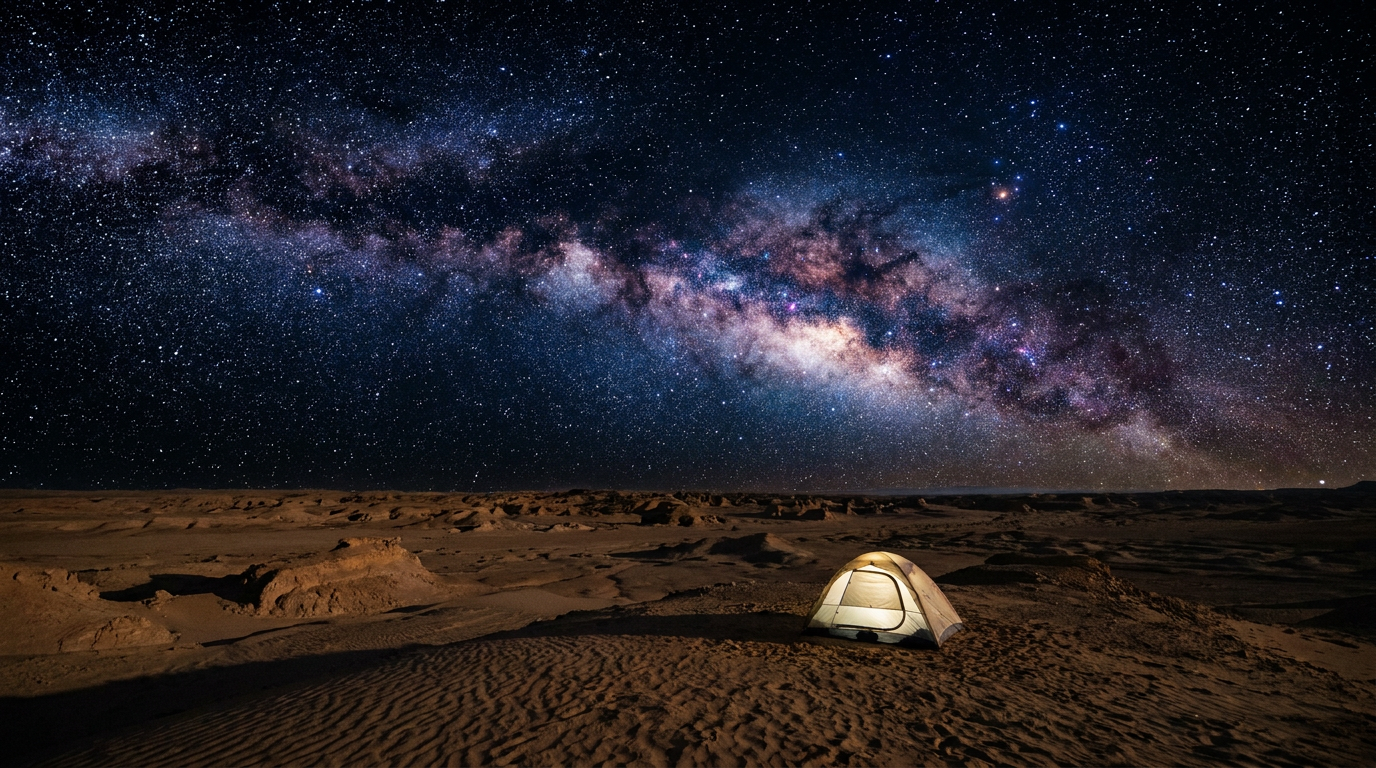
For decades, the travel industry has sold the world's most spectacular landscapes, from sun-drenched beaches to snow-capped peaks. But in 2026, the most coveted view in tourism requires looking away from the Earth entirely. Astrotourism—travel centered on experiencing pristine night skies and celestial phenomena—has rapidly evolved from a niche hobby for amateur astronomers into a multi-billion-dollar global industry. Following the cultural momentum of NASA's Artemis II lunar mission and a spectacular string of solar eclipses, travelers are increasingly prioritizing the cosmos over the coast. Travel agencies report that remote desert lodges are booking up simply because they promise a clear view of the Milky Way. This surge in "noctourism" represents a fundamental shift in how people vacation, treating the night not as a pause between daytime activities, but as the primary destination itself.[1][3][6]
The astrotourism calendar is heavily anchored by specific, highly anticipated celestial events that drive massive, temporary migrations of travelers. Total solar eclipses, in particular, serve as the ultimate catalyst for the industry. Following the widespread enthusiasm generated by the 2024 North American eclipse, the travel sector is already mobilizing for the August 2026 total solar eclipse, which will cast its shadow across Greenland, Iceland, and Spain. Tour operators report that specialized eclipse-chasing itineraries, often featuring onboard astronomers and exclusive viewing locations, are selling out at unprecedented rates. These fleeting astronomical phenomena act as a gateway, introducing millions of casual travelers to the profound emotional impact of the cosmos. Once initiated by the dramatic spectacle of an eclipse, many of these travelers subsequently seek out the quieter, sustained experience of visiting a certified dark sky destination, ensuring the long-term growth of the market.[1][4][6]
The sudden urgency to travel for the stars is driven by a profound environmental loss: the vanishing of the night sky. According to recent industry and scientific analyses, approximately 83 percent of the global population now lives under light-polluted skies. In North America, the situation is even more stark, with 80 percent of residents unable to see the Milky Way from their own homes. The culprit is "skyglow," a phenomenon where poorly designed, unshielded artificial light scatters against moisture and aerosols in the atmosphere, creating a pervasive orange haze that drowns out starlight. For most of human history, a glittering canopy of stars was a universal nightly experience. Today, a truly dark sky is a scarce ecological resource, transforming the simple act of stargazing into a luxury experience that requires deliberate, often extensive travel to the world's most remote corners.[3][4]

The urgency to establish these sanctuaries extends far beyond human aesthetics; it is a matter of profound ecological survival. The biological mechanism at play involves the disruption of circadian rhythms—the internal evolutionary clocks that dictate the behavior of nearly all living organisms. For millions of years, life on Earth evolved under a strict binary of bright days and dark nights. The sudden introduction of artificial skyglow over the last century has fundamentally scrambled these signals. Migratory birds, which navigate by the stars, become disoriented by city lights and fatally collide with buildings. Newly hatched sea turtles, wired to move toward the natural glow of the ocean horizon, are instead drawn inland toward illuminated coastal roads. By carving out massive reserves of absolute darkness, astrotourism initiatives are inadvertently creating critical biological refuges where these ancient, light-sensitive behaviors can continue uninterrupted.[2][3]
This scarcity has birthed a rigorous international framework to protect what remains of the dark. At the center of this effort is DarkSky International, a nonprofit organization that evaluates and certifies protected nocturnal environments. The organization classifies these areas into five distinct tiers: Urban Night Sky Places, Communities, Parks, Reserves, and the most pristine category of all—Sanctuaries. To earn the coveted Sanctuary designation, a region must possess an exceptional quality of starry nights and exist in a highly remote location where the conservation state is exceptionally fragile. The certification process is grueling, requiring local governments and land managers to implement strict lighting ordinances, retrofit existing infrastructure with shielded, low-intensity amber bulbs, and commit to ongoing public education about the night sky.[2][3]

This scarcity has birthed a rigorous international framework to protect what remains of the dark.
The scale of these protected areas is expanding dramatically to meet consumer demand and conservation goals. In 2024, a massive 2.5-million-acre expanse in southeastern Oregon was certified as the Oregon Outback International Dark Sky Sanctuary, becoming the largest of its kind in the world. Encompassing an area roughly half the size of New Jersey, the sanctuary stitches together federal lands, wildlife refuges, and unincorporated communities. By establishing such a massive contiguous zone of protected darkness, conservationists are not just preserving a view for tourists; they are protecting vital ecosystems. The sheer size of the Oregon Outback sanctuary ensures that a massive swath of the American West remains free from the creeping encroachment of urban skyglow, serving as a blueprint for mega-conservation efforts globally.[3][7]
Beyond the ecological benefits, astrotourism is proving to be a powerful engine for social innovation and rural economic development. Historically, remote communities with limited infrastructure and no electrification were viewed as economically disadvantaged. Today, that lack of artificial light is their greatest asset. Academic studies of astrotourism in peripheral contexts—from the Atacama Desert in Chile to the Himalayas of Ladakh, India—demonstrate how stargazing initiatives can revitalize local economies. Because astrotourists cannot simply drive through a dark sky park during the day, the activity inherently requires overnight stays. This captive audience stimulates short value chains, driving revenue to local bed-and-breakfasts, restaurants, and indigenous sky guides, often in regions that previously relied on extractive industries like mining or logging.[3][5]
The financial projections for this sector are staggering. Market analysts value the global astrotourism market at over $1.1 billion and project it to climb toward $3.47 billion by 2034, growing at a compound annual rate of nearly 13 percent. In the American Southwest alone, the Colorado Plateau's dark-sky economy is estimated to generate billions of dollars annually. This economic windfall creates a powerful incentive loop: as rural towns realize the financial value of their pristine skies, they become fiercely protective of them. Local municipalities are increasingly eager to pass dark-sky ordinances and invest in responsible lighting, recognizing that a single brightly lit gas station or unshielded hotel parking lot could jeopardize their certification and, by extension, their tourism revenue.[3][4]

However, the rapid commercialization of the night sky carries inherent risks and uncertainties. The central paradox of astrotourism is that the infrastructure required to host thousands of stargazers—hotels, roads, visitor centers, and vehicles—naturally introduces the very light pollution tourists are traveling to escape. If not managed with extreme care, nocturnal tourism can decimate local ecosystems. Bright spotlights used by amateur guides can blind nocturnal wildlife, while off-trail moonlit excursions can trample fragile desert flora. Furthermore, there is a growing concern among sociologists and ethicists regarding the commodification of Indigenous astronomical knowledge. As the industry scales, ensuring that local communities retain control over their cultural narratives and receive a fair share of the profits remains a complex, ongoing challenge.[3][5]

Despite these hurdles, the astrotourism movement represents a rare alignment of commercial travel and environmental preservation. It taps into a broader cultural desire for "hushpitality"—travel experiences designed around quiet, minimal sensory overload, and a deep connection to the natural world. In an era defined by digital hyper-connectivity and constant illumination, standing beneath a truly dark sky offers a profound sense of perspective and cosmic humility. By turning the preservation of darkness into a lucrative enterprise, astrotourism may be the most effective mechanism we have to reverse the century-long erasure of the stars, ensuring that future generations can still look up and see the universe.[1][6]
How we got here
1988
DarkSky International (formerly International Dark-Sky Association) is founded to combat global light pollution.
2001
The International Dark Sky Places Program is launched to formally certify protected nocturnal environments.
April 2024
The Oregon Outback is certified as the world's largest Dark Sky Sanctuary, protecting 2.5 million acres.
August 2026
A highly anticipated total solar eclipse crosses Europe, driving a massive surge in specialized astrotourism bookings.
Viewpoints in depth
Conservationists & Astronomers
Advocates who view the preservation of the night sky as an urgent ecological and scientific imperative.
For environmental scientists and astronomers, the loss of the night sky is not merely an aesthetic tragedy, but a profound ecological crisis. They point to the devastating biological impacts of 'skyglow'—the scattering of artificial light in the atmosphere—which disrupts the circadian rhythms of nearly all living organisms. Migratory birds are thrown off course, sea turtles are drawn away from the ocean, and insect populations are decimated by unshielded bulbs. From this perspective, astrotourism is a highly effective Trojan horse for conservation. By attaching a premium financial value to absolute darkness, conservationists can successfully lobby local governments to implement strict lighting ordinances that they would otherwise ignore, thereby creating massive, protected biological refuges under the guise of tourism.
Rural Communities
Remote towns that utilize their lack of modern infrastructure as a lucrative economic asset.
For decades, extreme geographic isolation and a lack of modern electrification were viewed as insurmountable economic disadvantages for rural communities. The astrotourism boom has entirely inverted this dynamic. Because stargazers require absolute darkness, the very absence of sprawling infrastructure has become these communities' most marketable asset. In places ranging from the Oregon Outback to the high-altitude villages of the Himalayas, locals are building sustainable livelihoods around the night sky. By offering guided stargazing, operating remote lodges, and hosting astronomy festivals, these off-the-grid towns can capture significant tourism revenue without needing to industrialize their landscapes or rely on extractive industries like mining.
Travel Industry Operators
Agencies and tour companies capitalizing on the surging consumer demand for pristine celestial experiences.
The commercial travel sector views astrotourism as one of the most reliable growth engines of the decade. Market analysts note that as urban light pollution worsens, the scarcity of a truly dark sky transforms it into a highly coveted luxury commodity. Tour operators are aggressively expanding their portfolios to include eclipse-chasing expeditions, aurora borealis hunts, and stays at remote observatory hotels. For the industry, the appeal lies in the fact that astrotourists cannot simply 'drive through' a destination; the nature of the activity requires overnight stays, which exponentially increases the economic yield per visitor. However, operators face the ongoing logistical challenge of building enough infrastructure to accommodate this influx of visitors without accidentally introducing the light pollution that would ruin the core product.
What we don't know
- Whether the carbon footprint of long-haul flights required to reach remote dark-sky destinations offsets the environmental benefits of local light conservation.
- How effectively the travel industry will prevent the commodification of Indigenous astronomical knowledge as guided stargazing tours become mainstream.
Key terms
- Astrotourism
- A growing sector of the travel industry focused on destinations that offer exceptional views of the night sky and celestial phenomena.
- Skyglow
- The brightening of the night sky caused by artificial light scattering off moisture and particles in the atmosphere, which obscures the view of stars.
- Light Pollution
- The inappropriate or excessive use of artificial outdoor light, which disrupts ecosystems, wastes energy, and washes out the night sky.
- Circadian Rhythm
- The natural, internal process that regulates the sleep-wake cycle and other biological functions of living organisms, heavily dependent on natural light and dark cycles.
Frequently asked
What exactly is astrotourism?
Astrotourism is a specialized form of travel centered on experiencing pristine night skies, stargazing, and witnessing celestial events like solar eclipses or meteor showers in areas free from light pollution.
What makes a Dark Sky Sanctuary different from a park?
While Dark Sky Parks are typically accessible public lands with good stargazing, Sanctuaries are the most remote and ecologically fragile dark zones in the world, requiring the strictest conservation standards.
How does light pollution affect wildlife?
Artificial skyglow disrupts the circadian rhythms of animals. It can disorient migratory birds that navigate by the stars, draw newly hatched sea turtles away from the ocean, and disrupt the mating patterns of insects.
Where is the largest Dark Sky Sanctuary?
The Oregon Outback International Dark Sky Sanctuary, certified in 2024, is the largest in the world. It spans 2.5 million acres across southeastern Oregon.
Sources
Source coverage
7 outlets
3 viewpoints surfaced







[1]Factlen Editorial Team
Synthesis by Factlen editorial team
Read on Factlen Editorial Team →[2]DarkSky InternationalConservationists & Astronomers
International Dark Sky Places Program
Read on DarkSky International →[3]Outside MagazineRural Communities
Why Astrotourism Is the Travel Trend We Need Right Now
Read on Outside Magazine →[4]Market InteloTravel Industry Operators
Astro Tourism Market Analysis and Forecast 2025-2034
Read on Market Intelo →[5]MDPIConservationists & Astronomers
Astrotourism as a Driver of Social Innovation in Peripheral Areas
Read on MDPI →[6]South China Morning PostTravel Industry Operators
What does 2026 have in store for travel? Experts talk about dark sky gazing
Read on South China Morning Post →[7]Oregon Outback Dark Sky SanctuaryRural Communities
Welcome to the Oregon Outback International Dark Sky Sanctuary
Read on Oregon Outback Dark Sky Sanctuary →
Every angle. Every day.
Get travel stories with full source coverage and perspective breakdowns delivered to your inbox.