
The Race to Build a Sun That Never Sets: How Space-Based Solar Power Actually Works
Recent breakthroughs in wireless power transmission have moved space-based solar power from science fiction to engineering reality. Here is how nations are racing to beam clean, 24/7 baseload energy from orbit directly to Earth.
By Factlen Editorial Team
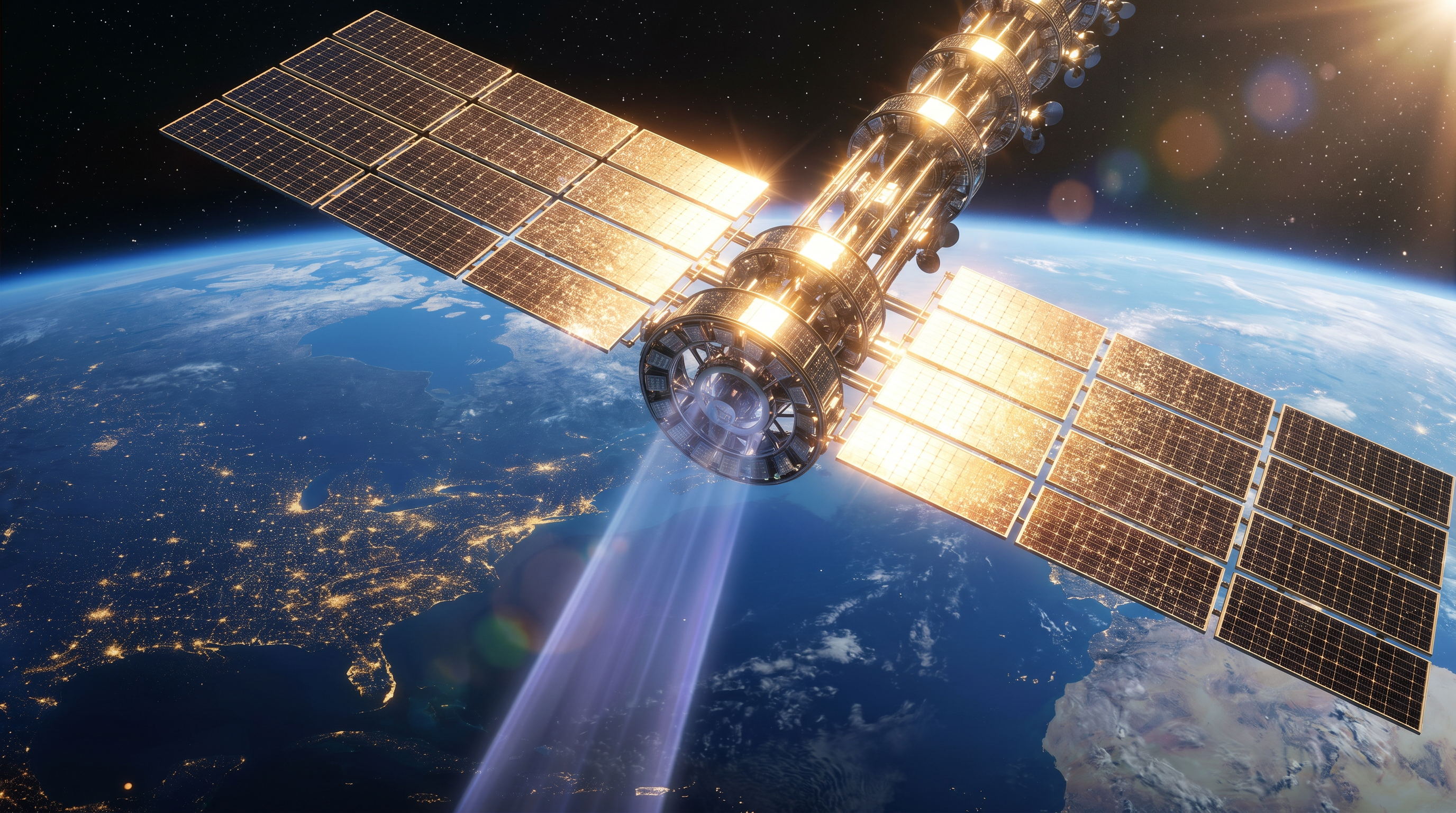
- Space Energy Advocates
- Believe orbital solar is the ultimate clean energy solution, providing 24/7 baseload power without weather interruptions.
- Economic Skeptics
- Argue that launch costs and orbital assembly make space solar prohibitively expensive compared to Earth-based renewables and storage.
- Aerospace Startups
- Focus on niche, smaller-scale applications first, like powering remote military bases, lunar outposts, or disaster zones.
What's not represented
- · Environmental groups concerned about orbital debris
- · Terrestrial grid operators managing the integration of beamed power
Why this matters
Transitioning the global grid to renewable energy requires a solution for when the sun sets and the wind stops blowing. If successfully scaled, space-based solar power could provide limitless, 24/7 clean energy to any point on Earth, fundamentally solving the baseload power problem without relying on massive battery farms.
Key points
- Chinese researchers successfully beamed 1,180 watts of power to moving targets, proving dynamic tracking works.
- Space-based solar power uses orbiting panels to collect 24/7 sunlight and beam it to Earth via microwaves.
- Caltech previously proved the physics in 2023 by beaming detectable power from orbit to Earth.
- NASA estimates the technology is currently 12 to 80 times more expensive than terrestrial solar.
- Launch costs must drop to around $500 per kilogram for the technology to become economically viable.
- Early applications will likely focus on powering lunar bases and remote disaster zones.
For decades, the concept of space-based solar power has been relegated to the realm of science fiction—a tantalizing vision of massive orbital arrays harvesting the sun's energy and beaming it down to Earth. The appeal is rooted in basic astronomy: in high Earth orbit, the sun never sets. There are no clouds to block the light, no atmospheric scattering to dilute the rays, and no day-night cycle to interrupt generation. A solar panel in space can collect sunlight continuously, offering the ultimate holy grail of renewable energy: a clean, limitless source of baseload power that does not require massive battery storage.
In 2026, this theoretical concept is rapidly transitioning into an engineering reality, driven by a series of escalating breakthroughs in wireless power transmission. The core challenge of space solar has never been generating the power; satellites have run on solar panels since the dawn of the space age. The hurdle has always been getting that power back to Earth without a physical cable. Now, research teams across the globe are proving that energy can be steered, focused, and beamed across vast distances using microwaves.
The most recent and significant leap forward occurred in mid-2026, when Chinese researchers at Xidian University announced a major milestone in their "Zhuri" (Chasing the Sun) project. The team successfully built and tested a ground-based wireless power transmission system capable of beaming kilowatt-level energy to multiple moving targets simultaneously. Operating from a 75-meter testing tower, the system delivered 1,180 watts of power over distances exceeding 100 meters while maintaining precise microwave beam control.[1][2][3]
What makes the Zhuri breakthrough particularly critical is its dynamic tracking capability. In orbit, both the transmitting satellite and the receiving ground station are in constant relative motion. Fixed point-to-point transmission is useless for a space-based power grid. The Chinese team proved their system could track and power a drone flying at 30 kilometers per hour, delivering a stable 143 watts of power to the moving aircraft. The system achieved a direct-current to direct-current transmission efficiency of 20.8 percent, meaning roughly one-fifth of the generated energy was successfully delivered and converted back into usable electricity.[1][2][3]

To understand how a full-scale system will eventually work, it is necessary to break down the mechanism into three distinct phases: collection, transmission, and reception. The process begins in orbit, where massive photovoltaic arrays are deployed. Above the atmosphere, these panels receive unfiltered sunlight at an intensity of roughly 1,366 watts per square meter. Because they operate in the vacuum of space, they can utilize highly efficient, specialized solar cells that convert up to half of that raw sunlight into direct-current electricity, far exceeding the 20 to 25 percent efficiency typical of commercial rooftop panels on Earth.[6]
The second phase is conversion and transmission. Running a physical tether from geostationary orbit to the ground is impossible, so the direct-current electricity is converted into microwaves. Microwaves are the preferred medium because, unlike lasers, they can pass through Earth's atmosphere, heavy cloud cover, and rainstorms with minimal energy loss. The spacecraft uses a phased-array antenna—a grid of thousands of small transmitters that electronically steer the microwave beam without any moving mechanical parts. By slightly altering the timing of the signals emitted by each transmitter, the array can focus the beam precisely on a target below.[5][6]
The final phase occurs on the ground at a facility known as a "rectenna," or rectifying antenna. A rectenna is a vast, wire-mesh structure spread over several square kilometers. When the microwave beam strikes the mesh, the rectenna captures the electromagnetic waves and converts them back into direct-current electricity, which is then fed directly into the local power grid. Because the mesh is mostly transparent, rectennas could theoretically be built over agricultural land or offshore, minimizing their terrestrial footprint.[6]

The final phase occurs on the ground at a facility known as a "rectenna," or rectifying antenna.
The foundation for the recent Chinese advancements was laid by the California Institute of Technology (Caltech), which achieved a historic first in 2023 and 2024 with its Space Solar Power Demonstrator (SSPD-1) mission. Caltech's MAPLE experiment successfully transmitted power wirelessly in the vacuum of space and, crucially, directed a detectable microwave beam all the way to receivers on the roof of a laboratory in Pasadena. While the power received on Earth was only a fraction of a microwatt, it proved that the fundamental physics of orbital-to-ground power beaming were sound and that lightweight, flexible transmission arrays could survive the violence of a rocket launch.[5]
The global race is now accelerating. Japan's space agency, JAXA, is preparing its OHISAMA satellite for a 2026 demonstration aimed at beaming 720 watts of power from low Earth orbit to a parabolic antenna at the Usuda Deep Space Center. The European Space Agency's SOLARIS program and the United Kingdom government are also actively funding research, with long-term roadmaps targeting the deployment of commercial, gigawatt-scale space solar power stations by 2040 or 2050.[4]
Despite the undeniable technical progress, the economic viability of space-based solar power remains fiercely debated. A comprehensive 2024 study by NASA poured cold water on near-term expectations, projecting that space solar systems could incur lifecycle costs between 12 and 80 times higher than terrestrial renewable alternatives. The sheer mass of the required infrastructure is the primary bottleneck. A gigawatt-scale orbital power station would be kilometers wide and weigh thousands of metric tons, dwarfing the International Space Station.[4]

For space solar to compete with cheap Earth-based solar and wind power, the aerospace industry must solve the launch cost equation. NASA's analysts noted that space solar could become economically competitive if launch costs drop to around $500 per kilogram and hardware lifetimes extend to 15 years. The advent of fully reusable, heavy-lift rockets like SpaceX's Starship is widely viewed as the prerequisite for this economic shift, promising to slash the cost of lifting raw materials into orbit.[4][6]
Furthermore, launching the materials is only half the battle; the power stations must be assembled in the vacuum of space. Human astronauts cannot build structures measuring several square kilometers. The industry will need to develop autonomous robotic assembly systems and self-deploying, modular architectures that can unpack and connect themselves in orbit. Startups and academic institutions are currently testing inflatable modules and ultra-lightweight composite structures to reduce the mass and complexity of these orbital mega-projects.[5][6]
As the technology matures, proponents are also working to address public safety concerns, specifically the persistent myth that a space solar beam could act as a "death ray." In reality, the microwave beams used for power transmission are highly diffuse. By the time the beam reaches the Earth's surface, its energy density is spread over such a wide area that it falls well below the safety limits set for human exposure to radio frequencies. Birds flying through the beam and passengers in commercial aircraft would be entirely unaffected.[6]

Given the massive capital requirements for grid-scale deployment, the first practical applications of space-based solar power will likely target niche markets where energy is currently expensive or difficult to obtain. Aerospace startups are exploring smaller-scale orbital transmitters designed to beam power to remote military outposts, disaster zones where the local grid has been destroyed, or even to lunar bases. Providing continuous power to rovers and habitats during the two-week-long lunar night is a critical challenge for NASA's Artemis program, and orbital power beaming offers an elegant solution.[4]
The transition from fossil fuels to renewable energy requires solutions that can guarantee stability when the wind stops blowing and the sun sets. While terrestrial batteries and grid upgrades will shoulder much of that burden, space-based solar power offers a permanent, structural fix. If engineers can continue to drive down launch costs and scale up wireless transmission efficiency, the night sky may eventually host a fleet of artificial suns, quietly beaming clean energy to a power-hungry world below.
How we got here
1970s
NASA and the US Department of Energy conduct the first major feasibility studies on space-based solar power.
Jan 2023
Caltech launches the Space Solar Power Demonstrator (SSPD-1) to test orbital power beaming.
Mar 2023
Caltech's MAPLE experiment successfully beams detectable microwave power from orbit to Earth for the first time.
May 2026
China's Zhuri project successfully beams kilowatt-level power to moving targets, proving dynamic tracking capabilities.
Late 2026
Japan's JAXA plans to launch the OHISAMA satellite to demonstrate orbital power beaming to a ground station.
Viewpoints in depth
Space Energy Advocates
Believe orbital solar is the ultimate clean energy solution, providing 24/7 baseload power without weather interruptions.
Proponents of space-based solar power argue that the world cannot transition away from fossil fuels using terrestrial renewables alone. Because wind and solar are intermittent, they require massive, expensive battery farms to maintain grid stability. Space solar solves this by generating continuous baseload power, as satellites in geostationary orbit are exposed to sunlight 99 percent of the time. Advocates point to recent breakthroughs in wireless transmission as proof that the engineering hurdles are rapidly falling, paving the way for a permanent, structural fix to the global energy crisis.
Economic Skeptics
Argue that launch costs and orbital assembly make space solar prohibitively expensive compared to Earth-based renewables and storage.
Critics, including cost analysts at NASA, emphasize that the physics of space solar are not the problem—the economics are. Building a gigawatt-scale power station in orbit requires launching thousands of metric tons of material, which currently makes the energy produced 12 to 80 times more expensive than terrestrial solar. Skeptics argue that the billions of dollars required to develop space solar would be better spent deploying existing Earth-based solar panels, wind turbines, and next-generation battery storage, which are already cost-competitive and scaling rapidly.
Aerospace Startups
Focus on niche, smaller-scale applications first, like powering remote military bases, lunar outposts, or disaster zones.
Rather than trying to immediately replace the global power grid, a growing ecosystem of aerospace startups is focusing on niche markets where energy is exceptionally expensive or logistically impossible to deliver. By building smaller, modular orbital transmitters, these companies aim to beam power to forward-deployed military bases, disaster zones with destroyed infrastructure, or even lunar habitats. This stepping-stone approach allows the industry to commercialize the technology and generate revenue while waiting for heavy-lift rockets to drive down the launch costs required for gigawatt-scale systems.
What we don't know
- Whether heavy-lift rockets like Starship will actually drive launch costs down to the $500/kg threshold required for economic viability.
- How the international community will regulate the orbital slots and frequency bands required for massive solar power constellations.
- Whether autonomous robotic assembly can reliably construct kilometer-scale structures in the harsh environment of space.
Key terms
- Rectenna
- A rectifying antenna, a specialized ground structure designed to capture microwave energy and convert it into direct-current electricity.
- Phased-Array Antenna
- A grid of small transmitters that can electronically steer a microwave beam without any moving mechanical parts.
- Baseload Power
- The minimum amount of electric power needed to be supplied to the electrical grid at any given time, traditionally provided by coal or nuclear plants.
- Geostationary Orbit
- A high Earth orbit where a satellite's orbital period matches the Earth's rotation, allowing it to stay fixed over a single location.
Frequently asked
Is the microwave beam dangerous to birds or airplanes?
No. The microwave beam is highly diffuse by the time it reaches Earth, with an energy density well below the safety limits for human and animal exposure.
Why use microwaves instead of lasers?
Microwaves can pass through heavy cloud cover, rain, and the atmosphere with minimal energy loss, whereas lasers would be blocked by bad weather.
Why is space solar better than panels on Earth?
Space solar panels receive unfiltered sunlight 24 hours a day, generating continuous baseload power without being interrupted by nightfall or weather.
Sources
Source coverage
6 outlets
3 viewpoints surfaced






[1]South China Morning PostSpace Energy Advocates
Chinese researchers build system that can send energy to multiple moving targets
Read on South China Morning Post →[2]Global TimesSpace Energy Advocates
China's 'space power bank' program marks new breakthrough as Zhuri project advances
Read on Global Times →[3]TechRepublicAerospace Startups
China says its Zhuri system wirelessly delivered kilowatt-level power to moving targets
Read on TechRepublic →[4]Payload SpaceEconomic Skeptics
Orbital Data, Niche Markets Give Space Solar a New Shimmer
Read on Payload Space →[5]CaltechSpace Energy Advocates
One Year Ago, Caltech's Space Solar Power Demonstrator Launched Into Space
Read on Caltech →[6]Tech TimesAerospace Startups
Space Solar Power Microwave vs Laser Transmission
Read on Tech Times →

Every angle. Every day.
Get technology stories with full source coverage and perspective breakdowns delivered to your inbox.