
The Preservation Trade-Off: How California's AB 1921 Forces Publishers to Choose Between Offline Patches and Full Refunds
California's proposed Protect Our Games Act would require publishers to provide offline modes, private server tools, or full refunds when shutting down paid online games. The legislation pits consumer ownership rights against the technical and financial realities of live-service development.

- Consumer Preservationists
- Argue that purchasing a game guarantees permanent access, requiring publishers to engineer offline modes.
- Industry Publishers
- Contend that retrofitting dying live-service games diverts essential resources away from new development.
- Legal & Compliance Analysts
- Focus on the market impact, noting the bill incentivizes a shift away from premium purchases toward exempt free-to-play models.
Why this matters
If passed, California's mandate would likely become a de facto global standard, fundamentally altering the economics of live-service games. Publishers would be forced to architect games for eventual offline play from day one or face massive refund liabilities when servers inevitably close.
Key points
- California's AB 1921 requires publishers to give 60 days' notice before shutting down paid online games.
- Publishers must provide an offline patch, private server tools, or a full refund to consumers.
- The bill applies to paid digital games released or resold after January 1, 2027.
- Free-to-play games, subscriptions, and inherently offline games are exempt from the mandate.
- The gaming industry argues the technical cost of retrofitting dying games will stifle new development.
- Consumer advocates argue the bill prevents 'bait-and-switch' tactics and preserves digital culture.
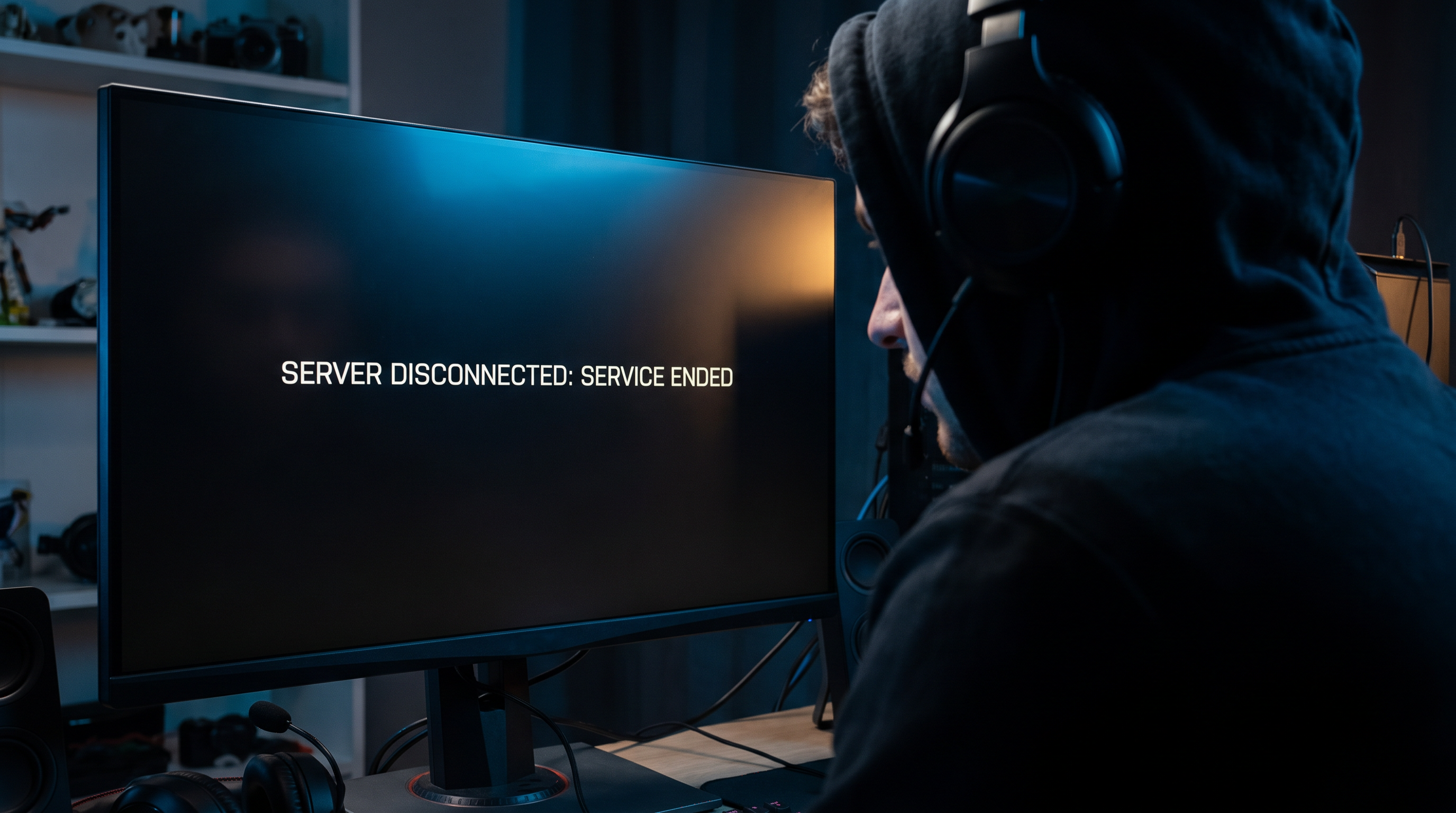
For decades, purchasing a video game meant acquiring a permanent physical good. But as the industry shifted toward digital distribution and live-service models, ownership transitioned into a revocable license. When a publisher decides that maintaining a game's central servers is no longer financially viable, the game simply ceases to exist. High-profile shutdowns—such as Ubisoft pulling the plug on the 2014 racing game 'The Crew' and Electronic Arts retiring dozens of titles in recent years—have left consumers with unplayable software and sparked a global backlash over digital consumer rights.[1][7]
California's Assembly Bill 1921, dubbed the 'Protect Our Games Act,' attempts to fundamentally rewrite this dynamic. Introduced by Assemblymember Chris Ward, the legislation mandates that publishers cannot simply abandon a paid game. Instead, they must provide a 60-day public notice before terminating services. More consequentially, they are required to offer a post-shutdown alternative: an offline version of the game, a patch enabling independent play, the tools necessary for players to host private community servers, or a full refund.[1][2][7]
The bill passed the California State Assembly with a decisive 43–16 vote in late May 2026, marking the first major legislative victory for digital preservation advocates. While it recently faced a hurdle in a state Senate committee, it was granted unanimous reconsideration, keeping the regulatory threat very much alive. If enacted, the rules would apply to paid digital games released or resold after January 1, 2027, forcing a structural pivot in how the industry approaches the end-of-life phase for software.[4][6]

The legislation forces a stark trade-off between consumer ownership rights and ongoing development resources. The case for the mandate centers on basic consumer protection and the prevention of 'bait-and-switch' economics. Proponents argue that when a user pays $70 for a title, they are purchasing a product, not a temporary rental. By forcing publishers to provide an offline patch or server tools, the bill ensures that the cultural and financial investment made by players is preserved indefinitely.[1][7]
The evidence supporting this side of the trade-off is championed by the 'Stop Killing Games' movement, a consumer advocacy group that has gained significant international traction. They point out that preserving digital assets has become technologically cheaper, and that much of the foundational work to decouple a game from its central servers can be planned during the initial development phase. For these advocates, the mandate simply forces publishers to internalize the cost of a game's eventual retirement rather than passing the loss onto the consumer.[3][7]
For these advocates, the mandate simply forces publishers to internalize the cost of a game's eventual retirement rather than passing the loss onto the consumer.
Conversely, the case against the mandate highlights the severe technical and financial burdens placed on studios. The Entertainment Software Association (ESA), representing the industry's largest publishers, strongly opposes AB 1921. They argue that the legislation fundamentally misunderstands how modern live-service games are architected. Many contemporary titles rely on complex, proprietary cloud infrastructure, licensed third-party content, and evolving matchmaking systems that cannot be easily packaged into a downloadable offline patch.[2][7]
The evidence against the mandate suggests that compliance will actively harm future game development. According to the ESA, forcing developers to spend limited time and engineering resources retrofitting old, unprofitable systems will divert capital away from creating new features and innovative experiences. If a studio knows it must eventually spend millions to engineer an offline mode for a dying game, it may simply choose not to greenlight ambitious online projects in the first place, chilling industry innovation.[2]

This leads to the second major trade-off: the financial risk of the refund liability alternative. If a publisher determines that patching a game for offline play is technically impossible or prohibitively expensive, AB 1921 requires them to issue a refund. Crucially, this refund must equal the highest price the game was offered at during the 12 months prior to the cessation of services. For a game with millions of players, a mandatory mass refund could trigger catastrophic financial liabilities for a studio.[5]
To mitigate this, the bill includes specific exemptions that shape the future business models of the industry. Free-to-play games, subscription-based services, and titles that are inherently playable offline from launch are excluded from the mandate. This creates a powerful regulatory incentive for publishers to abandon the traditional premium $70 purchase model entirely. If charging an upfront fee carries a permanent preservation or refund liability, studios are highly likely to pivot even further toward free-to-play microtransaction models, which are exempt from the law.[4][5]
The third trade-off involves regulatory fragmentation versus global standardization. Because digital storefronts operate globally, it is highly impractical for a publisher to engineer an offline patch exclusively for California residents. Much like the state's automotive emissions standards or the European Union's GDPR, California's massive market size means AB 1921 would likely become the de facto global standard. Publishers would architect their games to comply with California law, extending the benefits of offline play to gamers worldwide.[5]

Ultimately, this regulatory framework fits well when applied to single-player games that utilize 'always-online' digital rights management (DRM) or peer-to-peer multiplayer games. In these cases, the core game logic already resides on the user's hardware, and patching out the server check is a relatively trivial engineering task that restores permanent access to the consumer without bankrupting the studio.[3][5]
However, the framework does not fit well when applied to massively multiplayer online games (MMOs), cloud-native titles, or games heavily reliant on expiring third-party licenses, such as sports simulators. In these environments, the game cannot exist independently of the publisher's server racks and legal agreements. Forcing an offline mode in these scenarios is technically impossible, leaving publishers with the draconian alternative of mass refunds that could destabilize the broader gaming economy.[2][5]
How we got here
Early 2024
Ubisoft shuts down servers for the 2014 racing game 'The Crew,' sparking global consumer backlash and lawsuits.
February 2026
Assemblymember Chris Ward introduces AB 1921, the 'Protect Our Games Act,' in the California legislature.
May 2026
The California State Assembly passes the bill with a decisive 43-16 vote.
June 2026
The bill fails to advance out of a state Senate committee but is unanimously granted reconsideration.
January 2027
The proposed date when the new end-of-life mandates would apply to newly released or resold digital games.
Viewpoints in depth
Consumer Preservationists
Advocates argue that purchasing a game should guarantee permanent access, regardless of a publisher's server costs.
Groups like 'Stop Killing Games' and legislative backers view the current live-service model as a fundamental violation of consumer rights. They argue that when players pay full price for a title, they are entering an implicit contract for a permanent good, not a temporary rental that can be revoked at the publisher's discretion. This camp believes that engineering an end-of-life offline patch is a basic cost of doing business that studios must factor into their initial development budgets, rather than passing the loss of the product entirely onto the consumer.
Industry Publishers
Game developers argue the mandate misunderstands the technical reality of modern cloud-based game architecture.
Represented by the Entertainment Software Association, publishers contend that AB 1921 attempts to apply 1990s software logic to 2020s cloud infrastructure. They argue that many modern games do not simply 'check a server' for DRM, but actively compute physics, matchmaking, and AI on remote server racks. Decoupling these systems to create an offline patch requires millions of dollars in engineering work for a game that is, by definition, no longer generating revenue. They warn this liability will force studios to abandon risky, innovative online projects.
Legal & Compliance Analysts
Legal experts warn the bill will inadvertently accelerate the shift toward free-to-play and subscription models.
Market analysts point out that the bill's exemptions are just as impactful as its mandates. Because free-to-play titles and subscription services like Xbox Game Pass are exempt from the refund and patching requirements, publishers have a massive financial incentive to abandon the $70 upfront purchase model entirely. Analysts warn that while the bill aims to protect premium game buyers, its actual market effect will be to push the entire industry further into microtransaction-driven, free-to-play ecosystems to avoid regulatory liability.
What we don't know
- Whether the California Senate will ultimately pass the reconsidered bill into law.
- How publishers will technically untangle heavily cloud-reliant MMOs to comply with the offline patch mandate.
- If the threat of mass refunds will cause publishers to stop selling premium online games in California altogether.
Key terms
- Live-Service Game
- A video game designed to be played continuously over years, relying on central servers for matchmaking, content updates, and core gameplay features.
- Offline Patch
- A software update released by a developer that removes a game's reliance on central servers, allowing it to be played locally on a user's hardware.
- Digital Rights Management (DRM)
- Software tools used by publishers to verify ownership and prevent piracy, often requiring a continuous internet connection even for single-player games.
- Free-to-Play (F2P)
- A business model where the base game is free to download and play, with revenue generated through optional in-game purchases or microtransactions.
Frequently asked
Does this bill apply to games I already own?
No. If passed, the mandate would only apply to digital games released or resold after January 1, 2027.
Will this affect free-to-play games like Fortnite?
No. The legislation specifically exempts free-to-play games and subscription-based services from the offline patch and refund requirements.
How much of a refund would I get if a game shuts down?
Under the proposed law, if a publisher cannot provide an offline mode, they must refund the highest price the game was offered at during the 12 months prior to the shutdown.
Is this law only for gamers living in California?
Technically yes, but because it is difficult for publishers to create separate versions of a game for one state, California's rules would likely become the standard for all players globally.
Sources
Source coverage
7 outlets
3 viewpoints surfaced







[1]ABC10Industry Publishers
California bill pushes for refunds, offline versions of video games
Read on ABC10 →[2]GameSpotIndustry Publishers
California Bill Would Require Refunds Or Offline Modes For Shut-Down Games
Read on GameSpot →[3]TechSpotConsumer Preservationists
Stop Killing Games backs California bill supporting clearer EOL rules for online games
Read on TechSpot →[4]Gadget ReviewLegal & Compliance Analysts
California Bill Strikes Back Against Disappearing Video Games
Read on Gadget Review →[5]AshurstLegal & Compliance Analysts
California moves to regulate end-of-life requirements for digital games with the Protect Our Games Act
Read on Ashurst →[6]SlashdotLegal & Compliance Analysts
California Bill To Preserve Online Games Fails Committee Vote
Read on Slashdot →[7]California State AssemblyConsumer Preservationists
California bill pushes for refunds, offline versions of video games
Read on California State Assembly →

More in shopping
See all 5 stories →Pricing Transparency
The Transparency Redesign: How the FTC's Proposed Rule Will Reshape Pricing for Online Food and Grocery Delivery
8 sources
AI Liability
The Liability Trade-Off: How the EU's New Rules for Defective AI and Software Reshape Consumer Tech
3 sources
Cosmetics Regulation
The Compliance Redesign: How the FDA's New MoCRA Powers Force Mandatory Registration and Safety Substantiation for All US Cosmetics
7 sources

Every angle. Every day.
Get shopping stories with full source coverage and perspective breakdowns delivered to your inbox.