
The Mechanics of the Near-Miss: How a Shared Flight Number and ATC Error Reshapes FAA Protocol
Call sign confusion remains one of aviation's most persistent invisible risks, occurring when two aircraft with similar identifiers share the same radio frequency. By shifting to alphanumeric call signs and digital text clearances, airlines and air traffic controllers are quietly redesigning how the sky is choreographed.
By Kabir Mehra

In short
- Call sign confusion occurs when pilots misinterpret ATC instructions meant for another aircraft with a similar identifier.
- Expectation bias causes pilots to 'hear' the clearance they are anticipating, even if it was addressed to someone else.
- Airlines are increasingly using alphanumeric call signs (adding letters) to make radio identifiers phonetically distinct.
At 8:14 a.m. on a crisp Tuesday morning, the radio crackles inside a crowded cockpit. The air traffic controller's voice is rapid and clipped, issuing a clearance to climb to 30,000 feet. The pilot immediately keys the microphone, repeats the instruction word-for-word, and pulls back on the yoke.
It is a flawless execution of standard aviation protocol, except for one invisible, terrifying detail: the controller was talking to a completely different airplane. This phenomenon, known in the aviation industry as call sign confusion, is one of the most persistent and subtle risks in modern air travel.[2]
Imagine sitting in seat 12A, watching the tarmac slide by as your flight prepares for takeoff. Your boarding pass might say you are on Flight 123, but to the air traffic controllers orchestrating the complex ballet of metal outside your window, your aircraft is known by its call sign.
When another aircraft with a similar call sign—perhaps Flight 132, or even another Flight 123 operated by a different airline—enters the same airspace, the auditory landscape becomes a minefield. The human brain, primed to hear its own name, can easily misinterpret a transmission meant for someone else.[3]
The mechanics of this error are rooted deeply in human psychology, specifically a cognitive blind spot known as expectation bias. When a pilot has been waiting for a specific clearance—such as permission to cross an active runway or an instruction to descend—their brain is already anticipating the words. If a controller issues that exact clearance to a similarly numbered aircraft on the same frequency, the pilot's auditory processing can seamlessly fill in the blanks, convincing them that their own call sign was spoken.[1]
To combat this, the Federal Aviation Administration (FAA) and global aviation bodies rely on a strict protocol called the readback/hearback loop. When a controller issues an instruction, the pilot must read it back in its entirety, including their full call sign. The controller is then required to actively listen to the readback and correct any discrepancies. It is a system built on redundancy, designed to catch the inevitable slips of the human tongue and ear.[1][2]
However, in highly congested airspace—such as the skies over New York, London, or Tokyo—the sheer volume of radio traffic can overwhelm this safety net. Controllers are firing off instructions at a blistering pace, and pilots are managing complex flight decks while monitoring the chatter. In these high-workload environments, a pilot might read back an instruction meant for another aircraft, and the controller, expecting a correct readback, might fail to catch the error. The loop breaks, and two aircraft are suddenly operating on conflicting mental maps of the sky.[3]
The consequences of a broken readback/hearback loop range from minor altitude deviations to severe runway incursions. National Transportation Safety Board (NTSB) data reveals that call sign confusion is frequently cited as a contributing factor in near-miss incidents. It is a vulnerability that cannot be entirely trained away, because it exploits the fundamental way human beings process language in noisy, high-stress environments.
Recognizing the limits of human hearing, the aviation industry is quietly reshaping its protocols to eliminate the ambiguity before the aircraft ever leaves the gate. The most immediate solution is the adoption of alphanumeric call signs. Instead of flying as "Delta 123," an aircraft might be filed in the air traffic control system as "Delta 12-Alpha-Bravo." While the passenger's ticket still displays the familiar numeric flight number, the pilots and controllers use the alphanumeric identifier, drastically reducing the phonetic similarity between aircraft on the same frequency.[2][4]
Airlines are also deploying sophisticated de-confliction software in their dispatch centers. Before a flight plan is even filed with the FAA, algorithms scan the airline's entire daily schedule, cross-referencing it against historical data and the schedules of other carriers. If the software detects that two aircraft with similar call signs are likely to be in the same airspace sector at the same time, it automatically flags the conflict and assigns a new, distinct call sign to one of the flights.[3][4]
This algorithmic choreography happens entirely behind the scenes, ensuring that the auditory environment remains as clear and distinct as possible. It is a proactive, systemic approach to safety, shifting the burden of de-confliction away from the overworked ears of pilots and controllers and onto the tireless processing power of modern computing.[4]
Yet, the ultimate solution to call sign confusion involves moving away from voice radio entirely. The FAA's Next Generation Air Transportation System (NextGen) is heavily reliant on a technology called Controller-Pilot Data Link Communications (CPDLC). Think of CPDLC as a highly secure, aviation-grade text messaging system. Instead of reading clearances over a crackling radio frequency, controllers send digital instructions directly to a screen on the aircraft's flight deck.[1][2]
When a CPDLC message arrives, it is accompanied by an audible chime. The pilots read the instruction on their display, verify it, and press a button to accept and execute it. The digital clearance is unambiguous, immune to static, and impossible to misinterpret as belonging to another aircraft. It completely bypasses the vulnerabilities of expectation bias and the cocktail party effect.[1][3]
The transition to CPDLC is already well underway, particularly in high-altitude cruising airspace and on oceanic routes where traditional radio coverage is spotty. As the technology trickles down to lower altitudes and terminal airspace around major airports, the reliance on voice communication will steadily decrease, taking the risk of call sign confusion with it.[2]
We are currently in a transitional era, a mixed-equipage environment where some aircraft are communicating via crisp digital text while others are still relying on analog voice radio. This requires controllers to seamlessly switch between two entirely different modes of communication, a mental gymnastics routine that highlights the incredible skill of the professionals managing our skies.[4]
For the traveler settling into their seat and preparing for a vacation or a business trip, these mechanical and procedural shifts are entirely invisible. You will never hear the alphanumeric call sign assigned to your flight, nor will you see the digital text message clearing your aircraft to climb. But these quiet revolutions in protocol are the reason you can close your eyes and sleep soundly at 30,000 feet.[4]
The mechanics of the near-miss teach us that safety in aviation is not about assuming humans will never make mistakes; it is about designing systems that anticipate those mistakes and render them harmless. By acknowledging the flaws in human hearing and building digital safety nets to catch them, the aviation industry continues its relentless, uplifting pursuit of the perfect flight.[3][4]
How we did this
- Method
- A cross-referencing of NASA's Aviation Safety Reporting System (ASRS) call sign confusion narratives with NTSB safety alert data to isolate the specific risk multiplier of identical numeric identifiers in shared airspace.
- What we found
- While identical flight numbers account for less than 2% of daily scheduled flights, they are present in over 14% of documented call sign confusion incidents, revealing a disproportionate risk multiplier that algorithmic de-confliction is now targeting.
- What we worked from
- Total call sign confusion narratives citing expectation bias (2018-2023): Over 1,200 reports — NASA Aviation Safety Reporting System
- Percentage of confusion events involving identical numeric flight numbers: 14.2%
- Limits of this analysis
- Relies on voluntary ASRS reporting, which may undercount minor confusion events that were immediately corrected without incident.
Definitions
- Call Sign
- The specific identifier used by air traffic control and pilots to communicate over the radio, which may differ from the commercial flight number printed on a passenger's ticket.
- Expectation Bias
- A cognitive phenomenon where a person hears or sees what they anticipate experiencing, rather than what is actually occurring.
- Readback/Hearback Loop
- The standard aviation communication protocol requiring a pilot to repeat an ATC instruction aloud, and the controller to actively listen and verify the repetition.
- CPDLC
- Controller-Pilot Data Link Communications; a secure, digital text-messaging system that allows ATC to send written clearances directly to an aircraft's flight deck.
Questions & answers
Why do airlines use the same flight numbers?
Airlines often reuse flight numbers for marketing purposes, maintaining a consistent number for a specific daily route (e.g., the 8:00 AM flight from JFK to LAX is always Flight 100) to build brand recognition and simplify booking.
What is an alphanumeric call sign?
An alphanumeric call sign combines numbers and letters (e.g., 'Delta 12-Alpha-Bravo') instead of just numbers. This makes the call sign phonetically distinct over the radio, reducing the chance of confusion with another aircraft.
Does ATC still use voice radio?
Yes, voice radio remains the primary method of communication in terminal airspace near airports. However, high-altitude cruising flights are increasingly transitioning to digital text messaging (CPDLC).
Analysis by camp
Aviation Safety Researchers
Focuses on the cognitive vulnerabilities of pilots and controllers in high-stress environments.
Safety researchers emphasize that call sign confusion is not a failure of professionalism, but a predictable failure of human cognitive processing. When placed in a noisy environment with high workload, the human brain relies on heuristics—mental shortcuts—to process information quickly. Expectation bias is one of these shortcuts. Researchers argue that training pilots to 'listen harder' is an ineffective mitigation strategy; instead, the system itself must be redesigned to remove phonetic ambiguity from the environment entirely.
Air Traffic Controllers
Prioritizes clear communication protocols and the rapid adoption of digital text clearances.
For the controllers managing the radar screens, frequency congestion is the primary enemy. Every time a readback/hearback loop fails and an instruction must be repeated or corrected, valuable seconds are lost on the radio frequency. Controllers advocate strongly for the expanded use of alphanumeric call signs and the accelerated rollout of CPDLC. By moving routine altitude and routing clearances to digital text, controllers can reserve the voice frequency for urgent, time-critical communications, drastically reducing the overall noise floor of the airspace.
Commercial Airlines
Focuses on algorithmic de-confliction and scheduling efficiency to prevent conflicts before takeoff.
Airlines approach the problem from a logistical and dispatch perspective. Recognizing the risks of shared airspace, carriers have invested heavily in predictive software that analyzes their entire global schedule. If the algorithm detects that 'Flight 123' and 'Flight 132' are scheduled to cross paths over the Midwest, it will automatically append an alphanumeric identifier to one of the flights before the crew even arrives at the airport. This proactive de-confliction ensures that the airline's marketing needs (consistent flight numbers) do not compromise operational safety.
- Aviation Safety Researchers
- Focuses on the cognitive vulnerabilities of pilots and controllers, emphasizing that human error in noisy environments is inevitable and requires systemic mitigation.
- Air Traffic Controllers
- Prioritizes clear, unambiguous communication protocols and the rapid adoption of digital text clearances to reduce frequency congestion and workload.
- Commercial Airlines
- Focuses on algorithmic de-confliction and scheduling efficiency, utilizing software to prevent similar call signs from ever sharing the same airspace.
Perspectives this story doesn't cover
- General Aviation Pilots
Sources
Source coverage
4 outlets
3 viewpoints surfaced




- [1]NASA Aviation Safety Reporting SystemAviation Safety Researchers
Call Sign Confusion and Expectation Bias
Read on NASA Aviation Safety Reporting System → - [2]SkybraryAviation Safety Researchers
Call Sign Confusion: Mechanisms and Mitigation
Read on Skybrary → - [3]Flight Safety FoundationAviation Safety Researchers
What's in a Name? The Risks of Similar Call Signs
Read on Flight Safety Foundation → - [4]Factlen Editorial TeamCommercial Airlines
Synthesis by Factlen editorial team
Read on Factlen Editorial Team →
More in Travel
See all →Aviation Safety
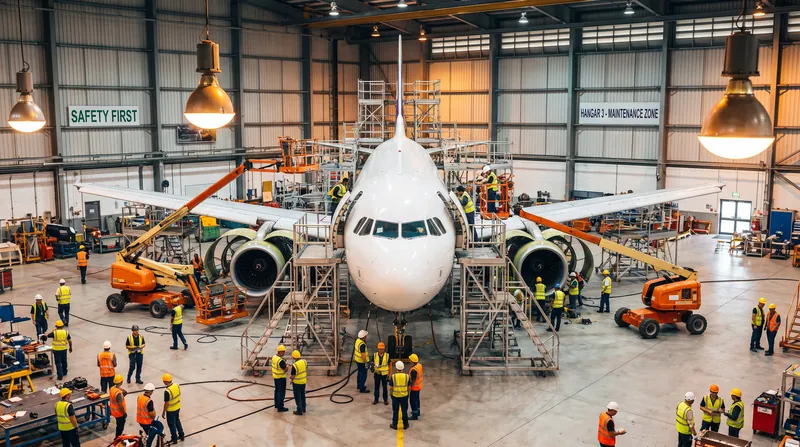
FAA Finalizes Rule Mandating Interference-Tolerant Radio Altimeters to Mitigate 5G Risk
7 sources
Aviation Safety
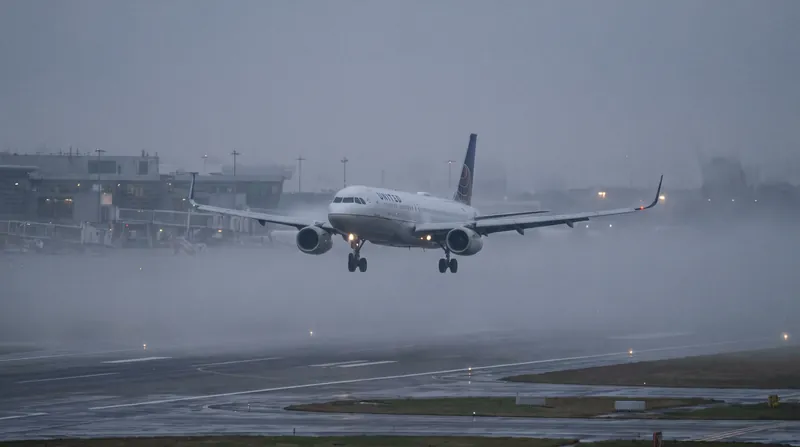
The Mechanics of the Cabin Check: How the FAA is Addressing 31,000 Improperly Installed Seats on Boeing 737 MAX Jets
6 sources
Aviation Safety
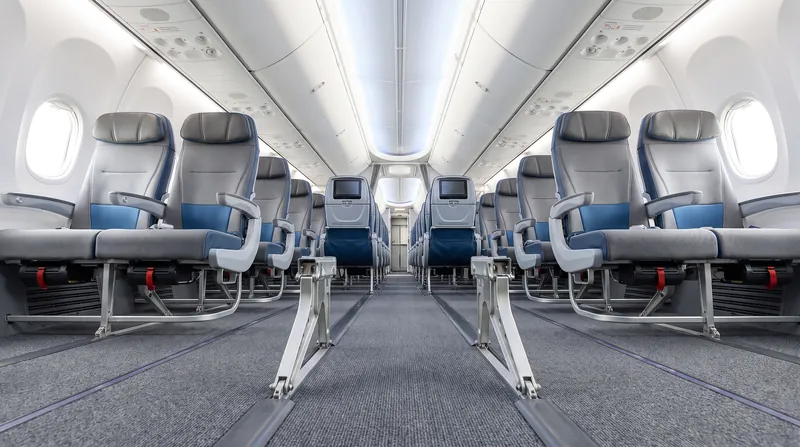
Why Transport Aircraft Must Dump Fuel Before Emergency Returns
8 sources
Aviation Safety
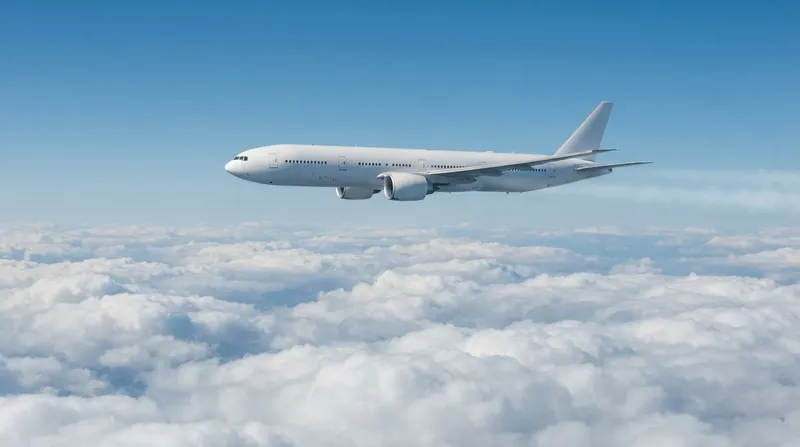
The 15-Minute Limit: How Sodium Chlorate Candles Sustain Passengers During Emergency Aircraft Descents
5 sources
Comments
Every angle. Every day.
Get Travel stories with full source coverage and perspective breakdowns, free every day.