
The Mechanics of the Global Wheat Trade: How Logistics and Quality Shape the Price of Flour
While international grain markets frequently experience volatility, the actual cost of baking flour is driven more by milling efficiency, protein spreads, and local logistics than by raw wheat prices alone.

In short
- The raw wheat berry accounts for less than 20 percent of the retail price of a bag of flour.
- Milling, packaging, transportation, and retail overhead make up the vast majority of consumer flour costs.
- Millers value wheat based on specific quality metrics like protein content, test weight, and falling number, not just sheer volume.
When you stand in the baking aisle staring at a bag of all-purpose flour, you are looking at the final stage of a massive, globally synchronized logistical chain. While headlines frequently warn of skyrocketing wheat prices due to overseas conflicts or weather events, the reality of what you pay at the register is far more insulated. The raw grain itself accounts for less than one-fifth of the retail price of flour.[2]
To understand why a 30 percent spike in global wheat markets doesn't mean a 30 percent spike in your grocery bill, you have to look at how wheat is valued, traded, and processed. Wheat is not a single, uniform commodity. It is a highly specific ingredient categorized by protein content, test weight, and enzymatic activity.[1][4]
The United States alone produces roughly 1.98 billion bushels of wheat annually, spread across five major classes. Hard Red Winter wheat, grown primarily in the Great Plains, accounts for about 40 percent of this production and is the backbone of bread flour. Hard Red Spring wheat, cultivated in the Northern Plains, provides the high-protein strength needed for bagels and chewy pizza dough.[1]
When a miller buys a cargo of wheat, they are not just buying weight; they are buying a specific milling yield. Test weight—the density of the grain—determines how much actual flour can be extracted from a bushel. A lower test weight means the miller has to process more raw grain to get the same amount of flour, which drives up their operational costs.[4]
Similarly, the 'falling number' of a wheat crop measures its enzymatic activity, specifically sprout damage. If wheat gets too wet before harvest, it begins to germinate, releasing enzymes that break down starches. Flour milled from this wheat will produce sticky, unmanageable dough and dense, gummy bread. Millers strictly discount or reject wheat with a low falling number, meaning that even in a year with a massive harvest, the supply of high-quality milling wheat can be tight.[4]
Once the right wheat is secured, the economics of the flour bag shift entirely away from the farm. According to the USDA's Economic Research Service, the 'farm share' of a retail bag of all-purpose white flour is roughly 18.5 percent. If a pound of flour costs 56.5 cents at the supermarket, the farmer who grew the wheat receives only about 10.5 cents of that total.[2]
The remaining 81.5 percent of the price tag is the farm-to-consumer price spread. This spread represents the value added by the middle of the supply chain: the energy required to run the massive steel rollers that crush the grain, the cost of the paper packaging, the fuel for the trucks that deliver it, and the overhead of the grocery store that stocks it.[2]
This massive price spread acts as a shock absorber for the consumer. When international wheat prices surge—as they did in 2022 and again during recent Black Sea shipping disruptions—the raw material cost increases, but the milling, packaging, and transport costs remain relatively stable. A significant jump in the global commodity market mathematically translates to only a marginal increase on the grocery store shelf.[2][6]
Globally, wheat is grown on more land than any other food crop, covering over 540 million acres worldwide. China and India lead global production, harvesting over 130 million and 100 million metric tonnes respectively, though much of this is consumed domestically. The international trade relies heavily on a handful of major exporters, including Russia, Canada, the United States, and Ukraine.[3][5]
When geopolitical tensions or extreme weather disrupt exports from one of these key regions, the global market reshuffles. Importers pivot to alternative suppliers, and the benchmark price of wheat rises as buyers compete for available tonnage. However, because the global supply chain is deeply integrated and heavily buffered by local processing costs, home bakers are largely shielded from the daily volatility of the trading floor.[4][6]
The role of co-products also helps stabilize flour prices. When a miller processes a pound of hard red winter wheat, they yield about 0.73 pounds of white flour. The remaining material—the bran and the germ—doesn't go to waste. It is sold as a co-product, often for animal feed or specialty health foods. The revenue generated from these co-products offsets the cost of milling, allowing the primary flour to be sold at a more competitive price.[2]
This intricate balancing act of global sourcing, precise quality metrics, and co-product economics means that flour is one of the most resilient staples in the modern diet. While the price of a loaf of artisan bread at a local bakery might fluctuate based on labor and rent, the raw ingredient itself remains highly accessible.[4]
Ultimately, the journey from a wheat field in the Dakotas or the Black Sea to a mixing bowl in a home kitchen is a triumph of modern logistics. The next time you measure out a cup of flour, you are holding the result of a system designed to absorb global shocks and deliver consistent, reliable performance, batch after batch.[4]
Ultimately, the journey from a wheat field in the Dakotas or the Black Sea to a mixing bowl in a home kitchen is a triumph of modern logistics.
For the home baker planning a weekend sourdough or a batch of cookies, the most significant variables remain the ones you can control: the hydration of your dough, the ambient temperature of your kitchen, and the freshness of your yeast. The global wheat market will continue its complex dance of yields and logistics, but the flour in your pantry remains a remarkably stable foundation for your baking.[4]
How we did this
- Method
- Analyzed the USDA's 'Price Spreads from Farm to Consumer' dataset alongside the 'Wheat Sector at a Glance' production figures to determine the exact ratio of raw grain cost to retail flour price.
- What we found
- Because the raw wheat berry accounts for less than 20% of the final retail price of flour, a hypothetical 30% spike in global grain prices mathematically translates to less than a 6% increase on grocery store shelves, as milling, packaging, and local transport absorb the majority of the cost structure.
- What we worked from
- Farm share of retail flour price (18.5%): 18.5% — USDA Economic Research Service
- Retail price of all-purpose white flour: 56.5 cents/lb — USDA Economic Research Service
- Limits of this analysis
- This analysis relies on U.S. national averages and does not account for hyper-local logistical disruptions or premium pricing for specialty, identity-preserved artisanal flours.
Jargon, explained
- Test Weight
- A measurement of the density of grain, which indicates to millers how much usable flour can be extracted from a given volume of wheat.
- Falling Number
- A metric used to evaluate the structural integrity of starch in wheat, indicating whether the grain suffered sprout damage from excess moisture before harvest.
- Farm-to-Consumer Price Spread
- The difference between what a consumer pays for a food product at retail and what the farmer received for the raw agricultural commodities used to make it.
- Co-product
- A secondary material, such as wheat bran or germ, that is generated during the milling process and sold separately to offset production costs.
- Hard Red Winter Wheat
- A major class of wheat grown primarily in the U.S. Great Plains, known for its high protein content and widely used to produce bread flour.
Common questions
Why doesn't the price of flour double when wheat prices double?
The raw wheat accounts for less than 20 percent of the retail price of flour. The majority of the cost comes from milling, packaging, transportation, and retail overhead, which do not increase just because the global commodity price of grain rises.
What is the difference between hard and soft wheat?
Hard wheat has a higher protein content and stronger gluten, making it ideal for bread and pizza dough. Soft wheat has lower protein and is used for tender baked goods like cakes, pastries, and cookies.
What does 'falling number' mean in wheat milling?
The falling number is a test that measures enzymatic activity, specifically sprout damage, in wheat. A low falling number means the wheat has begun to germinate, which breaks down starches and results in sticky, unmanageable dough.
How much of the world's wheat is grown in the United States?
The United States produces about 1.98 billion bushels of wheat annually, making it one of the top global exporters, though China and India produce significantly more total volume for their own domestic consumption.
Competing readings
Agricultural Economists
Focus on the farm-to-retail price spread and the buffering effect of the supply chain.
Economists emphasize that raw commodities make up a surprisingly small fraction of consumer food costs. They point to data showing that labor, energy, packaging, and transportation account for over 80 percent of the price of a bag of flour. From this perspective, global wheat market volatility is mostly absorbed by the supply chain before it reaches the grocery store, making local inflation and energy costs far more significant drivers of retail prices than the cost of the grain itself.
Commercial Millers
Prioritize specific quality metrics like protein content and falling number over sheer volume.
For the milling industry, a massive global wheat harvest is meaningless if the quality isn't there. Millers argue that their primary challenge is sourcing grain with the precise test weight and enzymatic activity required to produce consistent flour. They frequently pay significant premiums for high-protein wheat or grain that has avoided sprout damage, noting that these quality spreads often dictate their operational costs more than the baseline commodity price of wheat.
Global Trade Analysts
Monitor the logistical chokepoints and geopolitical risks that reshape international grain flows.
Trade analysts view the wheat market through the lens of logistics and security. They highlight that while global production is vast, the export market relies on a few critical maritime corridors, such as the Black Sea and the Panama Canal. When these routes are disrupted, analysts note that the resulting price spikes are driven not by a lack of grain, but by the sudden increase in freight rates, insurance premiums, and the logistical friction of rerouting massive cargo ships.
- Agricultural Economists
- Focus on the farm-to-retail price spread and the buffering effect of the supply chain.
- Commercial Millers
- Prioritize specific quality metrics like protein content and falling number over sheer volume.
- Global Trade Analysts
- Monitor the logistical chokepoints and geopolitical risks that reshape international grain flows.
Perspectives this story doesn't cover
- Home Bakers
- Independent Wheat Farmers
Sources
Source coverage
6 outlets
3 viewpoints surfaced





- [1]USDA Economic Research ServiceAgricultural Economists
Wheat Sector at a Glance
Read on USDA Economic Research Service → - [2]USDA Economic Research ServiceAgricultural Economists
Price Spreads from Farm to Consumer
Read on USDA Economic Research Service → - [3]WikipediaGlobal Trade Analysts
International wheat production statistics
Read on Wikipedia → - [4]Factlen Editorial TeamCommercial Millers
Synthesis by Factlen editorial team
Read on Factlen Editorial Team → - [5]Food and Agriculture OrganizationGlobal Trade Analysts
FAOSTAT: Crops and livestock products
Read on Food and Agriculture Organization → - [6]Trading EconomicsAgricultural Economists
Wheat - Price - Chart - Historical Data - News
Read on Trading Economics →
More in Food & Drink
See all →Sodium Bicarbonate
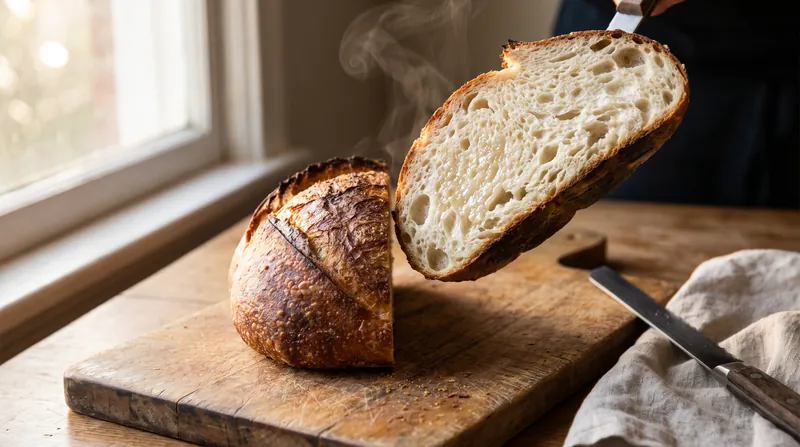
The Alkaline-Acid Collision: How Sodium Bicarbonate Demands a Low-pH Partner to Aerate Crumb Structure
6 sources
Baking Chemistry
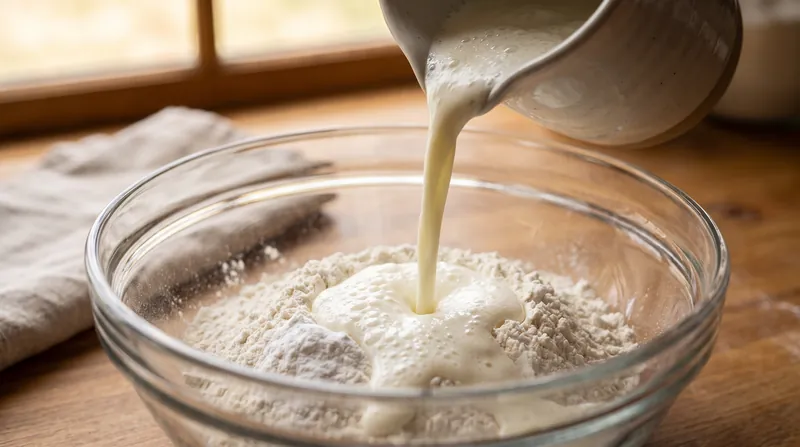
The Hygroscopic Tug-of-War: How Sucrose Steals Water from Gluten to Build a Tender Cake
9 sources

Sourdough Microbiome
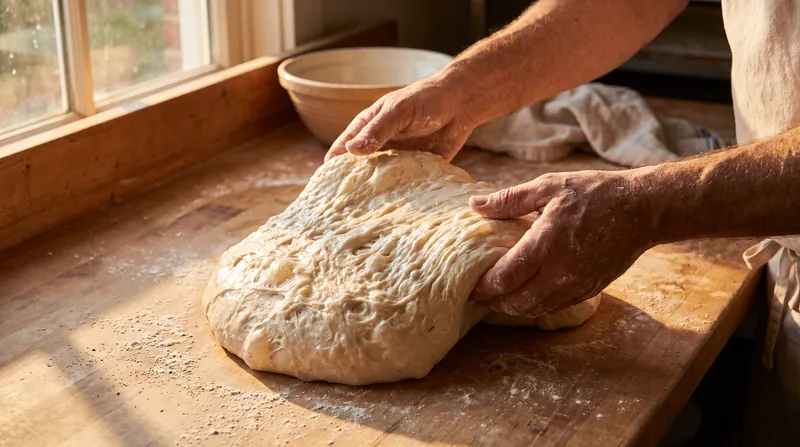
How Flour Choice and Wheat Enzymes Dictate the Microbiome and Digestibility of Sourdough
7 sources
Baking Chemistry
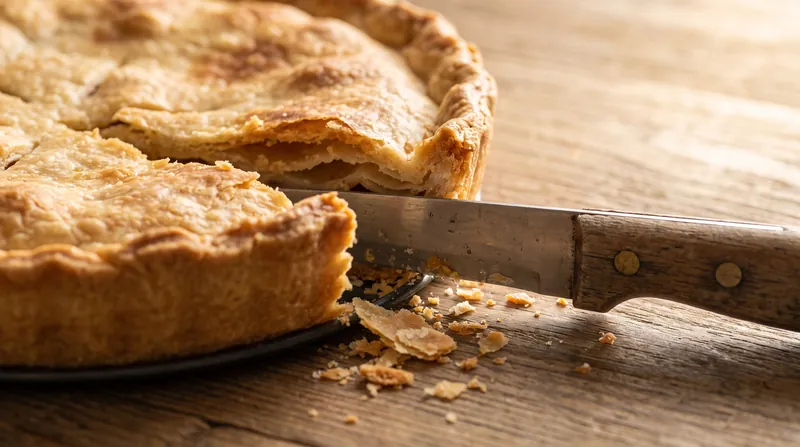
How Solid Fats Build Flakiness and Liquid Oils Guarantee Tenderness in the Oven
4 sources
Comments
Every angle. Every day.
Get Food & Drink stories with full source coverage and perspective breakdowns, free every day.