
The Lorenzo Renaissance: How Néstor Lorenzo Rebuilt Colombia into a World Cup Contender
After missing the 2022 tournament, Colombia rebuilt its national identity under manager Néstor Lorenzo, forging a historic 28-match unbeaten streak and reviving the career of playmaker James Rodríguez.

- Tactical Analysts
- Focus on Lorenzo's pragmatic defensive structure and lethal vertical transitions that protect the playmakers.
- Colombian Supporters
- Value the return of the national team's joyful identity and the emotional redemption of veteran stars.
- South American Rivals
- View Colombia as a formidable, disciplined threat that has broken the traditional Brazil-Argentina duopoly.
Perspectives this story doesn't cover
- European club managers managing the minutes of Colombian stars
- Youth academy directors in Colombia adapting to the new vertical style
Fast facts
- Colombia missed the 2022 World Cup, leading to the appointment of Néstor Lorenzo as head coach.
- Lorenzo shifted the team to a pragmatic, vertical counter-attacking system built on a solid defensive mid-block.
- The manager revived James Rodríguez's career by granting him a free role to orchestrate the attack.
- Colombia embarked on a historic 28-match unbeaten streak, defeating heavyweights like Germany, Brazil, and Spain.
- The team reached the 2024 Copa América final and comfortably qualified for the 2026 World Cup.
How we got here
April 2022
Colombia fails to qualify for the 2022 World Cup, prompting the dismissal of Reinaldo Rueda.
June 2022
Néstor Lorenzo is appointed as the new head coach, bringing his experience as a former assistant.
June 2023
Colombia secures a historic 2-0 victory over Germany, signaling their tactical evolution.
July 2024
Colombia reaches the Copa América final, extending their unbeaten streak to 28 matches.
September 2025
Colombia officially qualifies for the 2026 World Cup, finishing third in CONMEBOL.
The heartbreak of missing the 2022 FIFA World Cup in Qatar forced a profound reckoning within Colombian football. Finishing sixth in the CONMEBOL qualifying standings, the national team failed to reach the global stage, plunging a golden generation of talent into doubt and prompting the dismissal of head coach Reinaldo Rueda.[4][5]
The void left behind was palpable. After the soaring highs of reaching the 2014 quarterfinals and the knockout stages in 2018, the national team looked disjointed, lacking both a coherent tactical identity and the joyful flair that had long defined Los Cafeteros.[1][5]
In June 2022, the Colombian Football Federation made an appointment that initially raised eyebrows: Néstor Lorenzo. A former Argentine international defender, Lorenzo was largely untested as a head coach, with his only prior managerial experience coming during a brief stint with Peruvian club FBC Melgar.[2][4]
However, Lorenzo was no stranger to the Colombian dressing room. He had spent seven formative years as an assistant to José Pékerman, helping to engineer Colombia's historic run during the 2014-2018 era. He understood the unique pressures and rhythms of the national setup.[1][4]
Lorenzo's first task was not tactical, but emotional. He recognized that the squad's confidence was fractured. By prioritizing psychological unity and man-management over rigid dogma, he set out to heal the locker room and restore the inherent joy of playing for the national crest.[5]
With the culture stabilized, the tactical shift began. Under Lorenzo, Colombia moved away from the possession-obsessed football that had occasionally left them vulnerable to counter-attacks, pivoting instead toward a highly disciplined, pragmatic 4-2-3-1 system.[2][3]
The foundation of this system is a compact mid-block. Rather than pressing relentlessly high up the pitch—a strategy that can exhaust players in grueling tournament conditions—Colombia absorbs pressure, intentionally inviting opponents forward to create vast pockets of space behind their defensive lines.[3][5]
Once possession is won, the transition is devastatingly vertical. The double pivot in central midfield is tasked with immediately finding line-breaking passes, bypassing the opponent's structure before they have a chance to reorganize.[3][5]
This verticality relies heavily on the explosive pace and directness of wide players. Wingers like Luis Díaz and Jhon Arias have thrived in this setup, with Díaz becoming the focal point of the rapid transitions and cementing his status as one of the most lethal attackers in South America.[3]
This verticality relies heavily on the explosive pace and directness of wide players.
Yet, the most remarkable storyline of Lorenzo's tenure has been the resurrection of James Rodríguez. The talismanic playmaker, who captured the world's imagination in 2014, had seemingly lost his way in the years preceding Lorenzo's appointment.[1]
Prior to 2022, James was struggling to find traction at the club level. Bouncing between Everton, Al-Rayyan, Olympiacos, and São Paulo, he battled fitness setbacks and fell out of favor with previous national team managers who questioned his work rate.[1]
Lorenzo made a bold, defining decision: he handed the captain's armband back to James and built the team's entire attacking architecture around his legendary left foot, demonstrating absolute trust in the veteran.[5]
In Lorenzo's system, James is granted a specialized "free role." Relieved of heavy defensive tracking duties, which are absorbed by the disciplined midfielders behind him, he is tasked solely with finding pockets of space to orchestrate the counter-attacks and deliver final passes.[1][5]
This unwavering trust paid massive dividends at the 2024 Copa América. James delivered a spectacular tournament, recording five assists and a goal, and earning the Golden Ball as the competition's best player as he drove his nation to the final.
The manager's faith was absolute. Lorenzo even publicly compared James's set-piece delivery to that of David Beckham, noting that his pinpoint crosses and corners had become a fundamental, highly calculated weapon for Colombia's towering central defenders.
The results of this tactical and psychological overhaul have been historic. Colombia embarked on a staggering 28-match unbeaten streak spanning from February 2022 to July 2024, the longest such run in the nation's footballing history.[4]
This invincibility streak was not built against minor opposition. It included statement victories over global heavyweights like Germany, Brazil, and Spain, proving conclusively that Lorenzo's counter-attacking blueprint could dismantle elite, possession-heavy teams.[4]
Although the streak ultimately ended with a heartbreaking extra-time loss to Argentina in the 2024 Copa América final, the tournament cemented Colombia's status as a reborn powerhouse capable of navigating the grueling pressures of knockout football.[2][4]
The team seamlessly carried this momentum into the CONMEBOL qualifiers, officially securing their ticket to the 2026 World Cup with a dominant campaign that saw them finish comfortably among the continent's elite.[4]
Viewpoints in depth
Tactical Pragmatists
Analysts who praise Lorenzo's shift away from possession-based football.
Tactical analysts highlight that Lorenzo's true genius lies in his willingness to sacrifice possession for structural solidity. By deploying a compact mid-block and a double pivot, Colombia absorbs pressure from elite teams before launching devastating vertical transitions. This pragmatic approach protects the defense while maximizing the explosive pace of wingers like Luis Díaz, proving that structure can amplify, rather than stifle, natural attacking flair.
The Player-Centric View
Those who credit Lorenzo's man-management and revival of key veterans.
From a psychological perspective, Lorenzo's greatest achievement was uniting a fractured dressing room and resurrecting the career of James Rodríguez. By removing heavy defensive responsibilities from the playmaker and granting him a free role, Lorenzo built an environment of absolute trust. This man-management approach turned a group of isolated European-based stars back into a cohesive, joyful national unit that fights for each other on the pitch.
Sources
Source coverage
5 outlets
3 viewpoints surfaced





- [1]FIFASouth American Rivals
James Rodriguez heading to the FIFA World Cup 2026
Read on FIFA → - [2]FotMobTactical Analysts
Néstor Lorenzo profile, stats and career history
Read on FotMob → - [3]SquawkaTactical Analysts
Colombia World Cup 2026 stats
Read on Squawka → - [4]WikipediaSouth American Rivals
Néstor Lorenzo
Read on Wikipedia → - [5]Factlen Editorial TeamTactical Analysts
Synthesis by Factlen editorial team
Read on Factlen Editorial Team →
Comments
More in Sports
See all →Managerial Shift
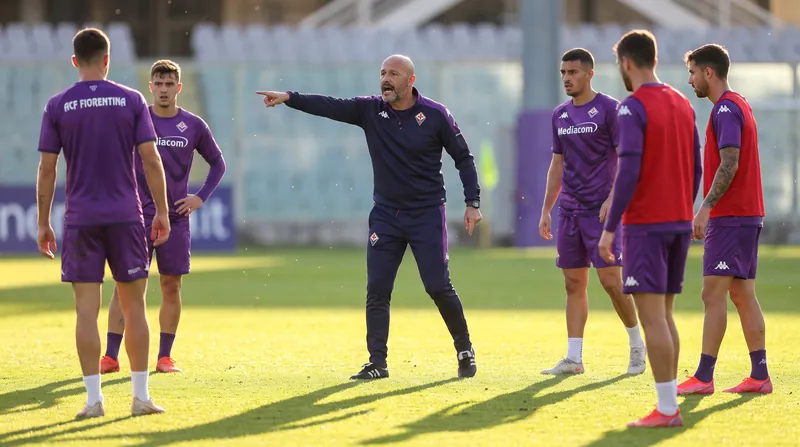
Fiorentina Re-Hire Paolo Vanoli as Head Coach After Sacking Fabio Grosso Three Matches Into Season
6 sources
Revenue Distribution
The €853 Million 'Value Pillar': How UEFA's New Champions League Revenue Engine Actually Works
7 sources
Mount Mizhirgi
Avalanche Kills 11 Climbers and Leaves Six Missing on Russia's Mount Mizhirgi
6 sources

WSL Rules
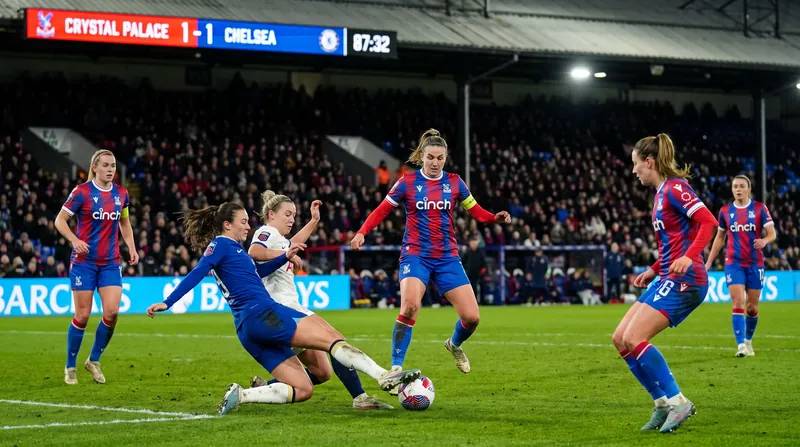
Crystal Palace Faces Points Deduction After Using Four Substitution Windows in WSL Opener Win
6 sources
Every angle. Every day.
Get Sports stories with full source coverage and perspective breakdowns delivered to your inbox.