
The Legacy of Milan-Cortina 2026: Record-Breaking Runs, Historic Firsts, and a New Era for the Winter Games
The 2026 Winter Olympics in Italy delivered unprecedented athletic achievements, from Norway's historic 41-medal haul to South America's first-ever gold, setting a high bar for the 2030 Games.
By Factlen Editorial Team
- National Federations
- Focusing on the success of long-term investment in winter sports programs and strategic funding.
- The Athletes
- Highlighting the immense pressure, mental toll, and emotional resonance of competing on the Olympic stage.
- Global Sports Analysts
- Pointing to the shifting geography and evolving competitive landscape of winter sports.
What's not represented
- · Local Italian residents affected by Olympic infrastructure
- · Athletes from nations without winter sports funding
Why this matters
As the Olympic torch passes to the French Alps for 2030, the Milan-Cortina Games proved that the limits of human endurance are still being rewritten, offering a blueprint for future athletic excellence and international sportsmanship.
Key points
- Norway set an all-time Winter Olympic record by winning 41 total medals, including 18 golds.
- Norwegian skier Johannes Høsflot Klæbo won an unprecedented six gold medals in cross-country events.
- The United States secured a national-record 12 gold medals, highlighted by victories in both men's and women's ice hockey.
- Brazilian alpine skier Lucas Pinheiro Braathen won South America's first-ever Winter Olympic medal with a gold in giant slalom.
- Host nation Italy achieved its best-ever Winter Games performance, winning 30 total medals.
The 2026 Winter Olympics in Milan-Cortina have officially concluded, leaving behind a legacy of shattered records, emotional home-ice triumphs, and historic firsts. Spread across the Italian Alps, the Games delivered two weeks of spectacular competition that redefined the boundaries of winter sports.[1][3]
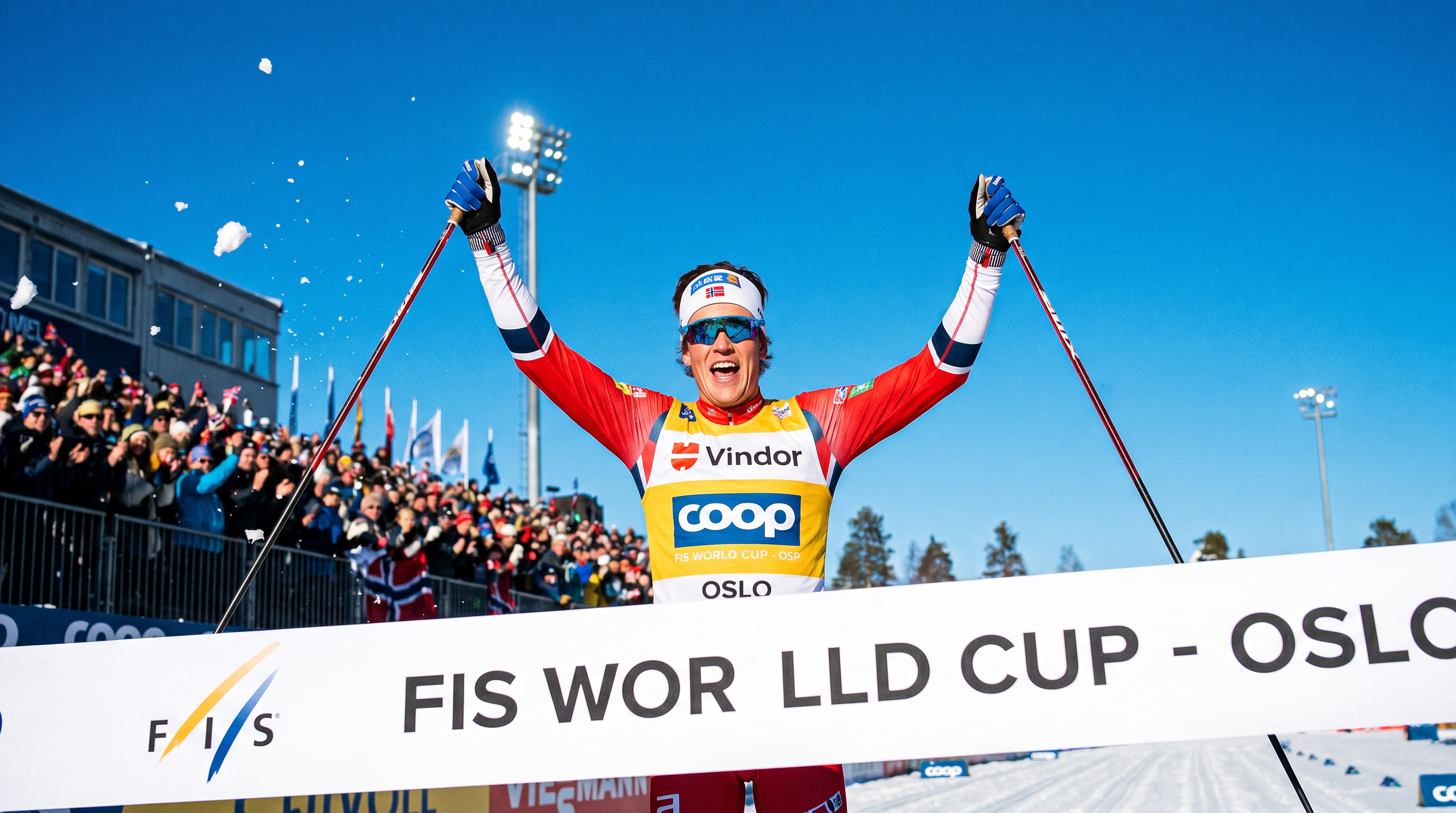
Norway cemented its status as the undisputed powerhouse of the Winter Games, topping the medal table for the third consecutive time. The Scandinavian nation amassed a staggering 41 total medals, including 18 golds—both all-time records for a single Winter Olympics.[3][4]
The individual star of the Games was undoubtedly Norwegian cross-country skier Johannes Høsflot Klæbo. Klæbo achieved the unthinkable by winning six gold medals across six events, becoming the first athlete to accomplish such a feat at a single Winter Olympics. His performance brought his career gold medal tally to 11, the most in Winter Olympic history.[1][4]

The United States also enjoyed a historic campaign, finishing second in the overall medal count with 33 podium finishes. More impressively, the American delegation secured 12 gold medals, setting a new national benchmark for a single Winter Games and showcasing incredible depth across multiple disciplines.[3][4]
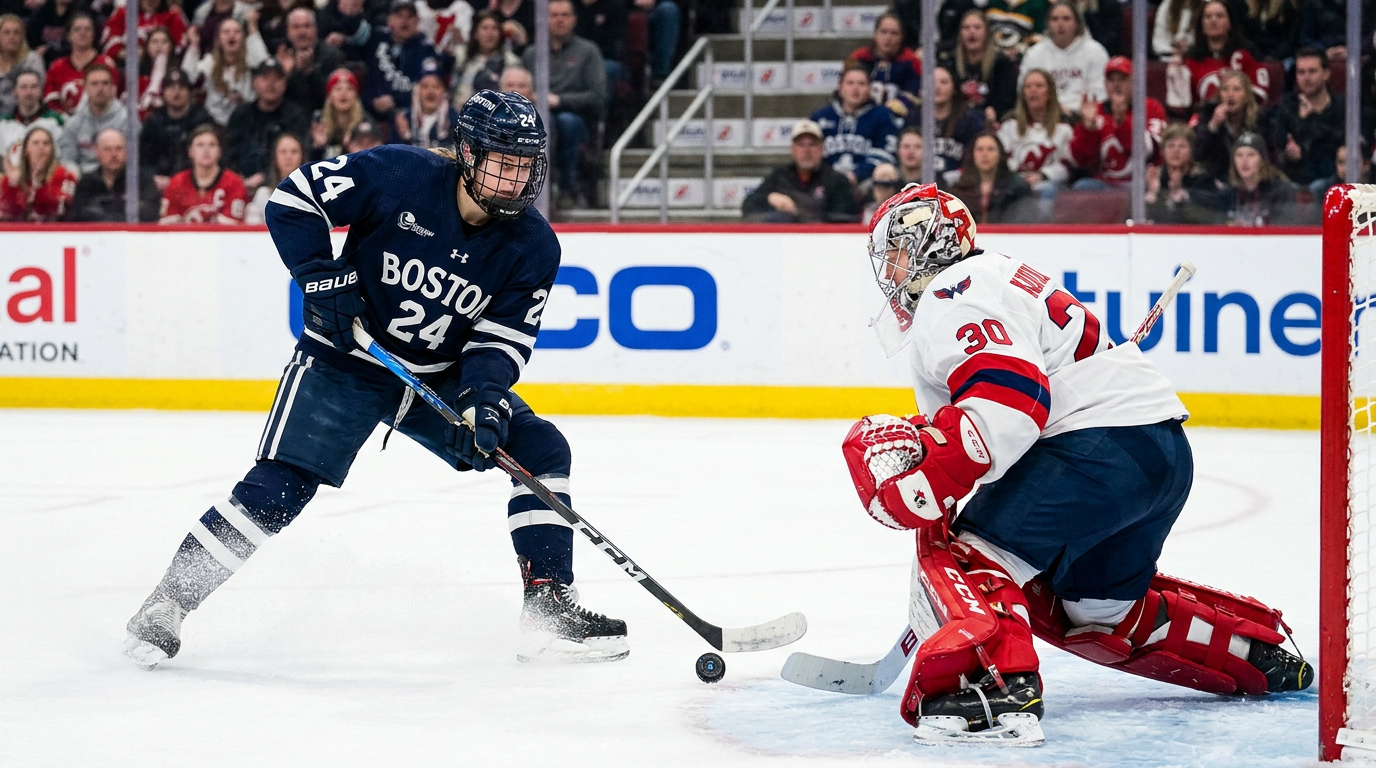
American success was highlighted by an unprecedented double in ice hockey. For the first time, the U.S. men's and women's teams both captured gold at the same Olympics. In a remarkable twist of fate, both squads defeated arch-rival Canada in their respective finals, and both victories came in overtime with identical 2-1 scores.[1][2]
American success was highlighted by an unprecedented double in ice hockey.
On the ice, American speed skater Jordan Stolz and figure skater Alysa Liu led the U.S. gold rush. Stolz dominated the men's 500m, 1000m, and 1500m races to claim three golds, while Liu secured the women's singles title and helped the U.S. win the team event, bringing joy and a near-flawless free skate to the rink.[1][2]
The Milan-Cortina Games also delivered deeply emotional milestones. Elana Meyers Taylor, the most decorated female bobsledder in U.S. history, finally captured her elusive first Olympic gold medal in the women's monobob. The victory made her the oldest U.S. woman to win a Winter Olympic medal and tied her as the most decorated U.S. woman in Winter Olympic history.[2][6]

For the host nation, the Games were a resounding success. Italy achieved its best-ever Winter Olympics performance, securing 30 total medals to finish fourth overall. The home crowds were treated to spectacular moments, including Lisa Vittozzi's historic biathlon pursuit gold and a double podium finish in the men's downhill on the legendary Stelvio course.[3][7]
Italian short-track speed skater Arianna Fontana provided one of the most enduring images of the Games. By winning three medals on home ice, Fontana brought her career total to 14, becoming the most decorated Italian Olympian in history and the first woman to win a medal at six consecutive Winter Olympics.[1][7]
Beyond the traditional powerhouses, the 2026 Games broke new geographic ground. Brazilian alpine skier Lucas Pinheiro Braathen made history by winning gold in the men's giant slalom. His victory marked the first-ever Winter Olympic medal for Brazil and the first for any South American nation, a watershed moment for winter sports in the Southern Hemisphere.[1][3]

The Games also saw the successful debut of ski mountaineering, adding a grueling new dimension to the Olympic program. The sport's inclusion, alongside new mixed team events in skeleton and alpine skiing, reflected the International Olympic Committee's push for gender parity and dynamic new formats that appeal to a younger generation of fans.[7]
As the Olympic flame was extinguished in Verona, attention now turns to the 2030 Winter Olympics in the French Alps. The Milan-Cortina Games have set an exceptionally high standard, proving that the appetite for winter sports—and the capacity of athletes to push beyond perceived limits—has never been stronger.[3][4]
How we got here
Feb 6, 2026
The Games officially open with a dual ceremony in Milan's San Siro stadium and Cortina d'Ampezzo.
Feb 14, 2026
Lucas Pinheiro Braathen wins Brazil's first-ever Winter Olympic medal with gold in the giant slalom.
Feb 19, 2026
The U.S. women's hockey team defeats Canada 2-1 in overtime to secure gold.
Feb 21, 2026
Johannes Høsflot Klæbo wins his sixth gold medal of the Games in the 50km mass start.
Feb 22, 2026
The U.S. men's hockey team matches the women's squad, defeating Canada 2-1 in overtime on the final day of competition.
Viewpoints in depth
National Federations' view
Focusing on the success of long-term investment in winter sports programs.
For national Olympic committees, the results in Milan-Cortina validated years of targeted funding. Norway's record-breaking 41 medals demonstrated the efficacy of their holistic, community-based approach to winter sports, while the United States' 12 gold medals highlighted the success of specialized training hubs for speed skating and hockey. Federations view these Games as a blueprint for maximizing medal yields in future competitions.
The Athletes' view
Highlighting the immense pressure and emotional resonance of the Games.
From the competitors' perspective, the 2026 Games were defined by emotional breakthroughs and the relief of overcoming adversity. Athletes like Elana Meyers Taylor and Alysa Liu spoke openly about the mental toll of the Olympic cycle and the joy of finally reaching the podium. For the Italian athletes, competing on home snow added an intense layer of pressure, which stars like Arianna Fontana channeled into historic, career-defining performances.
Global Sports Analysts' view
Pointing to the shifting geography and evolving landscape of winter sports.
Analysts note that while traditional powerhouses like Norway and the U.S. dominated the top of the table, the 2026 Games signaled a broadening of the winter sports map. Lucas Pinheiro Braathen's gold medal for Brazil proved that athletes from non-traditional winter nations can compete at the highest level. Furthermore, the successful integration of ski mountaineering suggests the IOC is effectively modernizing the Winter Games to attract younger, more diverse audiences.
What we don't know
- How the inclusion of ski mountaineering will impact funding for traditional alpine events in 2030.
- Whether Norway can maintain its unprecedented dominance as other nations heavily invest in cross-country skiing.
Key terms
- Monobob
- A women's bobsled event where a single athlete pushes, steers, and brakes the sled, emphasizing individual driving skill over team mechanics.
- Mass start
- A cross-country skiing race format where all competitors start simultaneously, leading to highly tactical racing and sprint finishes.
- Ski mountaineering
- A sport making its Olympic debut in 2026 that involves climbing snow-covered mountains on skis or on foot, followed by skiing back down.
- Giant slalom
- An alpine skiing event that involves skiing between sets of poles spaced at a greater distance than in a regular slalom, requiring high speeds and precise turns.
Frequently asked
Which country won the most medals at the 2026 Winter Olympics?
Norway topped the medal table with 41 total medals, including 18 golds, setting new records for a single Winter Olympics.
Who was the most successful athlete at the Milan-Cortina Games?
Norwegian cross-country skier Johannes Høsflot Klæbo won six gold medals, the most by any athlete at a single Winter Olympics.
Did the United States break any records?
Yes, the U.S. won 12 gold medals, setting a new national record for the most golds won by the country at a single Winter Olympics.
What was the most surprising result of the Games?
Brazilian alpine skier Lucas Pinheiro Braathen won gold in the men's giant slalom, marking the first-ever Winter Olympic medal for a South American nation.
Sources
Source coverage
7 outlets
3 viewpoints surfaced






[1]AP NewsGlobal Sports Analysts
10 memorable moments from the Milan Cortina Winter Olympics
Read on AP News →[2]Los Angeles TimesGlobal Sports Analysts
2026 Winter Olympics Day 13 recap: Results, medal count and schedule
Read on Los Angeles Times →[3]theScoreGlobal Sports Analysts
Milan Cortina medal table: Norway owns podium, USA edges out Italy
Read on theScore →[4]SwimSwamThe Athletes
2026 Winter Olympic Games: Major Updates, Viral Moments Through The Closing Ceremony
Read on SwimSwam →[5]Team USANational Federations
Milano Cortina 2026 Olympics Highlights
Read on Team USA →[6]NBC SportsThe Athletes
Chasing Gold: Milan Cortina 2026
Read on NBC Sports →[7]Olympics.comNational Federations
Milano Cortina 2026 in numbers: record engagement, efficient delivery, world-class performance
Read on Olympics.com →

More in sports
See all 13 stories →Olympic Sustainability
How the LA 2028 Olympics Will Run Entirely on Existing Stadiums
0 sources

NBA Finals
New York Knicks Win 2026 NBA Finals, Ending 53-Year Championship Drought
0 sources

NBA Finals
New York Knicks Capture First NBA Championship Since 1973
0 sources

Hockey Strategy
How the PWHL's 'Jailbreak' and 'No Escape' Rules Are Rewriting Hockey Strategy
0 sources
Every angle. Every day.
Get sports stories with full source coverage and perspective breakdowns delivered to your inbox.