
The Evidence Pack: Inside Florida's Proposed $250K Homestead Exemption and the Local Revenue Trade-Off
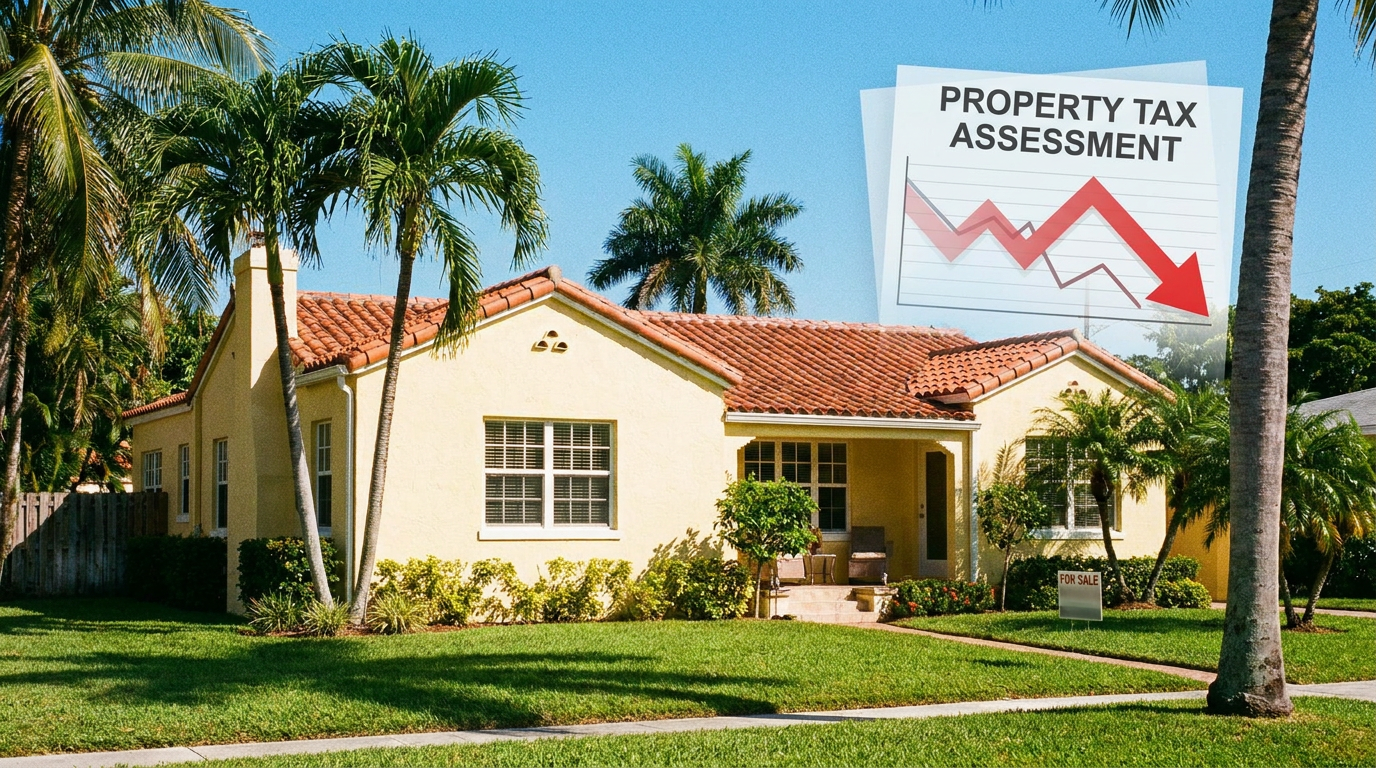
Florida lawmakers have placed a historic property tax cut on the November 2026 ballot that would raise the homestead exemption to $250,000. While the measure promises to wipe out non-school property taxes for 60% of homeowners, local municipalities warn it will create a massive revenue shortfall that threatens essential public services.
By Factlen Editorial Team
- State Administration & Homeowners
- Argues that local governments have over-collected taxes and that homeowners desperately need relief from the rising cost of living.
- Local Governments & Public Services
- Warns that the massive reduction in taxable value will gut funding for essential community services like libraries, transit, and emergency response.
- Tenant & Housing Advocates
- Cautions that the tax break disproportionately benefits existing homeowners while potentially driving up rent as local governments shift the tax burden.
What's not represented
- · Commercial Real Estate Developers
- · Out-of-State Prospective Buyers
Why this matters
If approved by voters, this amendment will fundamentally restructure Florida's economy, delivering massive financial relief to existing homeowners while forcing local governments to operate on billions of dollars less in revenue. For anyone buying, renting, or owning property in the state, the November vote will dictate their cost of living and the quality of their local public services for decades.
Key points
- Florida lawmakers passed a constitutional amendment to raise the non-school homestead exemption to $250,000 by 2028.
- The measure goes to voters in November 2026 and requires a 60% supermajority to take effect.
- The governor's office estimates the $250,000 threshold will wipe out non-school property taxes for 60% of homesteaded owners.
- Local governments warn the exemption will cause a $5 billion statewide revenue shortfall, threatening public services.
- The amendment also lowers the assessment cap on non-homestead properties from 10% to 5% to prevent a massive tax shift.
- New residents moving to Florida after 2026 will face a five-year waiting period before qualifying for the full $250,000 exemption.
On June 2, 2026, the Florida Legislature passed House Joint Resolution 1-F, officially titled the "Save Our Homes from Excessive Property Taxes" amendment. The measure, which now heads to the November 2026 ballot, proposes the largest property tax cut in the state's history. If approved by 60% of voters, it will fundamentally alter how local governments are funded while delivering massive financial relief to existing homeowners.[1][2][4][5][6]
The core mechanism of the amendment targets the "non-school" portion of a homeowner's property tax bill. Currently, Florida homeowners receive a $50,000 exemption on non-school levies. Under the new framework, that exemption would jump to $150,000 on January 1, 2027, and reach $250,000 in 2028. Beginning in 2029, the $250,000 threshold would be indexed to inflation, ensuring the tax shield grows alongside the wider economy.[1][3][5]
The evidence suggests this change will effectively eliminate municipal tax liabilities for a majority of the state's primary residents. The governor's office estimates that at the $250,000 level, roughly 60% of homesteaded property owners in Florida would owe zero non-school property taxes.[1]

This dramatic reduction is amplified by Florida's existing tax structure. Because the state's legacy "Save Our Homes" cap already limits assessed value growth to 3% annually, many long-time residents carry assessed values that are hundreds of thousands of dollars below current market prices. For these homeowners, a $250,000 exemption easily covers their entire assessed non-school value.[4][5]
While the policy delivers clear, calculable savings to property owners, the evidence points to a severe fiscal cliff for local municipalities. Cities and counties rely heavily on ad valorem taxes to fund daily operations, and the sudden removal of billions of dollars in taxable value threatens the foundation of local budgets.[2][7]
In a June 2026 memo to local leaders, Miami-Dade County Mayor Daniella Levine Cava quantified the impending shortfall. The county projects a $386 million revenue deficit in the first year alone if the amendment passes. By 2028, when the exemption hits the full $250,000, that annual shortfall is expected to nearly double to $696 million in Miami-Dade alone.[2]

Statewide projections mirror this localized alarm. Economists and the Florida Association of Counties project that cities and counties across the state could lose upwards of $5 billion in the first year of implementation. This revenue contraction directly threatens local infrastructure, public transportation, and community programs.[2][7]
Library systems, which are largely funded by dedicated millage rates on ad valorem taxes, are particularly vulnerable to the cuts. In Miami-Dade, library advocates anticipate an immediate $20 million budget reduction, which they warn will jeopardize free tutoring programs, public internet access, and community cooling centers.[2]
Library systems, which are largely funded by dedicated millage rates on ad valorem taxes, are particularly vulnerable to the cuts.
Proponents of the amendment counter these warnings by pointing to a historic surge in local tax receipts. Governor Ron DeSantis noted that property tax revenue collected by local governments has nearly doubled over the past seven years, reaching unprecedented levels. The administration contends that this revenue growth has significantly outpaced population growth, indicating that local governments have been over-collecting.[1][2]
To enforce fiscal discipline, the amendment introduces strict constitutional guardrails on how local governments can spend their remaining property tax revenue. It restricts county and municipal ad valorem spending to a closed list of seven core categories, including public safety, education, infrastructure, and natural resources.[3][5]

However, policy experts at the Florida Policy Institute note that these categories remain vaguely defined. This ambiguity creates transparent uncertainty around the future funding of non-core services, leaving local administrators unsure of which programs will survive the transition.[2][5]
To prevent local governments from simply shifting the tax burden onto businesses and second homes to cover the shortfall, the legislation includes a secondary cap. Currently, the assessed value of non-homestead properties can increase by a maximum of 10% annually. The new amendment lowers that cap to 5% beginning in 2027.[1][3][5]
Despite this commercial cap, tenant advocacy groups warn of unintended consequences for the state's renters. Because landlords do not qualify for the homestead exemption, their relative share of the total tax base will inevitably increase.[2]
The Miami Workers Center argues that if local governments raise overall millage rates to compensate for the $5 billion shortfall, those increased costs will be passed down to tenants. In an already strained housing market, this dynamic could inadvertently drive up rent prices while homeowners enjoy historic tax relief.[2][5]
The amendment also creates a two-tiered system designed to prevent out-of-state buyers from immediately capturing the tax break. Individuals who establish Florida residency after December 31, 2026, will face a mandatory five-year waiting period.[3]

During those first five years, new residents will only receive the standard $50,000 exemption. Only after completing the waiting period will they unlock the $250,000 tier, a mechanism intended to prioritize long-term Floridians over pandemic-era transplants.[3][5]
Beyond the $250,000 threshold, the amendment includes a sweeping mandate for the Legislature to create a schedule for the full elimination of all non-school homestead property taxes. While the exact timeline for this total phase-out remains undefined, the constitutional directive ensures that the $250,000 exemption is merely a transitional phase.[1][4]
The ultimate fate of the "Save Our Homes from Excessive Property Taxes" act now rests with the electorate. Because it alters the state constitution, it requires a 60% supermajority to pass on November 3, 2026. Until then, the housing market, local governments, and taxpayers remain in a holding pattern, weighing immediate financial relief against a fundamental restructuring of Florida's civic infrastructure.[2][4][6]
How we got here
1995
Florida implements the original 'Save Our Homes' amendment, capping annual assessed value growth at 3%.
June 2, 2026
The Florida Legislature passes House Joint Resolution 1-F during a special session.
Nov 3, 2026
Florida voters will decide on the amendment, which requires a 60% supermajority to pass.
Jan 1, 2027
If approved, the non-school homestead exemption increases to $150,000.
Jan 1, 2028
The non-school homestead exemption reaches $250,000 and begins indexing to inflation the following year.
Viewpoints in depth
State Administration
Argues that local governments have over-collected taxes and that homeowners desperately need relief.
Proponents of the amendment, led by the governor's office, argue that local municipalities have experienced a massive windfall in recent years. Because property values have skyrocketed, local tax receipts have nearly doubled since 2019, far outpacing population growth. The administration contends that this excess revenue should be returned to taxpayers who are struggling with inflation and the rising cost of living. By capping local spending to core services, they believe the amendment forces necessary fiscal discipline on counties and cities.
Local Municipalities
Warns that the massive reduction in taxable value will gut funding for essential community services.
County mayors, city commissioners, and public service advocates view the $250,000 exemption as an existential threat to local governance. They argue that property taxes are the primary engine for municipal operations, funding everything from emergency responders to public transit and libraries. In Miami-Dade alone, officials project a $696 million annual shortfall by 2028. Without this revenue, local leaders warn they will be forced to enact draconian budget cuts, lay off municipal workers, and permanently reduce the quality of life in Florida's communities.
Tenant & Housing Advocates
Cautions that the tax break disproportionately benefits existing homeowners while potentially driving up rent.
Housing advocates point out that the amendment offers zero direct relief to Florida's renters, who make up a significant portion of the state's population. Because landlords and commercial property owners do not qualify for the homestead exemption, their share of the overall tax burden will increase. Advocates warn that if local governments raise millage rates to compensate for the lost revenue, landlords will simply pass those increased costs down to tenants, exacerbating the state's housing affordability crisis.
What we don't know
- How local municipalities will redefine 'core services' to comply with the amendment's new spending restrictions.
- Whether landlords will actually pass increased tax burdens down to renters, or if the 5% commercial cap will provide sufficient protection.
- The exact timeline the Legislature will adopt for the full elimination of all non-school homestead property taxes.
Key terms
- Homestead Exemption
- A legal provision that reduces the assessed value of an owner-occupied primary residence, lowering the homeowner's overall property tax bill.
- Millage Rate
- The tax rate applied to the assessed value of a property, expressed in tenths of a cent per dollar.
- Ad Valorem Tax
- A tax based on the assessed value of an item, which in this context refers to local property taxes.
- Save Our Homes Cap
- A Florida law that limits the annual increase in the assessed value of a homesteaded property to 3% or the inflation rate, whichever is lower.
Frequently asked
Does this amendment eliminate school property taxes?
No. The $250,000 exemption applies exclusively to non-school levies, meaning homeowners will still pay the portion of their property tax that funds local school districts.
Do I get the $250,000 exemption if I move to Florida in 2027?
Not immediately. New residents who establish domicile after December 31, 2026, face a five-year waiting period where they only receive the standard $50,000 exemption.
What happens if the amendment fails in November?
Property taxes will continue to be assessed under the current system, with a standard $50,000 non-school homestead exemption and a 10% assessment cap for non-homestead properties.
Will this tax cut lower my rent?
Unlikely. Tenant advocates warn that if local governments raise overall tax rates to cover revenue shortfalls, landlords may pass those increased costs down to renters.
Sources
Source coverage
7 outlets
3 viewpoints surfaced







[1]Florida SenateState Administration & Homeowners
Florida Senate Passes $250,000 Homestead Exemption
Read on Florida Senate →[2]WLRNLocal Governments & Public Services
Local governments sound alarm over $250K property tax exemption
Read on WLRN →[3]Tax FoundationTenant & Housing Advocates
Florida's Proposed Property Tax Overhaul Heads to Voters
Read on Tax Foundation →[4]WUSFTenant & Housing Advocates
Florida lawmakers have sent a major property tax proposal to voters
Read on WUSF →[5]Florida Policy InstituteTenant & Housing Advocates
Amendment 3: Save Our Homes from Excessive Property Taxes
Read on Florida Policy Institute →[6]Tampa Bay TimesState Administration & Homeowners
DeSantis' property tax plan heads to voters
Read on Tampa Bay Times →[7]Florida Association of CountiesLocal Governments & Public Services
Florida County Property Tax Levy Impact — Special Session F
Read on Florida Association of Counties →
Every angle. Every day.
Get real estate stories with full source coverage and perspective breakdowns delivered to your inbox.