
The Circular E-Commerce Boom: How Brands Are Making Secondhand Shopping Mainstream
Driven by younger consumers and new environmental regulations, major retailers are bringing resale in-house to capture a secondhand market projected to reach $393 billion by 2030.
By Factlen Editorial Team
- Brand Executives
- Focuses on recommerce as a powerful tool for customer acquisition, retaining loyalty, and capturing secondary revenue streams.
- Sustainability Advocates
- Views the circular economy as an essential mechanism to decouple retail growth from resource extraction and reduce carbon emissions.
- Retail Infrastructure Providers
- Emphasizes the technological and logistical challenges of recommerce, arguing that sophisticated RaaS platforms are the true enablers of circularity.
What's not represented
- · Garment Workers & Primary Manufacturers
- · Low-Income Consumers
Why this matters
The transition from a disposable retail culture to a circular economy fundamentally changes how we buy, use, and discard products. For consumers, it means high-quality goods become more affordable and retain trade-in value, while for the planet, it offers a scalable mechanism to drastically reduce manufacturing emissions and landfill waste.
Key points
- The global secondhand apparel market is projected to reach $393 billion by 2030.
- Major retailers are launching 'branded resale' platforms to keep customers within their own ecosystems.
- Resale-as-a-Service (RaaS) providers are handling the complex reverse logistics required to process unique used items.
- Choosing a secondhand item can reduce its per-use climate impact by 42% and water footprint by 53%.
- New EU regulations are forcing brands to adopt circular models by mandating repairability and digital product passports.
- The environmental benefit of recommerce depends heavily on whether used purchases actually replace new manufacturing.
Retail has traditionally operated on a strictly linear model: manufacturers produce goods, retailers sell them, and consumers eventually dispose of them. For decades, the e-commerce boom only accelerated this one-way pipeline, optimizing supply chains to deliver new products faster and cheaper. But in 2026, a profound structural shift is rewriting the rules of digital retail. The industry is pivoting toward a circular economy, driven by a convergence of technological innovation, shifting consumer values, and mounting regulatory pressure. We are witnessing the end of the disposable era and the rapid institutionalization of recommerce.[5][7]
Recommerce—the structured buying and selling of previously owned, returned, or refurbished products—has evolved from a niche, weekend-flea-market concept into a sophisticated digital ecosystem. It is no longer an experimental side project for eco-conscious startups; it is a core strategic pillar for the world's largest brands. By intentionally extending the lifecycle of their products, retailers are discovering that they can capture new revenue streams while simultaneously addressing the massive environmental footprint of global supply chains. Inventory no longer flows in a straight line to a landfill; instead, it moves in a continuous loop from the customer back to the brand, through refurbishment, and onto a new buyer.[5][7]
The sheer scale of this secondary market is staggering, consistently outpacing traditional retail growth. The global secondhand apparel market alone is projected to reach $393 billion by 2030, expanding at twice the rate of the broader apparel sector. In the United States, online resale is forecast to hit $40 billion by the end of the decade, fueled by a 14% annual growth rate. This is not merely a post-pandemic anomaly or a temporary reaction to inflation; it represents a permanent change in how a massive segment of the population acquires goods.[1][4]

Historically, the secondary market was dominated by peer-to-peer platforms and third-party marketplaces like eBay, Poshmark, or Depop. Traditional brands largely ignored these platforms or viewed them defensively, seeing secondhand sales as a threat that cannibalized their primary inventory. When a consumer bought a used jacket or a refurbished smartphone on a third-party site, the original manufacturer saw none of the revenue, captured none of the customer data, and had no control over the quality or authenticity of the item being sold. The brand was entirely cut out of the product's secondary life, losing both margin and a critical touchpoint with the buyer.[6][7]
That defensive posture has entirely evaporated in today's retail landscape. The defining e-commerce trend of 2026 is the explosion of "branded resale"—initiatives where retailers launch and manage their own dedicated secondhand channels. Large retailers no longer treat resale as an external nuisance; they are embedding buy-back and trade-in programs directly into their core assortment strategies. By bringing recommerce in-house, brands keep customers firmly within their own digital ecosystems, ensuring that loyalty and spending remain captured by the original creator of the product. This shift allows companies to manage pricing dynamics, guarantee product authenticity, and maintain a direct relationship with the consumer across the entire lifecycle of the item.[1][6]
A prime example of this shift is New Balance, which recently expanded its "Reconsidered" resale platform to include apparel alongside its footwear offerings. The program allows customers to trade in gently worn items—either by mail or at over 100 physical retail locations—in exchange for a voucher toward their next purchase. The brand then cleans, inspects, and recirculates the inventory through its own digital storefront. Since its launch, the platform has successfully recirculated more than 100,000 pairs of shoes, proving that consumers are eager to engage directly with brands for pre-owned goods.[2]
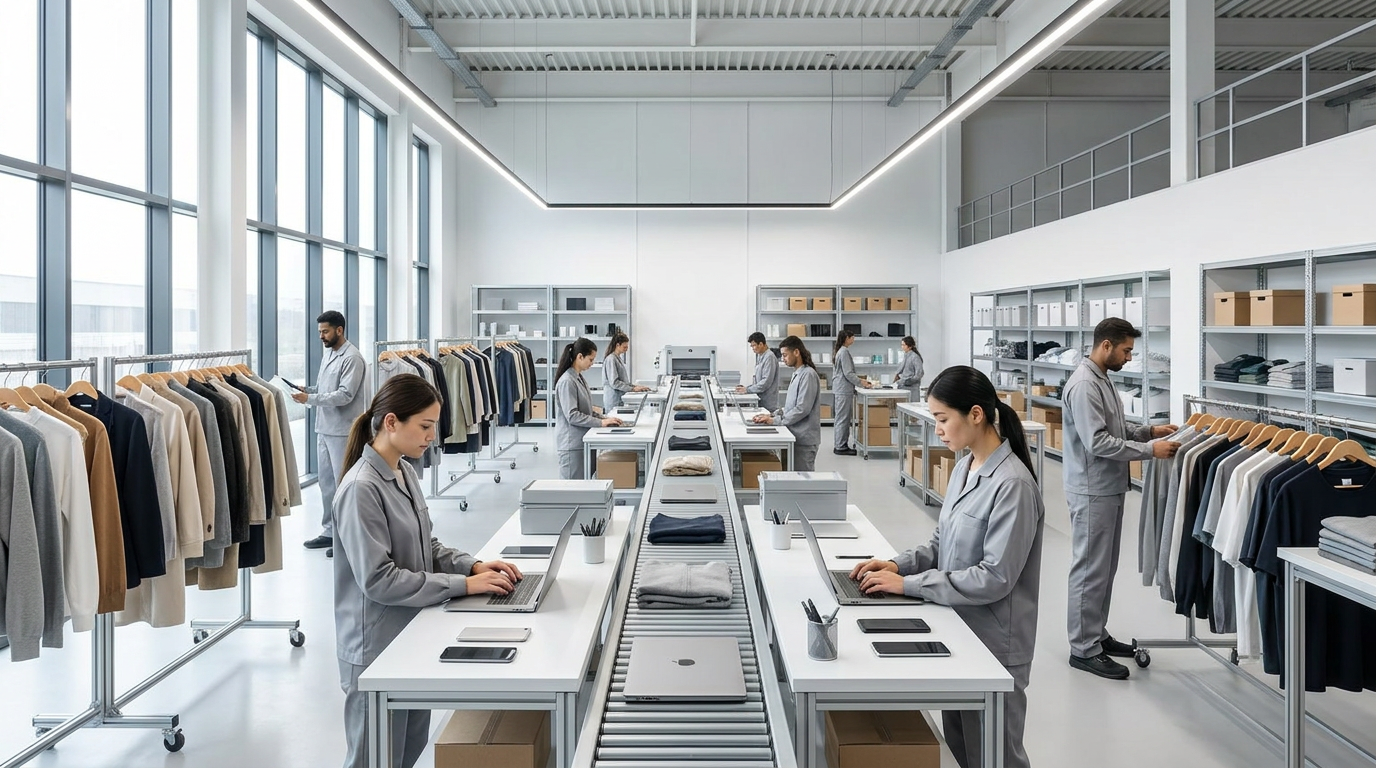
But how do traditional retailers, whose supply chains are optimized for pumping out millions of identical new products, suddenly become experts in processing individual used goods? The answer lies in a booming layer of B2B infrastructure known as Resale-as-a-Service, or RaaS. Companies like Trove and Archive operate quietly in the background, providing the complex software and physical logistics required to make recommerce viable at an enterprise scale. They serve as the invisible engine powering the branded resale revolution, allowing legacy brands to launch sophisticated circular programs without having to completely re-engineer their existing warehouse operations from scratch.[1][7]
These infrastructure providers handle the notoriously messy reality of reverse logistics. Resale is fundamentally different from traditional e-commerce because it involves managing one-of-a-kind products coming from thousands of different sources, all in varying conditions. RaaS platforms manage the intake, authenticate the items to prevent fraud, grade their condition, route them for specialized cleaning or repair, and seamlessly integrate the unique listings back into the brand's primary e-commerce site. This ensures that a customer buying a used item experiences the exact same premium digital interface, customer support, and shipping reliability as someone buying a brand-new product off the digital rack.[2][7]
These infrastructure providers handle the notoriously messy reality of reverse logistics.
The economic incentives driving brands toward this model are highly compelling. Resale acts as a remarkably efficient customer acquisition tool, particularly for younger demographics who might be priced out of a brand's new inventory. When the resale channel is utilized strategically, it serves as an accessible on-ramp for new shoppers to experience the brand's quality at a fraction of the retail price. Once inside the ecosystem, these value-conscious buyers often transition to purchasing new items as their disposable income grows, fundamentally altering the traditional economics of customer lifetime value and lowering overall marketing acquisition costs.[1][2]
Consumer data strongly reinforces this strategy. Surveys indicate that roughly 68% of Gen Z and Millennial consumers have shopped secondhand recently, with nearly half citing resale platforms as their very first stop when looking for a product. For these younger cohorts, buying used is no longer a compromise driven solely by budget constraints; it is a default expectation and a cultural norm. Resale has become a form of cultural currency, where finding a high-quality pre-loved item carries social prestige. Brands that fail to offer a recommerce option risk losing relevance with the next generation of high-value consumers who view circularity as a baseline requirement for their loyalty.[4][5]

Beyond the clear economic benefits, the environmental claims driving the recommerce boom are substantial. The circular economy aims to decouple retail growth from the relentless extraction of virgin resources. By keeping existing products in circulation longer, recommerce actively reduces the volume of goods destined for landfills or incinerators. This is particularly critical in industries like fashion and consumer electronics, which have historically been plagued by massive overproduction, short product lifespans, and devastating ecological footprints. Recommerce offers a tangible, scalable mechanism to slow down the manufacturing treadmill without sacrificing corporate revenue.[5][7]
The measurable impact of these programs is significant. Studies indicate that choosing a secondhand item over a newly manufactured one can reduce the product's per-use climate impact by 42%. Furthermore, it can lower the associated energy demand by 42% and reduce the water scarcity footprint by an impressive 53%. For public companies facing intense scrutiny over their Environmental, Social, and Governance (ESG) metrics, branded resale provides a highly visible, data-backed method to report actual waste reduction and carbon mitigation to their shareholders, moving beyond vague sustainability marketing into concrete operational changes.[3][5]
Regulatory pressure is also accelerating the adoption of circular models. In regions like the European Union, new rules are actively hardwiring repairability and reuse into the legal framework of commerce. Mandates requiring digital product passports, expanded transparency regarding durability, and extended producer responsibility schemes are shifting the financial burden of product disposal back onto the manufacturers. As these strict regulations take effect by 2026, brands are realizing that building a robust recommerce infrastructure is not just a marketing advantage, but a strict compliance necessity to maintain access to key global markets.[5][7]

However, the environmental triumphs of recommerce are not entirely without uncertainty. The true ecological benefit of the secondhand market hinges entirely on a metric known as the "displacement rate"—the frequency with which a used purchase actually prevents the manufacturing of a new item. If a consumer buys a refurbished jacket instead of a new one, the carbon savings are fully realized. But if the affordability and accessibility of resale simply encourage shoppers to buy used items in addition to their normal consumption of new goods, the environmental gains are severely diluted, risking a scenario where recommerce inadvertently fuels broader overconsumption.[3][7]
Recent studies suggest that the displacement rate in fashion currently sits between 60% and 80%. This implies that while the real-world resource savings are slightly lower than the theoretical maximums, they remain highly impactful. The challenge for the industry moving forward will be ensuring that circular programs genuinely replace linear production, rather than just serving as a supplementary revenue stream that runs parallel to unchecked manufacturing volumes. Brands will need to prove that their resale initiatives are actively reducing their reliance on virgin materials, rather than just greenwashing an expanding catalog.[3][7]

Operationally, the margins in recommerce also remain a persistent hurdle. Processing individual, unique items is inherently labor-intensive and expensive. A warehouse worker must physically inspect a returned pair of shoes, grade its wear and tear, photograph it, and write a unique listing—a process that costs significantly more than moving a pallet of identical, barcoded boxes. For branded resale to achieve long-term profitability, companies must continue to invest in AI-driven sorting, automated grading technology, and highly efficient reverse logistics networks to drive down the per-unit cost of refurbishment.[2][5][7]
Despite these logistical and behavioral challenges, the trajectory of the retail sector is unmistakable. The stigma once associated with buying used goods has vanished, replaced by a consumer base that views circularity as a mark of savvy, sustainable shopping. As the underlying technology matures and reverse logistics become more streamlined, the friction of buying and selling pre-owned items will continue to approach zero. We are rapidly approaching a future where purchasing a refurbished item is virtually indistinguishable from buying a new one, complete with warranties, premium packaging, and brand guarantees.[3][5][7]
Ultimately, the rise of branded resale represents a fundamental maturation of the digital economy. It acknowledges that the era of infinite extraction and disposable consumption is mathematically and ecologically unsustainable. By embracing recommerce, the retail industry is finally taking responsibility for the entire lifespan of the products it creates. It is a rare structural shift where economic incentives perfectly align with environmental necessity, transforming the future of shopping into a system that is both highly profitable and fundamentally restorative. In 2026, recommerce is no longer just a trend; it is the new standard operating procedure for global retail.[1][7]
How we got here
Pre-2020
Secondhand e-commerce is largely dominated by peer-to-peer platforms like eBay and Craigslist, with traditional brands viewing resale as a threat.
2020-2022
A pandemic-driven surge in online shopping and growing eco-consciousness accelerates the adoption of dedicated fashion resale apps like Depop and Poshmark.
2024
Major brands like New Balance launch their own in-house resale programs, signaling a shift toward 'branded resale' as a core retail strategy.
2025
The European Union introduces strict circular economy regulations, mandating repairability and digital product passports for consumer goods.
2026
Recommerce becomes standard operating infrastructure, with the global secondhand market projected to reach nearly $400 billion by the end of the decade.
Viewpoints in depth
Brand Executives' view
Recommerce is a strategic engine for customer acquisition and lifecycle control.
For retail leaders, the shift toward branded resale is fundamentally an economic and data play. By bringing the secondary market in-house, brands prevent third-party platforms from capturing their customers' loyalty and spending. Executives view recommerce as a highly efficient way to acquire younger, value-conscious shoppers who may eventually transition to buying new products, all while capturing a new margin layer on goods they have already manufactured.
Sustainability Advocates' view
The circular economy is an ecological necessity to combat retail overproduction.
Environmental groups and sustainability researchers argue that the linear 'take-make-dispose' model is pushing planetary boundaries to the breaking point. They champion recommerce for its measurable ability to cut a product's climate and water footprint by over 40%. However, these advocates also caution against 'greenwashing,' stressing that resale programs only benefit the environment if they achieve a high displacement rate—meaning they actually reduce the volume of new goods being manufactured.
Infrastructure Providers' view
Scalable technology and reverse logistics are the true bottlenecks to circularity.
The B2B platforms powering this revolution argue that the desire to launch a resale program is meaningless without the operational capacity to execute it. They focus on the immense complexity of reverse logistics—authenticating, cleaning, and individually listing thousands of unique used items. For these tech and logistics providers, the future of retail depends entirely on AI-driven sorting and automated grading to make the processing of secondhand goods as cost-effective as traditional manufacturing.
What we don't know
- Whether the widespread availability of cheap secondhand goods will inadvertently encourage consumers to buy more items overall, diluting the environmental benefits.
- How quickly AI and robotics will be able to fully automate the labor-intensive process of grading and sorting unique used items.
- The long-term impact of branded resale on primary manufacturing hubs in developing nations as demand for new goods potentially softens.
Key terms
- Recommerce
- The structured buying and selling of previously owned, returned, or refurbished products through intentional resale channels.
- Circular Economy
- An economic model designed to keep products and materials in use for as long as possible, minimizing waste and resource extraction.
- Resale-as-a-Service (RaaS)
- B2B technology and logistics platforms that enable traditional brands to launch and manage their own secondhand marketplaces without overhauling their existing supply chains.
- Reverse Logistics
- The complex supply chain process of moving goods from the consumer back to the manufacturer or retailer for refurbishment, recycling, or resale.
- Displacement Rate
- The percentage of secondhand purchases that genuinely replace the purchase of a newly manufactured item, rather than simply adding to overall consumption.
Frequently asked
What is branded resale?
Branded resale is a model where traditional retailers launch and manage their own secondhand marketplaces, allowing customers to buy and trade in used items directly through the brand rather than third-party sites.
Why are brands suddenly selling used clothes?
Brands are realizing that recommerce is a powerful customer acquisition tool that builds loyalty, captures revenue from secondary sales, and helps them meet strict new environmental regulations.
Is buying secondhand actually better for the environment?
Yes. Studies show that choosing a secondhand item can reduce its per-use climate impact by 42% and lower its water footprint by 53%, provided the purchase genuinely replaces a new item.
How do brands process all these unique used items?
Most brands partner with Resale-as-a-Service (RaaS) providers—specialized logistics companies that handle the complex intake, cleaning, authentication, and digital listing of one-of-a-kind used goods.
Sources
Source coverage
7 outlets
3 viewpoints surfaced







[1]ForbesBrand Executives
The resale market is becoming core retail infrastructure
Read on Forbes →[2]Digital Commerce 360Brand Executives
Why New Balance is adding apparel to its resale platform
Read on Digital Commerce 360 →[3]FashionUnitedSustainability Advocates
Forces reshaping the shift to second-hand fashion and lifestyle
Read on FashionUnited →[4]ThredUpRetail Infrastructure Providers
2026 Resale Market and Consumer Trend Report
Read on ThredUp →[5]ClaimlaneSustainability Advocates
The Recommerce Playbook: Why Recommerce Will Define Relevance by 2026
Read on Claimlane →[6]Ulan SoftwareRetail Infrastructure Providers
Branded resale keeps customers inside the ecosystem
Read on Ulan Software →[7]Factlen Editorial Team
Synthesis by Factlen editorial team
Read on Factlen Editorial Team →
More in business
See all 68 stories →SpaceX IPO
SpaceX Completes Record-Breaking IPO, Making Elon Musk the World's First Trillionaire
8 sources
Space Economy
SpaceX Completes Record $75 Billion IPO, Pushing Market Capitalization Past $2.2 Trillion
8 sources
Space Economy
SpaceX Completes Historic $75 Billion IPO, Igniting Space Economy Boom
8 sources

Skills-Based Hiring
The End of the Paper Ceiling: How Skills-Based Hiring is Rewiring the Labor Market
7 sources

Every angle. Every day.
Get business stories with full source coverage and perspective breakdowns delivered to your inbox.