
The Billion-Dollar Pivot: Why 80% of Luxury Market Value is Now Tied to Sports Sponsorship
A new Bain & Company report reveals that luxury fashion houses have fundamentally shifted their marketing strategies, with 80% of the sector's market value now linked to sports sponsorships. From LVMH's $1 billion Formula 1 deal to Chanel's historic rowing partnership, high-end brands are trading exclusive red carpets for global athletic arenas.
By Kabir Mehra
Share this story
The red carpet has been replaced by the stadium tunnel. According to a June 2026 report by Bain & Company and Altagamma, the global luxury sector has undergone a profound strategic realignment. Today, an astonishing 80% of the luxury market's total value is represented by brands that have sponsored a sporting event or athlete in the past twelve months.[1]
This is no longer about a polite logo on a tennis polo or a watch on a golfer's wrist. The world's most prestigious fashion houses are executing billion-dollar, multi-decade plays to embed themselves into the very fabric of global athletics. They are trading the exclusivity of the runway for the cultural ubiquity of the pitch, the court, and the racetrack, seeking to connect with consumers through shared passions rather than sheer aspiration.[2]
The catalyst for this modern era of hyper-sponsorship can be traced to the summer of 2024. Louis Vuitton Moët Hennessy (LVMH) invested a record €150 million to become a premium partner of the Paris Olympics. But the conglomerate did not just buy billboard space; they fundamentally co-created the aesthetic of the event.
Chaumet, LVMH's historic jeweler, designed the Olympic medals, embedding them with original iron from the Eiffel Tower. Berluti tailored the uniforms for the French national team, while Louis Vuitton crafted bespoke trunks to house the medals and torches. This shifted the paradigm from passive product placement to active cultural contribution, proving that luxury could scale to an audience of billions without diluting its prestige.
The success of the Olympic strategy emboldened LVMH to make an even larger bet. In early 2025, the conglomerate finalized a historic 10-year, $1 billion sponsorship deal with Formula 1. The agreement fundamentally reshaped the motorsport's aesthetic landscape, unseating legacy sponsors that had defined the sport for decades.
Under the new F1 deal, TAG Heuer replaced Rolex as the official timekeeper, Louis Vuitton stepped in as a title sponsor, and Moët & Chandon returned as the dedicated champagne sprayed on the podium. Formula 1's audience has swelled to over 500 million global fans, driven by a massive surge in the 18-to-34 demographic—precisely the affluent, younger consumer base that luxury brands are desperate to capture.
But LVMH is not the only player rewriting the playbook. Brands that have historically avoided the sweat and grit of sports are now diving in. Chanel, a house synonymous with Parisian restraint, recently signed a long-term deal to become the title sponsor and timekeeping partner of The Boat Race, the 195-year-old rowing duel between Oxford and Cambridge universities.[2]
Prada has expanded its long-standing relationship with the Luna Rossa sailing team in the America's Cup to include a high-profile partnership with the Chinese women's national soccer team. Meanwhile, Gucci has leaned heavily into tennis, turning its ambassadorship with world number one Jannik Sinner into a masterclass of on-court styling and off-court storytelling.
The mechanism driving this pivot is rooted in the fragmentation of modern media. Sporting events—from the FIFA World Cup to Grand Slam tennis—are among the last remaining global monocultures. They are the rare moments when billions of people watch the same event simultaneously, offering luxury brands an unparalleled platform for visibility.
Furthermore, the athletes themselves have evolved into the ultimate cultural ambassadors. Figures like Kylian Mbappé, Carlos Alcaraz, and Aryna Sabalenka offer a blend of massive reach, authentic storytelling, and intense emotional connection that traditional Hollywood celebrities can no longer match. The pre-match "tunnel walk" has become a de facto runway, generating viral moments that translate directly into brand equity.
The financial evidence supporting this strategy is compelling. According to Brand Finance, Rolex's brand value more than doubled—increasing by 138%—between 2020 and 2025, driven heavily by its deep integrations with Wimbledon and the PGA European Tour. The data shows that high-income individuals are significantly more likely to follow golf, tennis, and sailing, making these sports highly efficient acquisition channels.
The luxury sector's appetite for sports is now extending beyond elite viewing events and into active participation. L Catterton, the private equity firm backed by LVMH CEO Bernard Arnault, recently entered exclusive talks to acquire a substantial stake in Hyrox, the rapidly growing indoor fitness racing franchise.
Hyrox, which expects to draw over 1.3 million participants by 2026, boasts an estimated valuation of up to €1 billion and profit margins of roughly 20%. By investing in the fitness ecosystem itself, luxury conglomerates are signaling that health, wellness, and physical endurance are becoming the new markers of a high-end lifestyle.
This convergence is fundamentally altering the competitive landscape for legacy sportswear brands like Nike and Adidas. While traditional athletic companies still dominate performance technology, they now find themselves competing against luxury houses on emotion, identity, and aesthetic influence.
As the global sports sponsorship market surges past $115 billion, the line between high fashion and high performance has effectively vanished. Luxury brands have realized that to sell the dream of excellence, they must align themselves with the people and events that actually achieve it on the world stage.[1]
Key points
- 80% of the luxury market's value is now represented by brands that sponsor sports.
- LVMH's €150 million Paris Olympics investment shifted the model from product placement to cultural co-creation.
- LVMH recently finalized a 10-year, $1 billion sponsorship deal with Formula 1.
- Athletes are replacing traditional Hollywood celebrities as the ultimate global brand ambassadors.
What we don’t know
- Whether luxury brands can maintain their aura of exclusivity while broadcasting to audiences of billions.
- How legacy sportswear brands will adjust their long-term strategies to compete with luxury conglomerates' massive marketing budgets.
- If the ROI on billion-dollar sports sponsorships will hold up as the cost of entry continues to skyrocket.
How we got here
July 2023
Prada announces its partnership with the Chinese women's national soccer team ahead of the World Cup.
July 2024
LVMH activates its €150 million premium partnership at the Paris Olympics, integrating its brands into the ceremonies.
Early 2025
LVMH finalizes a 10-year, $1 billion sponsorship deal with Formula 1, unseating long-time sponsor Rolex.
March 2025
Chanel becomes the first-ever title sponsor of The Boat Race between Oxford and Cambridge.
June 2026
Bain & Company reports that 80% of luxury market value is now tied to sports sponsorships.
- Luxury Strategy Executives
- View sports as the ultimate platform for cultural ubiquity and aligning with universal values of excellence.
- Sports Marketing Analysts
- Focus on the massive ROI, shifting audience demographics, and the evolution from passive product placement to active co-creation.
- Legacy Sportswear Brands
- Must defend their market share as luxury houses encroach on their territory by blending performance tech with high fashion.
Perspectives this story doesn't cover
- Traditional fashion purists
- Grassroots sports organizations
Sources
Source coverage
2 outlets
3 viewpoints surfaced


- [1]Bain & CompanyLuxury Strategy Executives
Global luxury sector enters second half of 2026 confronting polycrisis, yet fundamentals point to stabilization
Read on Bain & Company → - [2]ForbesLuxury Strategy Executives
How Luxury Brands Are Showing Up For The World Cup
Read on Forbes →
More in Lifestyle
See all →Luxury Market
Unprecedented 'Great Luxury Garage Sale' as Conglomerates Shed Brands to Focus on Ultra-Wealthy Core
5 sources
Art Market
Record-Breaking $2.5 Billion Auction Week Signals Art Market's Return to Post-Pandemic Highs
6 sources
Luxury Reshuffle
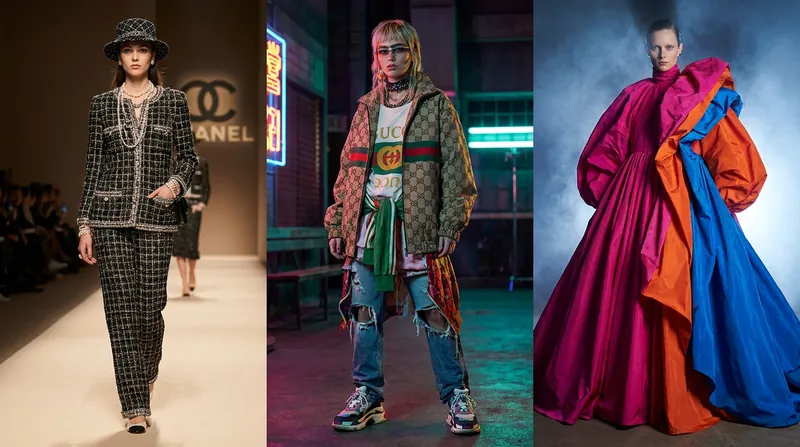
Unprecedented Creative Director Shuffle Sees Top Designers Reshape Gucci, Chanel, and Balenciaga
3 sources
Experiential Luxury
Global Luxury Goods Market Contracts for First Time in 15 Years as Consumers Pivot to Experiences
7 sources
Comments
Every angle. Every day.
Get Lifestyle stories with full source coverage and perspective breakdowns, free every day.