
The 3:1 Ratio: How Accent Lighting Must Exceed Ambient Light to Create Visual Depth and Focal Points
Interior lighting design relies on a specific mathematical relationship between light sources to prevent a room from looking flat. By ensuring accent lighting is at least three times brighter than the ambient fill, designers create necessary contrast and direct the eye.

Share this story
In short
- Relying solely on ambient light creates a visually flat, institutional space by eliminating shadows and contrast.
- Accent lighting creates depth by drawing the eye to specific focal points, but it must be significantly brighter than the ambient fill.
- Industry standards dictate a minimum 3:1 ratio: accent light must deliver three times the illuminance of the ambient light.
The most common mistake in residential lighting is treating illumination as a single variable: a room is either dark, or a switch is flipped and it is bright. This binary approach relies entirely on ambient light, the foundational layer designed to provide general, uniform illumination across a space.
When ambient light operates alone, it washes out shadows and eliminates contrast, resulting in a room that feels visually flat and institutional, much like a waiting room or a warehouse. The eye has nowhere to rest because every surface reflects the same volume of photons.[1][3]
To create depth, designers introduce a second layer: accent lighting. While ambient light fills the volume of the room, accent light is directional, intended to highlight specific architectural features, artwork, or focal points.
But simply adding a spotlight is not enough; the relationship between the two layers must cross a specific mathematical threshold to register to the human eye. Industry standards dictate that for accent lighting to be effective, it must deliver at least three times the illuminance (measured in foot-candles or lux) to its target than the surrounding ambient light provides.[1][2]
This 3:1 ratio is the minimum threshold required to create noticeable contrast. If the ambient light in a living room measures 10 foot-candles, a spotlight aimed at a painting must deliver at least 30 foot-candles to make the artwork stand out from the wall. If the ratio falls below 3:1, the accent light blends into the ambient wash, wasting energy and failing to draw the eye. The contrast is what creates the perception of depth, pulling the highlighted object forward and pushing the surrounding wall back into shadow.[1][3]
For more dramatic effects, designers push the ratio higher. A 5:1 ratio creates a strong focal point, often used in retail displays or to highlight significant architectural details. In museums or galleries, where the goal is to isolate an object entirely from its surroundings, the ratio can climb to 10:1 or higher. However, in residential settings, pushing the ratio too high can create a theatrical, high-drama environment that feels uncomfortable for daily living. The 3:1 to 5:1 range provides the necessary contrast without overwhelming the space.[1][3]
Achieving this ratio requires careful selection of fixtures and bulbs. Ambient lighting is typically delivered through ceiling-mounted fixtures, chandeliers, or wall sconces that cast light broadly. Accent lighting relies on directional fixtures like track lights, recessed adjustable downlights, or picture lights. The beam angle of the accent fixture is critical; a narrow beam (15 to 25 degrees) concentrates the light output onto a smaller area, making it easier to achieve the 3:1 ratio without requiring a bulb with a massive lumen output.[2][3][4]
The third layer of lighting design, task lighting, operates on a similar principle but serves a functional rather than aesthetic purpose. Task lighting provides localized illumination for specific activities like reading, cooking, or applying makeup. Like accent lighting, task lighting must be brighter than the ambient fill to be effective, typically requiring a 3:1 ratio to prevent eye strain. A desk lamp or under-cabinet kitchen lights are classic examples, delivering concentrated brightness exactly where it is needed without requiring the entire room to be flooded with light.[1][4]
The interplay of these three layers—ambient, accent, and task—is what creates a successful lighting scheme. When all three are present and properly balanced, a room becomes flexible. By putting each layer on a separate dimmer switch, the occupant can alter the ratios at will. Lowering the ambient light while maintaining the accent light increases the contrast ratio, instantly shifting the mood of the room from functional and energetic to relaxed and intimate.[1][3]
The transition to LED technology has made achieving these ratios easier and more energy-efficient, but it has also introduced new complexities. Early LEDs struggled with color rendering and dimming capabilities, making it difficult to balance layers seamlessly. Today, high-quality LEDs offer precise control over both lumen output and beam angle, allowing homeowners to dial in the exact 3:1 ratio required for visual depth without the heat generation or energy consumption of traditional halogen or incandescent bulbs.[3][4]
Definitions
- Ambient Light
- The general, overall illumination in a space, intended to provide a uniform base level of brightness.
- Accent Light
- Directional lighting used to highlight specific objects, architectural features, or artwork, creating contrast and visual interest.
- Task Light
- Focused, localized lighting designed to illuminate a specific area for activities like reading, cooking, or working.
- Foot-Candle
- A unit of illuminance representing the amount of light that falls on a one-square-foot surface one foot away from a single candle.
- Beam Angle
- The angle at which light is distributed from a directional fixture; a narrower angle concentrates the light into a brighter, smaller spot.
Questions & answers
What is ambient lighting?
Ambient lighting is the foundational layer of light in a room, designed to provide general, uniform illumination so you can navigate the space safely.
Why does a room look flat with only ambient light?
Ambient light alone washes out shadows and eliminates contrast. Without contrast, the eye has no focal point, making the space feel institutional and lacking in depth.
What is the 3:1 lighting ratio?
It is the industry standard rule that an accent light must be at least three times brighter than the surrounding ambient light to create a noticeable focal point.
What happens if the ratio is higher than 3:1?
Higher ratios, like 5:1 or 10:1, create more dramatic, theatrical contrast, often used in retail displays or museums to isolate an object entirely from its background.
Analysis by camp
Lighting Designers
Argue that lighting is the most critical element of interior design, relying on strict mathematical ratios of contrast to create mood and direct attention.
For professional lighting designers, illumination is a mathematical exercise before it is an aesthetic one. They argue that homeowners often waste money on expensive fixtures that fail to improve a room because they ignore the ratios. If an ambient chandelier is too bright, it washes out the track lighting, rendering the accent layer invisible. Designers advocate for a 'darkness first' approach: establishing a low baseline of ambient fill, and then strategically punching holes in that darkness with high-contrast accent and task lights to guide the occupant's eye and establish the room's hierarchy.
Architectural Planners
Focus on the integration of lighting layers into the physical structure of a space, prioritizing the balance of ambient, task, and accent fixtures.
Architectural planners view the three layers of light as structural components that must be built into the bones of a room. They emphasize that achieving a 3:1 ratio requires planning before the drywall goes up, ensuring that recessed housings for accent lights are positioned at the correct distance from the wall to hit the target at the proper angle. For planners, the failure of a lighting scheme is usually a failure of infrastructure—relying too heavily on a single central junction box rather than distributing the electrical load to support dedicated ambient, task, and accent circuits.
- Lighting Designers
- Argue that lighting is the most critical element of interior design, relying on strict mathematical ratios of contrast to create mood and direct attention.
- Architectural Planners
- Focus on the integration of lighting layers into the physical structure of a space, prioritizing the balance of ambient, task, and accent fixtures.
Perspectives this story doesn't cover
- Energy Regulators
- Residential Homeowners
Sources
Source coverage
5 outlets
2 viewpoints surfaced





- [1]1000Bulbs BlogLighting Designers
The Three Layers of Lighting Design Explained
Read on 1000Bulbs Blog → - [2]Aldo BernardiArchitectural Planners
Accent and ambient light: the differences
Read on Aldo Bernardi → - [3]Studio MatrxLighting Designers
The four jobs light does in a room — ambient fill, task/functional brightness, accent contrast and mood glow — what each is for, the fixtures it wants, how bright it should be relative to the others, and the mistake people make with each.
Read on Studio Matrx → - [4]BDC MagazineArchitectural Planners
Three Layers Of Lighting Design
Read on BDC Magazine → - [5]Factlen Editorial Team
Synthesis by Factlen editorial team
Read on Factlen Editorial Team →
More in Lifestyle
See all →Lighting Tech
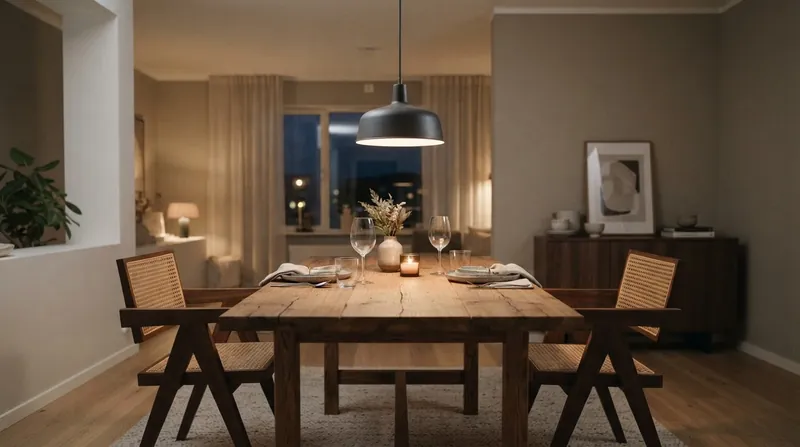
The Mathematical Blind Spot in LED Lighting: Why High-CRI Bulbs Still Dull Wood Finishes and Skin Tones
3 sources
Wayfair Strategy
Wayfair Launches 'Wayfair Delivers' Platform, Centering Brand on Logistics and 'Wayfair Verified' Product Vetting
3 sources
Spatial Planning
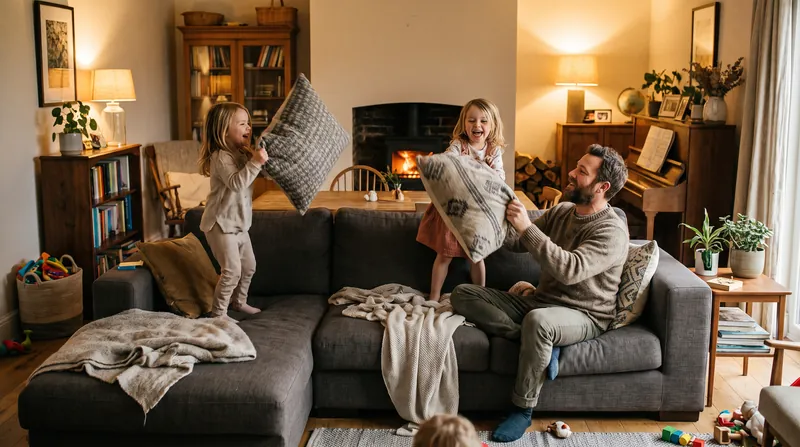
The 36-Inch Minimum Clearance: How Anthropometric Standards Dictate Traffic Flow and Seating Space in Residential Design
6 sources
Architectural Layouts
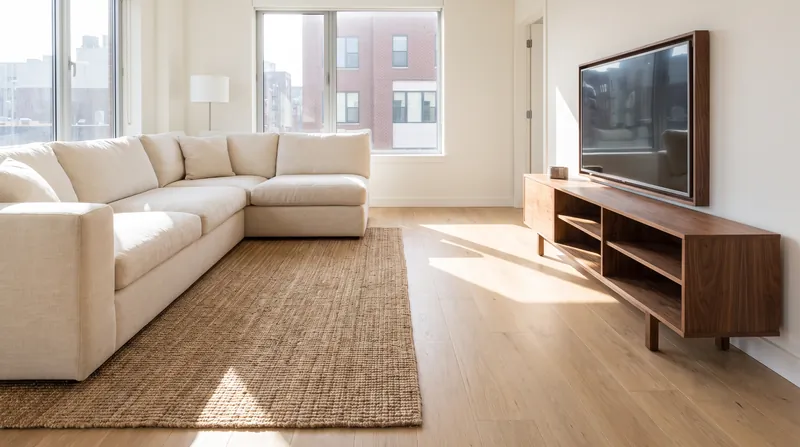
Why the 'Broken Plan' is Replacing the Open Concept Home
4 sources
Comments
Every angle. Every day.
Get Lifestyle stories with full source coverage and perspective breakdowns, free every day.