
Suspending Dining Pendants 75 to 90 Centimetres Above the Table Clears Seated Sightlines While Shielding Direct Bulb Glare
Interior design standards dictate hanging dining room light fixtures 75 to 90 centimetres above the tabletop to balance illumination and visual comfort. This specific vertical window keeps the fixture low enough to cast intimate, focused light on the dining surface while remaining high enough to prevent the shade from blocking eye contact across the table.

In short
- Hanging a pendant 75 to 90 centimetres above a table leaves a clear 30-centimetre gap above seated eye level, allowing unobstructed conversation.
- Keeping the fixture below 90 centimetres ensures the shade intercepts horizontal light rays, protecting diners from direct bulb glare.
- In rooms with ceilings taller than 2.4 metres, fixtures are raised 7.5 centimetres for every extra 30 centimetres of ceiling height, requiring deeper shades to maintain glare protection.
The standard rule for hanging a dining room pendant or chandelier is to suspend the bottom of the fixture 75 to 90 centimetres (30 to 36 inches) above the surface of the table. This measurement applies regardless of the ceiling height, because the relationship that matters is between the light source, the table, and the people sitting around it. Hanging a fixture within this specific vertical window solves two competing physical problems simultaneously.
First, it clears the seated sightlines. When adults sit at a standard 76-centimetre-high dining table, their eye level typically rests between 38 and 45 centimetres above the tabletop. A fixture hung at 75 centimetres leaves a 30-centimetre gap of empty air above the tallest diner's eye line, ensuring that guests can look across the table and see each other's faces without a metal shade or glass globe obstructing the view.[2]
The Geometry of Glare
Second, it shields the diners from direct bulb glare. The primary function of a dining pendant is to cast a pool of focused, intimate light down onto the food and the immediate place settings, rather than broadcasting ambient light across the entire room. If a fixture is hung too high—above 90 centimetres—the bottom edge of the shade no longer intercepts the horizontal light rays emitting from the bulb.[1][2]
When the shade sits too high, a seated diner looking across the table will have the naked filament or LED diode shining directly into their eyes. The Illuminating Engineering Society notes that direct glare in a dining setting causes pupillary constriction, which makes the surrounding room appear artificially dark and creates visual fatigue over the course of a meal.[1]
By keeping the fixture below 90 centimetres, the opaque or semi-opaque sides of the pendant act as a physical blinder. The light is forced downward onto the horizontal plane of the table, where it reflects softly upward to illuminate the diners' faces with indirect, flattering light, rather than striking their retinas directly.[1][2]
Adjusting for Ceiling Height
The 75-to-90-centimetre rule assumes a standard ceiling height of 2.4 metres (8 feet). When dealing with taller ceilings, the geometry of the room changes, and the fixture must be adjusted to maintain visual proportion. The standard design modification is to add 7.5 centimetres (3 inches) of height to the fixture for every additional 30 centimetres (1 foot) of ceiling height above 2.4 metres.
For example, in a room with a 3-metre (10-foot) ceiling, the bottom of the pendant should hang 90 to 105 centimetres above the table. This upward adjustment prevents the fixture from looking disconnected from the ceiling architecture, like a weight dangling on an overly long string. However, raising the fixture also raises the bulb, which reintroduces the risk of glare.[2]
To compensate for the increased height in tall rooms, lighting designers specify fixtures with deeper shades or use frosted diffusers across the bottom opening. A deeper shade physically recesses the bulb higher inside the housing, ensuring that even when the pendant is hung 105 centimetres above the table, the cutoff angle remains steep enough to protect the seated diners' eyes from direct exposure.[1][2]
Proportion and Table Width
The width of the fixture also plays a critical role in the physics of dining room lighting. A pendant that is too wide will cast shadows on the edges of the table or, worse, physically crowd the diners as they stand up or lean forward. The established guideline is that the diameter of the light fixture should be between one-half and two-thirds the width of the table it illuminates.
More importantly, the fixture must leave at least 15 centimetres (6 inches) of clearance on all sides between its outer edge and the edge of the table. If a table is 100 centimetres wide, the fixture should be no wider than 70 centimetres. This inset ensures that when a person leans forward to reach for a glass or stands up from their chair, they do not hit their head on the edge of the pendant.[2]
When a table is exceptionally long, a single central fixture, even if correctly sized for the width, will fail to illuminate the ends of the table, leaving the guests seated there in shadow. In these cases, the solution is not to hang the single fixture higher to spread the light further, as that ruins the glare cutoff angle. Instead, the solution is to use multiple fixtures.[1][2]
When hanging two or more pendants over a long rectangular table, the same 75-to-90-centimetre height rule applies. The fixtures should be spaced evenly, with the distance between each pendant roughly equal to the diameter of one pendant. This configuration creates a continuous, overlapping pool of downward light that covers the entire dining surface without raising the light source into the diners' eyes.[2]
Key terms
- Cutoff Angle
- The specific angle at which the opaque side of a light fixture's shade physically blocks the direct line of sight to the light bulb.
- Direct Glare
- Visual discomfort or impairment caused by a high-intensity light source shining directly into the eye, rather than reflecting off a surface.
- Ambient Light
- The general, overall level of illumination in a room, as opposed to focused task lighting directed at a specific area.
Frequently asked
Should the height be measured from the bottom of the shade or the bulb?
The measurement is always taken from the absolute lowest point of the fixture, which is typically the bottom rim of the shade or any decorative elements hanging below it. Measuring from the bulb would result in the physical shade hanging too low and obstructing the view.
Does the shape of the table change the hanging height?
No, the 75-to-90-centimetre vertical rule applies equally to round, square, and rectangular tables. The shape of the table dictates the shape and width of the fixture, but not its distance from the tabletop.
What if the pendant has an exposed bulb design?
Fixtures with exposed bulbs, such as bare Edison bulbs or clear glass globes, lack a physical shade to provide a cutoff angle. To prevent severe glare, these fixtures must be fitted with low-lumen, frosted, or dimmable bulbs, as their height alone cannot shield the eye.
Viewpoints in depth
Architectural Lighting Designers
Prioritize the precise control of lumens, glare cutoff angles, and task illumination over purely decorative considerations.
For lighting engineers, a dining pendant is primarily a tool for task illumination. The goal is to deliver a specific number of foot-candles to the horizontal surface of the table to make food look appealing and reading menus or playing cards possible. They view the 75-to-90-centimetre rule strictly through the lens of geometry: it is the precise mathematical window where the inverse-square law of light falloff provides adequate surface brightness, while the physical housing of the fixture provides a steep enough cutoff angle to prevent retinal glare. If a fixture must be raised for architectural reasons, engineers will mandate internal modifications, such as recessed diodes or louvered baffles, to artificially recreate that protective cutoff angle.
Interior Decorators
Focus on the visual weight, scale, and aesthetic proportion of the fixture relative to the room's architecture and furniture.
Designers approach the hanging height from a perspective of spatial composition. A dining pendant acts as a visual anchor that defines the dining zone within an open-concept space. Hanging it too high severs its visual connection to the table, making it read as a ceiling fixture rather than a dining fixture. Decorators use the 75-to-90-centimetre rule to create a sense of intimacy and enclosure, effectively lowering the perceived ceiling height over the table to make the space feel cozy. They are more likely to adjust the height slightly within that window based on the visual weight of the fixture—hanging a delicate, airy glass chandelier slightly lower, while raising a heavy, opaque metal dome to prevent it from feeling oppressive.
- Architectural Lighting Designers
- Prioritize the precise control of lumens, glare cutoff angles, and task illumination over purely decorative considerations.
- Interior Decorators
- Focus on the visual weight, scale, and aesthetic proportion of the fixture relative to the room's architecture and furniture.
Perspectives this story doesn't cover
- Ergonomic Researchers
- Optometrists
Sources
Source coverage
2 outlets
2 viewpoints surfaced


- [1]Illuminating Engineering SocietyArchitectural Lighting Designers
Residential Lighting Design Guide: Dining Spaces
Read on Illuminating Engineering Society → - [2]Factlen Editorial Team
Synthesis by Factlen editorial team
Read on Factlen Editorial Team →
More in Lifestyle
See all →Kitchen Ergonomics
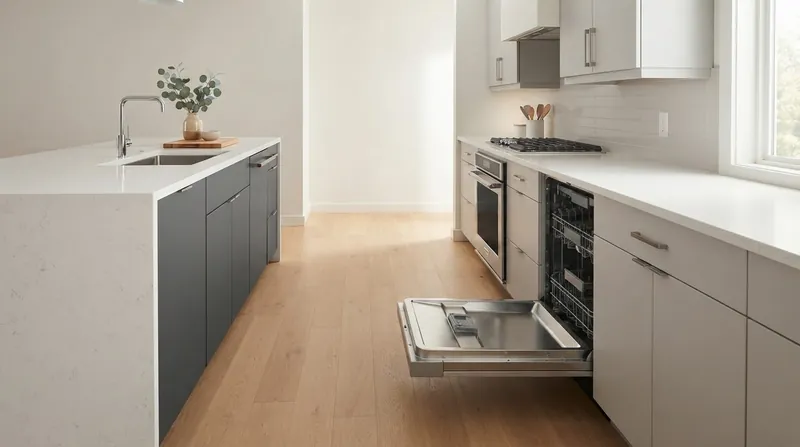
Kitchen Work Aisles Require 105 Centimeters of Clearance to Prevent Appliance Doors Trapping Cooks
3 sources
Acoustic Design
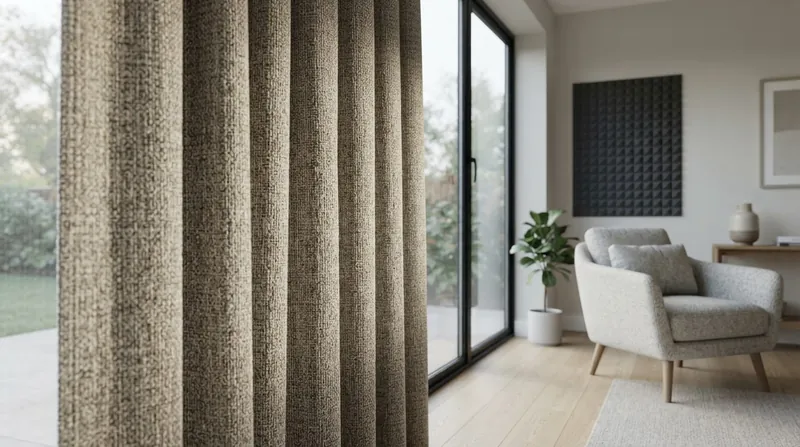
Why Curtains and Soft Furnishings Can Only Absorb High-Frequency Sound Above 1,000 Hertz
5 sources
Wayfair Strategy
Wayfair Launches 'Wayfair Delivers' Platform, Centering Brand on Logistics and 'Wayfair Verified' Product Vetting
3 sources

Spatial Planning
The 36-Inch Minimum Clearance: How Anthropometric Standards Dictate Traffic Flow and Seating Space in Residential Design
6 sources
Comments
Every angle. Every day.
Get Lifestyle stories with full source coverage and perspective breakdowns, free every day.