
The Affordability Trade-Off: How the AI Memory Crunch Is Collapsing New Smartphone Sales and Driving the Refurbished Boom
Surging memory chip costs driven by the artificial intelligence boom have pushed new smartphone prices out of reach for millions, triggering a historic drop in shipments. In response, consumers are fueling an unprecedented surge in the refurbished device market.
By Nabil Faris

- Premium Manufacturers & AI Optimists
- Viewing the hardware shift as a necessary evolution for the next computing era.
- Circular Economy Advocates
- Celebrating the shift toward refurbished devices as a victory for sustainability.
- Budget Brands & Emerging Markets
- Warning that soaring component costs threaten global digital inclusion.
Perspectives this story doesn't cover
- App developers optimizing for lower RAM
- Consumers in developing nations priced out of new devices
The global smartphone industry in 2026 is caught in a profound and unexpected paradox. The very technology meant to drive the next massive consumer upgrade cycle—artificial intelligence—is simultaneously making new devices too expensive for millions of everyday buyers to afford. As generative AI features transition from premium novelties to standard operating system requirements, the underlying hardware needed to run them has triggered a severe supply chain bottleneck. This collision of soaring technological ambition and constrained physical resources is fundamentally reshaping how the world buys, uses, and recycles mobile devices.[1][2]
For the past decade, the evolution of the smartphone was defined by predictable, incremental improvements: a slightly better camera sensor, a marginally faster central processor, or a brighter display. But the deep integration of generative AI has fundamentally altered the hardware architecture required to run a modern mobile device. Today's operating systems are no longer just passive interfaces; they are active, predictive agents that require immense computational power to function as intended.[6][7]
Instead of relying purely on distant cloud servers to process complex requests, the latest mobile operating systems demand that intricate logic models run natively on the device itself. This architectural shift toward "on-device AI" is driven by the need to protect user privacy and eliminate network latency for features like real-time language translation, generative photo editing, and autonomous digital assistants. When an AI agent needs to read your screen and execute a multi-step task instantly, sending that data to the cloud and back is simply too slow and insecure.[6][7]
However, running advanced artificial intelligence natively requires an immense amount of temporary memory. While 8GB of RAM was widely considered the standard for a flagship device just a few years ago, modern operating systems like Android 17 now require a minimum of 12GB to 16GB of RAM just to process on-device AI tasks smoothly. Without this massive memory allocation, the device's neural processing unit (NPU) becomes bottlenecked, leading to severe stuttering, rapid battery drain, and a frustrating user experience.[7]
This sudden, massive increase in mobile memory requirements has collided violently with a broader, more lucrative supply chain reality. The global semiconductor industry is currently undergoing a massive pivot to support the artificial intelligence boom, and consumer smartphones are no longer the priority. The factories that produce the world's memory chips are operating at maximum capacity, but their output is being directed elsewhere.[1][3]
Leading memory manufacturers—including SK Hynix, Samsung, and Micron—have aggressively shifted their production lines away from standard mobile DRAM and NAND flash. Instead, they are dedicating up to 70% of their manufacturing capacity to the highly profitable, high-bandwidth memory (HBM) required by enterprise AI data centers. The insatiable demand from tech giants building massive server farms has effectively crowded consumer electronics out of the supply chain.[1]
The result is a severe "memory crunch" in the consumer smartphone sector. With data centers consuming the vast majority of the world's memory supply, the cost of the remaining mobile DRAM has skyrocketed. Smartphone manufacturers are now forced to compete fiercely for a shrinking pool of essential components, driving raw material costs to unprecedented highs.[2][3]
Throughout the first half of 2026, mobile memory prices increased by more than 200%, with some industry analysts projecting the spike could reach 300% by the end of the year. For smartphone manufacturers, this exponential price increase has completely upended the traditional bill of materials (BOM)—the baseline cost required to assemble a single device before marketing, shipping, or profit margins are even considered.[3]
Supply chain analyses reveal that memory components now account for roughly 60% of the total manufacturing cost for smartphones priced below $400. For entry-level devices priced under $100, that figure rises to an unsustainable 64%. When a single component category consumes nearly two-thirds of a product's entire budget, manufacturers are left with an impossible choice: sell the device at a loss, drastically downgrade other features, or raise the retail price.[1]
Supply chain analyses reveal that memory components now account for roughly 60% of the total manufacturing cost for smartphones priced below $400.
Unable to absorb these soaring component costs, manufacturers have been forced to pass the financial burden directly onto consumers. Entry-level and mid-range smartphones have seen retail price increases exceeding 50% compared to the previous year. Devices that were once positioned as affordable entry points to digital connectivity are now priced out of reach for their target demographics.[2]
The market reaction to these price hikes has been swift and brutal. Global smartphone shipments plummeted by 11% year-over-year in the second quarter of 2026, marking the lowest shipment volume the industry has recorded since 2013. Millions of consumers, confronted with sticker shock at the carrier store, are simply walking away from new purchases entirely.[1][3]
The pain of this market contraction is not distributed evenly. Premium manufacturers like Apple and Samsung, whose high-margin flagship devices can more easily absorb component price hikes without alienating their affluent customer base, have managed to maintain or even slightly grow their market share. For buyers already spending over $1,000 on a phone, a slight price increase is often viewed as an acceptable premium for cutting-edge AI features.[1]
Conversely, budget-reliant brands that dominate emerging markets—such as Xiaomi, Oppo, and Vivo—have suffered steep double-digit declines in global shipments. Industry analysts warn that the sub-$100 smartphone segment, which historically accounted for roughly 170 million units sold annually and served as a vital lifeline for digital inclusion in developing nations, is facing a "structural reset" and could disappear entirely.
Priced out of the new device market, consumers are fundamentally changing their purchasing behavior. Many are simply holding onto their existing phones longer, extending the average upgrade cycle well beyond three or even four years. As long as their current device can still send messages and browse the web, buyers are increasingly willing to forgo the latest AI novelties to avoid the exorbitant cost of upgrading.[2]
Those who absolutely need a replacement device—due to hardware failure, battery degradation, or carrier network changes—are increasingly turning to the secondary market. The organized refurbished smartphone sector is experiencing an unprecedented boom, projected to grow by over 15% in 2026 and reach a global valuation of nearly $70 billion.[4]
Buyers are discovering that a refurbished flagship device from two years ago offers significantly better value than a heavily compromised, newly manufactured budget phone. These older premium devices are often equipped with sufficient RAM and processing power to handle daily tasks flawlessly, providing a high-end experience at a fraction of the cost of a 2026 AI smartphone.[2][4]
This massive shift in consumer behavior is supercharging the circular economy. Major wireless carriers, electronics retailers, and specialized refurbishers are aggressively expanding their trade-in programs to secure a steady supply of pre-owned devices. These phones are then professionally restored, rigorously tested, fitted with new batteries, and resold with warranties that rival those of brand-new hardware.[4]
Environmental advocates view this secondary market boom as a massive, unexpected victory. Extending the functional lifespan of millions of smartphones drastically reduces electronic waste and mitigates the massive carbon emissions associated with mining rare earth metals and manufacturing new hardware. The memory crunch, while painful for manufacturers, is forcing the industry toward a more sustainable, less disposable model of consumption.[2]
Yet, the affordability crisis also threatens to widen the global digital divide. As artificial intelligence becomes deeply integrated into essential daily services—from advanced accessibility tools for the disabled to real-time communication aids for global commerce—those who cannot afford the hardware tax will be left relying on outdated, less capable technology. The benefits of the AI revolution risk being gated behind a steep financial barrier.[6]
Ultimately, the smartphone industry of 2026 is bifurcating into two distinct realities. At the top end of the market, premium AI devices are becoming more powerful, autonomous, and expensive than ever before. But for the rest of the world, the cost of that intelligence is proving to be a formidable barrier—one that only the rapidly maturing refurbished market can currently bridge.[1][4]
Key points
- Global smartphone shipments fell by 11% in Q2 2026, hitting a 13-year low.
- On-device AI requires 12GB to 16GB of RAM, drastically increasing hardware costs.
- Memory suppliers are prioritizing AI data centers, causing mobile RAM prices to surge.
- Entry-level smartphones have seen price increases exceeding 50%.
- The refurbished smartphone market is projected to reach nearly $70 billion in 2026 as consumers seek affordable alternatives.
Why this matters
The hardware demands of on-device AI are fundamentally reshaping consumer electronics. As new devices become prohibitively expensive, the booming refurbished market offers a sustainable, cost-effective alternative that extends device lifespans and reduces electronic waste.
Viewpoints in depth
Premium Manufacturers & AI Optimists
Viewing the hardware shift as a necessary evolution for the next computing era.
For premium device makers and AI developers, the increased hardware requirements are an unavoidable step toward a more capable future. They argue that moving AI processing from the cloud to the device is essential for protecting user privacy, reducing latency, and enabling autonomous digital assistants. From this perspective, the temporary supply chain pain is a worthwhile trade-off for unlocking the next major paradigm shift in mobile computing.
Budget Brands & Emerging Markets
Warning that soaring component costs threaten global digital inclusion.
Manufacturers focused on budget devices and emerging markets view the memory crunch as an existential threat to affordable connectivity. With memory components now consuming up to 60% of the bill of materials for lower-tier phones, these brands are forced to either slash profit margins or raise prices beyond what their core demographics can afford. They caution that the AI revolution risks creating a wider digital divide, where advanced features are reserved exclusively for those who can afford premium hardware.
Circular Economy Advocates
Celebrating the shift toward refurbished devices as a victory for sustainability.
Environmental groups and secondary market retailers see a silver lining in the new-device affordability crisis. As consumers are priced out of the primary market, the surging demand for refurbished smartphones is supercharging the circular economy. This shift extends the functional lifespan of millions of devices, significantly reducing electronic waste and the massive carbon footprint associated with manufacturing new hardware. For these advocates, the market correction is forcing a more sustainable approach to consumer electronics.
Sources
Source coverage
7 outlets
3 viewpoints surfaced







- [1]TechRepublicCircular Economy Advocates
AI's Memory Boom Is Reshaping the Smartphone Market
Read on TechRepublic → - [2]TechRadarCircular Economy Advocates
Smartphone shipments predicted to hit 13-year low in 2026 due to memory supply crisis
Read on TechRadar → - [3]Light ReadingBudget Brands & Emerging Markets
Global handset sales are crashing thanks to soaring memory prices
Read on Light Reading → - [4]Mordor IntelligenceCircular Economy Advocates
Used and Refurbished Smartphone Market Analysis (2026-2031)
Read on Mordor Intelligence → - [5]IDCPremium Manufacturers & AI Optimists
AI Smartphones Market Opportunity and Definition
Read on IDC → - [6]JournalartaPremium Manufacturers & AI Optimists
7 AI Smartphone Trends in 2026 You Should Know Before Buying
Read on Journalarta → - [7]The Tech DictionaryPremium Manufacturers & AI Optimists
What Exactly Are the New AI Smartphone Requirements?
Read on The Tech Dictionary →
Comments

More in Shopping & Reviews
See all →Silicon Supply
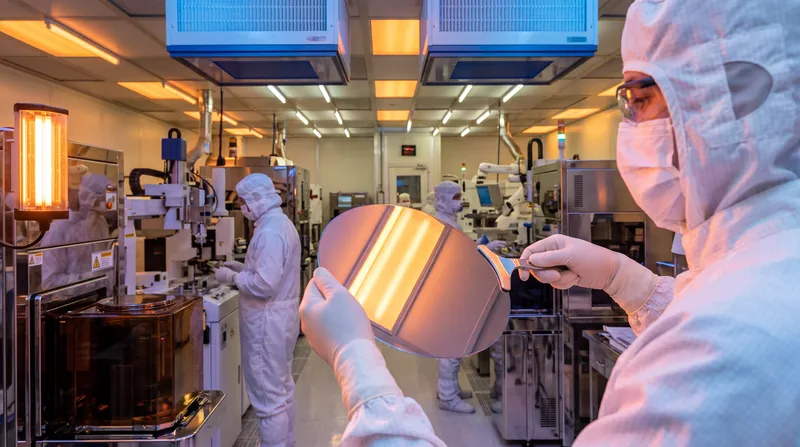
TSMC Finalizes 3-6% Wafer Price Hike for 2027 as AI Demand Strains Capacity
3 sources
Lens Quality
The MTF Chart's 10 lp/mm and 30 lp/mm Lines: How Lens Contrast and Resolution Dictate Perceived Sharpness
6 sources

Camera Tech
Nikon Unveils Z5IIC, a Viewfinder-Less Full-Frame Mirrorless Camera for Beginners
2 sources

Vehicle Testing
The FTP-75, US06, and SC03 Test Cycles: How EPA Ratings Dictate a Car's City, Highway, and Combined Fuel Economy
6 sources

Every angle. Every day.
Get Shopping & Reviews stories with full source coverage and perspective breakdowns delivered to your inbox.