
The 2026 Guide to Electric Motorcycles: Range, Charging, and the Tipping Point for EV Bikes
With legacy manufacturers entering the market and fast-charging networks standardizing, 2026 marks a turning point for electric motorcycles. Here is what riders need to know about real-world range, battery weight, and the new era of two-wheeled EVs.
By Factlen Editorial Team
- Urban Commuters
- City riders who view electric motorcycles as the ultimate practical transport.
- Touring Enthusiasts
- Long-distance riders who remain cautious about battery weight and highway range.
- Off-Road Competitors
- Motocross and trail riders embracing the performance advantages of electric powertrains.
- Tech-Focused Early Adopters
- Riders who prioritize smart connectivity, over-the-air updates, and advanced radar safety systems.
What's not represented
- · Independent motorcycle mechanics facing a shift away from combustion engines
- · Gas station owners losing revenue from touring riders
Why this matters
For decades, electric motorcycles were relegated to urban commuting or niche enthusiasts. The 2026 model year brings standardized fast-charging and legacy brand entries, making electric bikes a viable, low-maintenance option for mainstream riders and long-distance tourers.
Key points
- Legacy manufacturers like Honda have officially entered the full-size electric motorcycle market in 2026.
- Standardized charging ports (NACS and CCS2) have largely eliminated the need to hunt for proprietary chargers.
- Aerodynamic drag significantly reduces electric motorcycle range at highway speeds compared to city riding.
- Electric dirt bikes now offer the highest power-to-weight ratios in the off-road segment.
The era of the electric motorcycle being a quirky, range-anxious novelty is over. As the 2026 model year rolls out, the industry is witnessing a fundamental shift in how electric two-wheelers are designed, ridden, and charged.[2][4]
The most significant change is the full-throated arrival of legacy manufacturers. Honda’s introduction of the WN7 marks a turning point, bringing traditional OEM build quality, practical ergonomics, and vast dealer networks to the full-size electric standard market.[2]
Yet, to understand the 2026 electric motorcycle landscape, buyers must first understand the core divide in electric riding: urban commuting versus highway touring. The physics of motorcycles make this distinction much sharper than in electric cars.[6]
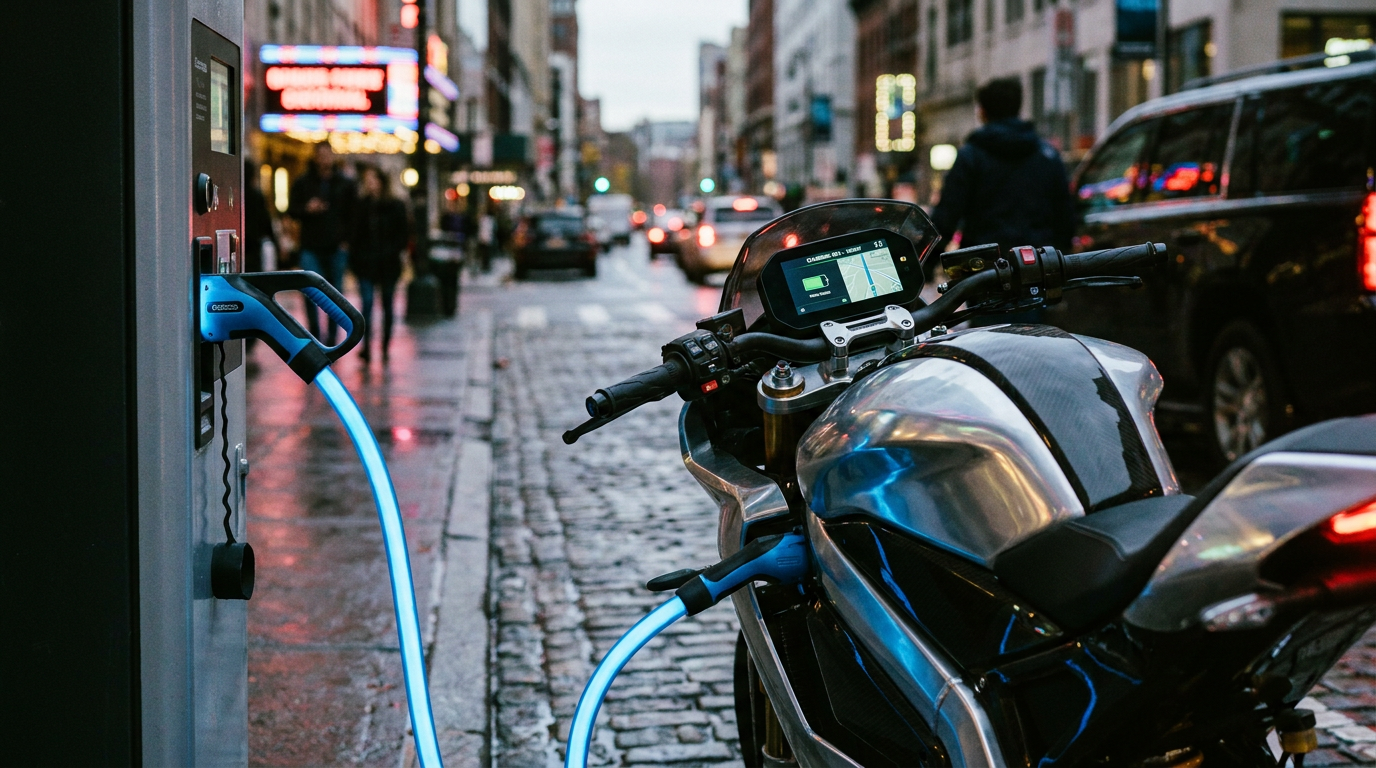
In stop-and-go city traffic, electric motorcycles excel. Regenerative braking constantly feeds power back into the battery every time the rider slows down, extending the vehicle's range significantly while saving wear on the brake pads.[4]

Models built for this environment, such as the LiveWire S2 Del Mar and the Zero FXE, thrive in the urban grid. They offer around 105 to 110 miles of real-world city range, combining lightweight agility with the instant torque that makes darting through traffic effortless.[1][3]
The highway presents an entirely different challenge. At 75 miles per hour, a motorcycle loses the aerodynamic battle. Without regenerative braking to offset the constant, massive energy draw required to push through the wind, battery range drops precipitously.[6]
The Energica Experia highlights this dichotomy perfectly. Built as a dedicated touring machine, it boasts a massive 261-mile city range. However, that figure drops to roughly 106 miles at sustained motorway speeds, forcing riders to plan their long-distance routes carefully.[1]
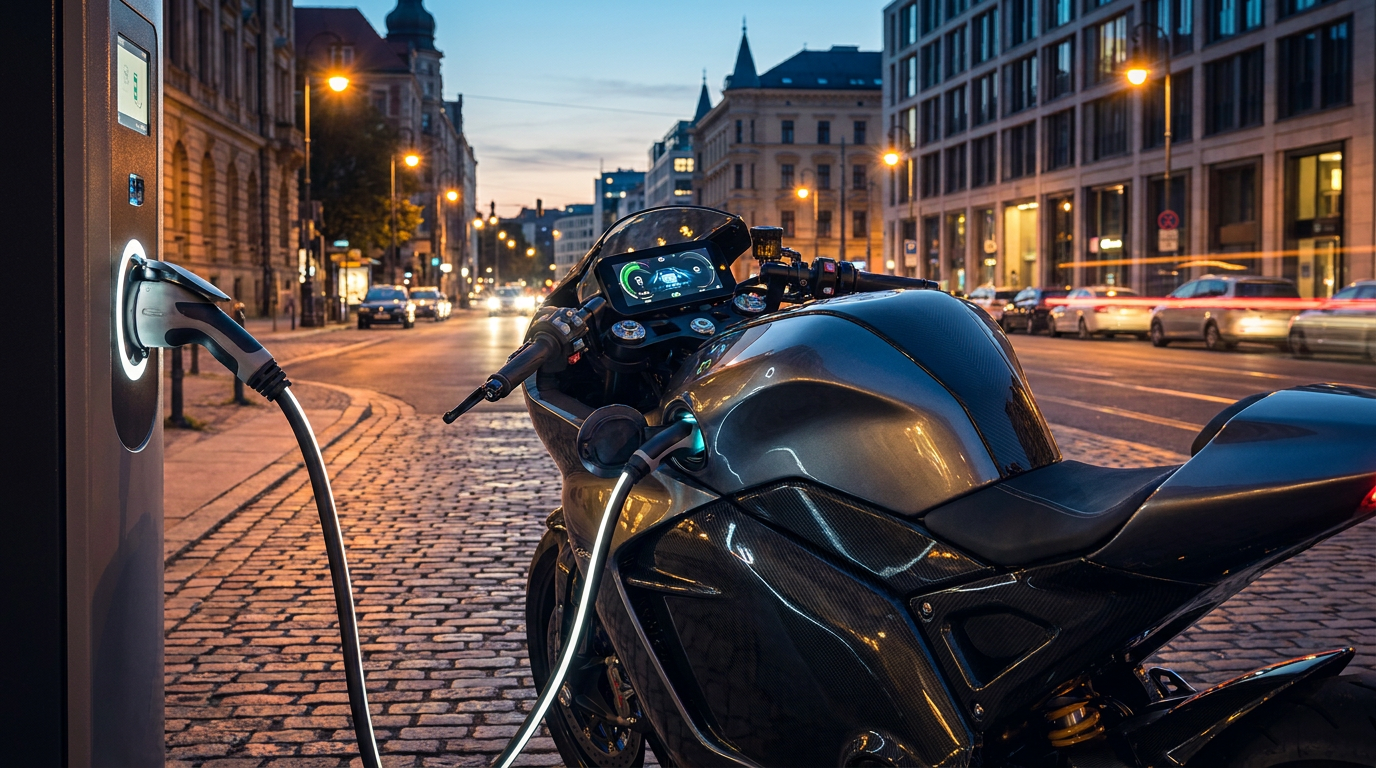
To make touring viable despite these aerodynamic penalties, the industry is standardizing its charging infrastructure. The near-universal adoption of the North American Charging Standard (NACS) and CCS Combo 2 in Europe means riders no longer have to hunt for obscure, proprietary charging stations.[3]
To make touring viable despite these aerodynamic penalties, the industry is standardizing its charging infrastructure.
Fast-charging architecture is the real game-changer for long-distance riders in 2026. Modern 800-volt systems can bring a depleted battery to an 80 percent charge in just 20 to 30 minutes, aligning a charging stop with a standard rest break.[3]

However, high-density batteries capable of highway travel come with a physical cost. A fully equipped electric touring bike requires a massive battery pack, pushing the total weight of the machine well over 600 pounds.[3]
This mass provides excellent crosswind stability on the interstate, but it makes low-speed maneuvers in parking lots physically demanding. Dropping one of these heavy machines at a gas station often requires two people to safely lift it back upright.[3]
While street bikes battle aerodynamic drag and weight, electric dirt bikes are actively rewriting the rules of off-road riding. In the dirt, range anxiety is replaced by a focus on pure, uninterrupted power delivery.[2][5]
The Stark VARG has legitimized electric off-road performance, offering adjustable power mapping that can mimic anything from a 125cc trail bike to a fire-breathing race machine. It currently stands as the most powerful production dirt bike available in 2026, gas or electric.[1][2]

Beyond the powertrain, the 2026 electric motorcycle is essentially a rolling computer. Internet of Things (IoT) integration allows for over-the-air firmware updates, GPS routing, and remote diagnostics that track vehicle health in real time.[4]
Advanced Rider Assistance Systems (ARAS) are also migrating from luxury cars to two wheels. Hidden radar modules now enable adaptive cruise control and blind-spot detection, significantly reducing the mental fatigue of highway cruising.[3][4]
This convenience, however, introduces a new financial vulnerability. A minor parking lot tip-over that once required a cheap plastic fairing replacement can now destroy a sensitive radar module, potentially totaling the motorcycle or drastically spiking insurance premiums.[3]

For riders who want the benefits of electric torque but aren't ready to map their cross-country trips around charging stations, hybrid platforms are emerging as a transitional technology. These bikes combine a standard gas engine with an electric motor to deliver a total range of more than 400 miles.[3]
Ultimately, the electric category has come of age. While battery-powered bikes still cannot match the sheer cross-continental convenience of a gas-powered adventure bike, they no longer need to in order to be successful.[2]
How we got here
2010s
Early electric motorcycles enter the market, primarily as expensive, low-range novelties from startup companies.
2019
Harley-Davidson launches the LiveWire, marking the first major entry by a legacy manufacturer into the full-size electric market.
2024
The Stark VARG disrupts the off-road segment, proving electric dirt bikes can match or exceed the performance of 450cc gas motocross bikes.
2025
Major manufacturers commit to adopting standardized charging ports (NACS in North America, CCS2 in Europe), easing range anxiety.
2026
Legacy brands release full-size electric standards, while 800-volt fast-charging architectures become widely available on touring models.
Viewpoints in depth
Urban Commuters
City riders who view electric motorcycles as the ultimate practical transport.
For riders navigating dense city traffic, the electric motorcycle is a revelation. Without a heavy clutch to constantly feather or engine heat baking their legs at stoplights, the physical toll of commuting vanishes. These riders prioritize models like the Zero FXE or LiveWire S2 Del Mar, which offer around 100 miles of range—more than enough for days of urban riding. The ability to plug into a standard wall outlet overnight and wake up to a 'full tank' makes the electric option cheaper and vastly more convenient than visiting a gas station.
Touring Enthusiasts
Long-distance riders who remain cautious about battery weight and highway range.
The traditional touring community measures a motorcycle by its ability to cross states without friction. For these riders, the 2026 electric landscape is promising but compromised. While bikes like the Energica Experia offer fast charging, the reality of highway riding—where aerodynamic drag destroys battery efficiency—means stopping every 100 miles. Furthermore, the massive battery packs required for touring push bike weights past 600 pounds, making low-speed maneuvering treacherous. Until solid-state batteries drastically reduce weight and increase energy density, many tourers prefer to stick with gas or emerging hybrid platforms.
Off-Road Competitors
Motocross and trail riders embracing the performance advantages of electric powertrains.
In the dirt, the electric debate is largely settled. Bikes like the Stark VARG have proven that electric motors offer a distinct competitive advantage. Without gears to shift or a powerband to manage, riders can focus entirely on traction and line choice. The instant, customizable torque allows a single bike to mimic the power delivery of a 125cc two-stroke or a 450cc four-stroke with a tap of a smartphone screen. Additionally, the silent operation of electric dirt bikes is reopening suburban trails and tracks that were previously shut down due to noise complaints.
What we don't know
- How quickly solid-state batteries will become commercially viable for motorcycles to reduce weight.
- Whether insurance premiums will permanently rise due to the cost of replacing integrated radar sensors.
- How well the secondary market will value used electric motorcycles with degraded battery packs.
Key terms
- NACS (North American Charging Standard)
- The standardized charging connector originally developed by Tesla, now widely adopted by 2026 electric motorcycles to allow access to universal fast-charging networks.
- Regenerative Braking
- A system that recovers energy normally lost during braking and feeds it back into the battery, significantly extending range in stop-and-go city traffic.
- 800-Volt Architecture
- An advanced electrical system that allows motorcycles to accept much higher charging speeds, reducing charging stops to 20 or 30 minutes.
- ARAS (Advanced Rider Assistance Systems)
- Sensor and radar-based safety technologies, such as adaptive cruise control and blind-spot detection, integrated into modern motorcycles.
- Inertial Measurement Unit (IMU)
- An electronic sensor that tracks a motorcycle's lean angle, acceleration, and braking to optimize traction control and ABS interventions.
Frequently asked
Do I need a special license to ride an electric motorcycle?
Yes, any full-size electric motorcycle capable of highway speeds requires a standard motorcycle endorsement (such as an M1 license in the US) to ride on public roads.
Can electric motorcycles go on the highway?
Most full-size models can. Bikes like the Zero SR/F and Energica Experia are fully highway-legal and can exceed 100 mph, though sustained high speeds drain the battery much faster than city riding.
How long does it take to charge an electric motorcycle?
Using a DC fast charger on a modern 800-volt system, a battery can reach 80% capacity in 20 to 30 minutes. Standard Level 2 charging takes a few hours, while a regular wall outlet can take overnight.
Are electric motorcycles automatic?
Yes, the vast majority of electric motorcycles have no clutch or gears. They use a direct drive system, meaning you simply twist the throttle to accelerate.
Sources
Source coverage
6 outlets
4 viewpoints surfaced





[1]MotorWattUrban Commuters
Best street electric motorcycles 2026
Read on MotorWatt →[2]BikeBoundOff-Road Competitors
2026: The Electric Category Comes of Age
Read on BikeBound →[3]AmeriFreightTouring Enthusiasts
Top 5 Exciting Motorcycle Trends to Watch for in 2026
Read on AmeriFreight →[4]Nagoya MotorTech-Focused Early Adopters
Major motorcycle trends expected in 2026
Read on Nagoya Motor →[5]Bike-EVUrban Commuters
Best electric motorcycles of 2026 by category
Read on Bike-EV →[6]Factlen Editorial TeamTech-Focused Early Adopters
Synthesis by Factlen editorial team
Read on Factlen Editorial Team →

Every angle. Every day.
Get shopping stories with full source coverage and perspective breakdowns delivered to your inbox.