
The 2026 E-Bike Buying Guide: How to Choose the Right Electric Bicycle
With battery technology improving and prices dropping, electric bikes have become a mainstream transportation and fitness option. This comprehensive guide breaks down the classes, motors, and metrics you need to know to find the perfect ride.
By Factlen Editorial Team
- Urban Commuters
- Riders focused on replacing car trips with efficient, sweat-free travel.
- Recreational Trail Riders
- Cyclists seeking outdoor exercise and off-road exploration.
- Budget-Conscious Buyers
- Consumers looking for accessible, entry-level electric mobility.
- Safety & Regulatory Advocates
- Organizations focused on battery safety and trail etiquette.
What's not represented
- · Traditional Cyclists
- · City Planners
Why this matters
Electric bicycles are transforming urban commuting, recreation, and cargo hauling by making cycling accessible to a wider range of ages and fitness levels. Understanding the technical specifications—from motor classes to battery certifications—ensures you invest in a safe, reliable bike that fits your lifestyle and local regulations.
Key points
- E-bikes are categorized into three classes based on top speed and throttle capabilities.
- Class 1 and 3 bikes are pedal-assist only, while Class 2 includes a throttle.
- Hub motors are affordable and simple, whereas mid-drive motors offer better hill-climbing and balance.
- Torque sensors provide a natural riding feel by multiplying the rider's actual physical effort.
- Battery capacity is measured in Watt-hours (Wh), which directly determines the bike's range.
- Purchasing an e-bike with UL 2849 battery certification is critical for fire safety.
The electric bicycle market has matured significantly by 2026, transitioning from a niche novelty to a mainstream transportation staple. With advancements in battery density, more refined motor integration, and a wider variety of frame styles, e-bikes are fundamentally changing how people navigate their communities. Whether the goal is to conquer steep hills without breaking a sweat, haul a week's worth of groceries, or simply enjoy a weekend trail ride, there is now a highly specialized machine designed for the task. However, the sheer volume of options—spanning different motor types, battery capacities, and legal classifications—can make the purchasing process daunting for first-time buyers.[1][2]
At its core, an e-bike is a traditional bicycle augmented with an electric motor and a lithium-ion battery. This assistance flattens topography and shrinks distances, making cycling accessible to older adults, individuals recovering from injuries, and professionals who want to commute without arriving at the office drenched in sweat. Industry experts note that the most crucial step in choosing an e-bike is identifying its primary "mission"—a daily commuter requires vastly different specifications than a weekend trail cruiser or a heavy-duty cargo hauler.[1][5]
The foundational decision for any prospective buyer is selecting the appropriate e-bike class. In the United States, the industry has largely standardized around a three-class system that dictates how the motor delivers power and its maximum assisted speed. This legal framework is vital because it determines where the bike can be legally ridden, with local municipalities and trail managers using these classes to regulate access to bike paths and mountain bike trails.[5][6]
Class 1 e-bikes are strictly pedal-assist, meaning the motor only engages when the rider is actively pedaling, and the assistance cuts off at 20 miles per hour. Because they most closely mimic the behavior of a traditional bicycle, Class 1 models enjoy the most universal access. They are generally permitted on multi-use paths, greenways, and many natural-surface mountain bike trails where higher-speed or throttle-powered vehicles are banned.[5][6]
Class 2 e-bikes share the 20 mph speed limit but introduce a throttle, allowing the bike to be propelled without any pedaling effort. This feature is particularly popular among commuters and cargo bike riders, as the throttle provides a helpful burst of power to get a heavy bike moving from a dead stop at a traffic light. However, because they can operate like low-speed mopeds, Class 2 bikes occasionally face restrictions on dedicated pedestrian and non-motorized trails.[5][6]
Class 3 e-bikes, often referred to as "speed pedelecs," are designed for efficiency and longer-distance commuting. Like Class 1, they are typically pedal-assist only, but the motor continues to provide power up to 28 mph. This higher top speed allows riders to safely keep pace with vehicular traffic on city streets and significantly reduces travel time on long commutes. Due to their speed, Class 3 bikes are frequently restricted from multi-use paths and are best suited for road use and dedicated bike lanes.[5][6]

Beyond the legal classification, the physical placement of the motor profoundly impacts the bike's handling and performance. The market is divided into two primary motor architectures: hub-drive and mid-drive. Hub motors are encased within the center of the rear (or sometimes front) wheel. They operate independently of the bike's gears, essentially pushing or pulling the rider along.[7][8]
Hub motors are generally more affordable to manufacture and require less maintenance, making them the standard choice for budget-friendly and entry-level e-bikes. Because they don't interact with the chain, they put less wear and tear on the drivetrain. However, they can feel somewhat disconnected from the rider's pedaling effort and are less efficient at climbing steep, sustained gradients, as they cannot leverage the mechanical advantage of the bike's gearing.[7][8]
Hub motors are generally more affordable to manufacture and require less maintenance, making them the standard choice for budget-friendly and entry-level e-bikes.
Mid-drive motors, conversely, are positioned at the bike's bottom bracket, directly between the pedals. This central, low placement improves the bike's center of gravity, resulting in superior balance and handling—a critical advantage for electric mountain bikes. More importantly, a mid-drive motor transfers its power through the bike's chain and gears. When the rider shifts into an easier gear for a hill, the motor also benefits from that gearing, making mid-drives exceptionally capable on steep terrain.[7][8]
The trade-off for a mid-drive system is cost and complexity. These motors are significantly more expensive and place increased stress on the chain and cassette, requiring more frequent drivetrain maintenance. For a casual rider sticking to flat, paved paths, a hub motor is often perfectly sufficient. But for riders tackling hilly terrain or seeking a premium, natural-feeling ride, a mid-drive is widely considered the superior technology.[7][8]

How the motor decides to deliver its power is governed by sensors, another critical differentiator between entry-level and premium models. Basic e-bikes rely on cadence sensors, which simply detect whether the pedals are turning. When the sensor registers movement, it tells the motor to deliver a predetermined amount of power. This can result in a somewhat jerky, "on/off" sensation, where the bike surges forward regardless of how hard the rider is actually pushing.[4][7]
Higher-end e-bikes utilize torque sensors, which measure the exact amount of physical force the rider is applying to the pedals. The motor then amplifies that effort proportionally. If the rider pedals lightly, the motor provides a gentle assist; if the rider stands up and mashes the pedals, the motor delivers maximum power. Torque sensors create a seamless, intuitive riding experience that feels like having bionic legs, rather than being pushed by an external engine.[4][7]
A motor is only as useful as the battery powering it. When evaluating battery capacity, buyers should look at Watt-hours (Wh) rather than just Volts or Amp-hours. Watt-hours represent the total energy capacity of the battery—the size of the "gas tank." A higher Wh rating directly translates to a longer range. While manufacturers often advertise maximum ranges of 50 to 80 miles, these estimates are typically achieved under ideal conditions: a lightweight rider, flat terrain, and the lowest assistance setting.[3][8]
In real-world conditions—using higher assistance levels, carrying cargo, or climbing hills—the actual range can be half of the advertised maximum. For riders with long commutes or those who prefer to rely heavily on the throttle, investing in a larger battery (typically 500Wh to 750Wh or more) or a dual-battery system is highly recommended to avoid "range anxiety."[1][3]

By 2026, battery safety has become a paramount concern. Following a rise in thermal events associated with cheap, uncertified lithium-ion batteries in previous years, safety standards have tightened significantly. Experts and advocacy groups strongly advise consumers to only purchase e-bikes whose electrical systems and batteries are certified to recognized safety standards, such as UL 2849 or EN 15194. This certification ensures the battery, motor, and charger have been rigorously tested against fire and electrical hazards.[5]
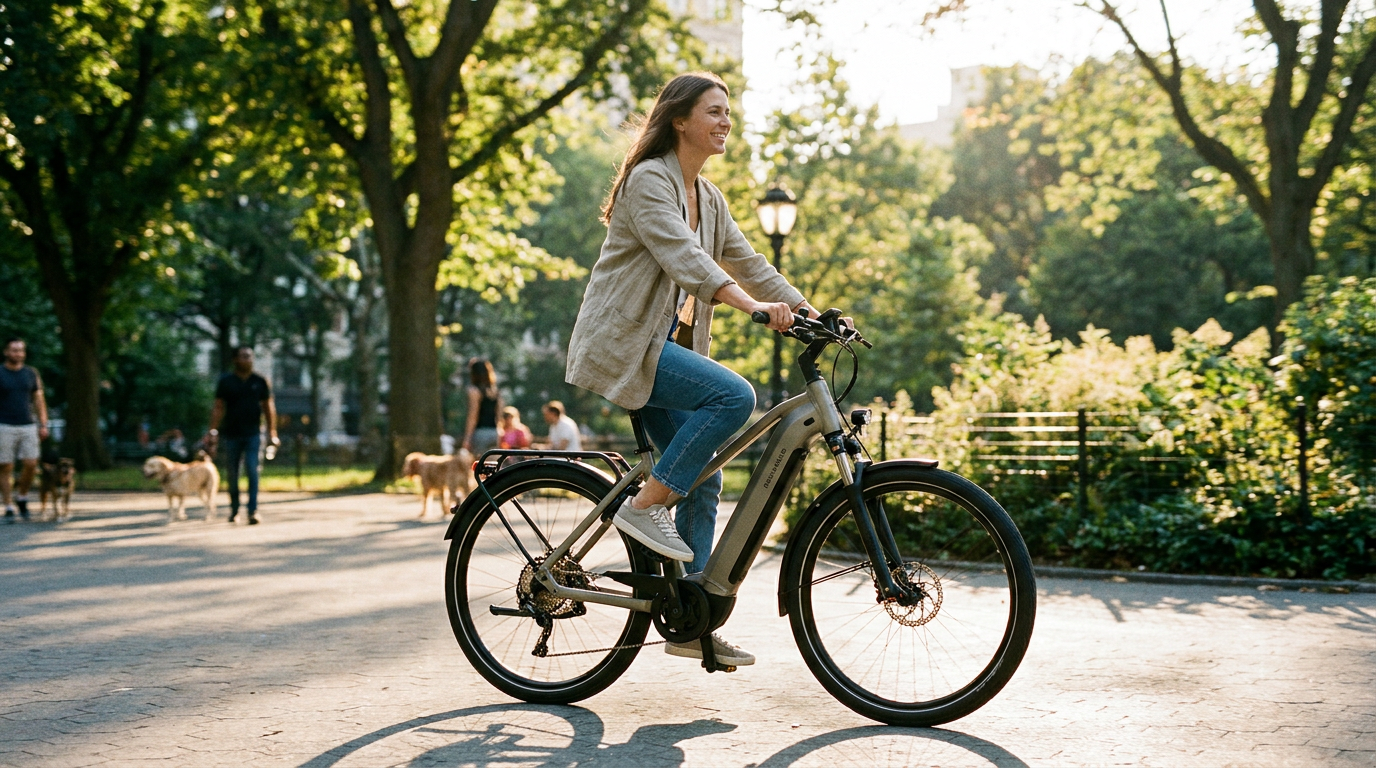
Once the technical specifications are settled, the final step is choosing a frame style that matches the rider's lifestyle. Commuter e-bikes prioritize efficiency and utility, coming equipped with integrated lights, fenders to block road spray, and rear racks for panniers. Step-through frames, which remove the high top tube, have become incredibly popular across all demographics for their ease of use, particularly when the bike is loaded with groceries.[1][2]
For families and small business owners, electric cargo bikes have emerged as viable car replacements. "Long-tail" cargo bikes feature an extended rear frame capable of carrying two children or heavy loads, while maintaining a footprint similar to a standard bicycle. The electric assist neutralizes the extra weight, making it possible to haul 100 pounds of cargo up a hill without undue strain.[1][2]

Ultimately, the best e-bike is the one that gets ridden consistently. While budget models under $1,000 have improved dramatically, experts caution that extremely cheap e-bikes often use proprietary parts that local bike shops cannot service. Investing in a mid-range model from a reputable brand with accessible customer support ensures the bike will remain a reliable, joy-inducing mode of transportation for years to come.[4][8]
How we got here
Early 2010s
E-bikes begin gaining significant traction in Europe, primarily as heavy, utilitarian commuter vehicles.
2015
The U.S. bicycle industry coalesces around the three-class system to standardize regulations and trail access.
2020–2021
The global pandemic triggers a massive boom in e-bike sales as consumers seek socially distanced recreation and commuting alternatives.
2023
Following a rise in battery fires from uncertified models, major cities and retailers begin mandating UL safety certifications for all e-bikes.
2026
E-bikes reach mainstream maturity, with highly specialized models available for cargo, mountain biking, and budget-friendly commuting.
Viewpoints in depth
Urban Commuters
Riders focused on replacing car trips with efficient, sweat-free travel.
For urban commuters, the e-bike is primarily a utility vehicle. This group heavily favors Class 3 speed pedelecs, as the 28 mph top speed allows them to safely take the lane and keep pace with city traffic, significantly reducing commute times. They prioritize features like integrated lighting, robust fenders, and high-capacity batteries that reduce the frequency of charging. Commuters also tend to prefer torque sensors for a natural ride feel, ensuring they can arrive at the office without needing a shower.
Recreational Trail Riders
Cyclists seeking outdoor exercise and off-road exploration.
Recreational riders and mountain bikers view e-bikes as a way to explore further and conquer steeper terrain without exhaustion. This camp almost exclusively prefers Class 1 e-bikes, as these are the only models legally permitted on most natural-surface trails and mountain bike parks. They strongly advocate for mid-drive motors, which provide the balanced center of gravity necessary for technical riding and the ability to leverage the bike's mechanical gears on steep, loose climbs.
Budget-Conscious Buyers
Consumers looking for accessible, entry-level electric mobility.
For many buyers, the primary barrier to e-bike adoption is cost. This perspective values affordability and practicality over premium ride feel. They gravitate toward Class 2 e-bikes with rear hub motors and cadence sensors, which keep manufacturing costs low while still providing the core benefits of electric assistance. The inclusion of a throttle is highly valued in this camp, as it offers a safety net for riders who may not have the fitness to pedal continuously.
Safety & Regulatory Advocates
Organizations focused on battery safety and trail etiquette.
With the rapid proliferation of e-bikes, safety advocates emphasize the critical importance of electrical certifications. They urge consumers to strictly avoid uncertified, grey-market batteries that pose severe fire risks, advocating only for systems carrying UL 2849 or EN 15194 certifications. Furthermore, this group stresses the importance of adhering to local class regulations, arguing that riding high-speed Class 3 or throttle-heavy Class 2 bikes on crowded pedestrian paths threatens the legal access of all e-bikes.
What we don't know
- How local municipalities will adapt their trail and bike lane infrastructure to accommodate the increasing speed and volume of e-bikes.
- Whether future battery technologies, such as solid-state batteries, will significantly reduce the weight and cost of entry-level models.
- How the secondary market for used e-bikes will evolve, particularly regarding battery degradation and replacement costs.
Key terms
- Pedal-Assist (PAS)
- A system where the electric motor only provides power while the rider is actively turning the pedals.
- Hub Motor
- An electric motor built directly into the center of the front or rear wheel, operating independently of the bike's gears.
- Mid-Drive Motor
- A motor positioned at the bike's bottom bracket (between the pedals), offering better weight distribution and leveraging the bike's gearing.
- Torque Sensor
- A device that measures how hard the rider is pedaling and delivers proportional motor assistance for a natural, intuitive feel.
- Cadence Sensor
- A basic sensor that detects whether the pedals are turning, delivering a fixed amount of power regardless of rider effort.
- Watt-hours (Wh)
- The metric used to measure a battery's total energy capacity, which directly determines the bike's potential range.
- UL 2849
- A rigorous safety standard and certification for e-bike electrical systems, ensuring protection against fire and electrical hazards.
Frequently asked
Do I need a license to ride an e-bike?
In most jurisdictions, Class 1, 2, and 3 e-bikes are legally classified as bicycles, meaning they do not require a driver's license, registration, or insurance.
Can I ride an e-bike in the rain?
Yes, quality e-bikes are designed to be water-resistant and can be safely ridden in the rain, though they should never be fully submerged in water.
How long does an e-bike battery last?
A typical lithium-ion e-bike battery will last for 3 to 5 years, or roughly 500 to 1,000 full charge cycles, before its capacity significantly degrades.
Are e-bikes allowed on mountain bike trails?
Access varies by location. Class 1 e-bikes are increasingly allowed on motorized and some non-motorized trails, but Class 2 and 3 bikes are often restricted. Always check local regulations.
Sources
Source coverage
8 outlets
4 viewpoints surfaced







[1]BicyclingUrban Commuters
15 Best E-Bikes to Buy This Summer
Read on Bicycling →[2]Cycling WeeklyUrban Commuters
Best electric bikes 2026: every style rated by ebike experts
Read on Cycling Weekly →[3]ElectroheadsBudget-Conscious Buyers
The best 12 electric bikes in 2026 from all our US reviews
Read on Electroheads →[4]Ebike EscapeBudget-Conscious Buyers
Best Affordable Electric Bikes of 2026: Top Picks Under $1000
Read on Ebike Escape →[5]Bicycle ColoradoSafety & Regulatory Advocates
E-Bike Buying Guide
Read on Bicycle Colorado →[6]Priority BicyclesSafety & Regulatory Advocates
E-BIKE CLASSES EXPLAINED
Read on Priority Bicycles →[7]Heybike CASafety & Regulatory Advocates
How to Choose An Electric Bike Motor? Mid-Drive Or Hub-Motor
Read on Heybike CA →[8]Action Bicycle ClubRecreational Trail Riders
Mid-drive or Hub drive motors on e-bikes – What's all the fuss about?
Read on Action Bicycle Club →

More in shopping
See all 112 stories →Motorcycle Safety Tech
The 2026 Motorcycle Buyer's Guide: Why You Need an IMU and Cornering ABS
7 sources
Display Tech
OLED vs. Mini-LED: The Definitive 2026 TV Buying Guide
8 sources

Skincare Tech
Do At-Home LED Light Therapy Masks Actually Work? An Evidence-Based Review
8 sources

Display Tech
OLED vs. Mini-LED Gaming Monitors: The 2026 Definitive Comparison
6 sources

Every angle. Every day.
Get shopping stories with full source coverage and perspective breakdowns delivered to your inbox.