
Table Tennis Injury Report: Pitchford and Ni Xialian Headline Remarkable Mid-Season Returns
Advanced surgical interventions and veteran resilience are defining the 2026 table tennis season, with major stars returning to the court while others manage the toll of a grueling international calendar.

The relentless pace of the 2026 World Table Tennis (WTT) calendar has tested the physical limits of the sport's elite, turning the mid-season injury report into a testament to modern sports medicine. While the explosive lateral movements of modern table tennis routinely claim ankles and groins, this season is being defined by remarkable stories of recovery.[1]
Leading the comeback narrative is Great Britain's Liam Pitchford. The former world No. 12 had been battling severe hip pain, a result of cartilage degradation and bone friction exacerbated by the deep squat stance required at the elite level.[1]
Facing a potential career-ending scenario, Pitchford opted for a cutting-edge hip resurfacing operation in London under renowned specialist Professor Damian Griffin. The procedure—an evolution of the surgery that famously extended tennis star Andy Murray's career—involved reshaping the femur and capping it with a smooth ceramic coating.[1]
After six weeks on crutches and a grueling rehabilitation regimen, Pitchford has returned to the table ahead of schedule. With his mobility restored and the chronic pain eliminated, the British Olympian is now using the 2026 season as a launchpad for his ultimate goal: qualifying for his fifth Olympic Games in Los Angeles in 2028.[1]
If Pitchford's return is a triumph of modern surgery, the comeback of Luxembourg's Ni Xialian is a masterclass in sheer willpower. At 62 years old, the evergreen paddler is the oldest competitor on the international circuit, but her career was nearly derailed by a severe wrist fracture sustained in a 2025 training accident.
Competing with a metal plate permanently affixed to her wrist, Ni underwent more than six months of grueling rehabilitation. For a sexagenarian athlete, recovering joint flexibility and explosive power is a monumental physiological challenge, yet she refused to let the injury dictate her retirement.
Ni made her triumphant return at the WTT Contender Taiyuan and subsequently anchored Luxembourg at the 2026 World Team Table Tennis Championships in London. Openly acknowledging that she can no longer match the raw speed of players forty years her junior, she has adapted her game to rely on elite tactical reading and unconventional rubber surfaces, keeping her 2028 Olympic dreams alive.
However, the recent World Championships in London also served as a stark reminder of the sport's physical toll. The high-stakes environment pushed several top players past their physical breaking points, resulting in fresh casualties for the June injury desk.[2]
Sweden's Kristian Karlsson delivered one of the most heroic, yet tragic, performances of the tournament during a Round of 16 clash against Hungary. While leading in the third game, the 34-year-old suffered a severe groin tear—a recurrence of an injury that had plagued him weeks earlier in China.[2]
Visibly struggling and requiring a medical timeout for a heavy thigh wrap, Karlsson bravely played through excruciating pain to close out the match 13-11, securing Sweden's advancement. Yet, the victory was bittersweet; a tearful Karlsson immediately acknowledged that his tournament was over, lamenting the difference between training recovery and the unforgiving stress of live match play.[2]
The physical fallout from London also rippled into the subsequent WTT calendar. Nigerian icon Aruna Quadri was forced to withdraw from his highly anticipated home tournament, the WTT Contender Lagos, much to the disappointment of local fans.[3]
Tournament directors confirmed that Quadri had been playing through physical distress during the World Championships. Medical staff ultimately intervened, prescribing four weeks of complete rest to allow his body to heal and protect his long-term viability on the tour.[3]
Quadri's prescribed rest mirrors the successful blueprint utilized by China's Sun Yingsha earlier this year. The women's world No. 1 suffered a scary ankle ligament injury and severe plantar fasciitis that forced her to collapse and withdraw from the WTT Finals in late 2025.
Rather than rushing back to defend her ranking points, Sun and the Chinese national team prioritized a strict, two-month rehabilitation block. The patience paid off spectacularly; Sun returned to the court fully healed, sweeping her early 2026 matches with dominant, straight-game victories and reporting zero residual pain in her ankle.
As the 2026 season pushes toward its second half, the overarching theme of the table tennis injury report is one of calculated resilience. Players are increasingly balancing the demands of the WTT rankings with strategic medical interventions, proving that with the right science and patience, a major injury is no longer an automatic career death sentence.
The essentials
- Great Britain's Liam Pitchford has returned to competition following an Andy Murray-style hip resurfacing surgery.
- 62-year-old Ni Xialian is competing internationally again after recovering from a severe wrist fracture that required a metal plate.
- Sweden's Kristian Karlsson suffered a severe groin tear but played through the pain to secure a 13-11 victory at the World Championships.
- Nigeria's Aruna Quadri withdrew from the WTT Contender Lagos to undergo four weeks of mandated medical rest.
- World No. 1 Sun Yingsha has fully recovered from a late-2025 ankle injury after taking a strict two-month rehabilitation break.
Timeline
Dec 2025
Liam Pitchford undergoes hip resurfacing surgery in London; Sun Yingsha withdraws from WTT Finals with an ankle injury.
Feb 2026
Sun Yingsha returns to action fully healed, winning her opening matches at the Asian Cup.
Apr 2026
62-year-old Ni Xialian returns to international competition at the WTT Contender Taiyuan after recovering from a wrist fracture.
May 2026
Kristian Karlsson tears his groin during a heroic win at the World Championships; Aruna Quadri withdraws from WTT Lagos.
- Sports Medicine & Rehabilitation
- Focuses on how advanced procedures like hip resurfacing and strict load management are extending athletic primes.
- Veteran Athlete Resilience
- Emphasizes mental fortitude, tactical adaptation over pure speed, and the sheer willpower required to compete into advanced age.
- National Team Management
- Prioritizes balancing the grueling WTT tournament schedule with player health, sometimes forcing difficult withdrawals to protect long-term goals.
Perspectives this story doesn't cover
- Younger athletes struggling to secure medical funding for major surgeries
- Tournament organizers facing revenue drops due to star player withdrawals
Sources
Source coverage
3 outlets
3 viewpoints surfaced



- [1]Table Tennis EnglandSports Medicine & Rehabilitation
Liam Pitchford on the recovery trail after surgery by leading hip specialist
Read on Table Tennis England → - [2]European Table Tennis UnionNational Team Management
Sweden through, but KARLSSON injury tempers celebration
Read on European Table Tennis Union → - [3]Sports247 NigeriaNational Team Management
Aruna Quadri Injury Update: Nigerian Table Tennis Star Ruled Out Of WTT Contender Lagos 2026
Read on Sports247 Nigeria →
More in Sports
See all →Standings
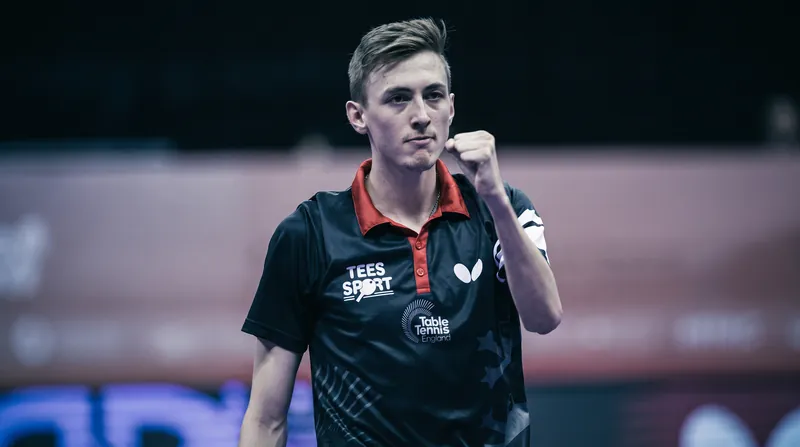
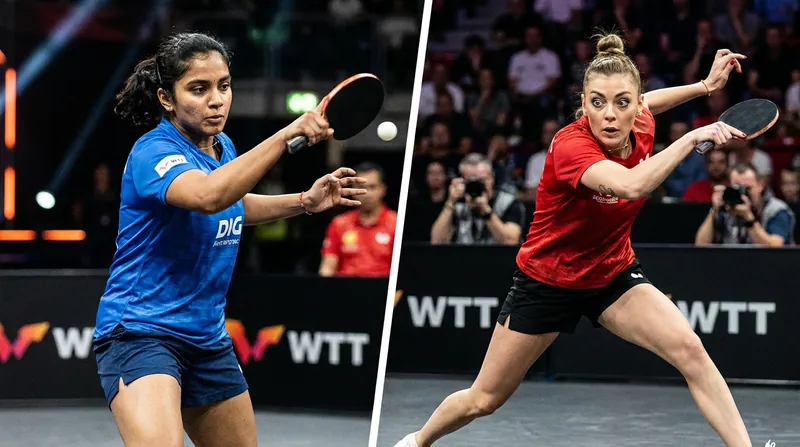
The Race to the WTT Finals: European Women Surge in the Mid-Summer Top 16 Standings
4 sources
Asian Games
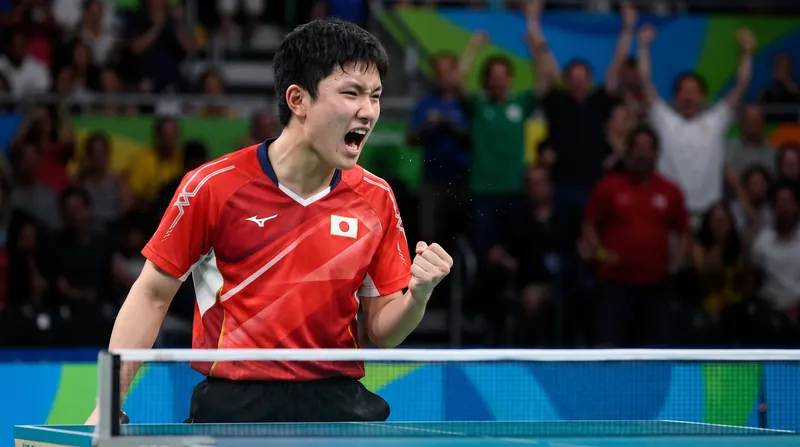
Japan Ends China's 32-Year Asian Games Men's Table Tennis Reign
6 sources
Sports Cybersecurity
Belgian Table Tennis Federation Investigates Cyberattack After Hacker Claims Data Theft
3 sources
Sports Physics
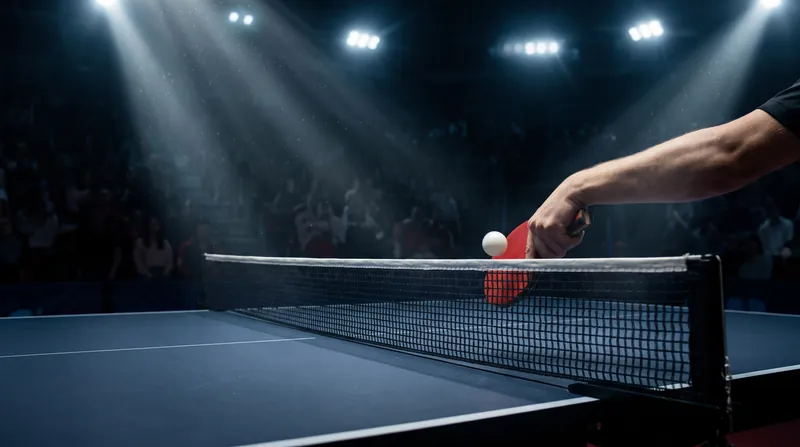
The Mechanics of Table Tennis Spin: How Topspin, Backspin, and Sidespin Affect Trajectory and Bounce
4 sources
Comments
Every angle. Every day.
Get Sports stories with full source coverage and perspective breakdowns, free every day.